

Hydrogen: green hydrogen: emissions of greenhouse gases.
Summary
(1) The California Global Warming Solutions Act of 2006 designates the State Air Resources Board (state board) as the state agency charged with monitoring and regulating sources of emissions of greenhouse gases. The state board is required to ensure that statewide greenhouse gas emissions are reduced to at least 40% below the 1990 level by 2030. The act requires the state board to prepare and approve a scoping plan for achieving the maximum technologically feasible and cost-effective reductions in greenhouse gas emissions and to update the scoping plan at least once every 5 years. This bill would require the state board, by December 31, 2022, as a part of the scoping plan and the state's goal for carbon neutrality, to identify the role of hydrogen, and particularly green hydrogen, in helping California achieve the goals of the act and the state's other climate goals. The bill would require the state board, in consultation with the State Energy Resources Conservation and Development Commission (Energy Commission) and Public Utilities Commission (PUC) , to prepare an evaluation posted to the state board's internet website by June 1, 2023, that includes specified information relative to the deployment, development, and use of hydrogen. The bill would require the state board, in making these evaluations, to consult with the California Workforce Development Board and labor and workforce organizations. (2) Existing law requires the Energy Commission, beginning November 1, 2003, and every 2 years thereafter, to adopt an integrated energy policy report that includes an overview of major energy trends and issues facing the state. This bill would require the Energy Commission, as part of the 2023 and 2025 editions of the integrated energy policy report, to study and model potential growth for hydrogen and its role in decarbonizing, as defined, the electrical and transportation sectors of the economy, and helping to achieve specified goals. (3) Existing law requires the PUC, state board, and Energy Commission to consider green electrolytic hydrogen an eligible form of energy storage, and to consider other potential uses of green electrolytic hydrogen. This bill would require the PUC, state board, and Energy Commission to consider other potential uses of green electrolytic hydrogen specifically in all of their decarbonization strategies, as defined. (4) This bill would require the state board, by June 1, 2023, in conjunction with the Energy Commission and the PUC, to (A) jointly develop recommendations to the Legislature on definitions for different categories of hydrogen, and potential end uses for those categories of hydrogen and would authorize the use of the recommendations to the Legislature to inform the oversight and administration of their respective hydrogen programs and eligibility rules, (B) provide guidance to the Legislature on which categories of hydrogen may be used to meet eligibility requirements for the programs under each state entity's jurisdiction, (C) jointly develop prohibitions against double counting of environmental attributes associated with production, distribution, and use of hydrogen, and (D) calculate life-cycle carbon dioxide intensity values for hydrogen pathways that reflect the fuels, feedstocks, and production processes used for their production.
Bill status
passed
3 of 5 stages cleared
Introduction
Dec 2020
Committee Review
Aug 2021
Senate Passage
May 2021
Assembly Passage
Governor
Introduced Dec 7, 2020
Last action Aug 26, 2021
Floor votes · Senate May 28, 2021
How they voted
38–0
Passed · 2 other
Total votes 40
May 28, 2021
D
Democratic31
93% Yea
R
Republican9
100% Yea
Vote distribution
All Yea
All Nay
Mixed
No data
Full legislative history
Actions timeline
Total actions
26
Key actions
13
Committee
4
Amendments
10
Aug 26, 2021
Lower · Passed
August 26 hearing: Held in committee and under submission.
lower
Jul 7, 2021
Lower · Passed
From committee: Do pass and re-refer to Com. on APPR. (Ayes 11. Noes 0.) (July 7). Re-referred to Com. on APPR.
lower
Jun 30, 2021
Lower · Passed
From committee with author's amendments. Read second time and amended. Re-referred to Com. on NAT. RES.
lower
Jun 21, 2021
Lower · Passed
Read second time and amended. Re-referred to Com. on NAT. RES.
lower
Jun 17, 2021
Lower · Passed
From committee: Do pass as amended and re-refer to Com. on NAT. RES. (Ayes 15. Noes 0.) (June 16).
lower
Jun 7, 2021
Lower · Passed
From committee with author's amendments. Read second time and amended. Re-referred to Com. on U. & E.
lower
Jun 3, 2021
Committee
Referred to Coms. on U. & E. and NAT. RES.
lower
May 28, 2021
Upper · Passed
Read third time. Passed. (Ayes 38. Noes 0. Page 1279.) Ordered to the Assembly.
upper
May 20, 2021
Upper · Passed
Read second time and amended. Ordered to second reading.
upper
May 20, 2021
Upper · Passed
From committee: Do pass as amended. (Ayes 7. Noes 0. Page 1179.) (May 20).
upper
May 3, 2021
Upper · Passed
Read second time and amended. Re-referred to Com. on APPR.
upper
Apr 29, 2021
Upper · Passed
From committee: Do pass as amended and re-refer to Com. on APPR. (Ayes 6. Noes 0. Page 985.) (April 29).
upper
Mar 23, 2021
Upper · Passed
Read second time and amended. Re-referred to Com. on E.Q.
upper
Mar 22, 2021
Upper · Passed
From committee: Do pass as amended and re-refer to Com. on E.Q. (Ayes 12. Noes 0. Page 499.) (March 15).
upper
Jan 28, 2021
Committee
Referred to Coms. on E., U. & C. and EQ.
upper
Dec 7, 2020
Introduced
Introduced. Read first time. To Com. on RLS. for assignment. To print.
upper
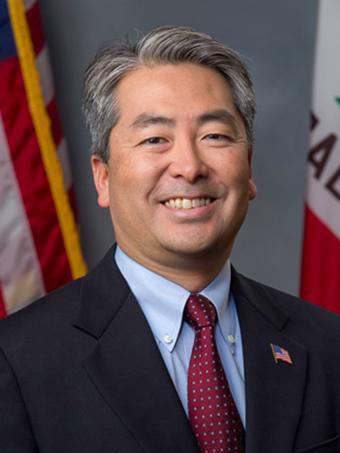
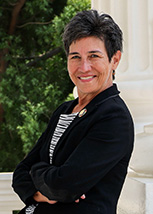
1 primary · 5 co-sponsors
Sponsors




Ask Maddy
·
AI policy assistant
Ask Maddy about SB 18
Scope: CA
Hi! I can help you understand SB 18. What would you like to know?
Try one of these
i
Maddy answers using official bill text and legislative records. Always verify before sharing.
Sources cited inline