

Existing law, until January 1, 2028, and to the extent funds are made available for these purposes, requires the State Department of Public Health to collect data on the incidence of neurodegenerative disease in California, and requires a hospital, facility, physician and surgeon, or other health care provider diagnosing or providing treatment to a patient for a neurodegenerative disease to report each case of a neurodegenerative disease to the department, as prescribed. Existing law specifies that for this purpose, "neurodegenerative disease" may include, but need not be limited to, amyotrophic lateral sclerosis (ALS) , among other diseases. This bill would require the term "neurodegenerative disease" to include, but not be limited to, ALS.
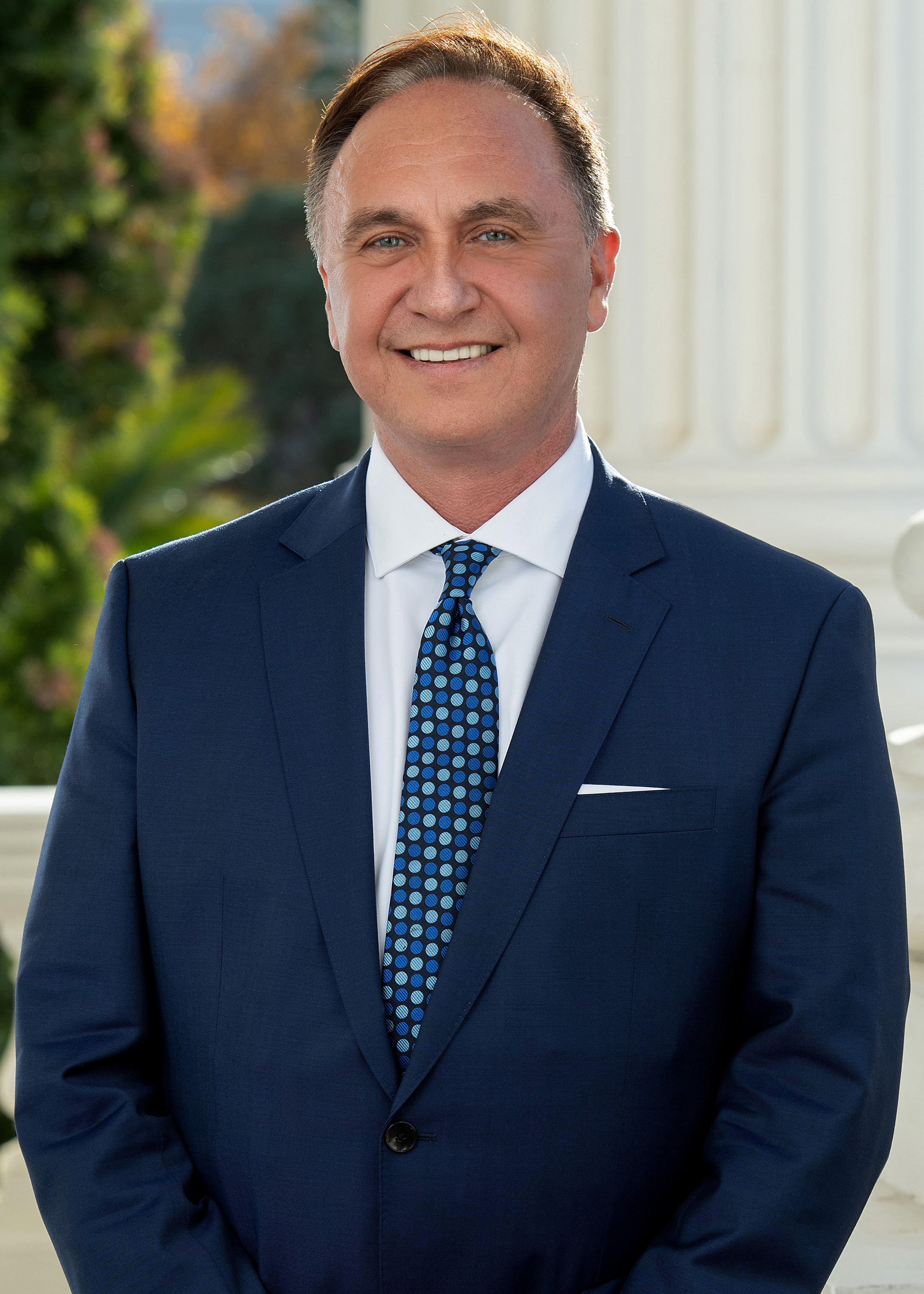
Asm. Rick Zbur
Sponsored bills
The California Global Warming Solutions Act of 2006 requires the State Air Resources Board to adopt regulations to require the reporting and verification of statewide greenhouse gas emissions and to monitor and enforce compliance with the act. The act requires the state board to make available, and update at least annually, on its internet website the emissions of greenhouse gases, criteria pollutants, and toxic air contaminants for each facility that reports to the state board, as provided. This bill would require the state board, on or before January 1, 2025, to develop and adopt regulations requiring specified partnerships, corporations, limited liability companies, and other business entities with total annual revenues in excess of $1,000,000,000 and that do business in California, defined as "reporting entities," to publicly disclose to the emissions reporting organization, as defined, and obtain an assurance engagement on, starting in 2026 on a date to be determined by the state board, and annually thereafter, their scope 1 and scope 2 greenhouse gas emissions, as defined, and, starting in 2027 and annually thereafter, their scope 3 greenhouse gas emissions, as defined, from the reporting entity's prior fiscal year, as provided. The bill would require the state board to review during 2029, and update as necessary on or before January 1, 2030, these deadlines to evaluate trends in scope 3 emissions reporting and to consider changes to the deadlines, as provided. The bill would require a reporting entity to obtain an assurance engagement, performed by an independent third-party assurance provider, of the entity's public disclosure as provided. The bill would require the state board, in developing these regulations, to consult with the Attorney General, other government stakeholders, investors, stakeholders representing consumer and environmental justice interests, and reporting entities that have demonstrated leadership in full-scope greenhouse gas emissions accounting and public disclosure and greenhouse gas emissions reductions. The bill would also require the state board to ensure that the assurance process minimizes the need for reporting entities to engage multiple assurance providers and ensures sufficient assurance provider capacity, as well as timely reporting implementation, as required. The bill would further require the state board to contract with an emissions reporting organization to develop a reporting program to receive and make publicly available the required disclosures. The bill would authorize the state board, starting in 2033 and every 5 years thereafter, to assess the global greenhouse gas accounting and reporting standards and to adopt an alternative standard if it determines that using the alternative standard would more effectively further the goals of the bill. This bill would require the state board, on or before July 1, 2027, to contract with the University of California, the California State University, a national laboratory, or another equivalent academic institution to prepare a report on the public disclosures made by reporting entities to the emissions reporting organization. The bill would require, in preparing the report, consideration to be given to, at a minimum, greenhouse gas emissions from reporting entities in the context of state greenhouse gas emissions reduction and climate goals. The bill would require the state board to provide the report to the emissions reporting organization to post on a digital platform that would be required to be created by the emissions reporting organization, and publicly accessible, to house the state board's report and the reporting entities' public disclosures. The bill would require the emissions reporting organization to provide the state board's report to the relevant policy committees of the Legislature. This bill would require a reporting entity, upon filing its disclosure, to pay to the state board an annual fee set by the state board, as provided. The bill would create the Climate Accountability and Emissions Disclosure Fund, require the proceeds of the fees to be deposited in the fund, and continuously appropriate the moneys in the fund to the state board for purposes of the bill. By creating a continuously appropriated fund, the bill would create an appropriation. The bill would require the state board to adopt regulations that authorize it to seek administrative penalties for violations of these provisions, as specified.
Prior state law established the Healthy California for All Commission for the purpose of developing a plan towards the goal of achieving a health care delivery system in California that provides coverage and access through a unified health care financing system for all Californians, including, among other options, a single-payer financing system. This bill would direct the Secretary of the California Health and Human Services Agency to research, develop, and pursue discussions of a waiver framework in consultation with the federal government with the objective of a health care system that incorporates specified features and objectives, including, among others, a comprehensive package of medical, behavioral health, pharmaceutical, dental, and vision benefits, and the absence of cost sharing for essential services and treatments. The bill would further require the secretary to engage specified stakeholders to provide input on topics related to discussions with the federal government and key design issues, as specified. The bill would require the secretary, no later than January 1, 2025, to provide an interim report to specified committees of the Legislature and propose statutory language to the chairs of those committees authorizing the development and submission of applications to the federal government for waivers necessary to implement a unified health care financing system. The bill would require the secretary, no later than June 1, 2025, to complete drafting the waiver framework, make the draft available to the public on the agency's internet website, and hold a 45-day public comment period thereafter. The bill would require the secretary, no later than November 1, 2025, to provide the Legislature and the Governor with a report that communicates the finalized waiver framework, as specified, and sets forth the specific elements to be included in a formal waiver application to establish a unified health care financing system, as specified. The bill would also include findings and declarations of the Legislature related to the implementation of a unified health care financing system.
Existing law, for purposes of governing property rights, defines a "solar energy system" as specified to include any solar collector or other solar energy device whose primary purpose is to provide for the collection, storage, and distribution of solar energy for space heating, space cooling, electric generation, or water heating. Existing law prescribes and limits permit fees that a city or county may charge for a residential and commercial solar energy system. Existing law repeals these provisions on January 1, 2025. This bill would extend that repeal date to January 1, 2034. By extending the operation of the requirements imposed on a city or county in connection with those solar energy systems, the bill would impose a state-mandated local program. The California Constitution requires the state to reimburse local agencies and school districts for certain costs mandated by the state. Statutory provisions establish procedures for making that reimbursement. This bill would provide that no reimbursement is required by this act for a specified reason.
(1) Existing law requires the State Energy Resources Conservation and Development Commission (Energy Commission) , in consultation with specified entities, to adopt a biennial integrated energy policy report containing certain information, including an overview of major energy trends and issues facing the state. This bill would require, as part of the 2025 edition of the integrated energy policy report, the Energy Commission, in consultation with the Public Utilities Commission (PUC) , to assess barriers to electricity interconnection and energization and provide recommendations on how to accelerate those processes, as appropriate. Existing law establishes the Voluntary Offshore Wind and Coastal Resources Protection Program that is administered by the Energy Commission for the purpose of supporting state activities that complement and are in furtherance of federal laws related to the development of offshore wind facilities and requires the program to award moneys to public and private entities through various mechanisms. Existing law authorizes the Energy Commission to allocate moneys under the program for various purposes. The bill would additionally authorize the Energy Commission to allocate moneys under the program for workforce development grants in consultation with the California Workforce Development Board. (2) Existing law requires the PUC to identify a diverse and balanced portfolio of resources needed to ensure a reliable electricity supply that provides optimal integration of renewable energy in a cost-effective manner. Existing law requires the PUC to adopt a process for each electrical corporation, electric service provider, or community choice aggregator to file an integrated resource plan and a schedule for periodic updates to the plan, and to ensure that those entities meet other specified requirements. This bill would require that the portfolio of resources ensure a reliable electricity supply that also provides optimal integration of resource diversity in a cost-effective manner, as specified. The bill would require the PUC, on or before September 1, 2024, and consistent with a certain process and schedule, to determine if there is a need for the procurement of eligible energy resources, as described, would require the PUC to specify the eligible energy resources that should be procured to meet that need, and would authorize the PUC, within 6 months of making that determination, to request the Department of Water Resources to procure those specified resources that meet the portfolio of resources, as specified. The bill would authorize the department to procure those resources pursuant to that request only before January 1, 2035, as provided. The bill would authorize the PUC to order the procurement of resources with specific attributes by electrical corporations, electric service providers, and community choice aggregators as a result of the integrated resource planning process and require the PUC to enforce any resource procurement requirements on a nondiscriminatory basis. (3) Existing law prohibits an electrical corporation from beginning the construction of, among other things, a line, plant, or system, or of any extension thereof, without having first obtained from the PUC a certificate that the present or future public convenience and necessity require or will require that construction. Under existing law, the extension, expansion, upgrade, or other modification of an existing electrical transmission facility, including transmission lines and substations, does not require a certificate that the present or future public convenience and necessity requires or will require its construction. This bill would require the PUC, in a proceeding evaluating the issuance of a certificate of public convenience and necessity for a proposed transmission project, to establish a rebuttable presumption with regard to need for the proposed transmission project in favor of an Independent System Operator governing board-approved need evaluation if specified requirements are satisfied. (4) Existing law requires each local publicly owned electric utility serving end-use customers to prudently plan for and procure resources that are adequate to meet its planning reserve margin and peak demand and operating reserves, sufficient to provide reliable electric service to its customers. This bill would authorize a local publicly owned electric utility to meet its minimum planning reserve margin through individual contractual procurement or through an aggregated or pooled portfolio of resources, as specified. (5) Existing law establishes the Department of Water Resources Electricity Supply Reliability Reserve Fund and continuously appropriates moneys in the fund to the department for purposes of (A) implementing projects, purchases, and contracts to carry out specified purposes, (B) constructing, owning, and operating, or contracting for the construction and operation of, contracting for the purchase of electricity from, or financing through loans, reimbursement agreements, or other contracts actions to secure resources for summer reliability or to preserve the option to extend the life of specified facilities, and (C) reimbursing electrical corporations for the value of imported energy or import capacity products that were delivered or capable of being delivered between July 1, 2022, and on or before October 31, 2023, and were procured at above-market costs or in excess of procurement authorizations set by the PUC and above the requirements needed to serve the electrical corporation's bundled customers in support of summer electric service reliability. This bill would require the PUC, on and before June 30, 2027, if the department determines that resources it procured through the Electricity Supply Strategic Reliability Reserve Program were used in a given month to meet a load-serving entity's identified reliability need, to annually assess a capacity payment on each load-serving entity that during that same month fails to meet its system resource adequacy requirements, as specified. The bill would require the Energy Commission, on or before January 31, 2024, in consultation with the PUC, to submit a report to the appropriate policy and budget committees of the Legislature that includes an assessment of whether each local publicly owned electric utility exceeded, met, or failed to meet its minimum planning reserve margin and specified system resource adequacy requirements. Upon the submission of that report, the bill would require the executive director of the Energy Commission, on and before June 30, 2027, if the department determines that resources it procured through the Electricity Supply Strategic Reliability Reserve Program were used in a given month to meet an identified reliability need, to annually assess a capacity payment on each local publicly owned electric utility in the Independent System Operator balancing area that during that same month fails to meet its minimum planning reserve margin, as specified. The bill would authorize the Energy Commission to adopt regulations for this purpose, as specified. The bill would establish the Load-Serving Entity Capacity Payment Account and the Local Publicly Owned Electric Utility Capacity Payment Account in the Department of Water Resources Electricity Supply Reliability Reserve Fund, and would specify that moneys in those accounts would, upon appropriation by the Legislature, be used for certain purposes. The bill would require capacity payments collected by the department from load-serving entities and local publicly owned electric utilities to be deposited into those 2 accounts, as provided. This bill would require the PUC, if the PUC requests the department to procure eligible energy resources and the department elects to conduct competitive solicitations or enter into contracts for eligible energy resources, to develop and adopt procedures and requirements that govern competitive procurement by, obligations on, and recovery of costs incurred by the department. The bill would require the department, in evaluating bids received through a solicitation to consider certain factors. The bill would require bids for the development of an eligible energy resource project to include the bidder's certification that certain labor requirements are met and that a skilled and trained workforce will be used to perform all construction work on the eligible energy resource project, as provided. The bill would, at the request of the department, authorize the PUC to require an electrical corporation to act as the agent for the department or to assist the department in conducting the solicitation, bid evaluation, or contract negotiation for new eligible energy resource procurement. The bill would authorize the department to establish a schedule and mechanism for a local publicly owned electric utility to voluntarily obtain from the department eligible energy resources to be acquired by the department through its central procurement function on a contract-by-contract basis. The bill would provide electrical corporations, electric service providers, and community choice aggregators with a voluntary option to obtain incremental eligible energy resources from the department, as provided. At the request of the department, the bill would authorize the PUC to order an electrical corporation to transmit or provide for the transmission of, and distribute all electricity made available by the department, and, as an agent of the department, to provide billing, collection, and other related services on terms and conditions that reasonably compensate the electrical corporation for its services and adequately secure payment to the department. The bill would establish the Eligible Energy Resource Central Procurement Fund and continuously appropriate moneys in the fund to the department for specified purposes. By establishing a continuously appropriated fund, the bill would make an appropriation. The bill would require that all moneys collected by electrical corporations, electric service providers, community choice aggregators, and local publicly owned electric utilities and remitted to the department for eligible energy resources, and all moneys paid directly or indirectly to or for the account of the department for any sale, exchange, transfer, or disposition of those resources, be deposited into the fund. The bill would authorize the department, upon determining that it is necessary or desirable to issue bonds to support activities for the procurement of eligible energy resources, to issue bonds for purposes of, among other things, financing the procurement of those resources supporting the fund and other related expenses incurred by the department, as specified. The bill would authorize the department to adopt regulations for purposes of administering these provisions. (6) This bill would provide that, upon appropriation by the Legislature, the sum of no less than $6,000,000 from the General Fund is available in the 2024–25 fiscal year to support comprehensive, regional baseline environmental monitoring and research into the impacts of prospective offshore wind energy development in and around regions in which offshore wind energy areas have been leased by the Bureau of Ocean Energy Management of the United States Department of the Interior, pending future legislation. The bill would provide that, upon appropriation by the Legislature, additional moneys from the General Fund will be made available for the 2024–25 fiscal year and subsequent fiscal years to support the California Coastal Commission's coastal development permitting of prospective offshore wind energy development in and around regions in which offshore wind energy areas have been leased by the bureau, pending future legislation. The bill would state the intent of the Legislature to appropriate additional resources for environmental permitting and related needs across applicable state entities upon the submission and review of a specified assessment. (7) Under existing law, a violation of the Public Utilities Act or any order, decision, rule, direction, demand, or requirement of the PUC is a crime. Because certain of the above provisions would be part of the act and a violation of a PUC action implementing this bill's requirements would be a crime, the bill would impose a state-mandated local program. The California Constitution requires the state to reimburse local agencies and school districts for certain costs mandated by the state. Statutory provisions establish procedures for making that reimbursement. This bill would provide that no reimbursement is required by this act for a specified reason. (8) This bill would declare that it is to take effect immediately as an urgency statute.
Existing law requires the State Energy Resources Conservation and Development Commission, in coordination with relevant federal, state, and local agencies, to develop a strategic plan for offshore wind energy developments installed off the California coast in federal waters, and requires the commission to submit the strategic plan to the Natural Resources Agency and the Legislature on or before June 30, 2023. Existing law requires the commission, on or before June 1, 2022, to evaluate and quantify the maximum feasible capacity of offshore wind to achieve reliability, ratepayer, employment, and decarbonization benefits and to establish megawatt offshore wind planning goals for 2030 and 2045. Existing law requires the commission, in coordination with specified state entities, to work with stakeholders, other state, local, and federal agencies, and the offshore wind energy industry to identify suitable sea space for wind energy areas in federal waters sufficient to accommodate those offshore wind planning goals. Existing law requires the commission, in coordination with relevant state and local agencies, based on those identified sea spaces, to develop a plan to improve waterfront facilities that could support a range of floating offshore wind energy development activities. Existing law requires the commission, in consultation with specified state entities, to assess the transmission investments and upgrades necessary to support those offshore wind planning goals. Existing law requires the commission to develop and produce a permitting roadmap that describes timeframes and milestones for a coordinated, comprehensive, and efficient permitting process for offshore wind energy facilities and associated electricity and transmission infrastructure off the coast of California. Existing law repeals these provisions on January 1, 2027. This bill would require the commission, in consultation with the State Lands Commission, other specified state entities, and the California Coastal Commission, to develop a 2nd-phase plan and strategy for seaport readiness that builds upon the recommendations and alternatives in the strategic plan for offshore wind energy developments, as specified. The bill would require the commission to submit a report on its recommendations for a seaport readiness strategy to the Governor and the Legislature on or before December 31, 2026. The bill would additionally require the commission, in consultation with the California Workforce Development Board, to conduct a study on the feasibility of achieving 50% and 65% in-state assembly and manufacturing of offshore wind energy projects and specified federal domestic content thresholds for offshore wind energy projects, as provided. The bill would require the commission to submit a report on the study to the Governor and the Legislature on or before December 31, 2027. The bill would repeal these provisions, including the existing law provisions described above, on January 1, 2031.
Existing law, the Ralph C. Dills Act (Dills Act) , governs collective bargaining between the state and recognized state public employee organizations. Existing law excludes certain employees from coverage under the Dills Act, including, among others, managerial employees, supervisory employees, and confidential employees, as defined. Existing law creates the Public Employment Relations Board and authorizes it, among other things, to determine appropriate state employee bargaining units, as specified. This bill would enact the Legislature Employer-Employee Relations Act, to provide employees of the Legislature, except certain specified categories of excluded employees, the right to form, join, and participate in the activities of employee organizations of their own choosing for the purpose of representation on all matters of employer-employee relations. The bill would prescribe rights, duties, and prohibitions in this context that parallel those in the Dills Act. For the purposes of bargaining or meeting and conferring in good faith, the bill would define "employer" to mean the Assembly Committee on Rules or the Senate Committee on Rules. The bill would require the employer to meet and confer with representatives of recognized employee organizations regarding matters within the scope of representation. The bill would exclude certain matters from the scope of representation, as specified. The bill would grant exclusive jurisdiction to the Public Employment Relations Board to make an initial determination as to whether charges of unfair practices are justified, and, if so, the necessary remedy, as specified. However, the bill would prohibit the board from issuing a decision or order that intrudes upon or interferes with the Legislature's core function of efficient and effective lawmaking or the essential operation of the Legislature. The bill would require the board to determine appropriate bargaining units, and would prohibit the board from including employees in a bargaining unit that includes employees other than those of the employer. The bill would prohibit the board from including within a bargaining unit employees from both the Assembly and Senate. This bill would make it a misdemeanor for any person to willfully resist, prevent, impede, or interfere with any member of the board, or any of its agents, in the performance of duties pursuant to its provisions. By expanding the definition of a crime, this bill would impose a state-mandated local program. The bill would provide that the provisions of the Legislature Employer-Employee Relations Act are severable. The bill would become operative on July 1, 2026. The California Constitution requires the state to reimburse local agencies and school districts for certain costs mandated by the state. Statutory provisions establish procedures for making that reimbursement. This bill would provide that no reimbursement is required by this act for a specified reason. This bill would additionally exempt from public inspection records related to activities governed by the Legislature Employer-Employee Relations Act that reveal the employer's deliberative processes, impressions, evaluations, opinions, recommendations, meeting minutes, research, work product, theories, or strategy, or that provide instruction, advice, or training to employees who do not have full collective bargaining and representation rights under the Legislature Employer-Employee Relations Act. Existing constitutional provisions require that a statute that limits the right of access to the meetings of public bodies or the writings of public officials and agencies be adopted with findings demonstrating the interest protected by the limitation and the need for protecting that interest. This bill would make legislative findings to that effect.
Existing law, until January 1, 2024, increases the smog abatement fee on certain vehicles by a specified amount and requires the revenues generated by the increase to be deposited in the Air Quality Improvement Fund and the Alternative and Renewable Fuel and Vehicle Technology Fund. Existing law, until January 1, 2024, increases vehicle registration fees and certain service fees for identification plates by specified amounts. Existing law requires the revenue generated by the increase in those fees to be deposited in the Alternative and Renewable Fuel and Vehicle Technology Fund and either the Air Quality Improvement Fund or the Enhanced Fleet Modernization Subaccount, as provided. This bill would extend the increases in those charges to July 1, 2035. Existing law, until January 1, 2024, prohibits the State Air Resources Board from enforcing any element of its clean fuels outlet regulations or other regulation that requires or has the effect of requiring suppliers, as defined, to construct, operate, or provide funding for the construction or operation of publicly available hydrogen-fueling stations. Existing law, until January 1, 2024, requires the state board to aggregate and make available certain information regarding projected leases and sales of, and the registration of, hydrogen-fueled vehicles, to evaluate, based on that information, the need for additional publicly available hydrogen-fueling stations for the actual and projected number of hydrogen-fueled vehicles, the geographic areas where fuel will be needed, and station coverage, and to report the finding of the evaluation to the State Energy Resources Conservation and Development Commission (Energy Commission) . Existing law, until January 1, 2024, requires the Energy Commission to annually allocate $20,000,000 to fund the number of publicly available hydrogen-fueling stations identified by the state board, not to exceed 20% of the moneys appropriated by the Legislature from the Alternative and Renewable Fuel and Vehicle Technology Fund, until at least 100 publicly available hydrogen-fueling stations are operating in the state. This bill would extend the above-described provisions to July 1, 2035, and would repeal them as of January 1, 2036. The bill would require the annual allocation described above to instead be no less than 15% of the moneys appropriated by the Legislature from the Alternative and Renewable Fuel and Vehicle Technology Fund from revenues attributable to specified sources, would require the commission to make that allocation only until July 1, 2030, and would impose other specified requirements. The bill would also delete the requirements that the hydrogen-fueling stations be publicly available and that there be at least 100 hydrogen-fueling stations operating in the state. Existing law creates the Enhanced Fleet Modernization Program to provide compensation for the retirement and replacement of passenger vehicles and light-duty and medium-duty trucks that are high polluters. Existing law requires the Bureau of Automotive Repair to administer the program and the state board to adopt the guidelines for the program. Existing law requires the guidelines to ensure vehicle replacement or a mobility option be an option for all motor vehicle owners and may be in addition to compensation for vehicles retired. This bill would require the guidelines to ensure each replacement vehicle in the program be either a plug-in hybrid or zero-emission vehicle unless the state board makes a specified determination regarding either the availability of vehicles or the availability of charging and refueling capabilities in consultation with the Energy Commission, as specified. Existing law establishes the Air Quality Improvement Program under the administration of the State Air Resources Board for the purpose of funding air quality improvement projects relating to fuel and vehicle technologies. The primary purpose of the program is to fund projects to reduce criteria air pollutants, improve air quality, and provide funding for research to determine and improve the air quality impacts of alternative transportation fuels and vehicles, vessels, and equipment technologies. This bill would instead provide that the purpose of the program is to fund air quality improvement projects relating to zero-emission fuel and vehicle technologies and that the primary purpose of the program is to fund projects to reduce criteria air pollutants in the logistics, goods movement, off-road, warehouse, and port sectors, improve air quality in nonattainment basins, with a priority for projects located in the areas of extreme nonattainment, and improve the air quality impacts of zero-emission transportation fuels and vehicles, vessels, and equipment technologies. The bill would also revise the list of the types of projects eligible for funding under the program. Existing law establishes the Clean Transportation Program that is administered by the Energy Commission to provide financial assistance to develop and deploy innovative technologies that transform California's fuel and vehicle types to help attain the state's climate change policies with an emphasis on the development and deployment of technology and alternative and renewable fuels in the marketplace. Existing law authorizes the Energy Commission to make a single source or sole source award for applied research. This bill would revise and recast the Clean Transportation Program to, among other things, change the emphasis of the program to the development and deployment of zero-emission technology and fuels in the marketplace where feasible and near-zero-emission technology and fuels elsewhere. The bill would require certain information regarding electric vehicle charging infrastructure and hydrogen-fueling infrastructure funded by the program to be reported to the Energy Commission. The bill would additionally authorize the Energy Commission to make a single source or sole source award to public or nonpublic entities that manage a United States Department of Energy national laboratory. The bill would require the Energy Commission, on and after January 1, 2025, to expend at least 50% of the moneys appropriated to the program on programs and projects that directly benefit or serve residents of disadvantaged and low-income communities and low-income Californians. The bill would require the Energy Commission, for any hydrogen application scoring under the program, to provide preference to applicants with the least carbon-intensive proposed fuel, as specified. The bill would also require the Energy Commission, by January 1, 2026, in consultation with the State Air Resources Board and the Department of Motor Vehicles, to propose to the Legislature alternative funding methodologies or fee structures for funding zero-emission vehicle infrastructure for light-, medium-, and heavy-duty vehicles. The bill would require the proposal to include an assessment of the economic equity of the alternatives. Existing law requires the Energy Commission, in consultation with the Public Utilities Commission, to develop uptime recordkeeping and reporting standards for electric vehicle chargers and charging stations by January 1, 2024, that only apply to electric vehicle chargers and charging stations installed on or after January 1, 2024, and that received an incentive from a state agency or through a charge on ratepayers. Existing law authorizes the Energy Commission, in consultation with the Public Utilities Commission, to adopt tools to increase charging station uptime and to include incentives, as specified. Existing law repeals these provisions on January 1, 2035. This bill would require the Energy Commission, by January 1, 2025, to set standards for how these stations shall notify customers about the availability and accessibility of publicly available charging infrastructure. This bill also would require, rather than authorize, the Energy Commission to adopt tools to increase charging station uptime. This bill would declare that it is to take effect immediately as an urgency statute.
Existing law authorizes an individual to contribute amounts in excess of personal income tax liability for the support of specified funds, including, for specified taxable years beginning on or after January 1, 2008, and before January 1, 2013, an ALS/Lou Gehrig's Disease Research Fund to provide research grants to develop and advance the understanding, techniques, and modalities effective in the prevention, treatment, and cure of ALS. Existing law specifies general administrative provisions applicable to these voluntary contributions, which, among other things, provide for the disbursement of contributions following the repeal of the fund provisions and require undesignated funds to be transferred to the General Fund. Existing law requires any new or extended voluntary contribution to include the words "voluntary tax contribution" in the name of the fund, to require the administering agency to include specified information about the fund on its internet website, to continuously appropriate from the fund the contributions made to the administering agency, and to set a minimum contribution amount for the continuation of any voluntary tax contribution fund provisions on the tax return form and a generally applicable repeal date for voluntary tax contribution provisions. This bill would allow an individual to designate on their tax return that a specified amount in excess of the taxpayer's personal income tax liability be transferred to the California ALS Research Network Voluntary Tax Contribution Fund. The bill would continuously appropriate the fund to the Franchise Tax Board, the Controller, and the State Department of Public Health for administrative costs and to the State Department of Public Health for disbursement to the Amyotrophic Lateral Sclerosis Association Golden West Chapter to support the work of their California ALS Research Network in an effort to develop and advance the understanding, techniques, and modalities effective in the prevention, treatment, and cure of ALS. The bill would repeal these provisions on December 1, 2031, or on December 1 of the year that the minimum contribution amount of $250,000 is not met, as specified. By continuously appropriating these funds, the bill would make an appropriation.
Existing law establishes the California Violence Intervention and Prevention (CalVIP) Grant Program, administered by the Board of State and Community Corrections, to award competitive grants for the purpose of violence intervention and prevention. Existing law imposes various taxes, including taxes on the privilege of engaging in certain activities. The Fee Collection Procedures Law, the violation of which is a crime, provides procedures for the collection of certain fees and surcharges. This bill, the Gun Violence Prevention and School Safety Act, would, commencing July 1, 2024, impose an excise tax in the amount of 11% of the gross receipts from the retail sale in this state of a firearm, firearm precursor part, and ammunition, as specified. The tax would be collected by the state pursuant to the Fee Collection Procedures Law. The bill would require that the revenues collected be deposited in the Gun Violence Prevention and School Safety Fund, which the bill would establish in the State Treasury. The bill would require the moneys received in the fund to be used to fund various gun violence prevention, education, research, response, and investigation programs, as specified. The bill would require the Director of Finance to transfer, as a loan, $2,400,000 from the General Fund to the California Department of Tax and Fee Administration to implement these provisions, as specified. The bill would require each licensed firearms dealer, firearms manufacturer, and ammunition vendor to register with the department for a certificate, as specified. The bill would also provide procedures for the issuance, revocation, and reinstatement of a permit. This bill would include a change in state statute that would result in a taxpayer paying a higher tax within the meaning of Section 3 of Article XIIIA of the California Constitution, and thus would require for passage the approval of 23 of the membership of each house of the Legislature. Because this bill would expand the scope of the Fee Collection Procedures Law, the violation of which is a crime, this bill would impose a state-mandated local program. The California Constitution requires the state to reimburse local agencies and school districts for certain costs mandated by the state. Statutory provisions establish procedures for making that reimbursement. This bill would provide that no reimbursement is required by this act for a specified reason.