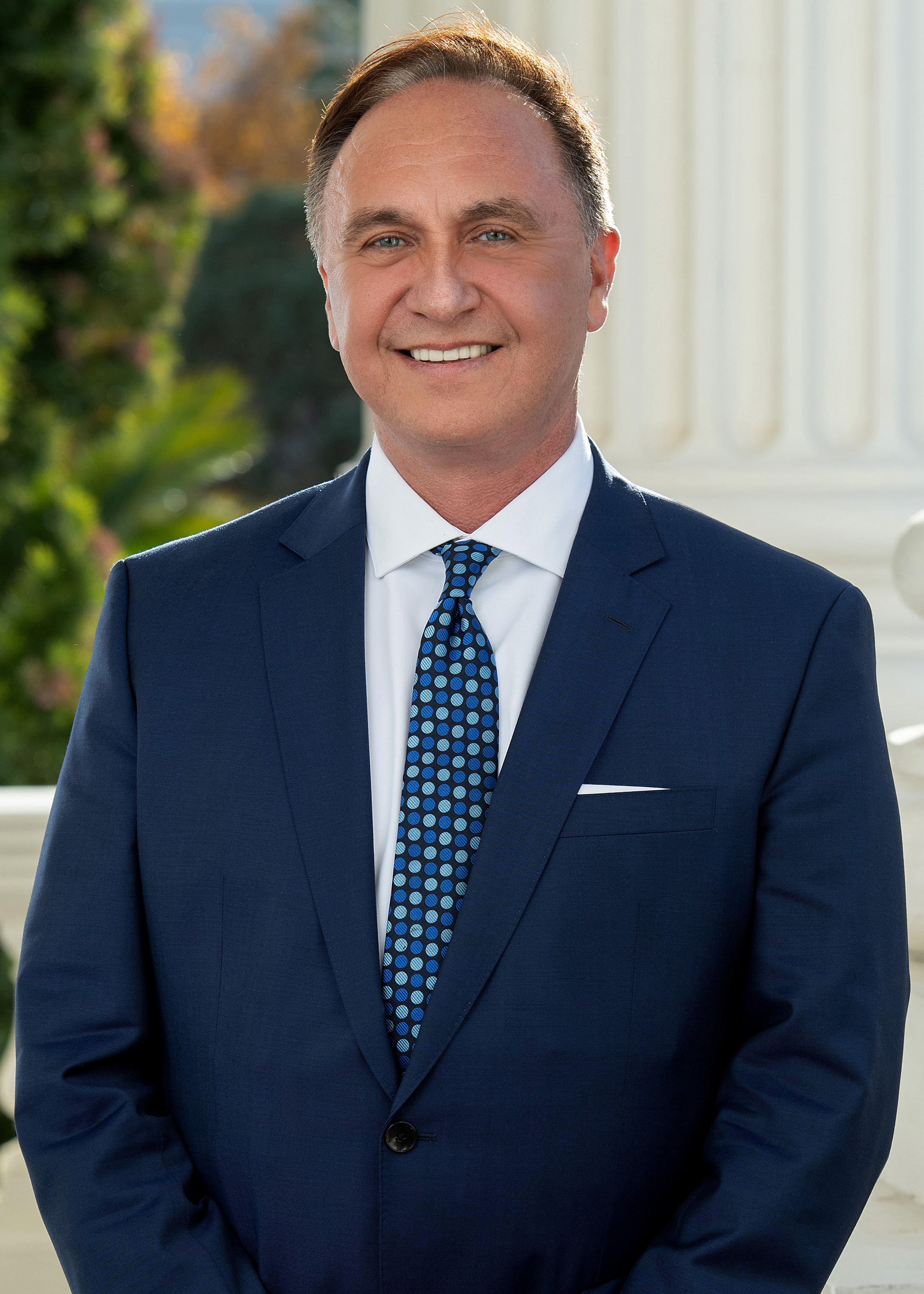
Photo of Rick Zbur
D California Assembly · District 51 On the 2026 ballot

Asm. Rick Zbur

Compare
Total votes
10,609
all sessions
Attendance
95%
391 missed
Near the chamber average
With party
99%
of cast votes
Near the chamber average
Bipartisan score
0%
crosses aisle rarely
Near the chamber average
Sponsored
927
bills & resolutions
Near the chamber average
Committees
13
assignments
927 bills and resolutions

Sponsored bills

Total
927
Primary
70
Co-sponsor
857
This page
927
matching current filters
Co-sponsor HR 128
Passed · California Assembly · Co-sponsor
Relative to Aromatic L-Amino Acid Decarboxylase Deficiency Awareness Day.

Maddy summaryCalifornia House Resolution 128 designates October 23, 2026, as Aromatic L-Amino Acid Decarboxylase (AADC) Deficiency Awareness Day. The resolution aims to increase public and medical community awareness of this ultrarare genetic condition, which prevents the body from producing dopamine and causes severe developmental delays. By highlighting the challenges faced by patients and their caregivers, the bill encourages Californians to learn more about the disease to support earlier diagnosis and continued research into treatments.

Passed Aug 13, 2026 1 co-sponsor
Co-sponsor HR 132
Passed · California Assembly · Co-sponsor
Relative to Young Women's Reproductive Health Awareness Month.

Maddy summaryThis California House Resolution proclaims September 2026 as Young Women's Reproductive Health Awareness Month to highlight the importance of early diagnosis and education for adolescent girls. The resolution urges high schools, colleges, public health agencies, and medical providers to promote educational campaigns on topics such as menstrual health, HPV vaccination, and sexual health practices. It specifically aims to address disparities in care by encouraging outreach to communities that face systemic barriers or lack culturally appropriate resources.

Passed Aug 13, 2026 1 co-sponsor
Co-sponsor HR 131
Passed · California Assembly · Co-sponsor
Relative to Student Cancer Education, Detection, and Prevention Week.

Maddy summaryCalifornia Assembly Resolution 131 proclaims October 11 through 17, 2026, as Student Cancer Education, Detection, and Prevention Week. The resolution encourages middle schools, high schools, colleges, public health agencies, pediatricians, and community health providers to promote educational campaigns on cancer prevention and detection. These efforts aim to inform students about risk factors, warning signs, and the importance of timely screenings to support better health outcomes for young people in the state.

Passed Aug 13, 2026 1 co-sponsor
Primary AB 2549
Passed · California Assembly · Lead sponsor
Electronic Waste Recycling Act of 2003: manufacturer notices.

The Electronic Waste Recycling Act of 2003 (act) requires a retailer selling a covered electronic device, including a covered battery-embedded product, as defined, in this state to collect from a consumer at the time of retail sale a covered electronic waste recycling fee, as specified. The act imposes certain obligations on a manufacturer of a covered electronic device sold in the state. Existing law requires a manufacturer of a covered electronic device that is a covered battery-embedded product, as defined, to provide a specified notice to any retailer that sells that product informing the retailer that the covered battery-embedded product is subject to a recycling fee, as provided. Existing law requires the notices to identify the covered electronic device by brand and model number. Existing law incorporates the requirements and other provisions of the act by reference as requirements and provisions of the hazardous waste control laws. The act also expressly authorizes the Department of Toxic Substances Control to enforce the act, and all regulations adopted pursuant to the act, through the hazardous waste control laws. A violation of the hazardous waste control laws is a crime. This bill would require the manufacturer to send notices regarding the products to the Department of Resources Recycling and Recovery (CalRecycle) in accordance with specified timeframes set forth in the bill. The bill would also require the notices to contain the universal product code (UPC) , as defined, and make conforming changes. By changing the definition of a crime, the bill would impose a state-mandated local program. The bill would require CalRecycle to develop, on or before March 1, 2027, a standardized form for notices submitted by a manufacturer pursuant to this provision. The bill would require the form to require each notice to identify the battery-embedded covered product manufactured by that manufacturer by brand, model number, and UPC, and the covered battery-embedded waste recycling fee. The bill would require CalRecycle, on or before May 1, 2027, to create and maintain a searchable database for the notices sent by a manufacturer pursuant to this requirement, to post that information on its internet website, as provided, and to consult with manufacturers and retailers to develop a standardized online upload process for these purposes. The bill would require, upon receipt of a notice directly from a manufacturer or the publication of a notice in the online database maintained by CalRecycle, that a retailer shall have 60 days to commence collection of the fee established in compliance with requirements of the act. The bill would specify procedures for addressing complaints or information alleging a violation of laws relating to a covered battery-embedded product, as provided. Existing law sets forth definitions for purposes of the act. This bill would expand the definition of a "retailer" to include a "marketplace facilitator," as defined. The bill would delay, until January 1, 2028, the application of the act to "discount stores," as defined. The bill would limit the duties under the act of "thrift retail stores," as defined, and manufacturers regarding battery-embedded product donations to thrift retail stores, as specified. The bill would define a "universal product code" to mean an all-numeric code that represents a consumer package of a particular brand, size, type, and manufacturer by using a series of alternating bars and spaces for electronic scanning. The California Constitution requires the state to reimburse local agencies and school districts for certain costs mandated by the state. Statutory provisions establish procedures for making that reimbursement. This bill would provide that no reimbursement is required by this act for a specified reason.

Passed Aug 13, 2026 0 co-sponsors
Co-sponsor AB 2235
Passed · California Assembly · Co-sponsor
The Judicial Home Security Act.

Existing law, the California Public Records Act, requires state and local agencies to make their records available for public inspection, unless an exemption from disclosure applies. Existing law authorizes a person who faces violence, harassment, or threats of violence from the public because of their work for a public entity to apply to the Secretary of State for the purposes of enabling state and local agencies to respond to requests for public records without disclosing a program participant's residence address contained in any public record and otherwise provide for confidentiality of identity for that person, subject to specified conditions. Under existing law, any person who makes a false statement in an application is guilty of a misdemeanor. This bill would require the Attorney General to establish the Judicial Home Security Program under which a judicial officer, including an imminent, current, or former superior court judge or district court judge, or an adult household member of a judicial officer who is domiciled in California may request their home address in public records to be shielded or substituted with an alternate mailing address, as specified. The bill would establish the Judicial Home Security Program Fund in the General Fund and would authorize moneys in the fund to be made available for the administration of the program upon appropriation by the Legislature. The bill would require the Attorney General to approve an application to the program if it is filed in the manner and on the form prescribed by the Attorney General and contains prescribed information, including documentation showing the household contains an individual who is a judicial officer and a signed statement that the applicant fears for their safety or the safety of a household member of the applicant due to the employment of the judicial officer. The bill would require the application to be dated and signed, and would make knowingly providing false or incorrect information in the application a misdemeanor. The bill would require the Attorney General to commence accepting applications under the program on April 1, 2027. The bill would require the Attorney General to create, maintain, and update monthly a publicly available list that includes the name, county of residence, and designated alternate mailing address of each current program participant. The bill would also require the Attorney General to create, maintain, and update monthly a publicly available list that includes former participants who are no longer in the program. The bill would require, when disclosing or releasing records or information that would otherwise contain the home address of a program participant in any format or medium, a state or local agency to substitute the participant's alternate mailing address for any reference to the participant's home address. The bill would require, when disclosing or releasing records or information that would otherwise contain the situs of the home address of a program participant in any format or medium, a county assessor's office to substitute the program participant's alternate mailing address for the situs of the home address on assessment rolls, maps, property ownership statements and records, and any other records containing the home address of a program participant. The bill would require, when disclosing or releasing, in any format or medium, records or information that would otherwise contain the situs of the home address of a program participant who requests shielding, a county assessor's office and a county recorder's office to shield the participant's public record, including real property deeds, real estate records, and any other records containing the home address of a program participant. In this regard, the bill would require a program participant to submit a request containing a list of documents to be shielded, a sworn statement attesting to the accuracy of the information provided, and payment of a fee, as specified. The bill would authorize a program participant to submit a request to update the list of documents to be shielded, a specified. The bill would require the county assessor's office and county recorder's office to validate and shield any requested records within 5 business days of receipt of a request for shielding. The bill would authorize making any original documents available only to specified persons or in specified circumstances. The bill would prohibit the disclosure of a participant's home address by the Attorney General and state and local agencies, except in specified circumstances. The bill would prohibit a person or organization from publicly posting or displaying the home address of a program participant who has made a written demand of that person or organization, including on the internet, and would prohibit a third-party data broker or aggregator from selling, licensing, trading, purchasing, transferring, releasing, or otherwise sharing in any format or medium, the home address of a program participant, including on the internet, except as specified. The bill would authorize the Attorney General to adopt guidance to facilitate the administration of the act by state and local agencies. The bill would define terms for its purposes. By imposing new duties on local agencies, expanding the scope of the crime of perjury, and creating a crime, this bill would create a state-mandated local program. Existing constitutional provisions require that a statute that limits the right of access to the meetings of public bodies or the writings of public officials and agencies be adopted with findings demonstrating the interest protected by the limitation and the need for protecting that interest. This bill would make legislative findings to that effect. The California Constitution requires local agencies, for the purpose of ensuring public access to the meetings of public bodies and the writings of public officials and agencies, to comply with a statutory enactment that amends or enacts laws relating to public records or open meetings and contains findings demonstrating that the enactment furthers the constitutional requirements relating to this purpose. This bill would make legislative findings to that effect. The California Constitution requires the state to reimburse local agencies and school districts for certain costs mandated by the state. Statutory provisions establish procedures for making that reimbursement. This bill would provide that with regard to certain mandates no reimbursement is required by this act for a specified reason. With regard to any other mandates, this bill would provide that, if the Commission on State Mandates determines that the bill contains costs so mandated by the state, reimbursement for those costs shall be made pursuant to the statutory provisions noted above.


Passed Aug 13, 2026 1 co-sponsor
Co-sponsor HR 112
Passed · California Assembly · Co-sponsor
Relative to Black Music Month.

Maddy summaryThis House Resolution officially designates September as Black Music Month to honor the significant contributions of Black artists to American culture. The measure recognizes a wide range of musical genres, including jazz, blues, gospel, and hip-hop, by highlighting their historical origins and influential figures. While the text celebrates these artistic achievements, it does not impose any new legal requirements or funding mandates.

Passed Aug 13, 2026 1 co-sponsor
Primary AB 2217
Passed · California Assembly · Lead sponsor
Criminal procedure: alternatives to arrest.

Existing law establishes the Law Enforcement Assisted Diversion (LEAD) pilot program, which is administered by the Board of State and Community Corrections, to improve public safety and reduce recidivism by increasing the availability and use of social service resources while reducing costs to law enforcement agencies and courts stemming from repeated incarceration. Existing law requires the board to award grants, on a competitive basis, to up to 3 jurisdictions to establish LEAD programs and requires the board to establish minimum standards, funding schedules, and procedures for awarding grants. This bill would rename the program as the Alternatives to Arrest (ATA) pilot program. The bill would require the board to additionally award a grant or grants to the agency administering qualifying programs in the City of Los Angeles and the County of Los Angeles, as well as in other jurisdictions to be identified by the board. Existing law allows a person to be referred to services through a program by a law enforcement officer as an alternative to arrest and through a social contact referral by a law enforcement officer if they believe the person is at high risk of arrest in the future for specified crimes relating to controlled substances and prostitution. Existing law requires those social contact referrals to meet specified criteria, including, among other things, verification that the individual has had prior involvement with low-level drug or prostitution activity and that the individual does not have a pending case in drug court or mental health court. This bill would remove these requirements for social contact referrals and instead authorize them if, absent probable cause to arrest, the officer believes the person would benefit from case management services and is at high risk of arrest in the future and the person expresses interest in voluntarily participating in the program. The bill would expand the offenses eligible for referral as an alternative to arrest to include, among other things, specified disorderly conduct crimes, shoplifting, or other violations identified by the local jurisdiction with agreement of the police chief or sheriff, the city attorney or district attorney, and the implementing public health or behavioral health agency administering case management services. Existing law requires the Board of State and Community Corrections to contract with a nonprofit research entity, university, or college to evaluate the effectiveness of the program, as specified. Existing law also authorizes the board to contract with experts for the purpose of providing technical assistance to participating jurisdictions. Existing law appropriated $15,000,000 from the General Fund for the program and authorized the board to spend up to $550,000 for the purposes of the evaluation contract and technical assistance. This bill would repeal those provisions and would require, upon appropriation by the Legislature for these programs, that the funds be granted to the entity responsible for LEAD or ATA in the City of Los Angeles and the County of Los Angeles and agencies in other jurisdictions to be identified by the board. The bill would authorize the board to spend a portion of those funds on contracts with experts on the implementation of ATA or similar programs in other jurisdictions for the purpose of providing technical assistance to participating jurisdictions, as specified. The bill would require local jurisdictions to commit to using these funds and local resources to support ATA or LEAD planning, implementation, and services and not supplant local resources that had been previously dedicated to ATA or LEAD programs and services. The bill would require the board to report to the Legislature on the effectiveness of the program on or before September 1, 2031.

Passed Aug 13, 2026 0 co-sponsors
Co-sponsor AB 2254
Passed · California Assembly · Co-sponsor
Coastal resources: monarch butterfly habitat.

Existing law establishes the Department of Fish and Wildlife and sets forth the duties of that department, which include administering various programs for the protection and conservation of fish and wildlife. Existing law authorizes the department to take feasible actions to conserve monarch butterflies and the unique habitats they depend upon for successful migration. Existing law, the California Coastal Act of 1976, among other things, establishes the California Coastal Commission and provides for planning and regulation of development in the coastal zone, as defined. This bill would require, on or before July 1, 2028, the department, in coordination with the commission, to identify known monarch butterfly overwintering habitat sites in the coastal zone and current local government monarch butterfly overwintering habitat management plans or policies. The bill would also require, on or before July 1, 2029, the department, in coordination with the commission, to develop and provide guidance on model policies to be used by a local government for the protection of monarch butterfly overwintering habitat, including habitat restoration and enhancement. The bill would require, after the above-described guidance on model policies is finalized, a local government with a monarch butterfly overwintering habitat site located within its jurisdiction and the coastal zone, as described, to, on or before July 1, 2031, develop and implement enforceable monarch butterfly overwintering habitat site protection policies, as provided. By imposing additional duties on a local government, the bill would impose a state-mandated local program. The California Constitution requires the state to reimburse local agencies and school districts for certain costs mandated by the state. Statutory provisions establish procedures for making that reimbursement. This bill would provide that, if the Commission on State Mandates determines that the bill contains costs mandated by the state, reimbursement for those costs shall be made pursuant to the statutory provisions noted above.
Passed Aug 13, 2026 1 co-sponsor
Co-sponsor AB 2158
Passed · California Assembly · Co-sponsor
Pupil instruction: outdoor learning.

Existing law establishes a system of public elementary and secondary education in this state. Under this system, local educational agencies throughout the state provide instruction to pupils in kindergarten and grades 1 to 12, inclusive, and existing law establishes courses of study for those pupils. This bill would encourage school districts, county offices of education, and charter schools to integrate outdoor learning into standards-aligned instruction across all grades and subject areas, as provided. Existing law establishes the State Department of Education under the administration of the Superintendent of Public Instruction, and assigns the department numerous duties relating to the governance and funding of local educational agencies. This bill would require the department, on or before July 1, 2028, to curate and maintain on its internet website resources for educators on outdoor learning. The bill would also encourage the department, in carrying out these provisions, to consult with county offices of education, classroom educators, tribal partners, mental and physical health professionals and researchers, environmental literacy experts, and community organizations with experience in outdoor learning. The bill would authorize the department to provide resources to address the particular needs of each local educational agency. The bill would authorize the department to accept voluntary contributions to be deposited into the Outdoor Learning and Environmental Literacy Account, which the bill would create in the State Treasury, to fund, upon appropriation by the Legislature, the costs of these provisions.

Passed Aug 13, 2026 1 co-sponsor
Co-sponsor SB 995
Passed · California Senate · Co-sponsor
Involuntary residential facilities: health and safety inspections.

Existing law requires the operator of a private detention facility, as defined, to comply with, and adhere to, the detention standards of care and confinement agreed upon in the facility's contract for operations, as specified. Existing law requires a private detention facility operator to comply with, and adhere to, all local and state public health orders and occupational safety and health regulations. This bill, the Masuma Khan Justice Act, would authorize the State Department of Public Health to inspect an involuntary residential facility, defined as a facility that houses more than 50 individuals overnight, restricts residents' ability to enter or leave, as specified, and provides specified onsite services, for the limited purpose of ensuring sanitary, hygienic, and safe conditions, using standards and inspection protocols consistent with those applied to licensed residential health facilities. The bill would authorize unnoticed inspections under specified conditions. The bill would require the department, within 30 days of completing an inspection, to submit a report to the Legislature. The bill would require the operator of a facility to provide access to the department for an inspection described above, to maintain all records necessary to demonstrate compliance with the above-described standards, and to correct any violation identified by the department, as specified. The bill would make a violation of the above-described requirements by an operator of a facility, after appropriate notice and an opportunity for a hearing, subject to an administrative penalty, as specified, per violation per day. If an operator fails to correct a violation within the time specified in the citation, the bill would authorize the department to issue a safety warning that identifies the uncorrected condition and requires prompt corrective action by the operator. The bill would authorize the department to refer violations to the Attorney General, and would authorize the Attorney General to bring a civil action for declaratory or injunctive relief. The bill would require the department to adopt rules and regulations to ensure that all involuntary residential facilities comply with measurable standards for sanitary, hygienic, and safe conditions and would require the department to consult with specified organizations in the development of these standards. The bill would require the department to implement the above-described provisions in a manner that avoids unnecessary duplication of existing state or local health and safety oversight, as specified. The bill would declare that its provisions are severable. The bill would make related findings and declarations. The bill would declare that it is to take effect immediately as an urgency statute.

Passed Aug 13, 2026 1 co-sponsor
Showing 101 to 110 of 927 bills
Previous 1 … 10 11 12 … 93 Next