

The Corporation Tax Law imposes on every corporation doing business in the state, as defined, a tax according to or measured by net income and, in the case of a corporation with income derived from or attributable to sources both within and without this state, apportions the income between this state and other states and foreign countries in accordance with a single sales formula based on the sales within and without this state, except that in the case of an apportioning trade or business that derives more than 50% of its gross business receipts from conducting one or more qualified business activities, as defined, business income is apportioned in accordance with a specified 3-factor formula. Existing federal law, for purposes of determining a taxpayer's gross income for federal income tax purposes, requires that a person who is a United States shareholder of any controlled foreign corporation, as defined, to include in their gross income the net CFC tested income, as provided. The Corporation Tax Law, for taxable years beginning on or after January 1, 2003, for purposes of determining income derived from or attributable to sources within this state, allows corporations to make a statutory election as to whether their income is determined on a "water's-edge" basis or on a worldwide unitary basis. Under existing law, the election to report income on a water's-edge basis remains in effect until terminated, and provides conditions for the termination of the election. This bill, for taxable years beginning on or after January 1, 2026, would require a taxpayer that files on a water's-edge basis to account for net CFC tested income within the water's-edge group, as provided. The bill would require a taxpayer that files on a water's-edge basis to include all income and apportionment factors of any corporation, other than a bank, whose sales factor, instead of the average of 3 factors, in the United States is at least 20%. The bill would also terminate all water's-edge elections for the first taxable year beginning on or after January 1, 2028, and would not allow a taxpayer to make a water's-edge election, or file on a water's-edge basis, for taxable years beginning on or after January 1, 2028. The bill would authorize any taxpayer that has made a water's-edge election to terminate that election without the consent of the Franchise Tax Board for taxable years beginning on or after January 1, 2026, and before January 1, 2028. This bill would include a change in state statute that would result in a taxpayer paying a higher tax within the meaning of Section 3 of Article XIIIA of the California Constitution, and thus would require for passage the approval of 23 of the membership of each house of the Legislature. This bill would take effect immediately as a tax levy.
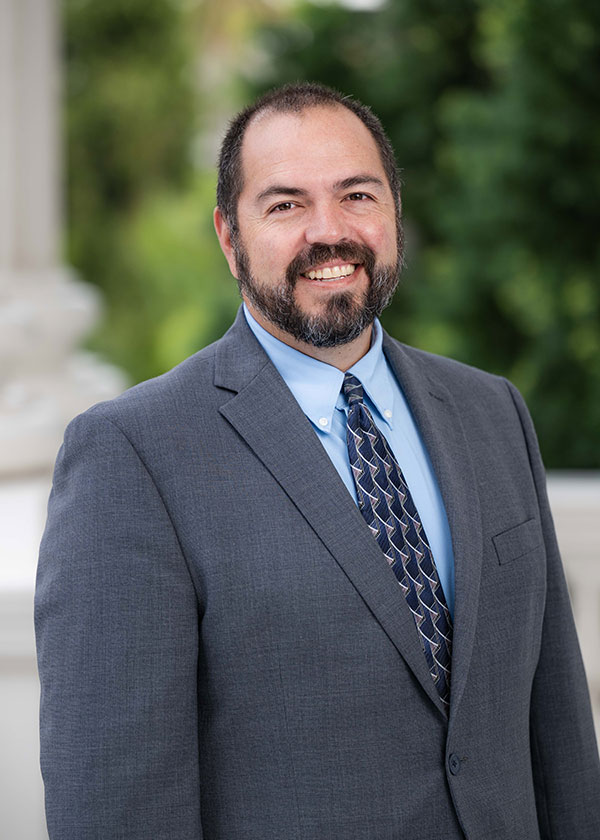
Asm. Robert Garcia
Sponsored bills
Existing law requires, beginning on or before July 1, 2028, the Department of Transportation, in consultation with the State Department of Public Health and in collaboration with impacted local governments, to incorporate suicide deterrent considerations in the updates of applicable guidance documents, as provided. This bill would require the Department of Transportation to additionally develop and maintain, beginning on or before July 1, 2029, a set of preapproved suicide prevention safety-barrier designs that local governments may use to install suicide prevention barriers, as provided.
Existing law establishes the Department of Housing and Community Development and authorizes the department to study the operation and enforcement of specified laws related to housing finance, taxes, redevelopment programs, and public housing projects, as related to housing and community development. This bill would require the department, upon appropriation by the Legislature, to conduct a study to assess the need and desire among seniors 60 years of age and older to downsize their homes, as specified. The bill would require the department to submit a report on the study to the Legislature within one year of an appropriation made for this purpose. The bill would repeal its provisions on January 1, 2032.
Maddy summaryThis bill designates the week of May 17 to May 24, 2026, as National Public Works Week throughout California to honor the contributions of public works professionals. It directly affects engineers, managers, and employees in government and the private sector who maintain essential infrastructure like transportation systems, water supplies, and public buildings. The resolution requests that the Governor issue a proclamation encouraging the public to observe the week with educational programs and activities that highlight the importance of these workers.
The Personal Income Tax Law allows various credits against the tax imposed by that law. Existing law requires any bill authorizing a new tax credit to contain, among other things, specific goals, purposes, and objectives that the tax credit will achieve, detailed performance indicators, and data collection requirements. This bill would allow credits against the tax imposed by the Personal Income Tax Law for taxable years beginning on or after January 1, 2027, and before January 1, 2032, to a qualified taxpayer for qualified costs relating to qualified home hardening, as defined, and for qualified costs relating to qualified vegetation management, as defined, in specified amounts, not to exceed an aggregate amount of $50,000,000 per taxable year. This bill would require a qualified taxpayer to reserve a credit for qualified costs relating to qualified home hardening or qualified vegetation management to be eligible for the above-described credits and provide all necessary information for this purpose, as specified. This bill also would include additional information required for any bill authorizing a new income tax credit and would require the Legislative Analyst's Office to prepare a written report regarding the credits, as provided. This bill would take effect immediately as a tax levy.
Existing law establishes the Division of Labor Standards Enforcement within the Department of Industrial Relations. Existing law authorizes the division, which is headed by the Labor Commissioner, to enforce the Labor Code and all labor laws of the state, the enforcement of which is not specifically vested in any other officer, board, or commission. This bill would prohibit an employer from using a worker's personal information, as defined, to train an artificial intelligence system to replicate, automate, or replace a worker's job, and would prohibit an employer from selling, disclosing, or otherwise providing access to a worker's personal information to a third party for the purpose of training an artificial intelligence system to replicate, automate, or replace a worker's job. The bill would prohibit a vendor providing services to an employer under a contract from providing access to the personal information of an employer's worker to a third party or using the personal information of an employer's worker to train artificial intelligence, as specified. The bill would require a contract between an employer and vendor to include a requirement that the vendor implement and maintain reasonable security procedures to protect the worker's personal information from, among other things, unauthorized or illegal access. The bill would define terms for these provisions, including "employer" and "personal information." The bill would require the Labor Commissioner and authorize a public prosecutor to enforce these provisions. The bill would authorize a worker, or their exclusive representative, who suffered a violation of these provisions to bring a civil action for damages, injunctive relief, punitive damages, and attorney's fees and costs. The bill would establish a statutory penalty for a violation of these provisions of up to $500 for each violation. The bill would include findings that changes proposed by this bill address a matter of statewide concern rather than a municipal affair and, therefore, apply to all cities, including charter cities.
Existing law requires the Department of Veterans Affairs, in voluntary cooperation with specified local entities, to design, develop, and construct a state-owned and state-operated Northern and Southern California Veterans Cemetery and California Central Coast Veterans Cemetery. Existing law requires the department to oversee and coordinate the design, development, and construction of these cemeteries. Existing law requires the department to adopt regulations to specify the eligibility requirements for interment in one of these cemeteries. This bill would require the department to establish and administer a state and local matching funds program for veterans cemetery maintenance funds by requiring that for $1 contributed locally by individuals, veterans' service organizations, local governments, or private donors, the state would contribute $1 in matching funds, up to $250,000 per veterans cemetery per fiscal year. The bill would require a veterans cemetery to apply to the department to be part of the program, and would require the department to, among other things, review the applications annually. The bill would establish the Veterans Cemetery Maintenance-Endowment Account in the General Fund that would be administered by the department. The bill would require moneys in the account to be allocated, upon appropriation by the Legislature, to the department for distribution to a veterans cemetery. The bill would require the department to provide to the Legislature a report summarizing all participating veterans cemeteries, total state matches, and fund performance.
Existing law establishes various food assistance programs, including, among others, the federal Supplemental Nutrition Assistance Program (SNAP) , known in California as CalFresh, under which supplemental nutrition assistance benefits allocated to the state by the federal government are distributed to eligible individuals by each county. Existing law declares that it is the established policy of the state that every human being has the right to access sufficient affordable and healthy food. Existing law defines "food insecurity" to mean the occasional or constant lack of access to the food one needs to live a healthy life and the uncertainty of being able to acquire enough food to meet the needs of an individual or household due to insufficient money or other resources. This bill would require the State Department of Social Services to annually conduct a statewide survey to assess food insecurity in the state, modeled after a specified federal survey. The bill would require the first statewide food insecurity survey to be completed on or before July 1, 2028. The bill would require the department, on or before October 1, 2028, and annually thereafter, to make the results of the statewide food insecurity survey publicly available on its internet website. The bill would authorize the department to collaborate or contract with a public research institution or other external vendor to implement these provisions. The bill would prohibit the department from conducting a statewide food insecurity survey during a year in which a federal food security survey is conducted, as specified.
Maddy summaryThis bill designates April 2026 as Second Chance Month in California to raise awareness about opportunities for individuals reentering society after incarceration. The measure is a ceremonial proclamation that does not alter laws, allocate funding, or change government operations. Its primary purpose is to encourage public recognition of the challenges faced by formerly incarcerated people and to highlight available support resources during that specific month.
This measure would proclaim the week of April 20, 2026, to April 24, 2026, inclusive, as California Home Visiting Week, and would encourage all Californians to recognize and celebrate the contributions of home visiting programs and professionals and the families they serve.