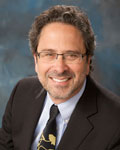
Photo of Richard Bloom
D California Assembly · District 50

Asm. Richard Bloom

Compare
Total votes
25,648
all sessions
Attendance
97%
563 missed
Near the chamber average
With party
99%
of cast votes
Near the chamber average
Bipartisan score
0%
crosses aisle rarely
Near the chamber average
Sponsored
1,825
bills & resolutions
Near the chamber average
Committees
0
assignments
1,825 bills and resolutions

Sponsored bills

Total
1,825
Primary
241
Co-sponsor
1,584
This page
1,825
matching current filters
Co-sponsor ACR 140
Passed · California Assembly · Co-sponsor
Freight transportation: supply chain.

This measure would declare and recognize that the state is currently suffering a supply chain crisis. The measure would urge the state's public agencies, departments, and local governments to provide all due and proper assistance to carriers, cargo owners, public seaports, terminals, workers, and facilities to facilitate the essential service of delivering goods to Californians.

Passed Aug 16, 2022 1 co-sponsor
Co-sponsor ACR 206
Passed · California Assembly · Co-sponsor
Relative to India's Independence Day.

This measure would recognize August 15, 2022, as India's Independence Day and urge all Californians to join in celebrating India's independence.

Passed Aug 16, 2022 1 co-sponsor
Primary AB 2313
Passed · California Assembly · Lead sponsor
Water: judges and adjudications.

(1) Existing law authorizes the Judicial Council to conduct institutes and seminars for the purpose of orienting judges to new judicial assignments, keeping them informed concerning new developments in the law, and promoting uniformity in judicial procedure, as specified. This bill would authorize the Judicial Council, on or before January 1, 2025, to establish a program that provides training and education to judges in specified actions relating to water, as defined. The bill would provide that the program may be funded by an appropriation from the General Fund in the annual Budget Act or another statute, or by using existing funds for judicial training. The bill would require a court to prioritize assigning a judge with training or education under the program for actions relating to water, if certain conditions are met. (2) Under existing law, when it appears to the court at any time before or during the trial of the action that expert evidence is or may be required by the court or by any party to the action, the court, on its own motion or on motion of any party, may appoint one or more experts to investigate, to render a report, and to testify as an expert at the trial of the action, as specified. For comprehensive groundwater adjudications, existing law authorizes the court to appoint one or more special masters with specified duties, including, among others, investigating technical and legal issues and performing other tasks the court may deem appropriate. Existing law requires the court to equitably allocate payment of the special master's compensation among the parties and authorizes the court to waive a party's obligations to pay the special master's compensation upon a showing of good cause. This bill would require the Judicial Council to identify experts in water science or management, or research attorneys, who may be available to any judge adjudicating an action relating to water, as defined, as an expert pursuant to the procedure specified above, as a research attorney, or to consult on the contents of a document submitted by a party. The bill would authorize the Judicial Council to pay or reimburse courts for the costs of employing or contracting with those experts or research attorneys in an action relating to water with funds appropriated for that purpose. The bill would authorize a judge to appoint a qualified special master to assist the judge with an action relating to water with duties similar to those for special masters in comprehensive groundwater adjudications. The bill would require the reasonable and appropriate compensation for experts and research attorneys identified pursuant to the bill, special masters appointed pursuant to the bill, and for experts appointed to an action relating to water pursuant to the procedure specified above, to be funded by an appropriation from the General Fund in the annual Budget Act or another statute. For a special master in a comprehensive groundwater adjudication, the bill would authorize their compensation to be provided pursuant to the procedures specified above under existing law or by that General Fund appropriation.

Passed Aug 11, 2022 0 co-sponsors
Co-sponsor AB 2703
Passed · California Assembly · Co-sponsor
Electric vehicle charging stations: reliability standards: low-income and disadvantaged community financial assistance.

Existing law requires the State Energy Resources Conservation and Development Commission (Energy Commission) , working with the State Air Resources Board and the Public Utilities Commission, to prepare and update, as provided, a statewide assessment of the electric vehicle charging infrastructure needed to support the levels of electric vehicle adoption required for the state to meet its goals of putting at least 5,000,000 zero-emission vehicles on California roads by 2030, and of reducing emissions of greenhouse gases to 40% below 1990 levels by 2030. Existing law establishes the Clean Transportation Program, administered by the Energy Commission, to provide funding to certain entities to develop and deploy innovative technologies that transform California's fuel and vehicle types to help attain the state's climate change policies. This bill would require a person who receives state funding to deploy a publicly available electric vehicle charging station to agree, as a condition of receiving the funding, to operate the station in compliance with reliability and reporting standards that would be developed by the Energy Commission, as specified. The bill would require the Energy Commission and the Public Utilities Commission to develop excluded time criteria from which the recipient of the state funding is exempt from reliability standards compliance. The bill would require the Energy Commission to publish data on compliance with the reliability standards as part of the above-described assessment and to protect the confidential information of an entity subject to the reliability standards by anonymizing and aggregating the compliance data in the assessment. The bill would also require the state board, upon appropriation by the Legislature, to develop a program, in consultation with the California Integrated Travel Project, to provide financial assistance to residents of low-income or disadvantaged communities, or both, to use electric vehicle charging stations, as specified. Existing constitutional provisions require that a statute that limits the right of access to the meetings of public bodies or the writings of public officials and agencies be adopted with findings demonstrating the interest protected by the limitation and the need for protecting that interest. This bill would make legislative findings to that effect.

Passed Aug 11, 2022 1 co-sponsor
Co-sponsor AB 2026
Passed · California Assembly · Co-sponsor
Recycling: plastic packaging.

The California Integrated Waste Management Act of 1989, administered by the Department of Resources Recycling and Recovery, generally regulates the disposal, management, and recycling of solid waste, including, among other solid waste, plastic packaging containers. This bill would require an e-commerce shipper, as defined, that ships purchased products in or into the state to reduce from its 2023 calendar year levels the total weight and number of units of single-use plastic shipping envelopes, cushioning, and void fill, and expanded and extruded polystyrene, it uses to ship or transport the products, by no less than unspecified percentages on or before January 1, 2030. The bill would establish exemptions from these prohibitions. The bill would make a violation of the foregoing requirements subject to civil penalties and would require penalties collected by the Attorney General to be deposited into the Plastic Packaging Reduction Penalty Account, which the bill would create, for expenditure by the Attorney General, upon appropriation by the Legislature, to enforce those requirements.

Passed Aug 11, 2022 1 co-sponsor
Co-sponsor AB 2532
Passed · California Assembly · Co-sponsor
Scoping plan: state agency, board, and department compliance and implementation: reports.

The California Global Warming Solutions Act of 2006 designates the State Air Resources Board as the state agency charged with monitoring and regulating sources of emissions of greenhouse gases. The state board is required to approve a statewide greenhouse gas emissions limit equivalent to the statewide greenhouse gas emissions level in 1990 to be achieved by 2020 and to ensure that statewide greenhouse gas emissions are reduced to at least 40% below the 1990 level by 2030. The act requires the state board to prepare and approve a scoping plan for achieving the maximum technologically feasible and cost-effective reductions in greenhouse gas emissions and to update the scoping plan at least once every 5 years. The act requires the scoping plan to identify and make recommendations on direct emissions reduction measures, alternative compliance mechanisms, market-based compliance mechanisms, and potential monetary and nonmonetary incentives for sources and categories of sources that the state board finds are necessary or desirable to facilitate the achievement of the maximum feasible and cost-effective reductions of greenhouse gas emissions, as provided. This bill would require, on or before March 1, 2023, and on or before March 1 of each year thereafter, each state agency, board, or department to post on its internet website a report regarding its compliance with and efforts to implement any goal or recommendation related to that state agency, board, or department, as defined, that is identified by the state board in the scoping plan, including any scoping plan updates. The bill would require a state agency, board, or department to include specified information in its report, including, but not limited to, identification of all scoping plan goals or recommendations that the state agency, board, or department is charged with or responsible, in whole or in part, for implementing, a description of the state agency's, board's, or department's, efforts to implement each scoping plan goal or recommendation, and whether the state agency, board, or department has fully implemented each scoping plan goal or recommendation. The bill would require, for each scoping plan goal or recommendation that is not fully implemented, a state agency, board, or department to describe in detail why the scoping plan goal or recommendation has not been fully implemented and the steps necessary for the state agency, board, or department to fully implement the goal or recommendation.


Passed Aug 11, 2022 1 co-sponsor
Co-sponsor ACR 147
Passed · California Assembly · Co-sponsor
Relative to the Aerospace Valley.

This measure would recognize that the Antelope Valley will henceforth be affectionately and acceptably referred to by the State of California as the Aerospace Valley.

Passed Aug 10, 2022 1 co-sponsor
Showing 101 to 110 of 1,825 bills
Previous 1 … 10 11 12 … 183 Next