

Existing law, the California Public Records Act, requires state and local agencies to make their records available for inspection by the public, subject to specified criteria and with specified exceptions. Existing law exempts from disclosure any investigatory or security file compiled by any other state or local police agency, or any investigatory or security files compiled by any other state or local agency for correctional, law enforcement, or licensing purposes. Under existing law, criminal offenders sentenced to imprisonment in the state prison are sentenced for either a determinate term or an indeterminate life sentence, and a person sentenced to an indeterminate life sentence is held until release by the Board of Parole Hearings. Under existing law, a person sentenced to a determinate sentence is released after serving the term of their sentence, minus any credits earned, and is required to serve a period of time after release under parole supervision. Existing constitutional provisions, enacted by Proposition 57 at the November 8, 2016, statewide general election, make an inmate sentenced to state prison for a conviction of a nonviolent felony offense eligible for early parole consideration after completing the full term for their primary offense, as defined. This bill would provide that Department of Corrections and Rehabilitation records pertaining to an inmate's release date and their early release credits are public records and are subject to disclosure under the California Public Records Act, with specified exceptions. The bill would state that the provisions relative to the California Public Records Act are declaratory of existing law.
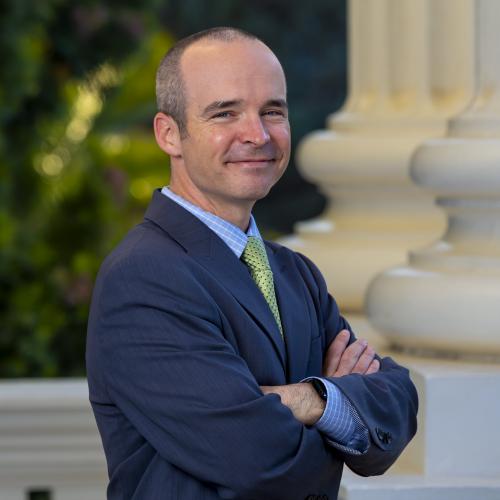
Asm. Joe Patterson
Sponsored bills
The California Global Warming Solutions Act of 2006 designates the State Air Resources Board as the state agency charged with monitoring and regulating sources of emissions of greenhouse gases. The state board is required to adopt rules and regulations to achieve the maximum technologically feasible and cost-effective greenhouse gas emissions reductions to ensure that the statewide greenhouse gas emissions are reduced to at least 40% below the statewide greenhouse gas emissions limit, as defined, no later than December 31, 2030. The act requires the state board to prepare and approve a scoping plan for achieving the maximum technologically feasible and cost-effective reductions in greenhouse gas emissions and to update the scoping plan at least once every 5 years. This bill would require the state board to include greenhouse gas emissions from wildlands and forest fires in the scoping plan.
This measure would declare October 2023 as Women's Small Business Month and encourage all citizens to recognize the economic importance of women's small business in California.
This measure would condemn and decry the Hamas terrorist organization in the harshest terms for its premeditated, coordinated, and barbaric attacks on Israel, acts of sexual violence, hostage taking, and theft of relief supplies intended for the civilian population of Gaza, and demand the release of all hostages held by Palestinian terrorists. The measure would condemn and denounce in the strongest possible terms all instances of anti-Semitism occurring in California, the United States, and globally.
The California Global Warming Solutions Act of 2006 establishes the State Air Resources Board as the state agency responsible for monitoring and regulating sources emitting greenhouse gases. The act requires the state board to approve a statewide greenhouse gas emissions limit equivalent to the statewide greenhouse gas emissions level in 1990 and to ensure the statewide greenhouse gas emissions are reduced to at least 40% below the statewide greenhouse gas emissions limit by 2030. The act authorizes the state board to include the use of market-based compliance mechanisms in its regulation of greenhouse gas emissions. This bill would specify that transportation fuels are not subject to regulations implementing a market-based compliance mechanism for greenhouse gas emissions. Existing law authorizes the state board to adopt and implement motor vehicle fuel specifications for the control of air contaminants and sources of air pollution. Existing law authorizes the state board to grant variances from the gasoline specifications, as provided. This bill would require the state board to grant variances from gasoline specifications, including for gasoline imported from outside the state, whenever a refinery outage or other supply interruption would result in substantial short-term price increases, as specified. Existing law requires the state board to establish, by regulation, maximum standards for volatility of gasoline, as provided. Pursuant to these authorities, the state board has adopted the California Reformulated Gasoline regulations, which include regulations establishing the maximum Reid vapor pressure of gasoline for various regions of the state at specified time periods. This bill would require the state board to waive the Reid vapor pressure requirement on summer-blend gasoline under the California Reformulated Gasoline regulations and to allow for the early transition to winter-blend gasoline if the state board determines that the gasoline market is experiencing a sudden and unusual increase in gasoline prices.
Existing law makes it a crime to possess for sale or purchase for purpose of sale, transport, import, sell, furnish, administer, give away, manufacture, compound, convert, produce, derive, process, or prepare various controlled substances, including, among others, fentanyl, peyote, and various other opiates and narcotics. This bill, Alexandra's Law, would require the court to advise a person who is convicted of, or who pleads guilty or no contest to, the above crimes, as specified, of the danger of selling or administering illicit drugs and counterfeit pills and that, if a person dies as a result of that action, the defendant can be charged with homicide. The bill would require the court to read the advisory statement in a case in which the defendant exchanged a controlled substance containing fentanyl or its analogs for anything else of value, as specified. The bill would require the advisory statement to be included in a plea form, if used, and specified on the record. The bill would require that the fact the advisory was given be recorded in the abstract of conviction and would prohibit the advisement from being used as evidence in the prosecution of a minor in juvenile court.
Existing law prohibits the possession, sale, and transport, as specified, of certain controlled substances. Existing law requires a person granted probation for controlled substance offenses to, as a condition of probation, secure education or treatment from a local community agency designated by the court, if the service is available and the person is likely to benefit from the service. This bill would require the court to order a person granted probation pursuant to those provisions for a violation of specified laws involving any amount of fentanyl, carfentanil, benzimidazole opiate, or any analog thereof, to successfully complete a fentanyl and synthetic opiate education program, if one is available. The bill would prohibit a defendant from being charged a fee for enrollment in that education program. The bill would require a court ordering a defendant to complete those courses to only order the defendant to participate in programs that include, among other things, information regarding the nature and addictive elements of fentanyl and other synthetic opiates and their danger to a person's life and health. The bill would require program providers to report an unexcused absence by a defendant from a fentanyl and synthetic opiate education program to the court and the probation department within 2 business days. The bill would require the court to only refer defendants to programs that are available at no cost to the participants. This bill would incorporate additional changes to Section 11373 of the Health and Safety Code proposed by SB 46 to be operative only if this bill and SB 46 are enacted and this bill is enacted last.
Existing law, the California Uniform Controlled Substances Act, classifies controlled substances into 5 schedules and places the greatest restrictions and penalties on the use of those substances placed in Schedule I. The act classifies the drug fentanyl in Schedule II. Existing law prohibits a person from possessing for sale or purchasing for purposes of sale, specified controlled substances, including fentanyl, and provides for imprisonment in a county jail for 2, 3, or 4 years for a violation of this provision. This bill would, subject to an appropriation, establish the Fentanyl Misuse and Overdose Prevention Task Force to undertake various duties relating to fentanyl misuse, including, among others, collecting and organizing data on the nature and extent of fentanyl misuse in California and evaluating approaches to increase public awareness of fentanyl misuse. The bill would require the task force to be cochaired by the Attorney General and the State Public Health Officer, or their designees, and would specify the membership of the task force. The bill would require the first meeting of the task force to take place no later than June 1, 2024, and would require the task force to meet at least once every 2 months. The bill would require the task force to submit an interim report to the Governor and the Legislature by July 1, 2025, and would require the task force to report its findings and recommendations to the Governor and the Legislature by December 1, 2025. The bill would repeal these provisions on January 1, 2026. This bill would declare that it is to take effect immediately as an urgency statute.
The Planning and Zoning Law, among other things, provides for the creation of accessory dwelling units by local ordinance, or, if a local agency has not adopted an ordinance, by ministerial approval, in accordance with specified standards and conditions. Existing law requires a local ordinance to require an accessory dwelling unit to be either attached to, or located within, the proposed or existing primary dwelling, as specified, or detached from the proposed or existing primary dwelling and located on the same lot as the proposed or existing primary dwelling. Existing law authorizes a local agency to require an accessory dwelling unit to be used for rentals of terms longer than 30 days. This bill, instead, would authorize a local agency to require terms that are 30 days or longer. Existing law, beginning January 1, 2025, authorizes a local agency to impose an owner-occupancy requirement on an accessory dwelling unit, provided that the accessory dwelling unit was not permitted between January 1, 2020, and January 1, 2025. This bill would instead prohibit a local agency from imposing an owner-occupancy requirement on any accessory dwelling unit. This bill would incorporate additional changes to Section 65852.2 of the Government Code proposed by AB 1033 to be operative only if this bill and AB 1033 are enacted and this bill is enacted last.
Existing law defines an "automobile dismantler" as a person who is engaged in the business of buying, selling, or dealing in vehicles that are required to be registered under the Vehicle Code, for the purpose of dismantling the vehicles, who buys or sells the integral parts and component materials of those vehicles, or deals in used motor vehicle parts, as specified. The definition of "automobile dismantler" also includes a person who keeps or maintains on property owned by the person, or under their possession or control, 2 or more unregistered motor vehicles no longer intended for, or in condition for, legal use on the highways, as specified. Existing law makes it a crime for a person to act as an automobile dismantler without having an established place of business, meeting specified requirements, and having a current, valid license or temporary permit issued by the Department of Motor Vehicles. This bill would revise the definition of an automobile dismantler to include a person who keeps or maintains on property owned by the person, or under their possession or control, for any of the above-described purposes 9 or more used catalytic converters that have been cut from a motor vehicle using a sharp implement. The bill would make a first violation of acting as an automobile dismantler due to possessing 9 or more catalytic converters as described above punishable as an infraction, and subsequent violations punishable as a misdemeanor, as specified. By expanding the definition of an automobile dismantler, the bill would expand the scope of an existing crime, thereby imposing a state-mandated local program. The bill would exclude from the revised definition of an automobile dismantler a junk dealer, recycler, commercial enterprise, or core recycler, as specified, that has 9 or more of these used catalytic converters. Existing law excludes from the definition of an "automobile dismantler" the owner or operator of any premises on which 2 or more unregistered and inoperable vehicles are held or stored, if the vehicles are used for restoration or replacement parts or otherwise, in conjunction with specified businesses, including the operation and maintenance of any fleet of motor vehicles used for the transportation of persons or property. This bill would also exclude from the definition of an "automobile dismantler" a person who possesses 9 or more catalytic converters that are used in the same manner as the unregistered and inoperable vehicles. The California Constitution requires the state to reimburse local agencies and school districts for certain costs mandated by the state. Statutory provisions establish procedures for making that reimbursement. This bill would provide that no reimbursement is required by this act for a specified reason.