

Existing law establishes the California Interagency Council on Homelessness to identify mainstream resources, benefits, and services that can be accessed to prevent and end homelessness in California by creating partnerships between federal, state, local, and nonprofit entities. Existing law requires a state agency or department that administers one or more state homelessness programs, upon request of the council, to participate in council activities, as specified, and to provide to the council any relevant information regarding those state homelessness programs. This bill would require, commencing September 1, 2025, a state agency or department that administers one or more state homelessness programs to report annually to the council cost and outcome data for each program the agency or department administers, and would require the council, in coordination with each agency or department required to report to the council, as specified, to develop data collection and reporting procedures for this purpose. The bill would require the council to compile the data reported by agencies and departments and, commencing April 1, 2026, annually make that data available to the public.
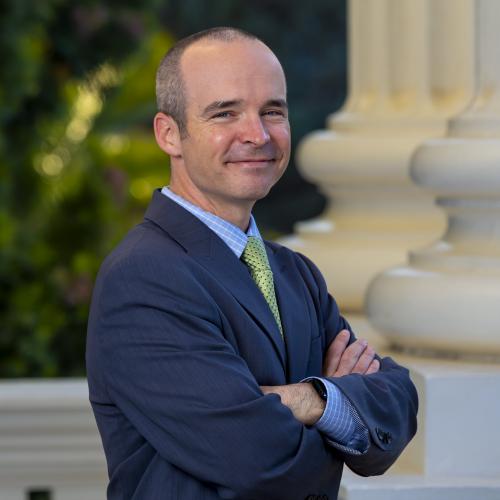
Asm. Joe Patterson
Sponsored bills
(1) Existing law requires a city or county to deem an applicant for a housing development project to have submitted a preliminary application upon providing specified information about the proposed project to the city or county from which approval for the project is being sought. Existing law requires a housing development project be subject only to the ordinances, policies, and standards adopted and in effect when the preliminary application was submitted. This bill would authorize a development proponent that submits a preliminary application for a housing development project to request a preliminary fee and exaction estimate, as defined, and would require a city, county, or city and county to provide the estimate within 30 business days of the submission of the preliminary application. For development fees imposed by an agency other than a city, county, or city and county, the bill would require the development proponent to request the fee schedule from the agency that imposes the fee and would require the agency that imposes the fee to provide the fee schedule to the development proponent without delay. The bill would specify that the preliminary fee and exaction estimate is for informational purposes only and does not affect the scope, amount, or time of payment of any fee or exaction, as specified. (2) Existing law requires a public agency that receives an application for a development project to, within 30 calendar days, determine in writing whether the application is complete and immediately transmit its determination to the applicant for the development project, as specified. This bill would, upon final approval of a housing development project, require a city, county, or city and county to provide the development proponent with an itemized list and a good faith estimate of the total sum amount of all fees and exactions that will apply to the project within 30 business days of the above-described determination of completeness transmitted to the applicant. For development fees imposed by an agency other than a city, county, or city and county, the bill would require the development proponent to request the good faith estimate of the total sum amount of all fees and exactions imposed by the agency that will apply to the project, and would require the agency to provide the development proponent with this information within 30 business days. The bill would state that the itemized list and good faith estimate is for informational purposes, is not legally binding on the agency, and shall not be construed to affect the scope, amount, or time of payment of any fees or exactions applicable to the project pursuant to other law. (3) Existing law requires a city, county, or special district that has an internet website to make specified information available on its internet website, as applicable, including a current schedule of fees, exactions, affordability requirements it has imposed that are applicable to a proposed housing development project, and an archive of impact fee nexus studies, cost of service studies, or equivalent, conducted by that city, county, or special district on or after January 1, 2018. Existing law requires a city or county to request from a development proponent, upon issuance of a certificate of occupancy or the final inspection, whichever occurs last, the total amount of fees and exactions associated with the project for which the certificate was issued. This bill would clarify that these provisions may not be construed to impose any obligation on any entity, including a development proponent, other than a city, county, or special district, as specified. The bill would also require the request from the city or county for the total amount of fees and exactions associated with the project to clearly state that the request does not create any obligation to respond and that the development proponent will not be subjected to any consequences for not responding or for the content of a response. (4) The bill would include findings that changes proposed by this bill address a matter of statewide concern rather than a municipal affair and, therefore, apply to all cities, including charter cities. (5) By imposing new duties on local governments when receiving and reviewing certain development project applications, the bill would impose a state-mandated local program. The California Constitution requires the state to reimburse local agencies and school districts for certain costs mandated by the state. Statutory provisions establish procedures for making that reimbursement. This bill would provide that no reimbursement is required by this act for a specified reason.
Existing law, the Alcoholic Beverage Control Act, administered by the Department of Alcoholic Beverage Control, regulates the sale and distribution of alcoholic beverages and the granting of licenses for the manufacture, distribution, and sale of alcoholic beverages within the state. Existing law limits the amount of on-sale general licenses that may be issued by the department based on the population of the county in which the licensed premises are located. Existing law provides various exceptions to the limitation described above, including authorizing the issuance of up to 10 additional new original on-sale general licenses for bona fide public eating places in the County of Placer. Existing law prohibits the department from issuing more than 4 of these licenses per year. Existing law requires the department to follow specified procedures concerning the issuance of these licenses, and authorizes the department to designate these licenses as on-sale general for special use. Existing law specifies that a person holding a valid on-sale general license for seasonal business is not prohibited from applying for licenses to be issued pursuant to this authorization. Existing law prohibits these licenses from being, among other things, transferred from one county to another. This bill would authorize the department to issue, except as specified, up to a total of 10 additional new original on-sale general licenses for bona fide public eating places, up to 4 in the first year the bill takes effect, in the County of El Dorado and in the County of Placer, to premises where the operation of a bona fide public eating place is located in a retail center, as defined. The bill would require the department to issue at least 3 of these licenses for a premises located in a retail center that contains at least 1,000,000 square feet of retail shopping space, as specified. If one of those licenses is canceled or revoked, the bill would authorize the department to issue an additional license. The bill would require the department to follow specified procedures concerning the issuance of these licenses, and would authorize the department to designate these licenses as on-sale general for special use. The bill would also specify that a person holding a valid on-sale general license for seasonal business is not prohibited from applying for licenses to be issued pursuant to this authorization. The bill would prohibit licenses issued under its provisions from being, among other things, transferred from one county to another.
Existing law establishes the Office of Vital Records within the State Department of Public Health. Existing law prescribes the duties of the State Registrar of Vital Statistics (State Registrar) and local registrars of births and deaths with respect to the registration of certificates of live birth, fetal death, or death, and marriage licenses. Existing law prescribes the information to be listed on a certificate of live birth. Existing law requires the State Registrar, upon request and payment of a fee, as specified, to provide an applicant a decorative heirloom certificate of any birth registered to that official, containing only identification information and the seal of the State of California and a facsimile of the State Registrar's signature. This bill would require the State Registrar to, upon request and payment of a fee, provide an applicant a decorative Asian Zodiac heirloom certificate, as specified. The bill would require the decorative Asian Zodiac heirloom certificate to be of a distinctive design as determined by the department to include Asian Zodiac artwork by local artists, the seal of the State of California, and a facsimile of the State Registrar's signature. The bill would require the certificate to contain only identification information, as determined by the State Registrar. The bill would require the department to set the fee for the decorative Asian Zodiac heirloom certificate to capture the reasonable costs of developing, preparing, and providing the decorative Asian Zodiac heirloom certificate. The bill would require the moneys collected by the State Registrar to be deposited with the Treasurer for credit to the Health Statistics Special Fund. The bill would specify that, upon appropriation, the moneys in the fund may be used by the department for the administrative costs of developing, preparing, and providing the decorative Asian Zodiac heirloom certificate, including payment of local artists.
Existing law provides for the licensure and regulation by the State Department of Public Health of health facilities, as defined. Existing law requires a health facility to allow a patient's domestic partner, the children of the patient's domestic partner, and the domestic partner of the patient's parent or child to visit unless no visitors are allowed, the facility reasonably determines that the presence of a particular visitor would endanger the health or safety of a patient, member of the health facility staff, or other visitor to the health facility, or would significantly disrupt the operations of a facility, or the patient has indicated to the health facility staff that the patient does not want this person to visit. A violation of this provision is a misdemeanor. This bill, Dianne's Law, would require a health facility to allow specified persons to visit, including the patient's children and grandparents. The bill would require the health facility to develop alternate visitation protocols, if circumstances require the health facility to restrict visitor access to the facility due to health or safety concerns, that allow visitation to the greatest extent possible while maintaining patient, visitor, and staff health and safety. Notwithstanding the requirement mentioned above, the bill would prohibit a health facility from prohibiting in-person visitation in end-of-life situations unless the patient has indicated to the health facility staff that the patient does not want this person to visit, as specified, and would authorize a health facility to require visitors to adhere to personal protective equipment and testing protocols not greater than those required of facility staff for the duration of their visit. The bill would also require the facility to provide personal protective equipment and testing resources to each visitor for a patient in an end-of-life situation, to the extent that those resources have been made readily available to the facility by state or local entities for that purpose. By expanding an existing crime, the bill would impose a state-mandated local program. The California Constitution requires the state to reimburse local agencies and school districts for certain costs mandated by the state. Statutory provisions establish procedures for making that reimbursement. This bill would provide that no reimbursement is required by this act for a specified reason.
Existing law establishes the Medi-Cal program, which is administered by the State Department of Health Care Services and under which qualified low-income individuals receive health care services, under fee-for-service or managed care delivery systems. The Medi-Cal program is, in part, governed and funded by federal Medicaid program provisions. Under existing federal law, in accordance with third-party liability rules, Medicaid is generally the payer of last resort if a beneficiary has another source of health care coverage in addition to Medicaid coverage. Under this bill, in the case of a Medi-Cal managed care plan enrollee who also has other health care coverage and for whom the Medi-Cal program is a payer of last resort, the department would be required to ensure that a provider that is not contracted with the plan and that is billing the plan for Medi-Cal allowable costs not paid by the other health care coverage does not face administrative requirements significantly in excess of the administrative requirements for billing those same costs to the Medi-Cal fee-for-service delivery system. Under the bill, in the case of an enrollee who meets those coverage criteria, except as specified, a Medi-Cal fee-for-service provider would not be required to contract as an in-network provider with the Medi-Cal managed care plan in order to bill the plan for Medi-Cal allowable costs for covered health care services. The bill would authorize a Medi-Cal managed care plan to require a letter of agreement, or a similar agreement, under either of the following circumstances: (1) if a covered service requires prior authorization, or if a service is not covered by the other health care coverage but is a covered service under the plan, as specified, or (2) if an enrollee requires a covered service and meets the requirements for continuity of care or the completion of covered services through a Medi-Cal managed care plan pursuant to specified provisions under existing law regarding services by a terminated or nonparticipating provider. The bill would require the department to solicit input from specified stakeholders regarding the coordination of payment for services between Medi-Cal enrollees' other commercial health care coverage and their Medi-Cal managed care plans, with a specific emphasis on Medi-Cal recipients receiving regional center services. The bill would require the department to include an item on the agenda of the first meeting of the Medi-Cal Managed Care Advisory Committee of 2025 to discuss this topic and, within 6 months of the advisory committee meeting, take the actions that it deems necessary to provide clarification regarding the conditions for billing plans to providers that render services to enrollees who also have other health care coverage. The bill would specify the intent of the Legislature that the department offer educational resources to an enrollee who needs assistance with understanding continuity of care and coordinating Medi-Cal and their other health care coverage when requested by the enrollee. The bill would require the department, annually from 2025 through 2028, to update the legislative health committees on the effectiveness of implementing these provisions. The bill would authorize the department to implement these provisions through plan letters or similar instructions. The bill would condition implementation of these provisions on receipt of any necessary federal approvals and the availability of federal financial participation.
Existing law, the Planning and Zoning law, generally requires that an action or proceeding challenging a public agency's decision on a variance, conditional use permit, or any other permit, among other decisions, be commenced, and service made on the legislative body of the agency, within 90 days after the legislative body's decision. This bill, for purposes of determining the period of time before a variance, conditional use permit, or any other development permit or project approval issued by a city, county, or state agency expires, would exclude the period of time during which an action or proceeding involving the approval or conditional approval of the permit or project approval is or was pending, except as specified. By extending the expiration date of local development permits and project approvals, this bill would impose a state-mandated local program. The California Constitution requires the state to reimburse local agencies and school districts for certain costs mandated by the state. Statutory provisions establish procedures for making that reimbursement. This bill would provide that no reimbursement is required by this act for a specified reason.
Existing law authorizes the State Energy Resources Conservation and Development Commission to prescribe, by regulation, lighting, insulation, climate control system, and other building design and construction standards that increase efficiency in the use of energy and water for new residential and new nonresidential buildings, and energy and water conservation design standards for new residential and new nonresidential buildings. Pursuant to this authority, the commission has adopted regulations requiring solar-ready buildings and for the installation of photovoltaic systems meeting certain requirements for low-rise residential buildings built on or after January 1, 2020. This bill would, until January 1, 2028, require residential construction intended to repair, restore, or replace a residential building damaged or destroyed as a result of a disaster in an area in which a state of emergency has been proclaimed by the Governor to comply only with the requirements regarding photovoltaic systems pursuant to those regulations, if any, that were in effect at the time the damaged or destroyed building was originally constructed and would prohibit that construction from being required to comply with any additional or conflicting photovoltaic system requirements in effect at the time of repair, restoration, or replacement. The bill would only apply to the construction of a building if certain conditions are met with respect to the building owner's income and insurance coverage, and to the location and square footage of the construction. Because a local agency would be required to determine whether any older applicable photovoltaic requirements are met, this bill would impose a state-mandated local program. The California Constitution requires the state to reimburse local agencies and school districts for certain costs mandated by the state. Statutory provisions establish procedures for making that reimbursement. This bill would provide that no reimbursement is required by this act for a specified reason.
Existing law requires a school district, county office of education, and charter school to annually inform parents or guardians, at the beginning of the first semester or quarter of the regular school term, of the dangers associated with using synthetic drugs and the possibility that dangerous synthetic drugs can be found in counterfeit pills, as provided. If a local educational agency maintains an internet website, existing law requires the local educational agency to post this information on their internet website, and to ensure that each individual school within the local educational agency that maintains an individual internet website also posts the information on that school's internet website, as provided. This bill would require a local educational agency to, as part of the above-described annual notification to parents or guardians, also include the risk of social media platforms being used as a way to market and sell synthetic drugs, such as fentanyl. By imposing additional duties on local educational agencies, the bill would impose a state-mandated local program. The California Constitution requires the state to reimburse local agencies and school districts for certain costs mandated by the state. Statutory provisions establish procedures for making that reimbursement. This bill would provide that, if the Commission on State Mandates determines that the bill contains costs mandated by the state, reimbursement for those costs shall be made pursuant to the statutory provisions noted above.
This measure would designate a specified portion of Interstate 80 in the City and County of San Francisco as the Willie Mays Highway. The measure would request the Department of Transportation to determine the cost of appropriate signs showing this special designation and, upon receiving donations from nonstate sources covering that cost, to erect those signs.