

Existing law generally regulates a social media platform, including by requiring a social media platform to clearly and conspicuously state whether it has a mechanism for reporting violent posts that is available to users and nonusers of the social media platform and to include a link to that reporting mechanism, as prescribed. This bill would require a social media platform to maintain a law enforcement contact process that, among other things, makes available a staffed hotline for law enforcement personnel for purposes of receiving, and responding to, requests for information. The bill would, except as prescribed, also require a social media platform to comply with a search warrant within 72 hours if the search warrant is provided to the social media platform by a law enforcement agency, the subject of the search warrant is information associated with an account on the social media platform, and that information is controlled by a user of the social media platform. This bill would not apply to a social media platform with fewer than 1,000,000 discrete monthly users and would make its provisions operative on July 1, 2025.
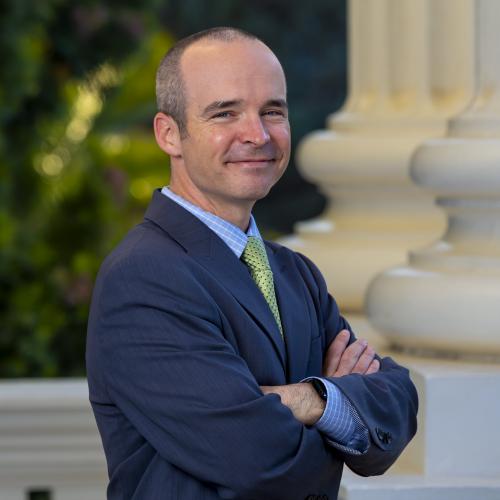
Asm. Joe Patterson
Sponsored bills
Existing law, the Knox-Keene Health Care Service Plan Act of 1975, provides for the licensure and regulation of health care service plans by the Department of Managed Health Care. Existing law provides for the regulation of health insurers by the Department of Insurance. Existing law generally requires a health care service plan contract or a health insurance policy issued, amended, or renewed on or after January 1, 2022, to provide coverage without cost sharing for a colorectal cancer screening test assigned either a grade of A or a grade of B by the United States Preventive Services Task Force and for a required colonoscopy for a positive result on a test with those grades. This bill would additionally require that coverage if the screening test is assigned either a grade of A or a grade of B, or equivalent, in accordance with the most current recommendations established by another accredited or certified guideline agency approved by the California Health and Human Services Agency.
Existing law prohibits the production, development, duplication, distribution, or possession, as specified, of matter, in specified formats, that depicts a person under 18 years of age engaging in or simulating sexual conduct, as defined. Existing law separately prohibits this conduct where it is done for consideration or where such matter is shared with a minor. Existing law provides an enhanced punishment when these offenses are committed using government property. This bill would expand the scope of certain of these provisions to include matter that is digitally altered or generated by the use of artificial intelligence, as such matter is defined. By expanding the scope of an existing crime, this bill would impose a state-mandated local program. The California Constitution requires the state to reimburse local agencies and school districts for certain costs mandated by the state. Statutory provisions establish procedures for making that reimbursement. This bill would provide that no reimbursement is required by this act for a specified reason. This bill would become operative only if SB 1381 of the 2023–24 Regular Session is enacted and takes effect on or before January 1, 2025.
Existing law authorizes a public or private elementary or secondary school to determine whether or not to make emergency naloxone hydrochloride or another opioid antagonist and trained personnel available at its school, and to designate one or more volunteers to receive related training to address an opioid overdose, as specified. Existing law prohibits a person who has completed that training and who administers, in good faith and not for compensation, naloxone hydrochloride or another opioid antagonist to a person who appears to be experiencing an opioid overdose from being subject to professional review, liable in a civil action, or subject to criminal prosecution for the person's acts or omissions in administering the naloxone hydrochloride or another opioid antagonist, unless the person's acts or omissions constituted gross negligence or willful and wanton misconduct, as provided. This bill would prohibit a school district, county office of education, or charter school from prohibiting a pupil 12 years of age or older, while on a schoolsite or participating in school activities, from carrying or administering, for the purposes of providing emergency treatment to persons who are suffering, or reasonably believed to be suffering, from an opioid overdose, a naloxone hydrochloride nasal spray or any other opioid overdose reversal medication that is federally approved for over-the-counter, nonprescription use, as provided. The bill would prohibit a pupil 12 years of age or older of those local educational agencies who administers those opioid antagonists on a schoolsite or while participating in school activities to a person who appears to be experiencing an opioid overdose, from being held liable in a civil action or being subject to criminal prosecution for their acts or omissions, unless the pupil's acts or omissions constitute gross negligence or willful and wanton misconduct, as provided. The bill would also prohibit those local educational agencies, or an employee of those local educational agencies, from being subject to professional review, liable in a civil action, or subject to criminal prosecution for a pupil's acts or omissions in administering those opioid antagonists, unless an act or omission of the local educational agency, or the employee of the local educational agency, constitutes gross negligence or willful and wanton misconduct connected to the administration of those opioid antagonists.
Existing law defines the term "public works" for the purposes of requirements regarding the payment of prevailing wages, the regulation of working hours, and the securing of workers' compensation for public works projects. Existing law requires an entity awarding a public works contract, as specified, to provide notice to the Department of Industrial Relations. Existing law requires civil penalties to be imposed on an entity that fails to provide that required notice and authorizes the Labor Commissioner to issue a citation for civil penalties to an entity that fails to provide the required notice. This bill would additionally require the awarding body to provide notice to the department, within 30 days, if there is a change in the identity of a contractor or subcontractor performing the project or, if the total amount of the contract change exceeds specified thresholds. The bill would exempt projects of awarding bodies operating labor compliance programs that are approved and monitored by the department and covered by a valid project labor agreement. By creating new notification requirements for public agencies, this bill would impose a state-mandated local program. The California Constitution requires the state to reimburse local agencies and school districts for certain costs mandated by the state. Statutory provisions establish procedures for making that reimbursement. This bill would provide that, if the Commission on State Mandates determines that the bill contains costs mandated by the state, reimbursement for those costs shall be made pursuant to the statutory provisions noted above.
Existing law requires the governing board of any school district to give diligent care to the health and physical development of pupils. Existing law authorizes a school district, county office of education, and charter school to provide emergency naloxone hydrochloride or another opioid antagonist to school nurses or trained personnel who have volunteered, and authorizes school nurses or trained personnel to use naloxone hydrochloride or another opioid antagonist to provide emergency medical aid to persons suffering, or reasonably believed to be suffering, from an opioid overdose, as provided. This bill would prohibit school districts, county offices of education, and charter schools from prohibiting pupils in middle schools, junior high schools, high schools, or adult schools, while on a schoolsite or participating in school activities, from carrying fentanyl test strips or a federally approved opioid antagonist, as provided, for the emergency treatment of persons suffering, or reasonably believed to be suffering, from an opioid overdose.
Existing law, the Lanterman Developmental Disabilities Services Act, requires the State Department of Developmental Services to contract with regional centers for the provision of community services and supports for persons with developmental disabilities and their families. Existing law requires the department, on or before March 1, 2019, to submit a rate study to specified committees of the Legislature regarding community-based services for individuals with developmental disabilities. Existing law requires the department to implement rate increases between April 1, 2022, and July 1, 2025, to raise service providers' rates based on a formula that takes into account the fully funded rate reflected in the rate models that were included in the rate study. This bill would require the department, commencing on July 1, 2025, and every other year thereafter, subject to appropriation and the approval of federal funds, to review and update the rate models, as defined, per the cost inputs available at the time of the review. The bill would also require the department to post the updated rate models to its internet website no later than January 1 of the following year.
The Planning and Zoning Law requires each county and each city to adopt a comprehensive, long-term general plan for its physical development, and the development of specified land outside its boundaries, that includes, among other mandatory elements, a housing element. Existing law, the Permit Streamlining Act, among other things, requires a public agency that is the lead agency for a development project to approve or disapprove that project within specified time periods. Existing law extended by 18 months the period for the expiration, effectuation, or utilization of a housing entitlement, as defined, that was issued before, and was in effect on, March 4, 2020, and that would expire before December 31, 2021, except as specified. Existing law provides that if the state or a local agency extended the otherwise applicable time for the expiration, effectuation, or utilization of a housing entitlement for not less than 18 months, as specified, that housing entitlement would not be extended an additional 18 months pursuant to these provisions. This bill would extend by 18 months the period for the expiration, effectuation, or utilization of a housing entitlement, as defined, that was issued before January 1, 2024, and that will expire before December 31, 2025, except as specified. The bill would toll this 18-month extension during any time that the housing entitlement is the subject of a legal challenge. By adding to the duties of local officials with respect to housing entitlements, this bill would impose a state-mandated local program. The bill would include findings that changes proposed by this bill address a matter of statewide concern rather than a municipal affair and, therefore, apply to all cities, including charter cities. The California Constitution requires the state to reimburse local agencies and school districts for certain costs mandated by the state. Statutory provisions establish procedures for making that reimbursement. This bill would provide that no reimbursement is required by this act for a specified reason.
Existing law establishes the California Kids Investment and Development Savings (KIDS) Program, under the administration of the Scholarshare Investment Board (board) , for purposes of expanding access to higher education through savings. Existing law, for the 2021–22 fiscal year, requires a KIDS Account to be established for all unduplicated pupils enrolled at a school district, public charter school, state special school, or other local educational agency, if one has not already been established for them, and requires the account to receive an enhanced deposit of $500. Existing law, for the 2021–22 fiscal year, requires an eligible pupil who is also a foster youth, as defined, to receive an additional enhanced deposit of $500. Existing law, commencing with the 2022–23 fiscal year, requires a KIDS Account to be opened for all unduplicated pupils enrolled at a school district, public charter school, state special school, or other local educational agency when the pupil is enrolled in first grade, if an account has not already been established for them, and requires the account to receive an enhanced deposit of $500. Existing law, commencing with the 2022–23 fiscal year, requires an eligible first grade pupil who is also a foster youth, as defined, to receive an additional enhanced deposit of $500. This bill, commencing with the 2025–26 fiscal year and subject to an appropriation by the Legislature, would (1) require a KIDS Account to be opened for a pupil who is a foster youth and is enrolled in any of grades 1 to 12, inclusive, at a school district, public charter school, state special school, or other local educational agency, if an account has not already been established for them, and would require the account to receive a one-time enhanced deposit of $500, and (2) require an additional enhanced deposit of $500 for those foster youth who did not previously receive the above-described deposits for unduplicated pupils in the 2021–22 fiscal year and unduplicated pupils in the first grade commencing with the 2022–23 fiscal year, as provided. The bill would limit the one-time enhanced deposits provided by the bill to the KIDS Accounts of those foster youth that had not already received one of the above-described enhanced deposits for foster youth. The bill would make these new provisions relating to enhanced deposits for foster youth inoperative on January 1, 2029.
Existing law vests the Public Utilities Commission with regulatory authority over public utilities, including electrical corporations, while local publicly owned electric utilities are under the direction of their governing boards. Existing law requires electrical corporations, in addition to other requirements to procure generating capacity from bioenergy projects, to collectively procure, by December 1, 2023, their proportionate share of 125 megawatts of cumulative rated generating capacity from bioenergy projects that commenced operations before June 1, 2013, and that use certain feedstocks. This bill would extend that procurement deadline to July 1, 2025. Existing law requires electrical corporations, local publicly owned electric utilities, and community choice aggregators with contracts to procure electricity generated from biomass that expire on or before December 31, 2028, to seek to amend the contracts or to seek approval for new contracts that include expiration dates 5 years later than the expiration dates in the contracts that were operative in 2022. Existing law specifies that this requirement does not apply to biomass facilities located in federal severe or extreme nonattainment areas for particulate matter or ozone. This bill would require those entities to seek to amend the contracts or seek approval for new contracts to include expiration dates at least 5 years later, rather than expiration dates 5 years later, than the expiration dates in the contracts that were operative in 2022. The bill would specify that this contracting requirement applies to a biomass facility located in an area that voluntarily opts for severe or extreme nonattainment status for particulate matter or ozone but the air district has determined that the continued operation of the facility does not impede the air district's ability to meet its applicable attainment deadline. This bill would prohibit the extension of a contract between an electrical corporation, local publicly owned electric utility, or community choice aggregator and a biomass generator that is located in the Sacramento federal ozone nonattainment area unless the biomass generator first obtains a letter or certificate from the air district with jurisdiction over the biomass generator that states that the Sacramento federal ozone nonattainment area voluntarily opted to be classified in one or more federal standards in a severe or extreme nonattainment zone and that the continued operation of the facility does not impede the air district's ability to meet its applicable requirements. This bill would make legislative findings and declarations as to the necessity of a special statute for the Sacramento federal ozone nonattainment area. This bill would incorporate additional changes to Section 399.20.3 of the Public Utilities Code proposed by AB 2276 to be operative only if this bill and AB 2276 are enacted and this bill is enacted last. Under existing law a violation of the Public Utilities Act or an order, decision, rule, direction, demand, or requirement of the commission is a crime. Because a provision of this bill would be a part of the act, and a violation of a commission action implementing the bill's requirements would be a crime, the bill would impose a state-mandated local program. The California Constitution requires the state to reimburse local agencies and school districts for certain costs mandated by the state. Statutory provisions establish procedures for making that reimbursement. This bill would provide that no reimbursement is required by this act for a specified reason.