

Passed Sep 5, 2017
1 co-sponsor
Total votes
29,417
all sessions
Attendance
88%
2,134 missed
Lower than 98% of chamber peers
With party
98%
of cast votes
Lower than 84% of chamber peers
Bipartisan score
1%
crosses aisle rarely
Higher than 90% of chamber peers
Sponsored
1,432
bills & resolutions
Lower than 83% of chamber peers
Committees
0
assignments
1,432 bills and resolutions
Sponsored bills
Total
1,432
Primary
144
Co-sponsor
1,288
This page
1,432
matching current filters
Human remains: disposition.
Existing law authorizes human remains to be transported from California to an adjacent state for disposition in that state without a death certificate or permit for disposition in specified circumstances if the remains are found within 50 miles of the California border and the nearest licensed funeral establishment is within 20 miles of the border in the adjacent state, and the remains are released to that funeral establishment. This bill would authorize human remains to be transported from California to an adjacent state for disposition in that state without a death certificate or a permit for disposition if the remains are found within 50 miles of the California border and a licensed funeral establishment in the adjacent state is within 30 miles of the county border in which the decedent died, and the remains are released to that funeral establishment.
Signed into law Sep 1, 2017
0 co-sponsors
Greenhouse Gas Reduction Fund: water supply and wastewater systems.
The California Global Warming Solutions Act of 2006 designates the State Air Resources Board as the state agency charged with monitoring and regulating sources of emissions of greenhouse gases. The act authorizes the state board to include the use of market-based compliance mechanisms. Existing law requires all moneys, except for fines and penalties, collected by the state board as part of a market-based compliance mechanism to be deposited in the Greenhouse Gas Reduction Fund and to be available upon appropriation. Existing law requires the Department of Finance, in consultation with the state board and any other relevant state agency, to develop, as specified, a 3-year investment plan for the moneys deposited in the Greenhouse Gas Reduction Fund. Existing law requires moneys from the fund to be allocated for the purpose of reducing greenhouse gas emissions in this state and satisfying other purposes. Existing law authorizes specified investments, including water use and supply, if the investment furthers the regulatory purposes of the act and is consistent with law. This bill would authorize the use of the moneys in the fund for electric pump efficiency, water and wastewater systems, pump and pump motor efficiency improvements, and drinking water transmission and distribution systems' water loss if the investment furthers the regulatory purposes of the act and is consistent with law.
Passed Sep 1, 2017
0 co-sponsors
Disaster relief.
The California Disaster Assistance Act provides that the state share for disaster project allocations to local agencies is no more than 75% of total state eligible costs, except for specified events for which the state share is up to 100% of state eligible costs. This bill would provide that the state share for the removal of dead and dying trees in connection with the Governor's Proclamation of a State of Emergency issued on October 30, 2015, is no more than 90% of total state eligible costs.
Passed Sep 1, 2017
1 co-sponsor
Fraternal fire insurers: coverage.
Existing law authorizes certain nontraditional insurers, including religious organizations meeting specified criteria, to insure against specified risks. Existing law authorizes these associations to insure against a specified list of losses, including, but not limited to, vandalism or malicious mischief, vehicles owned or operated by the insured or by any tenant of the described premises, falling trees, burglary and theft, and mysterious disappearance. This bill would remove insuring vehicles owned or operated by the insured or by any tenant of the described premises from the list of insurable losses and would add insuring against liability to the list of insurable losses. Existing law prohibits an association from writing insurance in excess of $10,000 on any one risk or in excess of $60,000 in any one city block within an incorporated city without immediately reinsuring all the excess amount. Existing law authorizes an association to write insurance for an amount not exceeding $60,000 on any one risk if the excess over $10,000 is reinsured, as provided. An association is not authorized to accept reinsurance but may reinsure risks if that reinsurance is by contracts and with reinsurers that meet the prescribed standards. This bill would delete the above-described provisions.
Signed into law Sep 1, 2017
0 co-sponsors
Electricity: procurement plans: integrated resource plans.
Under existing law, the Public Utilities Commission (PUC) has regulatory authority over public utilities, including electrical corporations, while local publicly owned electric utilities, as defined, are under the direction of their governing boards. The Public Utilities Act requires the PUC to review and accept, modify, or reject a procurement plan for each electrical corporation and requires the procurement plan to include specified elements, among them a showing that it will achieve certain objectives. Existing law requires the PUC to identify a diverse and balanced portfolio of resources needed to ensure a reliable electricity supply that provides optimal integration of renewable energy in a cost-effective manner, and specifies the respective roles of electrical corporations and community choice aggregators in satisfying the portfolio needs for renewable integration. This bill would specify that a "diverse and balanced portfolio of resources" includes an appropriate mix of renewable capacity, including peaking, dispatchable, baseload, firm, and as-available capacity. The bill would additionally require the PUC to assess the need for, and benefits of, existing and future renewable baseload generation, and determine whether a procurement requirement for renewable baseload generation is necessary to meet the portfolio needs for renewable integration. Existing law requires the PUC to adopt a process for each load-serving entity, defined as including electrical corporations, electric service providers, and community choice aggregators, to file an integrated resource plan and a schedule for periodic updates to the plan to ensure that load-serving entities accomplish specified objectives. Existing law requires each load-serving entity to prepare and file an integrated resource plan consistent with those objectives on a time schedule directed by the PUC and subject to PUC review. This bill would require that an integrated resource plan ensure that the load-serving entity procures a balanced resource portfolio with an appropriate mix of renewable capacity, including peaking, dispatchable, baseload, firm, and as-available capacity. Existing law requires that the governing board of a local publicly owned electric utility with an annual electrical demand exceeding 700 gigawatthours adopt an integrated resource plan and a process for updating the plan at least once every 5 years to ensure the utility achieves specified objectives. Existing law requires that the integrated resource plan and any updates be filed with the State Energy Resources Conservation and Development Commission (Energy Commission) , requires the Energy Commission to review the plans and plan updates, and, if the Energy Commission determines a plan or plan update is deficient, to provide recommendations to correct the deficiencies. This bill would require the governing board, when reviewing the local publicly owned electric utility's integrated resource plan, to evaluate the mix of resources in the utility's total resource and renewable resource portfolios to ensure balanced portfolios with an appropriate mix of renewable capacity, including peaking, dispatchable, baseload, firm, and as-available capacity. The bill would require the governing board to assess the need for, and benefits of, existing and new renewable baseload generation and consider whether to procure renewable baseload generation for the utility. By placing additional requirements upon local publicly owned electric utilities, the bill would impose a state-mandated local program. The California Constitution requires the state to reimburse local agencies and school districts for certain costs mandated by the state. Statutory provisions establish procedures for making that reimbursement. This bill would provide that no reimbursement is required by this act for a specified reason.
Passed Sep 1, 2017
1 co-sponsor
Commercial motor vehicles: examination requirements: driving skills test.
Existing law prohibits a person from operating a commercial motor vehicle unless the person has passed a written and driving test for the operation of a commercial motor vehicle that complies with specified federal standards and any other requirements imposed by the Vehicle Code. Existing law requires the Department of Motor Vehicles to implement these provisions, as specified. This bill would require the Department of Motor Vehicles to establish performance goals to decrease the wait time to obtain an appointment to take the driving skills test to operate a commercial motor vehicle. The bill would require the department to convene a stakeholder group to make recommendations to the department on meeting these performance goals. The bill would require the department to submit a report to the relevant budget and policy committees of the Legislature detailing the recommendations of the stakeholder group, the recommendations that the department has adopted, the recommendations that were not adopted with an explanation of why they were not adopted, and how the department intends to implement these recommendations. The bill would additionally require the department to submit a subsequent report to these committees describing the department's performance in implementing the recommendations it has adopted and achieving the performance goals.
Passed Sep 1, 2017
1 co-sponsor
Peace officers: transparency.
Existing law requires a department or agency that employs peace officers to establish a procedure to investigate complaints by members of the public against those officers. Existing law requires the department or agency to provide written notification to the complaining party of the disposition of a complaint made pursuant to those provisions within 30 days of the disposition. This bill would also require a department or agency to provide written notification to the complaining party of the current procedural status of an ongoing complaint investigation at least every 45 days. The bill would require a department or agency that employs peace officers to make available for public inspection the rules and procedures that have been adopted by that department or agency for imposing discipline and providing for the administrative appeal of an adverse decision by a peace officer. By imposing additional duties on local agencies, the bill would impose a state-mandated local program. Existing law requires each law enforcement agency to annually furnish to the Department of Justice a report of specified incidents when a peace officer is involved in the use of force, including an incident involving the shooting of a civilian by a peace officer. This bill would require each county district attorney's office that conducts an investigation into an incident involving the shooting of a civilian by a peace officer to report the findings of that investigation on a publicly accessible Internet Web site within 30 days of the conclusion of the investigation. The bill would also require each department or agency that employs peace officers to post reports about serious uses of force by peace officers on its Internet Web site within 30 days of completing any investigation or adjudication related to the use of force and to, at least quarterly, post a report on its Internet Web site containing aggregate statistical information on serious uses of force for which any investigation, adjudication, or both have been completed. By imposing additional reporting duties on local law enforcement agencies, the bill would impose a state-mandated local program. The California Constitution requires the state to reimburse local agencies and school districts for certain costs mandated by the state. Statutory provisions establish procedures for making that reimbursement. This bill would provide that, if the Commission on State Mandates determines that the bill contains costs mandated by the state, reimbursement for those costs shall be made pursuant to the statutory provisions noted above.
Passed Sep 1, 2017
1 co-sponsor
Sport fishing licenses: duration.
Existing law requires every person 16 years of age or older who takes any fish, reptile, or amphibian for any purpose other than profit to first obtain a sport fishing license for that purpose, with specified exceptions, and to have that license on his or her person or in his or her immediate possession when engaged in carrying out any activity authorized by the license. Existing law requires a resident or a nonresident, 16 years of age or older, upon payment of a specified fee, to be issued a sport fishing license for the period of a calendar year, or, if issued after the beginning of the year, for the remainder thereof. Existing law also requires the issuance of shorter term licenses upon payment of a specified lesser fee. Existing law requires the Fish and Game Commission to adjust the amount of the fees, as prescribed, to fully recover, but not exceed, all reasonable administrative and implementation costs of the Department of Fish and Wildlife and the commission relating to those licenses. Existing law specifies that the requirements for issuance of a license only apply to licenses, permits, reservations, tags, and other entitlements issued through the Automated License Data System. This bill would require a resident or a nonresident, 16 years of age or older, upon payment of a specified fee, to be issued a sport fishing license for the period of 12 consecutive months beginning on the date specified on the license, instead of for the period of a calendar year, or the remainder thereof. The bill would require the commission to include, among the costs required to be recovered by an adjustment of the fee amount, transition costs related to the new licensing period. The bill would require the Department of Fish and Wildlife to collect all relevant and appropriate information necessary to justify the amount of the sport fishing license fees, including information about enforcement costs. The bill would require the department to submit to the Legislature a written report on the implementation of the new licensing period that also includes the information collected to justify the amount of the fees for licenses issued for the new licensing period. The bill would delete the provision specifying that the license issuance requirements only apply to licenses, permits, reservations, tags, and other entitlements issued through the Automated License Data System. The provisions of this bill would be operative beginning January 1, 2020, until January 1, 2025, except for the change regarding the Automated License Data System, which would be operative on January 1, 2018.
Passed Sep 1, 2017
1 co-sponsor
Passed Aug 31, 2017
1 co-sponsor
Ask Maddy
·
AI policy assistant
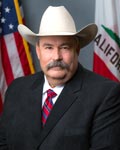
Ask Maddy about Frank Bigelow
Scope: CA
Hi! I can help you understand Frank Bigelow's legislative record. What would you like to know?
Try one of these
i
Maddy answers using official bill text and legislative records. Always verify before sharing.
Sources cited inline