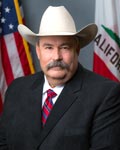
Photo of Frank Bigelow
R California Assembly · District 5 · Former member

Asm. Frank Bigelow

Compare
Total votes
29,417
all sessions
Attendance
88%
2,134 missed
Lower than 98% of chamber peers
With party
98%
of cast votes
Lower than 84% of chamber peers
Bipartisan score
1%
crosses aisle rarely
Higher than 90% of chamber peers
Sponsored
1,432
bills & resolutions
Lower than 81% of chamber peers
Committees
0
assignments
1,432 bills and resolutions

Sponsored bills

Total
1,432
Primary
144
Co-sponsor
1,288
This page
1,432
matching current filters
Co-sponsor ACR 114
Signed into law · California Assembly · Co-sponsor
Relative to Grand Jury Awareness Month.

This measure would proclaim the month of March 2016 as Grand Jury Awareness Month in California, recognize those who volunteer in a grand jury, and encourage all Californians to learn about its role in the judicial system.

Signed into law Apr 14, 2016 1 co-sponsor
Primary AB 2578
In committee · California Assembly · Lead sponsor
California Environmental Quality Act: exemptions: water service.

The California Environmental Quality Act (CEQA) requires a lead agency, as defined, to prepare, or cause to be prepared, and certify the completion of an environmental impact report on a project that it proposes to carry out or approve that may have a significant effect on the environment or to adopt a negative declaration if it finds that the project will not have that effect. CEQA also requires a lead agency to prepare a mitigated negative declaration for a project that may have a significant effect on the environment if revisions in the project would avoid or mitigate that effect and there is no substantial evidence that the project, as revised, would have a significant effect on the environment. CEQA authorizes a court, in an action or proceeding brought challenging the decision of a public agency on the ground of noncompliance with CEQA, to enter an order that includes, among other things, a mandate that the determination, finding, or decision be void by the public agency, in whole or in part. CEQA exempts various projects from its requirements. This bill would exempt from the requirements of CEQA a project within a public street or highway or other public right-of-way for the maintenance, repair, restoration, reconditioning, relocation, replacement, removal, or demolition of an existing water distribution pipeline to address water leakage. Because a local agency would be required to determine the applicability of this exemption, this bill would impose a state-mandated local program. The bill would also exempt activities undertaken by a local agency in response to a drought to acquire water supplies, extend service, or provide water for drinking and sanitation to certain individuals and communities. The California Constitution requires the state to reimburse local agencies and school districts for certain costs mandated by the state. Statutory provisions establish procedures for making that reimbursement. This bill would provide that no reimbursement is required by this act for a specified reason.

In committee Apr 14, 2016 0 co-sponsors
Co-sponsor AB 1866
Failed · California Assembly · Co-sponsor
High-speed rail bond proceeds: redirection: water projects.

Existing law, the Safe, Reliable High-Speed Passenger Train Bond Act for the 21st Century, approved by the voters as Proposition 1A at the November 4, 2008, general election, provides for the issuance of general obligation bonds in the amount of $9 billion in general obligation bonds for high-speed rail purposes and $950 million for other related rail purposes. Article XVI of the California Constitution requires measures authorizing general obligation bonds to specify the single object or work to be funded by the bonds and further requires a bond act to be approved by a 23 vote of each house of the Legislature and a majority of the voters. This bill would provide that no further bonds shall be sold for high-speed rail purposes pursuant to the Safe, Reliable High-Speed Passenger Train Bond Act for the 21st Century, except as specifically provided with respect to an existing appropriation for high-speed rail purposes for early improvement projects in the Phase 1 blended system. The bill, subject to the above exception, would require redirection of the unspent proceeds received from outstanding bonds issued and sold for other high-speed rail purposes prior to the effective date of these provisions, upon appropriation, for use in retiring the debt incurred from the issuance and sale of those outstanding bonds. The bill, subject to the above exception, would also require the net proceeds of other bonds subsequently issued and sold under the high-speed rail portion of the bond act to be made available, upon appropriation, to fund capital expenditures for water projects, including the construction of desalination facilities, wastewater treatment and recycling facilities, reservoirs, water conveyance infrastructure, and aquifer recharge. The bill would make no changes to the authorization under the bond act for the issuance of $950 million in bonds for rail purposes other than high-speed rail. These provisions would become effective only upon approval by the voters at the next statewide election.

Failed Apr 12, 2016 1 co-sponsor
Co-sponsor AB 1565
In committee · California Assembly · Co-sponsor
Developmental services: funding.

The Lanterman Developmental Disabilities Services Act requires the State Department of Developmental Services to contract with regional centers to provide services and supports to individuals with developmental disabilities. Under existing law, the regional centers purchase needed services for individuals with developmental disabilities through approved service providers or arrange for those services through other publicly funded agencies. This bill would require the department to submit a plan to the Legislature by August 1, 2017, to ensure the sustainability, quality, and transparency of community-based services for individuals with developmental disabilities. The bill would require the department to regularly consult with stakeholders in developing the plan and would require the plan to address specified topics, including, among others, recommendations for a comprehensive approach to funding regional center operations in a sustainable and transparent manner that enables regional centers to deliver high-quality services to consumers. Existing law requires that contracts or agreements between regional centers and service providers in which the rates between the regional center and the service provider are determined through negotiations to ensure that not more than 15% of regional center funds be spent on administrative costs, as described. This bill would instead provide that the percentage of the funds that may be spent on administrative costs varies depending on the total value, annually, of the payments received by a service provider from all regional centers. Existing law establishes specified rates to be paid to certain service providers and the rates to be paid for certain developmental services. Existing law requires that rates to be paid to other developmental service providers either be set by the department or negotiated between the regional center and the service provider. Existing law prohibits certain provider rate increases, but authorizes increases to those rates as necessary to adjust employee wages to meet the state minimum wage law. This bill would increase the rates established by existing law, as specified, and would require an increase to the rates set by the department and the rates negotiated between regional centers and service providers, as specified. The bill would also require the department, when setting rates for community care facilities serving people with developmental disabilities, to ensure that the rates permit the viability of those facilities by establishing different rates for each facility size, as determined by the number of beds available, that reflect reasonable differences in the cost structure of facilities with differing numbers of beds. The bill would require the department to adopt emergency regulations implementing that provision. Existing law requires each regional center to submit, on or before August 1 of each year, to the department and the State Council on Developmental Disabilities a program budget plan for the subsequent budget year. Existing law provides that, to the extent feasible, all funds appropriated for developmental disabilities programs be allocated to those programs by August 1 of each year and designates the department as the agency responsible for the processing, audit, and payment of funds made available to regional centers. This bill would require the department to increase the funding paid to a regional center for the regional center's operating budget, beginning July 1, 2016, by 10% above the amount the regional center otherwise would have received under the department's core staffing formula, and, beginning July 1, 2017, by 10% above the amount the regional center otherwise would have received under the department's core staffing formula, plus a percentage equal to the percentage of any increase in the California Consumer Price Index since July 1, 2016. The bill would also require the department to increase the funding provided to a regional center to enable the regional center and the regional center's purchase-of-service vendors to fund certain costs related to minimum wage requirements. This bill would declare that it is to take effect immediately as an urgency statute.


In committee Apr 12, 2016 1 co-sponsor
Co-sponsor SB 1191
In committee · California Senate · Co-sponsor
Fish and wildlife: management plans.

The California Constitution provides for the delegation to the Fish and Game Commission powers relating to the protection and propagation of fish and game. Existing statutory law delegates to the commission the power to regulate the taking or possession of birds, mammals, fish, amphibians, and reptiles in accordance with prescribed laws. Under existing law, the Department of Fish and Wildlife exercises various functions with regard to the taking of fish and wildlife. Under existing law, a violation of the Fish and Game Code or of any rule, regulation, or order made or adopted under the code is a crime. Existing law, enacted as part of the Marine Life Management Act of 1998, generally establishes a comprehensive plan for the management of marine life resources. Existing law requires the Department of Fish and Wildlife to develop, and submit to the Fish and Game Commission for its approval, a fishery management master plan, and provides for the preparation and approval of fishery management plans, which form the primary basis for managing California's sport and commercial marine fisheries. Existing law authorizes regulations that the commission adopts to implement a fishery management plan or plan amendment for that fishery to make inoperative, in regard to that fishery, any fishery management statute that applies to that fishery. This bill would establish a similar process for the management of wildlife resources on land and the inland waters of the state. The bill would require the department to develop and submit, on or before September 1, 2018, to the Fish and Game Commission for its approval, a wildlife resources master plan, but would provide for the preparation and approval of wildlife management plans by the department, which would form the primary basis for managing these wildlife resources. The bill would authorize regulations that the department adopts to implement a wildlife management plan or amendment to make inoperative, in regard to the resource, any wildlife management statute that applies to the resource. Because a violation of a regulation adopted by the department would be a crime, this bill would impose a state-mandated local program. The California Constitution requires the state to reimburse local agencies and school districts for certain costs mandated by the state. Statutory provisions establish procedures for making that reimbursement. This bill would provide that no reimbursement is required by this act for a specified reason.

In committee Apr 11, 2016 1 co-sponsor
Co-sponsor SB 806
In committee · California Senate · Co-sponsor
Dr. Charlie Waters Memorial Veterans' Home.

Existing law establishes the Veterans' Home of California, under the administration of the Department of Veterans Affairs, including homes in Yountville and Barstow. Existing law also authorizes the Department of General Services, on behalf of the Department of Veterans Affairs, to acquire, design, equip, construct, and establish additional veterans' homes in other locations, including Fresno. This bill would rename the veterans' home in the County of Fresno as the Dr. Charlie Waters Memorial Veterans' Home and would make specified findings of the Legislature regarding Dr. Waters' life.

In committee Apr 7, 2016 1 co-sponsor
Co-sponsor AB 1586
Failed · California Assembly · Co-sponsor
California Environmental Quality Act: Temperance Flat Reservoir.

The California Environmental Quality Act requires a lead agency, as defined, to prepare, or cause to be prepared, and certify the completion of, an environmental impact report on a project that it proposes to carry out or approve that may have a significant effect on the environment or to adopt a negative declaration if it finds that the project will not have that effect. The act also requires a lead agency to prepare a mitigated negative declaration for a project that may have a significant effect on the environment if revisions in the project would avoid or mitigate that effect and there is no substantial evidence that the project, as revised, would have a significant effect on the environment. The act establishes a procedure by which a person may seek judicial review of the decision of the lead agency made pursuant to the act. This bill would prohibit the court, in an action or proceeding alleging a violation of the act, from staying or enjoining the construction or operation of the Temperance Flat Reservoir unless the court makes certain findings. This bill would make legislative findings and declarations as to the necessity of a special statute for the Temperance Flat Reservoir.

Failed Apr 4, 2016 1 co-sponsor
Co-sponsor AB 1569
Failed · California Assembly · Co-sponsor
California Environmental Quality Act: exemption: existing transportation infrastructure.

The California Environmental Quality Act (CEQA) requires a lead agency, as defined, to prepare, or cause to be prepared, and certify the completion of, an environmental impact report on a project that it proposes to carry out or approve that may have a significant effect on the environment or to adopt a negative declaration if it finds that the project will not have that effect. CEQA also requires a lead agency to prepare a mitigated negative declaration for a project that may have a significant effect on the environment if revisions in the project would avoid or mitigate that effect and there is no substantial evidence that the project, as revised, would have a significant effect on the environment. This bill would exempt from the provisions of CEQA a project, or the issuance of a permit for a project, that consists of the inspection, maintenance, repair, rehabilitation, replacement, or removal of, or the addition of an auxiliary lane or bikeway to, existing transportation infrastructure and that meets certain requirements. The bill would require the public agency carrying out the project to take certain actions.

Failed Apr 4, 2016 1 co-sponsor
Showing 1,011 to 1,020 of 1,432 bills