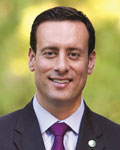
Photo of Roger Hernández
D California Assembly · District 48

Asm. Roger Hernández

Compare
Total votes
13,497
all sessions
Attendance
89%
1,261 missed
Near the chamber average
With party
99%
of cast votes
Near the chamber average
Bipartisan score
0%
crosses aisle rarely
Near the chamber average
Sponsored
648
bills & resolutions
Higher than 77% of chamber peers
Committees
0
assignments
648 bills and resolutions

Sponsored bills

Total
648
Primary
131
Co-sponsor
517
This page
648
matching current filters
Primary AB 2588
died · California Assembly · Lead sponsor
Emergency medical services: local EMS agencies.

Existing law, the Emergency Medical Services System and the Prehospital Emergency Medical Care Personnel Act, authorizes each county to develop an emergency medical services program. The act further authorizes a local emergency medical services (EMS) agency to develop and submit a plan to the Emergency Medical Services Authority for an emergency medical services system, and requires the local EMS agency to coordinate and facilitate arrangements necessary to develop the system, consistent with the plan. This bill would make technical, nonsubstantive changes to these provisions.

died Nov 30, 2014 0 co-sponsors
Co-sponsor SJR 31
Failed · California Senate · Co-sponsor
Immigration: unaccompanied minors.

This measure would urge the President and Congress of the United States to take specified action and adopt specified policies designed to protect unaccompanied minors immigrating to the United States.

Failed Nov 30, 2014 1 co-sponsor
Primary AB 2750
Failed · California Assembly · Lead sponsor
Dentistry.

(1) The Dental Practice Act provides for the licensure and regulation of dentists and associated professions by the Dental Board of California within the Department of Consumer Affairs. The act requires each applicant for a license to practice dentistry to successfully complete specified examinations, including receiving a passing score on either a portfolio examination, as specified, or a clinical and written examination administered by the Western Regional Examining Board. Existing law requires that board to determine the passing score for that examination. This bill would additionally allow an applicant to satisfy that examination requirement by receiving a passing score on a clinical and written examination administered by the North East Regional Board of Dental Examiners, Inc., or an examination developed by the American Board of Dental Examiners, Inc. The bill would require those boards to determine the passing score for their respective examinations. (2) Existing law requires the department to periodically review the examination process of the Western Regional Examining Board. Existing law requires that the Western Regional Examining Board examination meet specified antidiscrimination mandates. This bill would additionally apply those provisions to the North East Regional Board of Dental Examiners, Inc. and the American Board of Dental Examiners, Inc. (3) This bill would declare that it is to take effect immediately as an urgency statute.

Failed Nov 30, 2014 0 co-sponsors
Primary AB 2373
Failed · California Assembly · Lead sponsor
Probation officers: funding.

Existing law requires a probation officer to notify the presiding judge of the superior court and the board of supervisors of the county, or city and county, upon a determination that, in the probation officer's opinion, staff and financial resources available to him or her are insufficient to meet his or her statutory or court-ordered responsibilities. Under existing law, that notification is required to be in writing, to explain which of those responsibilities cannot be met, and to explain what resources are necessary to properly discharge those responsibilities. This bill would require a county, or city and county, within 30 days of receipt of the notification described above, to determine if it has the resources available to meet the probation officer's specified needs, and to either inform the probation officer and the presiding judge of the superior court that it has the resources and commence providing the probation officer with the resources he or she has identified as necessary in that notification to properly discharge those responsibilities, or if it makes a determination that it does not have the resources available to meet the probation officer's specified needs, to notify the probation officer and the presiding judge of the superior court of that determination. By creating new duties for local government, the bill would impose a state-mandated local program. The California Constitution requires the state to reimburse local agencies and school districts for certain costs mandated by the state. Statutory provisions establish procedures for making that reimbursement. This bill would provide that, if the Commission on State Mandates determines that the bill contains costs mandated by the state, reimbursement for those costs shall be made pursuant to these statutory provisions.

Failed Nov 30, 2014 0 co-sponsors
Primary AB 687
Failed · California Assembly · Lead sponsor
Electricity.

The Public Utilities Act requires the Public Utilities Commission, pursuant to electrical restructuring, to authorize and facilitate direct transactions between electricity suppliers and retail end-use customers. Statutes enacted during the energy crisis of 2000–01, authorized the Department of Water Resources, until January 1, 2003, to enter into contracts for the purchase of electricity, and to sell electricity to retail end-use customers at not more than the department's acquisition costs and to recover those costs through the issuance of bonds to be repaid by ratepayers. That law suspended the right of retail end-use customers, other than community choice aggregators and a qualifying direct transaction customer, as defined, to acquire service through a direct transaction until the Department of Water Resources no longer supplies electricity under that law. Existing law continues the suspension of direct transactions except as expressly authorized, until the Legislature, by statute, repeals the suspension or otherwise authorizes direct transactions. Existing law requires the commission to authorize direct transactions for nonresidential end-use customers subject to a reopening schedule that will phase in over a period of not less than 3 years and not more than 5 years, and is subject to an annual maximum allowable total kilowatthour limit established, as specified, for each electrical corporation. Under existing law, a violation of the Public Utilities Act or any order, decision, rule, direction, demand, or requirement of the commission is a crime. This bill would additionally require the commission, when authorizing additional direct transactions for retail nonresidential end-use customers, to provide the highest priority to acquire electric services from other providers to entities treating and remediating groundwater that a federal, state, or local agency identifies as contaminated if the entity is a public drinking water system serving a disadvantaged or severely disadvantaged community. The bill would require the entity treating and remediating contaminated groundwater to use moneys saved as a result of the direct transaction for activities related to the treatment and remediation of the groundwater. Because a violation of this requirement is a crime, this bill would impose a state-mandated local program. The bill would correct a statutory reference to a reporting requirement of the commission. The California Constitution requires the state to reimburse local agencies and school districts for certain costs mandated by the state. Statutory provisions establish procedures for making that reimbursement. This bill would provide that no reimbursement is required by this act for a specified reason.

Failed Nov 30, 2014 0 co-sponsors
Primary AB 2715
Failed · California Assembly · Lead sponsor
District-based municipal elections.

Existing law provides for political subdivisions that encompass areas of representation within the state. With respect to these areas, public officials are generally elected by all of the voters of the political subdivision (at-large) or from districts formed within the political subdivision (district-based) . Existing law, the California Voting Rights Act of 2001, prohibits an at-large method of election to be imposed or applied in a manner that impairs the ability of a protected class to elect candidates of its choice or its ability to influence the outcome of an election, as a result of the dilution or the abridgment of the rights of voters who are members of a protected class, as defined. Existing law authorizes the legislative body of a city to submit to voters at any municipal or special election an ordinance providing for the election of members of the legislative body by districts, from districts, by districts with an elective mayor, or from districts with an elective mayor. Under existing law, "by district" means election of members of the legislative body by voters of the district alone and "from district" means election of members of the legislative body who are residents of the district from which they are elected by the voters of the entire city. Existing law prescribes the procedures for the electors to change from the election of these members by district to election from districts or vice versa. This bill would permit the legislative body of a city to provide by ordinance, without submitting the ordinance to the voters of the city for approval, for the election of members of the legislative body by district if the voters of the city previously rejected such an ordinance, as specified. This provision would be repealed on December 31, 2016. The bill would, commencing January 1, 2017, require the legislative body of a city with a population of 100,000 or more, as determined by the most recent federal decennial census, to provide by ordinance, without submitting the ordinance to the voters of the city for approval, for the election of members of the legislative body by district. The bill would, commencing January 1, 2017, permit the legislative body of any other city to provide by ordinance, without submitting the ordinance to the voters of the city for approval, for the election of members of the legislative body by district. The bill would require that the boundary lines of each district be adjusted in accordance with specified provisions of law. By requiring cities to conduct elections for members of their legislative bodies in a specified manner, this bill would impose a state-mandated local program. The California Constitution requires the state to reimburse local agencies and school districts for certain costs mandated by the state. Statutory provisions establish procedures for making that reimbursement. This bill would provide that, if the Commission on State Mandates determines that the bill contains costs mandated by the state, reimbursement for those costs shall be made pursuant to these statutory provisions. This bill would specify that its provisions become operative on July 1, 2015.


Failed Nov 30, 2014 0 co-sponsors
Co-sponsor ACR 27
died · California Assembly · Co-sponsor
Relative to César Chávez.

This measure would call upon all Californians to observe César Chávez's birthday, March 31, as a day of public service, to recognize the hard work and self-sacrifice that farmworkers go through to feed all the families in our state, and to learn from César Chávez's life and his mission of nonviolence, social justice, and selfless service to others.

died Nov 30, 2014 1 co-sponsor
Primary AB 1977
Failed · California Assembly · Lead sponsor
Public postsecondary education: Student Academic Preparation and Educational Partnerships.

(1) Existing law establishes a system of public elementary and secondary schools maintained and operated by local educational agencies throughout the state. Existing law establishes a system of public postsecondary education in this state, consisting of the California Community Colleges, the California State University, and the University of California. The University of California administers Student Academic Preparation and Educational Partnerships with the goal of raising student achievement levels generally and to close achievement gaps among groups of students from kindergarten to the postgraduate level. Existing programs within the Student Academic Preparation and Educational Partnerships (SAPEP) include the Early Academic Outreach Program (EAOP) , the Mathematics, Engineering, Science Achievement (MESA) program, and the Puente program. This bill would express legislative intent to provide increased financial support for SAPEP programs and to make it easier for SAPEP students to meet their educational goals. (2) This bill would appropriate $82,243,000 from the General Fund to the Regents of the University of California for allocation, without regard to fiscal year, to Student Academic Preparation and Educational Partnerships. The bill would further provide that, of the amount appropriated under this provision, an unspecified amount would be allocated to the Puente program.

Failed Nov 30, 2014 0 co-sponsors
Showing 231 to 240 of 648 bills
Previous 1 … 23 24 25 … 65 Next