Existing law, in order to gather data that is relevant to ensuring the safety and well-being of persons with developmental disabilities, requires the State Department of Developmental Services to ensure that the client master file entry of any person with developmental disabilities who is placed by a regional center is updated within 30 days after the change of residence. This bill would make a nonsubstantive, technical change to that provision.
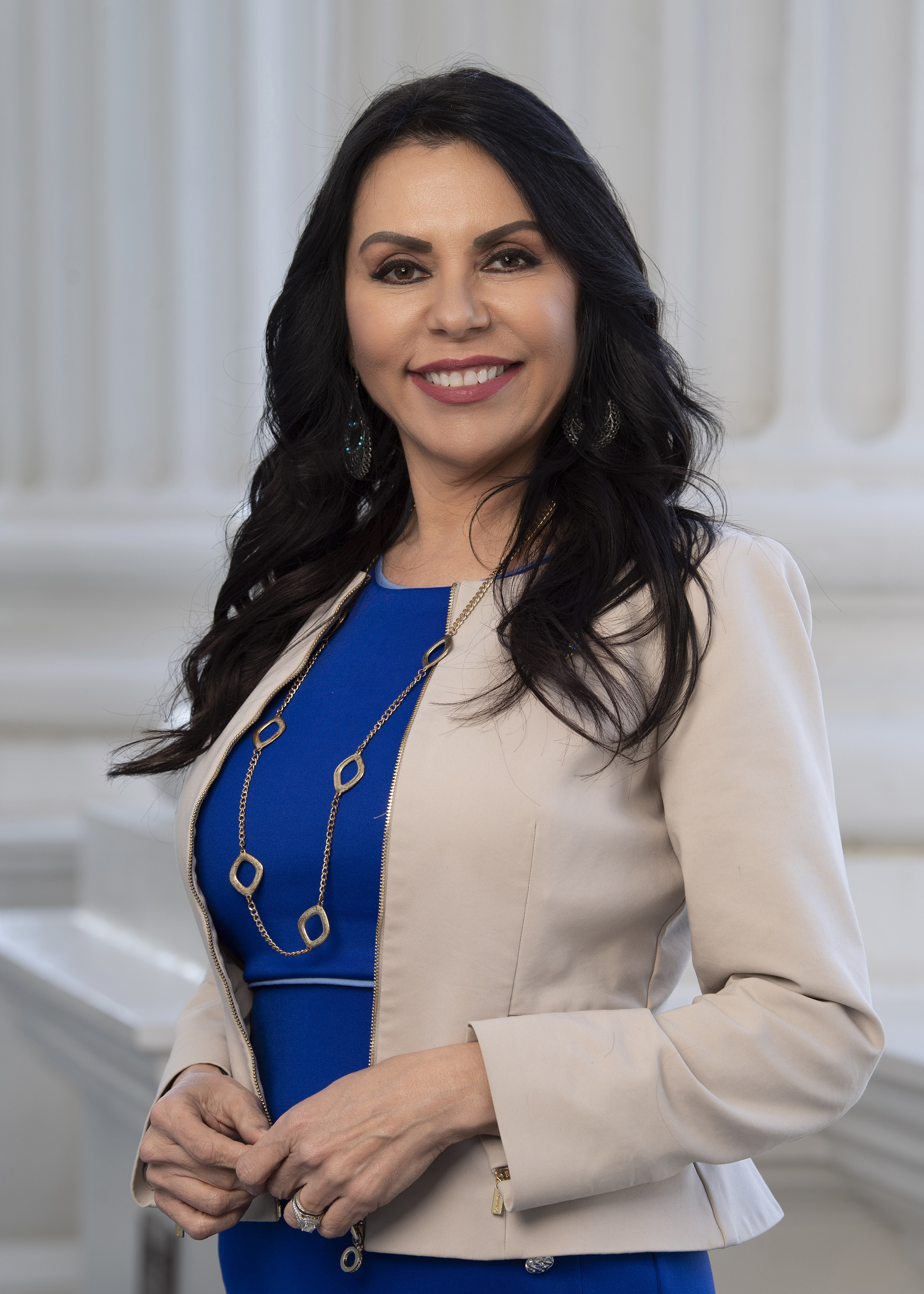
Asm. Blanca Rubio
Sponsored bills
(1) Existing law requires the State Department of Education to issue a request for proposals to contract for the development of standards for professional development for educators and instructional leaders. Existing law requires the standards to serve as guidelines for providers of professional development activities and authorizes them to be used to facilitate coordination among existing professional development programs. This bill, among other things, would require the department, on or before August 31, 2026, to develop a list of recommended professional development and training programs that meet specified requirements relating to effective means of teaching literacy and evidence-based means of teaching foundational reading skills, as described, and to submit the list to the State Board of Education for approval, as provided. The bill would require the state board, on or before January 1, 2027, to approve a list of those recommended professional development and training programs. The bill would require the department to make the list of those approved professional development and training programs available on its internet website and to update the list as necessary. The bill, commencing September 1, 2027, would require school districts, county offices of education, and charter schools to ensure participation in, and would require all applicable personnel, as defined, to satisfactorily complete by no later than August 31, 2029, an approved professional development and training program that is listed on the department's internet website, except as specified. By imposing additional duties on local educational agencies, the bill would impose a state-mandated local program. (2) Existing law requires the state board to adopt basic instructional materials for use in kindergarten and grades 1 to 8, inclusive, for governing boards, subject to specified provisions, including, among others, that the state board adopt at least 5 basic instructional materials for all applicable grade levels in each of the specified subject areas, including, among others, language arts, including, but not limited to, spelling, reading, and English language development. In reviewing and adopting or recommending for adoption submitted basic instructional materials, existing law requires the state board to use specified criteria, and to ensure that, in its judgment, the submitted basic instructional materials meet that criteria, including, among others, that the instructional materials are aligned to the content standards adopted by the state board in the subject area and the grade level or levels for which they are submitted. Notwithstanding any other law, existing law authorizes a local educational agency to use instructional materials that are aligned with the academic content standards previously adopted by the state board. This bill would revise and recast provisions relating to adoption of instructional materials for English language arts, English language development, and reading by, among other things, requiring the state board, on or before January 1, 2027, to adopt basic instructional materials, as defined, for transitional kindergarten, kindergarten, and grades 1 to 8, inclusive, in English language arts, English language development, and reading. The bill would require the state board to, among other things, ensure that all basic instructional materials adopted pursuant to these provisions are aligned to the most recently adopted academic content standards and curriculum frameworks and adhere to effective means of teaching literacy and evidence-based means of teaching foundational reading skills. The bill would require the department to publish the complete list of the state board's adopted basic instructional materials on the department's internet website and to distribute the complete list to all local educational agencies, as specified. Upon the state board's adoption of those basic instructional materials, the bill would require all basic instructional materials in English language arts, English language development, and reading for transitional kindergarten, kindergarten, and any of grades 1 to 8, inclusive, adopted by each school district, county office of education, and charter school to, among other requirements, adhere to specified evaluation criteria, and would prohibit those local educational agencies from adopting basic instructional materials in English language arts, English language development, or reading that have not been adopted by the state board unless the local educational agency is granted a waiver from the state board, as specified. On or before December 31, 2028, the bill would require each local educational agency to provide to the department, and the department to develop, maintain, and annually update, a current list of basic instructional materials in English language arts, English language development, and reading, adopted by each local educational agency that is publicly accessible on the department's internet website. By imposing additional duties on local educational agencies, the bill would impose a state-mandated local program. (3) This bill would make Legislative findings and declarations relating to these provisions, conforming changes, and other nonsubstantive changes. (4) The California Constitution requires the state to reimburse local agencies and school districts for certain costs mandated by the state. Statutory provisions establish procedures for making that reimbursement. This bill would provide that, if the Commission on State Mandates determines that the bill contains costs mandated by the state, reimbursement for those costs shall be made pursuant to the statutory provisions noted above.

(1) Existing law, known as the Green Chemistry program, requires the Department of Toxic Substances Control to adopt regulations to establish a process to identify and prioritize chemicals or chemical ingredients in consumer products that may be considered as being chemicals of concern. Existing law requires the regulations to include criteria by which chemicals and their alternatives may be evaluated by the department, as provided. Existing law requires the department, following the completion of an alternatives analysis, to provide a regulatory response that may include, but is not limited to, not requiring any action and restricting or prohibiting the use of the chemical of concern in the consumer product. This bill would, beginning January 1, 2028, prohibit a person from distributing, selling, or offering for sale a covered product, as defined, that contains intentionally added PFAS, as defined, unless the department has issued a regulatory response for the covered product pursuant to the Green Chemistry program or the prohibition is preempted by federal law. The bill would authorize a manufacturer of a covered product to petition the department to evaluate a covered product and would require the department to evaluate and provide a regulatory response for a covered product under the Green Chemistry program, as specified. This bill would require the department, on or before January 1, 2028, to adopt regulations to carry out these provisions. The bill would require the department to analyze and comment on the presence of PFAS in industrial processes and products, as specified. The bill would authorize the department to identify and categorize commercially active PFAS present in products distributed in California, as specified. The bill would authorize the department to report on other issues relating to products containing PFAS and emissive compounds. (2) Existing law requires the department, on or before January 1, 2029, to adopt regulations to enforce specified covered perfluoroalkyl and polyfluoroalkyl substances (PFAS) restrictions, which include prohibitions on the distribution, sale, or offering for sale of certain products that contain specified levels of PFAS. Existing law requires the department, on and after July 1, 2030, to enforce and ensure compliance with those provisions and regulations, as provided. Existing law requires manufacturers of these products, on or before July 1, 2029, to register with the department, to pay a registration fee to the department, and to provide a statement of compliance certifying compliance with the applicable prohibitions on the use of PFAS to the department, as specified. Existing law authorizes the department to test products and to rely on third-party testing to determine compliance with prohibitions on the use of PFAS, as specified. Existing law requires the department to issue a notice of violation for a product in violation of the prohibitions on the use of PFAS, as provided. Existing law authorizes the department to assess an administrative penalty for a violation of these prohibitions and authorizes the department to seek an injunction to restrain a person or entity from violating these prohibitions, as specified. This bill would require the department to use this existing authority to enforce the prohibition on products that would be prohibited by the provisions in paragraph (1) . (3) Existing law requires the department, in consultation with the Office of Environmental Health Hazard Assessment and all appropriate state agencies, to adopt regulations to establish a process to identify and prioritize chemicals or chemical ingredients in consumer products that may be considered as being a chemical of concern, as specified. Pursuant to that authority, the department adopted regulations known as the Safer Consumer Products Regulations. This bill would authorize, but not require, that those regulations evaluate uses of PFAS in products that would be prohibited by the provisions in paragraph (1) .
Existing law establishes the Labor and Workforce Development Agency, consisting of various offices and entities, including the office of the Secretary of Labor and Workforce Development, the Agricultural Labor Relations Board, and the California Workforce Development Board. This bill would establish the Essential Worker Commission within the Labor and Workforce Development Agency, to review, investigate, and analyze issues relating to essential workers in the state, including workplace safety and health protections and wages and benefits for undocumented workers. The bill would require the Essential Worker Commission, based on that review, investigation, and analysis, to establish the Essential Worker Legal Work Program to provide essential workers with legal pathways to remain in California and work lawfully.
The Personal Income Tax Law and the Corporation Tax Law allow various credits against the taxes imposed by those laws. This bill, for taxable years beginning on or after January 1, 2026, and before January 1, 2031, would allow a credit against those taxes to qualified taxpayers, defined to mean certain fast food restaurant franchisees or independent operators, in the amount of $12,000 per qualified fast food restaurant, as defined. Existing law requires any bill authorizing a new tax expenditure to contain, among other things, specific goals that the tax expenditure will achieve, detailed performance indicators, and data collection requirements. This bill also would include additional information required for any bill authorizing a new tax expenditure. This bill would take effect immediately as a tax levy.
Existing law requires the State Board of Education to adopt statewide academically rigorous content standards in the core curriculum areas of reading, writing, mathematics, history/social science, and science, as specified. Existing law requires the Instructional Quality Commission to, among other things, recommend curriculum frameworks to the state board and develop criteria for evaluating instructional materials. This bill would require the state board to, on or before January 1, 2028, develop and adopt academically rigorous content standards for ethnic studies instruction in high school. The bill would require the commission, on or before January 1, 2028, to review and recommend to the state board curriculum frameworks and instructional materials for ethnic studies instruction in high school, as specified. The bill would require the state board to provide the commission with evaluation criteria to use in providing its review and recommendations. The bill would state the intent of the Legislature to enact subsequent legislation to establish an advisory committee with a majority of the advisory committee's members being experts in African American studies, Asian American and Pacific Islander studies, Native American studies, and Latino and Chicanx studies, to provide input to the state board on proposed content standards and to the commission on proposed curriculum frameworks and instructional materials for ethnic studies instruction in high school. Existing law requires a pupil to complete designated coursework while in grades 9 to 12, inclusive, in order to receive a diploma of graduation from high school. These graduation requirements include, commencing for pupils graduating in the 2029–30 school year, the completion of a one-semester course in ethnic studies meeting specified requirements. Under existing law, the requirement to complete an ethnic studies course may be fulfilled by the completion of, among others, a course based on the model curriculum developed by the Instructional Quality Commission, an ethnic studies course taught as part of a course that has been approved as meeting the A–G requirements of the University of California and the California State University, or a locally developed ethnic studies course approved by the governing board of a school district or the governing body of a charter school. Existing law requires the curriculum, instruction, and instructional materials for these ethnic studies courses to meet specified requirements, including that they not reflect or promote any bias, bigotry, or discrimination against any person or group of persons on the basis of certain characteristics. Existing law makes these provisions relating to ethnic studies courses operative only upon an appropriation of funds by the Legislature for purposes of these provisions. This bill would require the curriculum, instruction, and instructional materials for any high school ethnic studies course, including ethnic studies courses meeting high school graduation requirements, to meet the above-described requirements, and would require the curriculum, instruction, and instructional materials for all high school ethnic studies courses to additionally, among other things, foster multicultural respect and understanding and focus on the domestic experience and stories of historically marginalized peoples in American society. To the extent that the bill would impose new duties on local educational agencies, the bill would impose a state-mandated local program. The bill would require a school district, county office of education, or charter school to provide, on or before June 30, 2026, the State Department of Education with a copy of all curricula, instruction, and instructional materials in ethnic studies that schools offer or plan to offer to pupils in any of grades 9 to 12, inclusive, and the adoption calendar for curricula, instruction, and instructional materials in ethnic studies proposed for adoption by the governing board or body of the local educational agency for instruction to these pupils. The bill would require a local educational agency that does not have an ethnic studies course in place for its pupils in any of grades 9 to 12, inclusive, on or before June 30, 2026, to provide the department with a copy of all curricula, instruction, and instructional materials in ethnic studies that its schools seek to adopt at least 60 days before being first presented at a public meeting of the governing board or body of the local educational agency for instruction to these pupils. The bill would require the department to post the information received pursuant to these requirements on its internet website. To the extent that the bill would impose new duties on local educational agencies, it would impose a state-mandated local program. The bill would require the department to monitor compliance with the requirements of this bill as part of its annual compliance monitoring of state and federal programs and to provide a report to the relevant policy and fiscal committees of the Legislature summarizing the data collected through compliance monitoring, as specified. The California Constitution requires the state to reimburse local agencies and school districts for certain costs mandated by the state. Statutory provisions establish procedures for making that reimbursement. This bill would provide that, if the Commission on State Mandates determines that the bill contains costs mandated by the state, reimbursement for those costs shall be made pursuant to the statutory provisions noted above.

The Personal Income Tax Law allows various credits against the taxes imposed by that law, including a young child tax credit to a qualified taxpayer in a specified amount multiplied by the earned income tax credit adjustment factor, as provided. That law also allows a payment from the continuously appropriated Tax Relief and Refund Account for an amount in excess of tax liability. Existing law defines "qualified taxpayer" for this purpose to include an eligible individual, as defined, who has a qualifying child, defined to be a child younger than 6 years of age as of the last day of the taxable year, and who meets other specified criteria. This bill, for taxable years beginning on or after January 1, 2025, would instead define a "qualifying child" to mean a child younger than a specified age as of the last day of the taxable year, as described. By increasing the payments from the Tax Relief and Refund Account, a continuously appropriated fund, the bill would make an appropriation. Existing law requires any bill authorizing a new tax expenditure to contain, among other things, specific goals that the tax expenditure will achieve, detailed performance indicators, and data collection requirements. This bill would include additional information required for any bill authorizing a new tax expenditure.
Existing law generally provides for the placement of foster youth in various placement settings and governs the provision of child welfare services, which is defined to mean public social services that are directed toward the accomplishment of specified purposes, including protecting and promoting the welfare of all children, preventing the unnecessary separation of children from their families, and restoring to their families children who have been removed. Existing law requires the State Department of Social Services to ensure that, among other things, emergency response services are coordinated with the implementation of specified program models. Existing law also requires each county to provide the department with a disaster response plan describing how county programs that receive federal assistance for child and family services would respond to a disaster. Existing law also requires the department to review its disaster plan, revise the plan to clarify the role and responsibilities of the state in the event of a disaster, and consult with counties to identify opportunities for collaboration in the event of a disaster. This bill would establish the Child Welfare Disaster Response Program, to be administered by the department. The bill would establish the Child Welfare Disaster Response Account to fund the program. The bill would require, upon appropriation by the Legislature, moneys in the Child Welfare Disaster Response Account to be used for purposes of the program and to support the needs of foster children and youth, as defined, and their caregivers during a disaster. The bill would require the department to determine eligibility criteria for applicants and would authorize county child welfare agencies, county probation departments, or Indian tribes, as specified, to apply for funds. The bill would require funds awarded pursuant those provisions to be available to meet the housing, clothing, transportation, and other tangible needs of foster children and youth and their caregivers that occur within 180 days of a local emergency proclamation by a local government or a state of emergency proclamation by the Governor. The bill would authorize the department to implement, interpret, or make specific these provisions by means of all-county letters or similar written instructions.
Existing law sets forth various provisions on the wearing of a mask for health purposes. These circumstances include, among others, a statewide stockpile of personal protective equipment (PPE) in the event of a pandemic, wildfire smoke event, or other health emergency; employer-supplied PPE to employees who provide direct patient care in a general acute care hospital; employees of commercial cannabis businesses wearing a mask for respiration; and providing peace officers with an appropriate portable manual mask and airway assembly for use when applying cardiopulmonary resuscitation to prevent the spread of communicable disease. Under this bill, an individual would have the right to wear a health mask on their face in a public place for the purpose of protecting their individual health or the public health, with regard to communicable disease, air quality, or other health factors. The bill would define a health mask and a public place for purposes of this provision. Under the bill, the above-described right would not be construed as limiting or otherwise modifying the application or implementation of certain requirements for the removal of a health mask relating to, among other contexts, security protocols to identify an individual, essential functions in the workplace, or emergency health care protocols, as specified, without limiting certain nondiscrimination protections on the basis of disability or medical condition.
Existing law, the Knox-Keene Health Care Service Plan Act of 1975, provides for the licensure and regulation of health care service plans by the Department of Managed Health Care, and makes a willful violation of the act a crime. Existing law provides for the regulation of health insurers by the Department of Insurance. Existing law requires a health care service plan contract or health insurance policy issued, amended, or renewed on or after January 1, 2021, to provide coverage for medically necessary treatment of mental health and substance use disorders, as defined, under the same terms and conditions applied to other medical conditions. This bill would generally require a large group health care service plan contract or health insurance policy issued, amended, or renewed on or after January 1, 2026, to reimburse an eligible enrollee or insured for up to 12 visits with a behavioral health provider if the enrollee or insured lives in a county where a local or state emergency has been declared due to wildfires and the enrollee or insured has experienced a loss, trauma, or displacement because of the fire. The bill would prohibit these benefits from being subject to utilization review. The bill would require a health care service plan contract or health insurer to provide notice to all affected enrollees of these provisions, as specified. Because a willful violation of these provisions by a health care service plan would be a crime, the bill would impose a state-mandated local program. The California Constitution requires the state to reimburse local agencies and school districts for certain costs mandated by the state. Statutory provisions establish procedures for making that reimbursement. This bill would provide that no reimbursement is required by this act for a specified reason. This bill would declare that it is to take effect immediately as an urgency statute.