

Passed Feb 1, 2018
1 co-sponsor
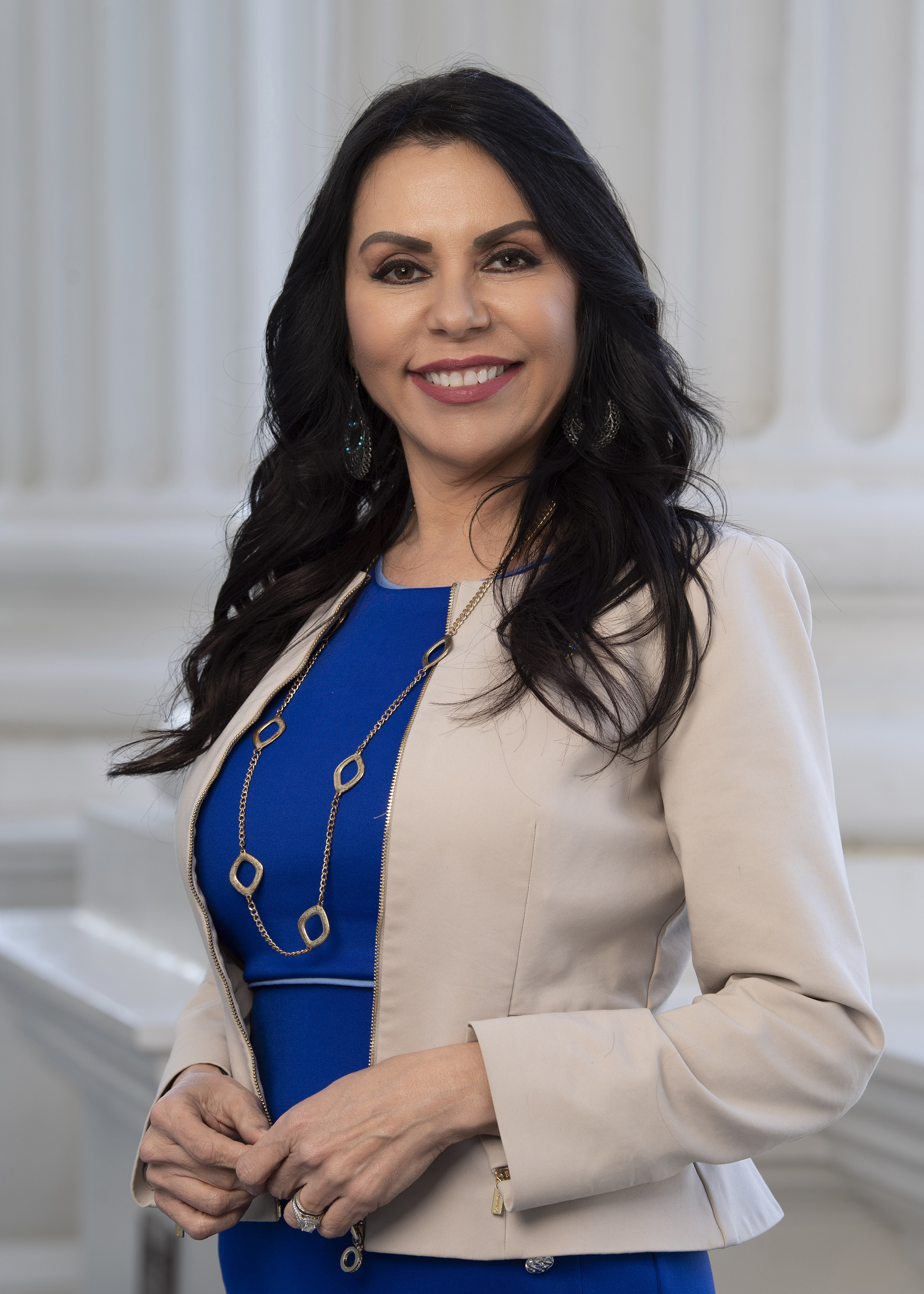
Asm. Blanca Rubio
Total votes
21,034
all sessions
Attendance
93%
1,310 missed
Near the chamber average
With party
99%
of cast votes
Near the chamber average
Bipartisan score
0%
crosses aisle rarely
Near the chamber average
Sponsored
2,345
bills & resolutions
Higher than 94% of chamber peers
Committees
7
assignments
2,345 bills and resolutions
Sponsored bills
Total
2,345
Primary
236
Co-sponsor
2,109
This page
2,345
matching current filters
Student support services: Dream Resource Liaisons.
(1) Existing law establishes the segments of the public postsecondary education system in the state, including the University of California administered by the Regents of the University of California, the California State University administered by the Trustees of the California State University, and the California Community Colleges administered by the Board of Governors of the California Community Colleges. Existing law provides that a student, other than a nonimmigrant alien, as defined, who has attended high school in California for 3 or more years, who has graduated from a California high school or attained the equivalent thereof, who has registered at or attends an accredited institution of higher education in California not earlier than the fall semester or quarter of the 2001–02 academic year, and who, if he or she is an alien without lawful immigration status, has filed an affidavit, as specified, is exempt from paying nonresident tuition at the California Community Colleges and the California State University. This bill would, commencing with the 2018–19 academic year, require the California Community Colleges and the California State University, and request the University of California, to designate a Dream Resource Liaison on each of their respective campuses, as specified, to assist students meeting specified requirements, including undocumented students, by streamlining access to all available financial aid and academic opportunities for those students. By requiring community colleges to designate a Dream Resource Liaison, this bill would impose a state-mandated local program. The bill would encourage those institutions to establish Dream Resource Centers, and would authorize those centers to provide specified support services. This bill would authorize the trustees, the board of governors, and the regents to seek and accept on behalf of the state any gift, bequest, devise, or donation whenever the gift and the terms and conditions thereof will aid in the creation and operation of Dream Resource Centers for their respective systems. (2) Existing law establishes a system of public elementary and secondary schools in this state, and authorizes local educational agencies throughout the state to operate schools and provide instruction to pupils in kindergarten and grades 1 to 12, inclusive. This bill would require the governing board of a school district or county office of education that maintains any of grades 9 to 12, inclusive, to designate a Dream Resource Liaison at each of their respective campuses that includes any of those grades. By requiring certain school districts and county offices of education to designate a Dream Resource Liaison, this bill would impose a state-mandated local program. (3) The California Constitution requires the state to reimburse local agencies and school districts for certain costs mandated by the state. Statutory provisions establish procedures for making that reimbursement. This bill would provide that, if the Commission on State Mandates determines that the bill contains costs mandated by the state, reimbursement for those costs shall be made pursuant to the statutory provisions noted above.
Failed Feb 1, 2018
1 co-sponsor
California Global Warming Solutions Act of 2006: market-based compliance mechanisms: scoping plan: report.
(1) The California Global Warming Solutions Act of 2006 designates the State Air Resources Board as the state agency charged with monitoring and regulating sources of emissions of greenhouse gases. The state board is required to approve a statewide greenhouse gas emissions limit equivalent to the statewide greenhouse gas emissions level in 1990 to be achieved by 2020 and to ensure that statewide greenhouse gas emissions are reduced to at least 40% below the 1990 level by 2030. The act requires the state board to prepare and approve a scoping plan for achieving the maximum technologically feasible and cost-effective reductions in greenhouse gas emissions and to update the scoping plan at least once every 5 years. This bill would require the state board to report to the appropriate policy and fiscal committees of the Legislature to receive input, guidance, and assistance before adopting guidelines and regulations implementing the scoping plan and a regulation ensuring statewide greenhouse gas emissions are reduced to at least 40% below the 1990 level by 2030. This bill would require the state board, no later than January 1, 2019, and in conjunction with specified stakeholders, to report to the Legislature on the need for increased education, career technical education, job training, and workforce development in ensuring that statewide greenhouse gas emissions are reduced to at least 40% below the 1990 level no later than December 31, 2030, and as a result of the scoping plan, as specified. (2) The act authorizes the state board to include the use of market-based compliance mechanisms in implementing the act. This bill would establish the Compliance Offsets Protocol Task Force for the purpose of investigating, analyzing, and providing guidance to the state board in approving new offset protocols for a market-based compliance mechanism with a priority on the development of new urban offset protocols, as specified. The bill would require the state board, in conjunction with the task force, to develop a multitiered incentive system for compliance offset credits, as specified.
died Feb 1, 2018
1 co-sponsor
California Health and Human Services Agency.
Existing law establishes the California Health and Human Services Agency, which consists of various departments, including, among others, the California Department of Aging, the State Department of Developmental Services, the State Department of Health Care Services, the Department of Rehabilitation, and the State Department of Social Services. Existing law establishes various programs and services under these departments, including, among others, leadership to the area agencies on aging in developing systems of home- and community-based services that maintain individuals in their own homes or least restrictive homelike environments, services and supports for individuals with developmental disabilities, the Medi-Cal program, services at independent living centers, and the CalFresh program. This bill would require the agency to develop, in coordination with stakeholders, a set of criteria, to be recommended to the Legislature, for the screening of applicants for, and recipients of, any health care or social service program under the purview of the agency. The bill would require the agency to report the identified criteria to the Legislature on or before June 30, 2018.
Failed Feb 1, 2018
0 co-sponsors
Pupil health: drinking water: lead.
Existing law requires a school district to provide access to free, fresh drinking water during meal times in school food service areas, except as specified. Under existing law, known as the Lead-Safe Schools Protection Act, the State Department of Public Health is required to perform various activities related to reducing the risk of exposure to lead hazards in public schools, including, among other activities, working with the State Department of Education to develop voluntary guidelines to ensure that lead hazards are minimized in the course of school repair and maintenance programs and abatement procedures. This bill would require a community water system, as defined, to test, on or before July 1, 2019, and every year thereafter, for the presence of lead at a sample of water outlets used for drinking or cooking at each school, defined to include a public elementary school, a public secondary school, a public preschool located on public school property, and a public day care facility located on public school property, constructed before January 1, 1993, within the boundaries of the community water system. The bill would require, if testing reveals an elevated lead level, as defined, at a water outlet at a school, the school to close off access to the outlet, as specified; report the test results to the State Water Resources Control Board; purchase and install certified water filters at all school faucets, fountains, and other outlets designated for drinking or cooking that were not closed off; on or before July 1, 2022, replace all lead-bearing parts, as defined, within the school's water delivery system, where feasible and cost effective; and, on or before January 1, 2020, develop and adopt a plan of action relating to these requirements. By imposing additional duties on public schools, the bill would impose a state-mandated local program. The bill would exempt a school and a community water system from its provisions if the school demonstrates to the satisfaction of the State Water Resources Control Board that its water delivery system is free of lead-bearing parts. The California Constitution requires the state to reimburse local agencies and school districts for certain costs mandated by the state. Statutory provisions establish procedures for making that reimbursement. This bill would provide that, if the Commission on State Mandates determines that the bill contains costs mandated by the state, reimbursement for those costs shall be made pursuant to the statutory provisions noted above.
Failed Feb 1, 2018
0 co-sponsors
Urban water use: water efficiency.
Existing law requires the state to achieve a 20% reduction in urban per capita water use on or before December 31, 2020, and to make incremental progress toward that state target by reducing urban per capita water use by at least 10% on or before December 31, 2015. Existing law requires each urban retail water supplier to develop urban water use targets and an interim urban water use target, in accordance with specified requirements. This bill would revise the definitions of "gross water use" and "recycled water" for these purposes. The bill would require the Department of Water Resources to reconvene its Urban Stakeholder Committee by April 1, 2018, composed as specified, and would require, by July 1, 2019, the department, in consultation with the committee, to develop certain methodologies. The bill would require the committee, by January 1, 2020, and every 5 years thereafter, to develop a report to provide information and recommendations to the department and the Legislature about new demand management measures, technologies, and approaches, and would require the department to review the committee report and include the department's recommendations and comments in a final report to the Legislature. The bill would require, by December 31, 2025, the committee, in consultation with the department and the State Water Resources Control Board, to submit a report to the Legislature recommending for potential adjustments to water efficiency targets and commercial, industrial, and institutional performance measures, as defined. The bill would require the department, in consultation with the board, to convene a commercial, industrial, and institutional water use efficiency task force by July 1, 2018, to recommend appropriate water efficiency measures for various segments of the commercial, industrial, and institutional water use sector and would require the task force, by December 31, 2019, in consultation with the department and the board, to submit a specified report to the Legislature. Existing law, the Urban Water Management Planning Act, requires every public and private urban water supplier that directly or indirectly provides water for municipal purposes to prepare and adopt an urban water management plan and to update its plan once every 5 years on or before December 31 in years ending in 5 and zero, except as specified. This bill would require each urban retail water supplier to develop a water efficiency target, as defined, for 2025 in its 2020 urban water management plan required to be submitted by July 1, 2021, and to achieve that target. The bill would authorize an urban retail water supplier to adjust and update the water efficiency target, as appropriate, when the supplier reports its compliance in achieving the water efficiency targets and its implementation of the identified performance measures in its 2025 urban water management plan required to be submitted by July 1, 2026. The bill would require each urban retail water supplier to meet its adjusted 2025 water efficiency target by December 31, 2025, unless the supplier makes a certain report to the department. The bill would require the department, by July 1, 2019, to provide to urban retail water suppliers in electronic form a database of validated aerial imagery and measured irrigable area, as specified, and to conduct a statistically valid review of the accuracy of the information in the database before providing the database to an urban retail water supplier. The bill would extend the deadline for an urban retail water supplier to submit its urban water management plan if the department does not release the database by July 1, 2019, as prescribed.
Failed Feb 1, 2018
0 co-sponsors
Charter schools.
Existing law, the Charter Schools Act of 1992, authorizes a charter school petitioner, if the governing board of a school district denies a petition for the establishment of a charter school, to submit the petition to the county board of education, and, if the county board of education denies the petition, to then submit the petition to the State Board of Education. A charter school that is granted its charter through an appeal to the state board is required to submit a petition for renewal of the charter to the governing board of the school district that initially denied the charter. This bill would instead authorize the petitioner to submit a petition for renewal to either the governing board of the school district that initially denied the charter or directly to the state board. Existing law authorizes a county board of education to approve a petition for a countywide charter if the county board of education finds, among other things, that the pupil population cannot be served as well by a charter school that operates in only one school district and only if it is reasonably satisfied that the charter school has reasonable justification for why the charter school could not be established by petition to a school district. This bill would delete those requirements. The bill would require a charter school petition to demonstrate that the charter school will provide a high-quality education program and that it will seek to share best and promising practices of the charter school with other traditional and charter public schools that have low academic performance. The bill would authorize a charter school petitioner, if a county board of education denies or revokes a petition, to submit the petition directly to the state board. To the extent the bill imposes additional duties on county boards of education, the bill would impose a state-mandated local program. Existing law requires the state board, as a condition of approving a petition for the operation of a charter school, to find that the charter school will provide instructional services of statewide benefit that cannot be provided by the operation of the charter school in only one school district or county. The bill would delete the requirement that the statewide benefit cannot be provided by a charter school operating in only one school district or county and would instead require, as part of the determination of the statewide benefit, to ensure that the charter school has described the manner in which the charter school will seek to share best and promising practices with other traditional and charter public schools with low academic performance, and would authorize the state board to establish other criteria or conditions to define a statewide benefit. The California Constitution requires the state to reimburse local agencies and school districts for certain costs mandated by the state. Statutory provisions establish procedures for making that reimbursement. This bill would provide that, if the Commission on State Mandates determines that the bill contains costs mandated by the state, reimbursement for those costs shall be made pursuant to the statutory provisions noted above.
Failed Feb 1, 2018
0 co-sponsors
Bail licenses: examination of books.
Existing law requires the Insurance Commissioner to make an examination of the books and records of the applicant for a bail license with the costs and expenses of the examination to be paid by the commissioner out of funds appropriated for support of the Department of Insurance. This bill, among other things, would repeal those provisions and would instead require the commissioner, prior to licensure, and at any other time as he or she deems necessary in his or her discretion, to examine the books and affairs of persons or corporations subject to the bail licensing provisions. The bill would also place the costs of the examination on the person or corporation examined, except as provided.
Failed Feb 1, 2018
0 co-sponsors
Incompatible public offices.
Existing law prohibits a public officer, including an appointed or elected member of a governmental board, from simultaneously hold 2 public offices that are incompatible. Existing prescribes certain circumstances that result in offices being incompatible, unless the simultaneous holding of the particular offices is compelled or expressly authorized by law. This bill would repeal these provisions.
Failed Feb 1, 2018
0 co-sponsors
In committee Jan 29, 2018
1 co-sponsor
Ask Maddy
·
AI policy assistant
Ask Maddy about Blanca Rubio
Scope: CA
Hi! I can help you understand Blanca Rubio's legislative record. What would you like to know?
Try one of these
i
Maddy answers using official bill text and legislative records. Always verify before sharing.
Sources cited inline