

California Global Warming Solutions Act of 2006: market-based compliance mechanisms: scoping plan: report.
Summary
(1) The California Global Warming Solutions Act of 2006 designates the State Air Resources Board as the state agency charged with monitoring and regulating sources of emissions of greenhouse gases. The state board is required to approve a statewide greenhouse gas emissions limit equivalent to the statewide greenhouse gas emissions level in 1990 to be achieved by 2020 and to ensure that statewide greenhouse gas emissions are reduced to at least 40% below the 1990 level by 2030. The act requires the state board to prepare and approve a scoping plan for achieving the maximum technologically feasible and cost-effective reductions in greenhouse gas emissions and to update the scoping plan at least once every 5 years. This bill would require the state board to report to the appropriate policy and fiscal committees of the Legislature to receive input, guidance, and assistance before adopting guidelines and regulations implementing the scoping plan and a regulation ensuring statewide greenhouse gas emissions are reduced to at least 40% below the 1990 level by 2030. This bill would require the state board, no later than January 1, 2019, and in conjunction with specified stakeholders, to report to the Legislature on the need for increased education, career technical education, job training, and workforce development in ensuring that statewide greenhouse gas emissions are reduced to at least 40% below the 1990 level no later than December 31, 2030, and as a result of the scoping plan, as specified. (2) The act authorizes the state board to include the use of market-based compliance mechanisms in implementing the act. This bill would establish the Compliance Offsets Protocol Task Force for the purpose of investigating, analyzing, and providing guidance to the state board in approving new offset protocols for a market-based compliance mechanism with a priority on the development of new urban offset protocols, as specified. The bill would require the state board, in conjunction with the task force, to develop a multitiered incentive system for compliance offset credits, as specified.
Bill status
died
1 of 4 stages cleared
Introduction
Jan 2017
Committee Review
Floor Vote
Governor
Introduced Jan 11, 2017
Last action Feb 1, 2018
Floor votes
How they voted
No floor votes recorded yet.
Full legislative history
Actions timeline
Total actions
13
Key actions
3
Committee
6
Amendments
2
May 26, 2017
Lower · Passed
From committee: Do pass. (Ayes 12. Noes 3.) (May 26).
lower
May 17, 2017
Committee
In committee: Set, first hearing. Referred to APPR. suspense file.
lower
May 3, 2017
Committee
Re-referred to Com. on APPR.
lower
May 1, 2017
Lower · Passed
From committee: Amend, and do pass as amended and re-refer to Com. on APPR. (Ayes 9. Noes 1.) (April 24).
lower
Mar 6, 2017
Committee
Re-referred to Com. on NAT. RES.
lower
Mar 2, 2017
Introduced
From committee chair, with author's amendments: Amend, and re-refer to Com. on NAT. RES. Read second time and amended.
lower
Mar 2, 2017
Committee
Referred to Com. on NAT. RES.
lower
Jan 12, 2017
Lower · Passed
From printer. May be heard in committee February 11.
lower
1 primary · 4 co-sponsors
Sponsors
Role
Legislator
Party
State
District
P

Autumn R. Burke
DDemocratic
Co

Evan Low
DDemocratic
Co
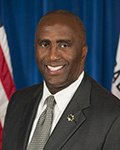
Jim Cooper
DDemocratic
Co

Mike Gipson
DDemocratic
Co

Tim Grayson
DDemocratic
Ask Maddy
·
AI policy assistant
Ask Maddy about AB 151
Scope: CA
Hi! I can help you understand AB 151. What would you like to know?
Try one of these
i
Maddy answers using official bill text and legislative records. Always verify before sharing.
Sources cited inline