This measure would recognize August 15, 2022, as India's Independence Day and urge all Californians to join in celebrating India's independence.
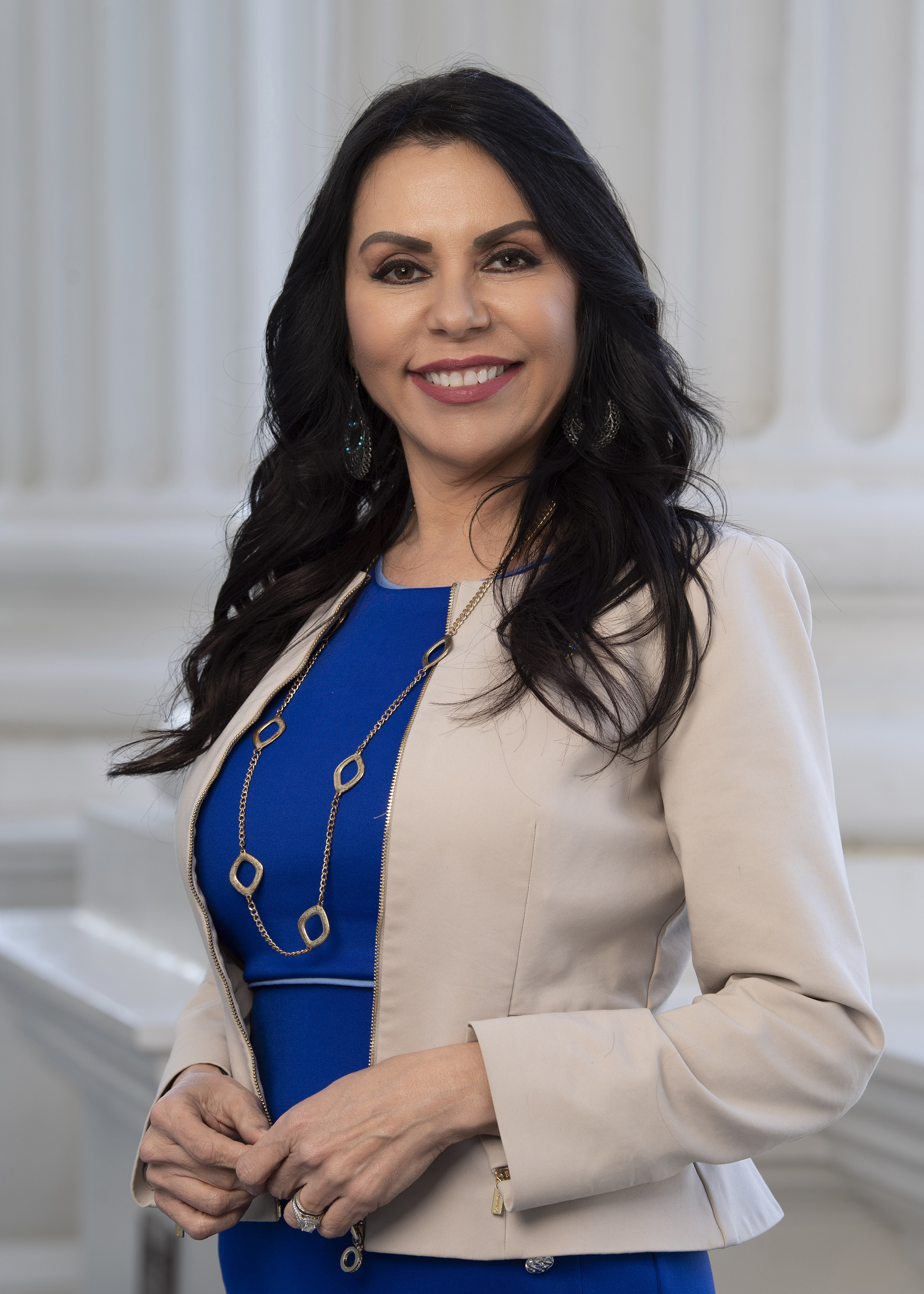
Asm. Blanca Rubio
Sponsored bills
This measure would declare August 2022 as Valley Fever Awareness Month.
This measure would declare the month of September 2022 as California Emergency Preparedness Month.
Existing law provides for the California Work Opportunity and Responsibility to Kids (CalWORKs) program, under which each county provides cash assistance and other benefits to qualified low-income families and individuals. Under the CalWORKs program, recipients are required to participate in specified welfare-to-work activities, except for specified persons, including a parent or other relative who has primary responsibility for personally providing care to a child 6 months of age or under, except that the period may be reduced to the first 12 weeks after birth or adoption or increased to the first 12 months after birth or adoption. Existing law authorizes an individual to be exempted only once pursuant to that exemption, and requires a 12-week exemption for any subsequent children, except as specified. Existing law also exempts a parent or other caretaker relative who has primary responsibility for personally providing care to one child from birth to 23 months and authorizes an individual to be exempted pursuant to this provision once. Existing law authorizes an individual not required to participate in welfare-to-work activities to participate voluntarily if the individual's status has not changed in a way that would require participation. This bill would, among other things, expand the exemption for a parent or other relative providing care to a child by instead exempting parents and other relatives who have primary responsibility for personally providing care to a child 2 years of age or younger, for up to 24 cumulative months for the same child or for a combination of that child and subsequent children. For a 2-parent family, the bill would authorize only one parent to claim that exemption and would authorize the parents to notify the county of the parent claiming the exemption. The bill would require the State Department of Social Services to develop a method for counties to allocate the exemption period between parents if parents do not notify the county which parent is claiming the exemption. The bill would also exempt, for up to 4 months, a recipient who is disabled by pregnancy, childbirth, or a related medical condition, as specified, and would require the county to extend the period if there is a statement from the recipient's health care provider that the recipient needs more time. By expanding eligibility for CalWORKs, this bill would impose a state-mandated local program. The bill would require that an individual who is exempt from participating in welfare-to-work activities pursuant to the above-described exemptions be provided a notice of action informing the individual that, among other things, they are exempt from participation and they have the right to voluntarily participate in a welfare-to-work activity of their choice. The bill would require that notice of action to be accompanied by a specified form relating to voluntary participation. The bill would require a voluntary participant's welfare-to-work plan to be deemed adopted if the county fails to act on the plan within 30 days of receiving it. By increasing county duties relating to the administration of the CalWORKs program, the bill would impose a state-mandated local program. The bill would authorize the department to implement these provisions by all-county letter or similar instruction and would require the all-county letter or similar instruction to be issued no later than April 1, 2023. Existing law continuously appropriates moneys from the General Fund to defray a portion of county costs under the CalWORKs program. This bill would instead provide that the continuous appropriation would not be made for purposes of implementing these provisions. The California Constitution requires the state to reimburse local agencies and school districts for certain costs mandated by the state. Statutory provisions establish procedures for making that reimbursement. This bill would provide that, if the Commission on State Mandates determines that the bill contains costs mandated by the state, reimbursement for those costs shall be made pursuant to the statutory provisions noted above.
Under existing law, the State Department of Health Care Services is responsible for the administration and oversight of various health care programs, including those related to cancer screening and research. This bill, the California Childhood Cancer Research Fund Act, would request the Regents of the University of California to establish and administer the Childhood Cancer Research Grant Program to provide funding to various entities to support research and treatment for children impacted by cancer and the long-term effects of cancer treatment. The bill would create the Childhood Cancer Research Council composed of 7 members, including specialists in pediatric oncology, appointed by the Governor, Senate Committee on Rules, or Speaker of the Assembly, and would require the council to develop the strategic objectives and priorities of the program and make grant recommendations to the University of California in accordance with the program's goals. The bill would require the council to submit an annual report to the Legislature describing the grants made, grants in progress, program accomplishments, and future program directions. The bill would create the Andrew Hirschman Childhood Cancer Research Fund for the implementation and administration of the grant program, upon appropriation by the Legislature. The bill would make these provisions operative until January 1, 2028.
The California Global Warming Solutions Act of 2006 designates the State Air Resources Board as the state agency charged with monitoring and regulating sources of emissions of greenhouse gases. The state board is required to approve a statewide greenhouse gas emissions limit equivalent to the statewide greenhouse gas emissions level in 1990 to be achieved by 2020 and to ensure that statewide greenhouse gas emissions are reduced to at least 40% below the 1990 level by 2030. The act requires the state board to prepare and approve a scoping plan for achieving the maximum technologically feasible and cost-effective reductions in greenhouse gas emissions and to update the scoping plan at least once every 5 years. The act requires the scoping plan to identify and make recommendations on direct emissions reduction measures, alternative compliance mechanisms, market-based compliance mechanisms, and potential monetary and nonmonetary incentives for sources and categories of sources that the state board finds are necessary or desirable to facilitate the achievement of the maximum feasible and cost-effective reductions of greenhouse gas emissions, as provided. This bill would require, on or before March 1, 2023, and on or before March 1 of each year thereafter, each state agency, board, or department to post on its internet website a report regarding its compliance with and efforts to implement any goal or recommendation related to that state agency, board, or department, as defined, that is identified by the state board in the scoping plan, including any scoping plan updates. The bill would require a state agency, board, or department to include specified information in its report, including, but not limited to, identification of all scoping plan goals or recommendations that the state agency, board, or department is charged with or responsible, in whole or in part, for implementing, a description of the state agency's, board's, or department's, efforts to implement each scoping plan goal or recommendation, and whether the state agency, board, or department has fully implemented each scoping plan goal or recommendation. The bill would require, for each scoping plan goal or recommendation that is not fully implemented, a state agency, board, or department to describe in detail why the scoping plan goal or recommendation has not been fully implemented and the steps necessary for the state agency, board, or department to fully implement the goal or recommendation.

Under existing law, a person who deprives or violates the personal liberty of another with the intent to obtain forced labor or services, or for the purpose of prostitution or sexual exploitation, is guilty of the crime of human trafficking and subject to imprisonment. This bill would, upon appropriation by the Legislature, establish the California Multidisciplinary Alliance to Stop Trafficking Act (California MAST) to review collaborative models between governmental and nongovernmental organizations for protecting victims and survivors of trafficking, among other related duties. The task force would be comprised of specified state officials or their designees and specified individuals who have expertise in human trafficking or providing services to victims of human trafficking, as specified. The bill would require the task force to hold its first meeting no later than July 1, 2023, and would require the task force to meet at least 4 times. The bill would require the task force to report its findings and recommendations to the Office of Emergency Services, the Governor, the Attorney General, and the Legislature by January 1, 2025. The bill would make related findings and declarations. The bill would repeal these provisions on July 1, 2025.