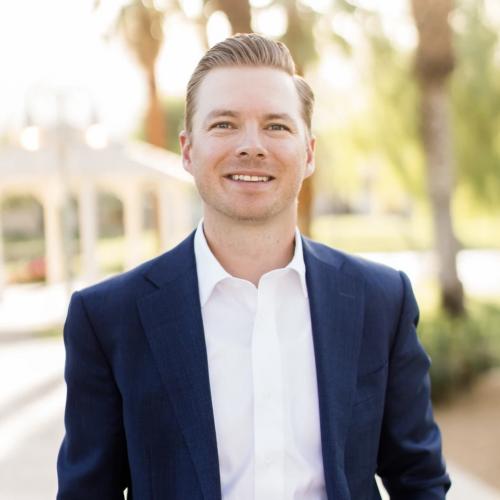
Photo of Greg Wallis
R California House · District 47 On the 2026 ballot

Rep. Greg Wallis

Compare
Total votes
9,235
all sessions
Attendance
89%
897 missed
Lower than 84% of chamber peers
With party
95%
of cast votes
Near the chamber average
Bipartisan score
3%
crosses aisle rarely
Near the chamber average
Sponsored
870
bills & resolutions
Higher than 93% of chamber peers
Committees
11
assignments
870 bills and resolutions

Sponsored bills

Total
870
Primary
81
Co-sponsor
789
This page
870
matching current filters
Co-sponsor AB 1641
Passed · California House · Co-sponsor
Postsecondary education: segments: tribal colleges and universities.

Existing law establishes the California Community Colleges, the California State University, the University of California, independent institutions of higher education, and private postsecondary educational institutions as the segments of postsecondary education in the state. The missions and functions of these segments are set forth in the Donahoe Higher Education Act. This bill would provide that public higher education additionally consists of tribal colleges and universities geographically located in California that are operated by an Indian tribal government, as defined.

Passed Aug 27, 2026 1 co-sponsor
Co-sponsor AB 1652
Signed into law · California House · Co-sponsor
State agencies: regulations and legislation: nondisclosure agreements.

Existing law prohibits Members of the Legislature from entering into, or requesting that another party enter into, a nondisclosure agreement relating to the drafting, negotiation, or discussion of proposed legislation, and makes any nondisclosure agreement relating to the drafting, negotiation, or discussion of proposed legislation void and unenforceable. Existing law provides an exception for nondisclosure agreements, or portions thereof, that prevent only the disclosure of trade secrets, financial information, or proprietary information, as specified. This bill would prohibit an elective or appointive officer of a state agency acting in their official capacity from entering into, or requesting that another party enter into, a nondisclosure agreement relating to the drafting, negotiation, or discussion of a proposed regulation or legislation. The bill would also make any nondisclosure agreement relating to the drafting, negotiation, or discussion of a proposed regulation or legislation entered into by an elective or appointive officer of a state agency acting in their official capacity after the effective date of this bill void and unenforceable. The bill would provide an exception for nondisclosure agreements, or portions thereof, that prevent only the disclosure of trade secrets, private financial information, or proprietary information, as specified.

Signed into law Aug 27, 2026 1 co-sponsor
Co-sponsor SB 594
Passed · California Senate · Co-sponsor
Short-Term Rental Facilitator Act of 2026.

Existing law, the Short-Term Rental Facilitator Act of 2025, authorizes a local agency to enact an ordinance to require a short-term rental facilitator, as defined, to report, in the form and manner prescribed by the local agency, the physical address of each short-term rental, as defined, during the reporting period. Existing law requires a short-term rental facilitator, in a jurisdiction that has adopted an ordinance, to include in the listing of a short-term rental any applicable local license number associated with the short-term rental and any transient occupancy tax certification issued by a local agency. Existing law authorizes a local agency to, if the short-term rental facilitator is responsible for collecting and remitting the transient occupancy tax to the local agency pursuant to a local ordinance or collection agreement, conduct an audit or otherwise examine the records of the short-term rental facilitator documenting the receipt of the transient occupancy tax due and payable to the local agency. This bill would enact the Short-Term Rental Facilitator Act of 2026. The bill would authorize an Indian tribe, as defined, to exercise the same powers a local agency has under the Short-Term Rental Facilitator Act of 2025. The bill would provide that an "ordinance" under the act refers to a tribal law of an Indian tribe imposing a transient occupancy tax.

Passed Aug 27, 2026 1 co-sponsor
Co-sponsor HR 141
Introduced · California House · Co-sponsor
Relative to tire affordability.

Maddy summaryCalifornia Assembly Resolution 141 expresses concern that the state's new energy efficiency standards for replacement tires may impose significant financial burdens on consumers and businesses. The resolution cites industry data suggesting tire costs could rise by up to $365 per set, contradicting official estimates of a smaller increase, and argues that the program's environmental benefits have not fully accounted for the impacts of manufacturing, transporting, and disposing of additional tires. It urges the State Energy Resources Conservation and Development Commission to reassess the program by conducting a comprehensive evaluation of affordability, tire safety, and full life-cycle environmental effects.

Introduced Aug 26, 2026 1 co-sponsor
Co-sponsor AB 2066
Passed · California House · Co-sponsor
Triggering event: pregnancy.

Existing law, the Knox-Keene Health Care Service Plan Act of 1975, provides for the licensure and regulation of health care service plans by the Department of Managed Health Care and makes a willful violation of the act a crime. Existing law provides for the regulation of disability insurers by the Department of Insurance. Existing law requires a health care service plan or disability insurer to allow an individual to enroll in or change their health benefit plan as a result of a specified triggering event. This bill would make pregnancy a triggering event for purposes of enrollment or changing a health benefit plan. Because a willful violation of this provision by a health care service plan would be a crime, the bill would impose a state-mandated local program. The California Constitution requires the state to reimburse local agencies and school districts for certain costs mandated by the state. Statutory provisions establish procedures for making that reimbursement. This bill would provide that no reimbursement is required by this act for a specified reason.

Passed Aug 26, 2026 1 co-sponsor
Co-sponsor AB 1693
Passed · California House · Co-sponsor
Accelerated retailer building plan approval: tenant improvements.

Existing law, the California Building Standards Law, establishes the California Building Standards Commission within the Department of General Services. Existing law requires the commission to approve and adopt building standards and to codify those standards in the California Building Standards Code. Existing law authorizes local governments to enact ordinances or regulations that make building standards amendments to the California Building Standards Code, as specified. Existing law establishes a streamlined approval process for a local permit for a tenant improvement related to a restaurant, as defined. This bill would establish a similar streamlined approval process for a local permit for a tenant improvement relating to a retailer, as defined. In this regard, the bill would require a local building department, upon the request and at the expense of the permit applicant, to allow a qualified professional certifier, defined as a licensed architect or engineer who meets certain requirements, to certify that the plans and specifications of the tenant improvement comply with all applicable building, health, and safety codes, as specified, unless otherwise provided by specified provisions. The bill would require a qualified professional certifier, or the applicant, as applicable, to prepare certain affidavits related to the tenant improvement under penalty of perjury. The bill would require the local building department to approve or deny the permit application within 20 business days of receiving a complete application. The bill would also authorize the applicant to resubmit corrected plans addressing the deficiencies identified in the initial denial, would limit the local building department's review of each subsequent resubmission to the deficiencies identified in the initial denial, and would require the local building department to approve or deny each subsequent resubmission within 10 business days of receipt. The bill would require each local building department to conduct audits of tenant improvements submitted for certification, as specified. The bill would authorize a city or county to adopt additional qualifications or requirements for qualified professional certifiers, including penalties or reasonable administrative fines for certain actions. The bill would make qualified professional certifiers liable for any damages arising from negligent plan review. The bill would also require the applicant to indemnify the local agency from any property damage or personal injury arising from construction permitted under the above-described provisions. The bill would further require the use of a qualified professional certifier to be temporary in cases in which there is an excessive delay, as defined. Existing law establishes the California Architects Board and the Board for Professional Engineers, Land Surveyors, and Geologists to administer the licensure and regulation of architects and engineers, respectively. Existing law specifies grounds for disciplinary action by the boards. This bill would deem making a false statement in a certification described above to be grounds for disciplinary action against a licensee who serves as a qualified professional certifier. Existing law, the Government Claims Act, establishes the liability and immunity of a public entity for its acts or omissions that cause harm to persons. Where a public entity is under a mandatory duty imposed by an enactment that is designed to protect against the risk of a particular kind of injury, the act makes the public entity liable for an injury of that kind proximately caused by its failure to discharge the duty unless the public entity establishes that it exercised reasonable diligence to discharge the duty. This bill, notwithstanding the above-described liability of a public entity for failure to discharge certain mandatory duties, would provide that a public entity or public employee is not liable for an injury caused by their discretionary or ministerial acts or omissions relating to the issuance or denial of a permit pursuant to the bill's provisions. Existing law, the California Environmental Quality Act (CEQA) , requires a lead agency, as defined, to prepare, or cause to be prepared, and certify the completion of, an environmental impact report on a project that it proposes to carry out or approve that may have a significant effect on the environment or to adopt a negative declaration if it finds that the project will not have that effect. CEQA does not apply to the approval of ministerial projects. To the extent that the streamlined, ministerial review processes established by the bill would apply to final, discretionary approval of a tenant improvement, the bill would exempt those projects from CEQA. This bill would also make related findings and declarations. The bill would include findings that changes proposed by this bill address a matter of statewide concern rather than a municipal affair and, therefore, apply to all cities, including charter cities. By adding to the duties of local officials with respect to the review and approval of tenant improvements for retailers, and by expanding the scope of various crimes related to these provisions, this bill would impose a state-mandated local program. The California Constitution requires the state to reimburse local agencies and school districts for certain costs mandated by the state. Statutory provisions establish procedures for making that reimbursement. This bill would provide that no reimbursement is required by this act for specified reasons.


Passed Aug 26, 2026 1 co-sponsor
Co-sponsor AB 1941
Passed · California House · Co-sponsor
Organized metal theft.

Existing law makes a person who is a dealer in or collector of junk, metals, or secondhand materials, or their agent, employee, or representative, who buys or receives any wire, cable, copper, lead, solder, mercury, iron, or brass that the person knows or reasonably should know is used by or belongs to specified entities, including a railroad, certain utility companies, or a public entity engaged in furnishing public utility service, without using due diligence to ascertain that the person selling or delivering that material has a legal right to do so, guilty of criminally receiving that property and, in addition to imprisonment, makes that act punishable by a fine of not more than $5,000. This bill would prohibit organized metal theft, described as acting in concert with one or more persons to steal metal materials from one or more of specified materials and items with the intent to sell, exchange, or return those metal materials for value, acting in concert with 2 or more persons to receive, purchase, or possess those metal materials knowing or believing it to have been stolen, acting as an agent of another to steal those metal materials as part of an organized plan to commit theft, or recruiting, coordinating, organizing, supervising, directing, managing, or financing another to undertake acts of theft of metal. The bill would make a violation of organized metal theft punishable as either a misdemeanor or a felony. The bill would make related findings and declarations and state the intent of the Legislature. By creating new crimes, the bill would impose a state-mandated local program. The California Constitution requires the state to reimburse local agencies and school districts for certain costs mandated by the state. Statutory provisions establish procedures for making that reimbursement. This bill would provide that no reimbursement is required by this act for a specified reason.

Passed Aug 25, 2026 1 co-sponsor
Co-sponsor AB 2361
Passed · California House · Co-sponsor
Insurance: personal vehicle sharing.

Existing law generally regulates classes of insurance, including automobile liability insurance. Existing law prohibits classifying a private passenger motor vehicle as a commercial vehicle, for-hire vehicle, permissive use vehicle, or livery solely because its owner allows it to be shared, if specified criteria are met. In the event of a loss or injury that occurs during any time period when the vehicle is under the operation and control of a person other than the vehicle owner, existing law requires the personal vehicle sharing program to assume all liability of the owner and is considered the owner of the vehicle for all purposes. Existing law requires a personal vehicle sharing program to provide insurance coverages for the vehicle and operator at a minimum of $45,000 for bodily injury or death for one person, $90,000 for bodily injury or death for all persons, and $15,000 for property damage, and, on and after January 1, 2031, to provide liability coverage at least 3 times the minimum insurance requirements for private passenger vehicles. This bill would, instead of requiring a personal vehicle sharing program to assume all liability of the owner, require the program to assume liability of the owner for bodily injury or property damage to injured third parties resulting from personal vehicle sharing in amounts stated in the personal vehicle sharing program agreement, and not less than $250,000 for bodily injury or death for one person, $500,000 for bodily injury or death for all persons, and $100,000 for property damage. The bill would make these provisions inapplicable if the vehicle owner acts in concert with a shared vehicle driver who fails to return the shared vehicle pursuant to the terms of the personal vehicle sharing program agreement.

Passed Aug 25, 2026 1 co-sponsor
Co-sponsor AB 1607
Passed · California House · Co-sponsor
Emergency medical services.

Existing law establishes the Maddy Emergency Medical Services (EMS) Fund and authorizes each county to establish an emergency medical services fund for reimbursement of costs related to emergency medical services. Existing law, until January 1, 2027, requires 15% of the fund to be used to, among other things, improve access to, and coordination of, pediatric trauma and emergency services, with specified preferences, and requires the cost of administering money deposited into the EMS Fund to be reimbursed from the money collected, as specified. Existing law, until January 1, 2027, authorizes county boards of supervisors to elect to levy an additional penalty, for deposit into the EMS Fund, in the amount of $2 for every $10 upon fines, penalties, and forfeitures collected for criminal offenses. Existing law, until January 1, 2027, requires 15% of the funds collected pursuant to that provision to be used to provide funding for pediatric trauma centers. This bill would extend the operative date of these provisions until January 1, 2037.

Passed Aug 25, 2026 1 co-sponsor
Primary AJR 9
Signed into law · California House · Lead sponsor
National parks: federal funding.

This measure would urge the President of the United States and Congress of the United States to immediately restore full and consistent funding and staffing for the National Park Service.

Signed into law Aug 25, 2026 0 co-sponsors
Showing 21 to 30 of 870 bills
Previous 1 2 3 4 87 Next