

In committee Jan 29, 2018
1 co-sponsor
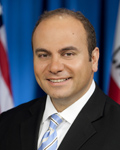
Total votes
23,010
all sessions
Attendance
96%
714 missed
Near the chamber average
With party
99%
of cast votes
Near the chamber average
Bipartisan score
0%
crosses aisle rarely
Lower than 76% of chamber peers
Sponsored
1,694
bills & resolutions
Near the chamber average
Committees
0
assignments
1,694 bills and resolutions
Sponsored bills
Total
1,694
Primary
253
Co-sponsor
1,441
This page
1,694
matching current filters
Passed Jan 22, 2018
1 co-sponsor
Medi-Cal: covered benefits: continuous glucose monitors.
Existing law provides for the Medi-Cal program, which is administered by the State Department of Health Care Services, under which qualified low-income individuals receive health care services. The Medi-Cal program is, in part, governed by, and funded pursuant to, federal Medicaid program provisions. Existing law provides for a schedule of covered benefits under the Medi-Cal program. Existing law also generally requires pharmaceutical manufacturers to provide to the department a state rebate for certain drug products that have been added to the list of Medi-Cal contract drugs, that are approved for the treatment of acquired immunodeficiency syndrome (AIDS) , or an AIDS-related condition, or cancer, and that are reimbursed through the Medi-Cal outpatient fee-for-service drug program, as specified. This bill would, to the extent that federal financial participation is available and any necessary federal approvals have been obtained, add continuous glucose monitors and related supplies required for use with those monitors to the schedule of benefits under the Medi-Cal program for the treatment of diabetes mellitus type 1 and diabetes mellitus type 2 when medically necessary, subject to utilization controls. The bill would also authorize the department to require the manufacturer of a continuous glucose monitor to enter into a rebate agreement with the department.
Vetoed Jan 12, 2018
1 co-sponsor
Eligible fuel cell electrical generating facilities: energy metering.
Under existing law, the Public Utilities Commission has regulatory authority over public utilities, including electrical corporations, as defined. Existing law establishes a specified energy metering program that is available to an eligible fuel cell customer-generator, as defined. A fuel cell electrical generating facility is eligible for the program if it has a capacity of not more than 5 megawatts. Existing law requires that an electrical corporation file with the commission a standard tariff providing for this energy metering for eligible fuel cell customer-generators and make the tariff available to eligible fuel cell customer-generators upon request, on a first-come-first-served basis, until the total cumulative rated generating capacity of the eligible fuel cell electrical generating facilities receiving service pursuant to the tariff reaches a specified level. Existing law provides that a fuel cell electrical generating facility is not eligible for the tariff unless it commences operation on or before December 31, 2021. This bill would change "eligible fuel cell electrical generating facility" to "eligible electrical generating facility" and would additionally make eligible a facility that electromechanically converts fuel to electricity for purposes of the above-described energy metering program. The bill would make conforming and nonsubstantive changes. Under existing law, a violation of any order, decision, rule, direction, demand, or requirement of the commission is a crime. Because the program that is expanded under the provisions of this bill would be implemented through a decision or order of the commission, a violation of these provisions would impose a state-mandated local program by expanding the application of a crime. The California Constitution requires the state to reimburse local agencies and school districts for certain costs mandated by the state. Statutory provisions establish procedures for making that reimbursement. This bill would provide that no reimbursement is required by this act for a specified reason.
Vetoed Jan 12, 2018
0 co-sponsors
Teacher credentialing: recognition of study in genocide, atrocities, and human rights.
Existing law requires the Commission on Teacher Credentialing to establish standards and to determine the terms for the issuance and renewal of teaching credentials, certificates, and permits, as specified. This bill would authorize the commission to convene a workgroup to advise the commission on the establishment of program standards for the issuance of a recognition of study in genocide, atrocities, and human rights for holders of a single subject teaching credential and would authorize the commission to add this recognition of study to the single subject teaching credential of a teacher who meets the program standards established by the workgroup. The bill would make the commission's authority to convene the workgroup subject to a determination by the Department of Finance that private funds sufficient to support the workgroup's activities have been deposited with the state. The bill would authorize the workgroup to perform specified other duties relating to genocide studies, including advising the Governor and the Legislature on strategies to improve genocide, human rights, and tolerance education and to promote genocide, atrocities, and human rights education.
Vetoed Jan 12, 2018
0 co-sponsors
Relative to the Voting Rights Act of 1965.
This measure would recognize August 6, 2017, as the 52nd anniversary of the signing of the federal Voting Rights Act of 1965.
Passed Jan 3, 2018
1 co-sponsor
Relative to Red Ribbon Week.
This measure would proclaim the period of October 23, 2017, to October 31, 2017, inclusive, as Red Ribbon Week and would encourage all Californians to help build drug-free communities and to participate in drug prevention activities.
Passed Jan 3, 2018
1 co-sponsor
Public contracts: 2028 Olympic Games and Paralympic Games.
Existing law provides specified requirements in awarding certain public contracts. This bill would authorize the Governor to execute games support contracts, not to exceed a specified amount, in connection with the site selection process for the City of Los Angeles to become the host for the 2028 Olympic Games and Paralympic Games, that accept financial liability to provide the state security for amounts owed by the Organizing Committee for the Olympic Games (OCOG) , as specified, and for any financial deficit accruing to the OCOG as a result of the hosting of the games by the endorsing municipality, as defined. The bill would establish the Olympic Games Trust Fund in the State Treasury and would, upon appropriation by the Legislature, make the money in the fund available for these purposes, as specified. This bill would make legislative findings and declarations that, among other things, the endorsing municipality has developed a self-sufficient bid for financing the games.
Signed into law Oct 15, 2017
1 co-sponsor
Vehicles: buses: seatbelts.
Existing law prohibits a person from operating a motor vehicle on a highway unless that person and all passengers 16 years of age or over are properly restrained by a safety belt. Existing law makes the violation of this provision an infraction. This bill would also require a passenger who is 16 years of age or older in a bus that is equipped with safety belts to be properly restrained by a safety belt and would require a motor carrier to maintain those safety belts in good working order for the use of the passengers. The bill would prohibit a parent, legal guardian, or chartering party from transporting on a bus that is equipped with safety belts, or permitting to be transported on a bus that is equipped with safety belts, a child, ward, or passenger who is 8 years of age or older, but under 16 years of age, unless he or she is properly restrained by a safety belt. The bill would also prohibit a parent, legal guardian, or chartering party from transporting on a bus that is equipped with safety belts, or permitting to be transported on a bus that is equipped with safety belts, a child, ward, or passenger who is under 8 years of age and under 4 feet 9 inches in height, unless he or she is acceptably restrained by a safety belt, except as specified. The bill would exempt a passenger leaving his or her seat to use an onboard bathroom from the seatbelt requirement. The bill would also require a motor carrier operating a bus equipped with safety belts to either: (1) require the bus driver to inform passengers of the requirement to wear a seatbelt or (2) post, or allow to be posted, signs or placards informing passengers of the requirement to wear a seatbelt, as specified. The bill would make a violation of the provisions requiring a passenger to wear a safety belt, an infraction punishable by a fine of not more than $20 for a first offense and a fine of not more than $50 for each subsequent offense. By creating a new crime, the bill would impose a state-mandated local program. The bill would specify that these provisions do not apply to a schoolbus or a school pupil activity bus, as defined. This bill, if the bus is equipped with a driver safety belt, would require the driver to be properly restrained by the safety belt and would require the motor carrier to maintain the driver safety belt. The bill would make violation of these provisions an infraction punishable by a fine of up to $20 for the first violation and of up to $50 for subsequent violations. By creating a new crime, this bill would impose a state-mandated local program. Existing law requires a charter-party carrier of passengers engaged in charter bus transportation to ensure that drivers of certain vehicles provide each passenger with written or video instructions that include, among other things, the importance of wearing a seatbelt, if available. A violation of this provision is an infraction. This bill would instead require those written or video instructions to include, among other things, instructions on the requirement to wear a seatbelt, if available, and the penalties for violating that requirement. By changing the definition of a crime, the bill would impose a state-mandated local program. This bill would also make a technical correction and other conforming changes. The provisions of this bill would become operative on July 1, 2018. This bill would incorporate additional changes to Section 12810.2 of the Vehicle Code proposed by SB 810 and would make these changes operative only if this bill and SB 810 are enacted and this bill is enacted last. The California Constitution requires the state to reimburse local agencies and school districts for certain costs mandated by the state. Statutory provisions establish procedures for making that reimbursement. This bill would provide that no reimbursement is required by this act for a specified reason.
Signed into law Oct 8, 2017
1 co-sponsor
Health professions development: loan repayment.
(1) Existing law authorizes any licensed mental health service provider, as defined, including a mental health service provider who is employed at a publicly funded mental health facility or a public or nonprofit private mental health facility that contracts with a county mental health entity or facility to provide mental health services, and who provides direct patient care in a publicly funded facility or a mental health professional shortage area, to apply for grants under the Licensed Mental Health Service Provider Education Program to reimburse his or her educational loans related to a career as a licensed mental health service provider, as specified. Existing law establishes the Mental Health Practitioner Education Fund and provides that moneys in that fund are available, upon appropriation, for purposes of the Licensed Mental Health Service Provider Education Program. This bill would, on and after July 1, 2018, add licensed professional clinical counselors and associate professional clinical counselors to those licensed mental health service providers eligible for grants to reimburse educational loans. (2) The Psychology Licensing Law establishes the Board of Psychology to license and regulate the practice of psychology. That law establishes a biennial license renewal fee and also requires the board to collect an additional fee of $10 at the time of renewal and directs the deposit of that fee into the Mental Health Practitioner Education Fund. This bill would, on or after July 1, 2018, increase that additional fee to $20. (3) The Licensed Marriage and Family Therapist Act, the Clinical Social Worker Practice Act, and the Licensed Professional Clinical Counselor Act make the Board of Behavioral Sciences responsible for the licensure and regulation of marriage and family therapists, clinical social workers, and professional clinical counselors, respectively. Those acts require the board to establish and assess biennial license renewal fees, as specified. The Licensed Marriage and Family Therapist Act and the Clinical Social Worker Practice Act also require the board to collect an additional fee of $10 at the time of license renewal and directs the deposit of these additional fees into the Mental Health Practitioner Education Fund. This bill would, on and after July 1, 2018, increase those existing additional fees under the Licensed Marriage and Family Therapist Act and the Clinical Social Worker Practice Act from $10 to $20, and would amend the Licensed Professional Clinical Counselor Act to require the Board of Behavioral Sciences to collect an additional $20 fee at the time of renewal of a license for a professional clinical counselor for deposit in the Mental Health Practitioner Education Fund. (4) This bill would declare that it is to take effect immediately as an urgency statute.
Signed into law Oct 7, 2017
0 co-sponsors
Ask Maddy
·
AI policy assistant
Ask Maddy about Adrin Nazarian
Scope: CA
Hi! I can help you understand Adrin Nazarian's legislative record. What would you like to know?
Try one of these
i
Maddy answers using official bill text and legislative records. Always verify before sharing.
Sources cited inline