

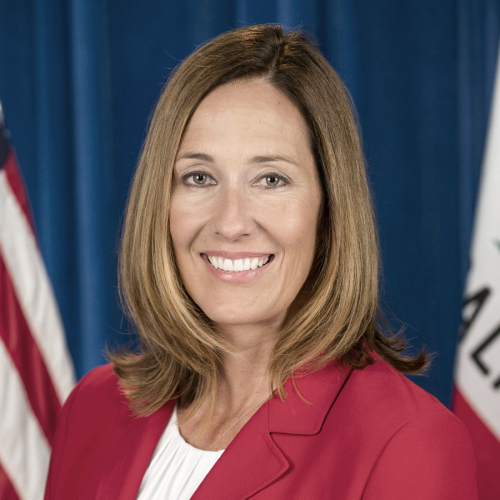
Photo of Jacqui Irwin
D California Assembly · District 42

Asm. Jacqui Irwin

Compare
Total votes
26,022
all sessions
Attendance
93%
1,558 missed
Near the chamber average
With party
98%
of cast votes
Near the chamber average
Bipartisan score
1%
crosses aisle rarely
Near the chamber average
Sponsored
2,145
bills & resolutions
Near the chamber average
Committees
13
assignments
2,145 bills and resolutions

Sponsored bills

Total
2,145
Primary
284
Co-sponsor
1,861
This page
2,145
matching current filters
Co-sponsor SCR 152
Signed into law Aug 18, 2026 1 co-sponsor
Co-sponsor HR 136
Passed · California Assembly · Co-sponsor
Relative to Home Hardening Week.

Maddy summaryCalifornia House Resolution 136 designates the second week of September each year as Home Hardening Week to promote fire safety measures for residents. The resolution cites rising wildfire risks and insurance costs as reasons for encouraging homeowners to use fire-resistant building materials and manage defensible space around their properties. It urges local organizations and county boards of supervisors to distribute information about these protective steps, which studies suggest can significantly increase the likelihood that a home survives a wildfire.

Passed Aug 17, 2026 1 co-sponsor
Co-sponsor HR 128
Passed · California Assembly · Co-sponsor
Relative to Aromatic L-Amino Acid Decarboxylase Deficiency Awareness Day.

Maddy summaryCalifornia House Resolution 128 designates October 23, 2026, as Aromatic L-Amino Acid Decarboxylase (AADC) Deficiency Awareness Day. The resolution aims to increase public and medical community awareness of this ultrarare genetic condition, which prevents the body from producing dopamine and causes severe developmental delays. By highlighting the challenges faced by patients and their caregivers, the bill encourages Californians to learn more about the disease to support earlier diagnosis and continued research into treatments.

Passed Aug 13, 2026 1 co-sponsor
Co-sponsor HR 132
Passed · California Assembly · Co-sponsor
Relative to Young Women's Reproductive Health Awareness Month.

Maddy summaryThis California House Resolution proclaims September 2026 as Young Women's Reproductive Health Awareness Month to highlight the importance of early diagnosis and education for adolescent girls. The resolution urges high schools, colleges, public health agencies, and medical providers to promote educational campaigns on topics such as menstrual health, HPV vaccination, and sexual health practices. It specifically aims to address disparities in care by encouraging outreach to communities that face systemic barriers or lack culturally appropriate resources.

Passed Aug 13, 2026 1 co-sponsor
Co-sponsor HR 131
Passed · California Assembly · Co-sponsor
Relative to Student Cancer Education, Detection, and Prevention Week.

Maddy summaryCalifornia Assembly Resolution 131 proclaims October 11 through 17, 2026, as Student Cancer Education, Detection, and Prevention Week. The resolution encourages middle schools, high schools, colleges, public health agencies, pediatricians, and community health providers to promote educational campaigns on cancer prevention and detection. These efforts aim to inform students about risk factors, warning signs, and the importance of timely screenings to support better health outcomes for young people in the state.

Passed Aug 13, 2026 1 co-sponsor
Co-sponsor ACA 18
Passed · California Assembly · Co-sponsor
A resolution to propose to the people of the State of California an amendment to the Constitution of the State, by amending Section 9 of Article IX thereof, relating to the University of California.

The California Constitution provides that the University of California constitutes a public trust, and requires the university to be administered by the Regents of the University of California, a corporation in the form of a board, with full powers of organization and government, subject to legislative control only for specified purposes. The California Constitution requires the board to consist of 7 ex officio members and 18 appointive members appointed by the Governor and approved by the Senate. The California Constitution authorizes the members of the board to appoint either a member of the faculty at a campus of the university or of another institution of higher education, or a person enrolled as a student at a campus of the university, or both, as members of the board serving for no less than one year with all rights of participation. Beginning on July 1, 2027, this measure would require, instead of authorize, the members of the board to appoint to the board for 2-year terms, 2 undergraduate students and 2 graduate students enrolled at a campus of the university for each regular academic term during their service as members of the board, as provided. The measure would require each student board member to serve as a nonvoting student regent-designate in the first year of their 2-year term, and would authorize a student member who graduates from the university on or after January 1 of the 2nd year of the student member's 2-year term to serve the remainder of their term.

Passed Aug 13, 2026 1 co-sponsor
Co-sponsor AB 1787
Passed · California Assembly · Co-sponsor
Electrical corporations: rates: smart meter infrastructure: dynamic rate option.

Existing law vests the Public Utilities Commission with regulatory authority over public utilities, including electrical corporations. Existing law authorizes the commission to fix the rates and charges for every public utility and requires that those rates and charges be just and reasonable. Existing law requires each electrical corporation to identify a separate rate component to fund certain programs that enhance system reliability and provide in-state benefits. Existing law requires that the rate component be a nonbypassable element of the local distribution service. This bill would require the commission to require a large electrical corporation, if the commission approves the large electrical corporation's request to upgrade its smart meter infrastructure relative to infrastructure in place on January 1, 2026, to offer eligible customer segments at least one dynamic rate option no later than 18 months after the upgraded smart meter infrastructure is anticipated to be placed into service, as specified. The bill would require the commission to ensure, in reviewing a request of a large electrical corporation to recover costs associated with upgrading its smart meter infrastructure, that specified conditions are met. The bill would also require the commission to ensure, among other things, the large electrical corporation makes the same time-varying distribution rates available to both bundled customers and unbundled customers located in the same geographic area, as specified. Under existing law, a violation of the Public Utilities Act or an order, decision, rule, direction, demand, or requirement of the commission is a crime. Because the above provisions would be part of the act and a violation of a commission action implementing this bill's requirements would be a crime, the bill would impose a state-mandated local program. The California Constitution requires the state to reimburse local agencies and school districts for certain costs mandated by the state. Statutory provisions establish procedures for making that reimbursement. This bill would provide that no reimbursement is required by this act for a specified reason.

Passed Aug 13, 2026 1 co-sponsor
Co-sponsor AB 2046
Passed · California Assembly · Co-sponsor
Vehicles: pollution control devices.

Existing law prohibits a person from operating or leaving standing upon a highway a motor vehicle that is required to be equipped with a motor vehicle pollution control device or any other certified motor vehicle pollution control device, as specified, unless the motor vehicle is equipped with the required motor vehicle pollution control device that is correctly installed and in operating condition, and prohibits a person from disconnecting, modifying, or altering that device. Existing law also prohibits a person from installing, selling, offering for sale, or advertising any device, apparatus, or mechanism intended for use with, or as a part of, a required motor vehicle pollution control device or system that alters or modifies the original design or performance of the motor vehicle pollution control device or system. Existing law exempts from these provisions an alteration, modification, or modifying device, apparatus, or mechanism found by resolution of the State Air Resources Board to not reduce the effectiveness of a required motor vehicle pollution control device or to result in emissions from the modified or altered vehicle that comply with existing state or federal standards, as specified. A violation of these provisions is a crime. This bill would additionally exempt from the above-described provisions an alternative fuel retrofit system for a light-duty or medium-duty gasoline-fueled vehicle that converts the vehicle to a dual-fueled vehicle that can utilize gasoline or E85 fuel if the alternative fuel retrofit system has been certified by the United States Environmental Protection Agency as a clean alternative fuel conversion system, as specified, and would prohibit the State Air Resources Board from requiring state certification, executive order approval, or any additional testing or demonstration for such an alternative fuel retrofit device.

Passed Aug 13, 2026 1 co-sponsor
Primary AB 2182
Passed · California Assembly · Lead sponsor
Energy efficiency: financing options: custom agricultural and industrial efficiency projects.

Existing law vests the Public Utilities Commission (PUC) with regulatory authority over public utilities, including electrical corporations and gas corporations. Existing law requires the State Energy Resources Conservation and Development Commission (Energy Commission) to establish a regulatory proceeding to develop and implement a comprehensive program to achieve greater energy savings in California's existing residential and nonresidential building stock. Existing law requires the PUC to investigate the ability of electrical corporations and gas corporations to provide various energy efficiency financing options to their customers for the purpose of implementing the program developed by the Energy Commission. Existing law imposes requirements for custom projects and other custom programs for industrial, agricultural, commercial, residential, and public sector customers. Existing law requires the PUC to develop and maintain rules for custom energy efficiency projects that include eligibility criteria or metrics for determining if a project is eligible for funding. This bill would delete the requirement on the PUC to develop and maintain those rules, and would instead require the commission, as part of the approval of the next Tier 2 advice letters submitted after January 1, 2027, by program administrators for mid-cycle review pursuant to a specific commission decision, to revise the rules adopted for custom agricultural and industrial efficiency projects to replace the commission's ex ante review process with a process that ensures the provision of incentives pursuant to these provisions for custom agricultural and industrial efficiency projects, as specified. Under existing law, a violation of an order, decision, rule, direction, demand, or requirement of the PUC is a crime. Because a violation of a PUC action implementing this bill's requirements would be a crime, the bill would impose a state-mandated local program. The California Constitution requires the state to reimburse local agencies and school districts for certain costs mandated by the state. Statutory provisions establish procedures for making that reimbursement. This bill would provide that no reimbursement is required by this act for a specified reason.

Passed Aug 13, 2026 0 co-sponsors
Co-sponsor HR 112
Passed · California Assembly · Co-sponsor
Relative to Black Music Month.

Maddy summaryThis House Resolution officially designates September as Black Music Month to honor the significant contributions of Black artists to American culture. The measure recognizes a wide range of musical genres, including jazz, blues, gospel, and hip-hop, by highlighting their historical origins and influential figures. While the text celebrates these artistic achievements, it does not impose any new legal requirements or funding mandates.

Passed Aug 13, 2026 1 co-sponsor
Showing 61 to 70 of 2,145 bills
Previous 1 … 6 7 8 … 215 Next