

Passed Dec 5, 2016
1 co-sponsor
Total votes
26,022
all sessions
Attendance
93%
1,558 missed
Near the chamber average
With party
98%
of cast votes
Near the chamber average
Bipartisan score
1%
crosses aisle rarely
Near the chamber average
Sponsored
2,145
bills & resolutions
Near the chamber average
Committees
13
assignments
2,145 bills and resolutions
Sponsored bills
Total
2,145
Primary
284
Co-sponsor
1,861
This page
2,145
matching current filters
University of California: innovation and entrepreneurship expansion.
Existing law establishes the University of California, under the administration of the Regents of the University of California, as one of the segments of public postsecondary education in this state. The University of California comprises 10 campuses, which are located at Berkeley, Davis, Irvine, Los Angeles, Merced, Riverside, San Diego, San Francisco, Santa Barbara, and Santa Cruz. This bill would require the University of California to make one-time expenditures for activities to expand or accelerate economic development in the state in ways that are aligned with other efforts to support innovation and entrepreneurship. The bill would identify a specific funding source in the Budget Act of 2016 appropriated for that purpose and would allocate $2,200,000 under that appropriation to each of 10 campuses of the University of California. The bill would require the regents to designate an external advisory board, as provided, to encourage the effective use of these funds through planning and oversight and would prohibit a campus from expending these funds unless the external advisory body has certified that the chancellor of that campus has made certain demonstrations, including, among others, that funds will only be used for the costs of activities that support the expansion or acceleration of economic development in the state and that private funds that at least match the amount of state funds will also be used on those activities. The bill would require the University of California to report to the Department of Finance and the Legislature on or before November 30, 2017, on the specific activities at each campus supported by these funds.
Signed into law Sep 30, 2016
0 co-sponsors
Workers' compensation.
Under existing law, the Director of Health Care Services is authorized, for purposes of administering the Medi-Cal program, to suspend a provider of service from further participation under the program for specified reasons, including conviction of any felony or any misdemeanor involving fraud, abuse of the Medi-Cal program or any patient, or otherwise substantially related to the qualifications, functions, or duties of a provider of service. Existing law requires the director, upon receipt of written notification from the Secretary of the United States Department of Health and Human Services that a physician or other individual practitioner has been suspended from participation in the Medicare or Medicaid programs, to promptly suspend the practitioner from participation in the Medi-Cal program. Existing law establishes a workers' compensation system, administered by the Administrative Director of the Division of Workers' Compensation, that generally requires employers to secure the payment of workers' compensation for injuries incurred by their employees that arise out of, or in the course of, employment. Existing law requires an employer to provide all medical services reasonably required to cure or relieve the injured worker from the effects of the injury. Existing law authorizes an insurer, employer, or entity that provides physician network services to establish or modify a medical provider network for the provision of medical treatment to injured employees and requires the administrative director to contract with individual physicians or an independent medical review organization to perform medical provider network independent medical reviews. This bill would require the administrative director to promptly suspend any physician, practitioner, or provider from participating in the workers' compensation system if as a physician, practitioner, or provider the individual or entity meets specified criteria, including if that individual has been convicted of any felony or misdemeanor involving fraud or abuse of the Medi-Cal program, Medicare program, or workers' compensation system, if that individual's license, certificate, or approval to provide health care has been surrendered or revoked, or if that individual or entity has been suspended, due to fraud or abuse, from participation in the Medicare or Medicaid programs. The bill would require the administrative director to adopt regulations for suspending a physician, practitioner, or provider from participating in the workers' compensation system pursuant to these provisions, as specified, and would require the administrative director to furnish to the physician, practitioner, or provider written notice of the right to a hearing regarding the suspension and the procedure to follow to request that hearing. The bill would also require the administrative director to promptly notify the appropriate state licensing, certifying, or registering authority of a physician's, practitioner's, or provider's suspension and to update the division's databases of qualified medical evaluators and medical provider networks. The bill would require the administrative director to notify the chief judge of the division of a suspension under these provisions, as specified, and post a notice on the department's Internet Web site. The bill would enact special lien proceedings for the adjudication of any liens of a physician, practitioner, or provider who has been suspended pursuant to these provisions because he or she has been convicted of a felony or misdemeanor that meets specified criteria. The bill would also require the Director of Health Care Services to notify the administrative director of a suspension of a physician from participation in the Medi-Cal program imposed pursuant to the provisions described above authorizing the director to suspend a provider of service from participation. Existing law establishes the Workers' Compensation Appeals Board to exercise all judicial powers vested in it, as specified, including workers' compensation proceedings for the recovery of compensation, or concerning any right or liability arising out of or incidental to the recovery of compensation. Existing law vests the appeals board with full power, authority, and jurisdiction to try and determine finally those matters, subject only to the review by the courts, as specified. Existing law authorizes the appeals board to determine, and allow as liens against any sum to be paid as compensation, as specified, a reasonable attorney's fee for legal services and disbursements in connection with those legal services. Existing law provides that a charge, claim, or agreement for those legal services or disbursements is not enforceable, valid, or binding in excess of a reasonable amount. Existing law also requires an attorney to furnish to the employee a written disclosure form describing the procedures available to the injured employee or his or her dependents and specified information regarding attorney's fees. Existing law requires that a copy of the disclosure form be signed by the employee and the attorney and sent to the employer, or insurer or 3rd-party administrator, if either is known, by the attorney within 15 days of the employee's and attorney's execution of the form. Existing law also requires the employee, the insurer, the employer, and the attorneys for each party to sign and file with the board a statement, signed under penalty of perjury, attesting that the signatories have not violated specified laws prohibiting conflicts of interest. Existing law authorizes the appeals board, a workers' compensation judge, or any party to the action or proceeding, as specified, to cause the deposition of witnesses in any investigation or hearing before the appeals board, and provides that the deponent is entitled to receive specified benefits, such as reasonable expenses of transportation, meals, and lodging, as specified. This bill would prohibit payment for legal services or disbursements in connection with those legal services, or expenses relating to the deposition of witnesses, incurred under the provisions described above, as specified, prior to the filing of the disclosure form with the appeals board and the sending of that form to the employer, or to the insurer or 3rd-party administrator, if either is known, by the attorney. The bill would require the disclosure form described above to contain a paragraph setting forth the exact location of the district office of the appeals board at which the employee's case will be filed and to include a specified statement. The bill would impose other requirements regarding the signing and content of the form, including that the form be signed under penalty of perjury by the attorney representing the employee, and would require the form to be filed with the appeals board. The bill would also require an attorney who subsequently assumes the representation of the employee in the same action or proceeding to complete and sign under penalty of perjury a disclosure form that meets the above-described requirements and the statement attesting that the signatories have not violated specified laws prohibiting conflicts of interest. The bill would require the attorney to file the form and statement with the appeals board, and send them to the employer, or insurer or 3rd-party administrator, if either is known, within 15 days of the employee's and attorney's execution of the form and statement. By expanding the scope of the crime of perjury under these provisions, this bill would impose a state-mandated local program. The California Constitution requires the state to reimburse local agencies and school districts for certain costs mandated by the state. Statutory provisions establish procedures for making that reimbursement. This bill would provide that no reimbursement is required by this act for a specified reason.
Signed into law Sep 30, 2016
1 co-sponsor
CaliforniaVolunteers: nonprofit public benefit corporation.
Under existing law, by executive order, CaliforniaVolunteers is established in the office of the Governor and is charged with overseeing programs and initiatives for service and volunteerism. This bill would authorize CaliforniaVolunteers, for so long as it is authorized to exist, to form a nonprofit public benefit corporation or other entity exempt from income taxation, as provided, to raise revenues and receive grants or other financial support from private or public sources, for the purposes of undertaking or funding any lawful activity authorized to be undertaken by CaliforniaVolunteers. The bill would require that the nonprofit public benefit corporation or other entity use the financial support it receives solely for the governmental purposes approved by CaliforniaVolunteers for activities within the scope of authority of CaliforniaVolunteers. The bill would prohibit the nonprofit public benefit corporation or other entity from using for its own administrative costs more than 10% of the grants and financial support it receives. The bill would specify the mission of that nonprofit public benefit corporation or other entity.
Signed into law Sep 28, 2016
0 co-sponsors
Powdered alcohol.
The Alcoholic Beverage Control Act contains various provisions regulating the application for, the issuance of, the suspension of, and the conditions imposed upon alcoholic beverage licenses by the Department of Alcoholic Beverage Control. That act imposes additional regulations on the sale of alcoholic beverages and creates penalties for violations of those regulations. This bill would require the department to revoke the license of any licensee who manufactures, distributes, or sells powdered alcohol, as provided. This bill would prohibit the possession, purchase, sale, offer for sale, distribution, manufacture, or use of powdered alcohol and would make the specified violation of these provisions punishable as an infraction. This bill would impose a state-mandated local program by creating a new crime. The California Constitution requires the state to reimburse local agencies and school districts for certain costs mandated by the state. Statutory provisions establish procedures for making that reimbursement. This bill would provide that no reimbursement is required by this act for a specified reason.
Signed into law Sep 28, 2016
1 co-sponsor
Powdered alcohol.
The Alcoholic Beverage Control Act contains various provisions regulating the application for, the issuance of, the suspension of, and the conditions imposed upon alcoholic beverage licenses by the Department of Alcoholic Beverage Control. That act imposes additional regulations on the sale of alcoholic beverages and creates penalties for violations of those regulations. This bill would prohibit the department from issuing a license to manufacture, distribute, or sell powdered alcohol, as defined. This bill would prohibit the possession, purchase, sale, offer for sale, distribution, manufacture, or use of powdered alcohol and would make the specified violation of these provisions punishable as an infraction. This bill would impose a state-mandated local program by creating a new crime. The California Constitution requires the state to reimburse local agencies and school districts for certain costs mandated by the state. Statutory provisions establish procedures for making that reimbursement. This bill would provide that no reimbursement is required by this act for a specified reason.
Signed into law Sep 28, 2016
0 co-sponsors
Postmortem examinations or autopsies: forensic pathologists.
Existing law requires a county coroner to inquire into and determine the circumstances, manner, and cause of certain deaths. Existing law either requires or authorizes a county coroner, under certain circumstances, to perform, or cause to be performed, an autopsy on a decedent. Existing law imposes certain requirements on a postmortem examination or autopsy conducted at the discretion of a coroner, medical examiner, or other agency upon an unidentified body or human remains. Existing law requires the coroner to perform an autopsy pursuant to a standardized protocol developed by the State Department of Public Health in any case where an infant has died suddenly and unexpectedly. Existing law authorizes the board of supervisors of a county to consolidate the duties of certain county offices in one or more of specified combinations, including, but not limited to, sheriff and coroner, district attorney and coroner, and public administrator and coroner. Existing law authorizes the board of supervisors of a county to abolish the office of coroner and provide instead for the office of medical examiner, as specified, and requires the medical examiner to be a licensed physician and surgeon duly qualified as a specialist in pathology. This bill would require that a forensic autopsy, as defined, be conducted by a licensed physician and surgeon. The bill would require that the results of a forensic autopsy be determined by a licensed physician and surgeon. The bill would require the manner of death to be determined by the coroner or medical examiner of a county. The bill would authorize trained county personnel who are necessary to the performance of an autopsy to take body measurements or retrieve blood, urine, or vitreous samples from the body of a decedent at the direction and supervision of a coroner, a medical examiner, or a licensed physician and surgeon. The bill would require, if a licensed physician and surgeon conducts a forensic autopsy, the coroner or medical examiner to consult with the licensed physician and surgeon in the determination of the manner of death. The bill would require the coroner to conduct an evaluation pursuant to a standardized protocol developed by the State Department of Public Health in any case where an infant has died suddenly and unexpectedly. The bill would require, for health and safety purposes, that all persons in the autopsy suite be informed of the risks presented by bloodborne pathogens and be informed that they should wear personal protective equipment, as specified. The bill would require that only individuals who are directly involved in the investigation of the death of the decedent be allowed into the autopsy suite but would permit individuals to be in the autopsy suite for educational and research purposes at the discretion of the coroner, in consultation with any licensed physician and surgeon conducting an autopsy. The bill would prohibit law enforcement personnel directly involved in the death of an individual who died due to involvement of law enforcement activity from being involved with any portion of the postmortem examination or being inside the autopsy suite during the performance of the autopsy. The bill would define a postmortem examination for this purpose to be the external examination of the body where no manner or cause of death is determined. The bill would require specified materials that are in the possession of law enforcement and are related to a death that is incident to law enforcement activity to be made available to the physician and surgeon who conducts the autopsy prior to the completion of the investigation of the death. The bill would specify that these provisions shall not be construed to limit the practice of an autopsy for educational or research purposes. By imposing additional duties upon local officials and law enforcement agencies, this bill would create a state-mandated local program. The California Constitution requires the state to reimburse local agencies and school districts for certain costs mandated by the state. Statutory provisions establish procedures for making that reimbursement. The bill would provide that, if the Commission on State Mandates determines that the bill contains costs mandated by the state, reimbursement for those costs shall be made pursuant to these statutory provisions.
Signed into law Sep 28, 2016
1 co-sponsor
Personal income taxes: earned income credit: credit percentage: phaseout percentage.
The Personal Income Tax Law allows various credits against the taxes imposed by that law, including certain credits that are allowed in modified conformity to credits allowed by federal income tax laws. Federal income tax laws allow a refundable earned income tax credit for certain low-income individuals who have earned income from specified sources and who meet certain other requirements. The Personal Income Tax Law, for taxable years beginning on or after January 1, 2015, in modified conformity with federal income tax laws, allows an earned income credit against personal income tax, and a payment from the Tax Relief and Refund Account for an allowable credit in excess of tax liability, to an eligible individual in an amount determined in accordance with federal law as applicable for federal income tax purposes for the taxable year, multiplied by the earned income tax credit adjustment factor, as specified. Existing law creates the Tax Relief and Refund Account, which is continuously appropriated, and provides that required payments to be made to taxpayers or other persons from the Personal Income Tax Fund are to be paid from that account, including amounts allowable as an earned income credit in excess of any tax liability. The Personal Income Tax Law provides that the amount of the credit is calculated as a percentage of the eligible individual's earned income and is phased out above a specified amount as income increases. Under existing law, the credit percentage and the phaseout percentage is based on the number of qualifying children of the eligible individual. Existing law provides, in modified conformity with federal income tax law, in the case of an eligible individual with 3 or more qualifying children, for taxable years beginning before January 1, 2016, the credit percentage and phaseout percentage is 45%, and for taxable years beginning on or after January 1, 2016, the credit percentage and phaseout percentage is the same as for an eligible individual with 2 or more children, which is 40%. This bill, for taxable years beginning on and after January 1, 2016, would instead provide that, in the case of an eligible individual with 3 or more qualifying children, the credit percentage and phaseout percentage is 45%, thereby increasing the credit percentage and the phaseout percentage for those eligible individuals for taxable years beginning on and after January 1, 2016. By increasing the allowable credit amount, this bill would authorize new payments from the Tax Relief and Refund Account for additional amounts in excess of personal income tax liabilities, thereby making an appropriation.
Signed into law Sep 27, 2016
1 co-sponsor
California Small Business Expansion Fund: corporate guarantees.
Existing law, the Small Business Financial Assistance Act of 2013, establishes the California Small Business Expansion Fund, a continuously appropriated fund that includes General Fund moneys. The act requires guarantees made by small business financial development corporations to be backed by funds on deposit in the corporation's trust fund account or by receivables due from funds loaned from the corporation's trust fund account to another fund in state government, as specified, and requires these loan guarantees to be secured by a reserve of at least 20%, until January 1, 2018, and 25% thereafter, as specified. This bill would reduce the required reserve to 10% indefinitely and would make conforming changes with respect to related statements of legislative intent. Existing law prohibits the amount of guarantee liability outstanding at any one time from exceeding 5 times the amount of funds on deposit in the expansion fund plus any receivables due from funds loaned from the expansion fund to another fund in state government, as specified, until January 1, 2018, and 4 times thereafter. This bill would increase that maximum amount to 10 times the amount of funds on deposit in the expansion fund plus any receivables due from funds loaned from the expansion fund to another fund in state government, as specified, would apply that increased amount indefinitely, and would make conforming changes. Existing law requires the program manager under the guidance of the executive director of the California Infrastructure and Economic Development Bank, to, among other things, authorize the distribution, transfer, and withholding of moneys in the expansion fund and trust funds. This bill would also require the program manager to leverage moneys in the expansion fund and trust funds.
Signed into law Sep 27, 2016
1 co-sponsor
Memorial to California firefighters: modifications.
Existing law authorizes the construction of a memorial to California firefighters on the grounds of the State Capitol, but prohibits the expenditure of state funds for purposes of the memorial. This bill would authorize the California Fire Foundation, a nonprofit organization that provides assistance to the families of fallen firefighters, in consultation with the Department of General Services, to prepare a plan to construct modifications to the existing memorial on the grounds of the State Capitol, which may include the construction of a new wall within the existing footprint of the memorial that would include the names of additional fallen firefighters. The bill would require the Department of General Services, if the foundation prepares a plan pursuant to those provisions, to take specified actions to ensure that the design, review, inspection, and construction of the proposed modifications meet prescribed requirements. The bill would require the foundation, if it undertakes responsibility to modify the memorial pursuant to these provisions, in consultation with the Department of General Services, to establish a schedule for the design and construction, implement procedures to solicit designs, devise a process for the choice of design for the proposed modifications, and report to the Joint Committee on Rules on the proposed modifications. The bill would require the California Fire Foundation to submit a plan for the proposed modifications to the Department of General Services and the Joint Committee on Rules for their review and approval. The bill would prohibit the foundation from commencing construction of any proposed modifications to the memorial until the master plan of the State Capitol Park is approved and adopted by the Joint Committee on Rules, or January 1, 2021, whichever occurs first. The bill would prohibit the commencement of any approved modifications unless the Joint Committee on Rules and the Department of Finance have verified that sufficient private donations have been secured to complete construction of the modifications. The bill would require that any modifications to the memorial be funded exclusively by private donations secured by the foundation.
Signed into law Sep 27, 2016
0 co-sponsors
Ask Maddy
·
AI policy assistant
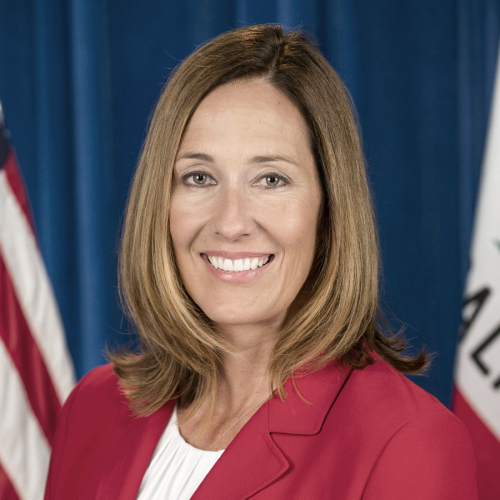
Ask Maddy about Jacqui Irwin
Scope: california
Hi! I can help you understand Jacqui Irwin's legislative record. What would you like to know?
Try one of these
i
Maddy answers using official bill text and legislative records. Always verify before sharing.
Sources cited inline