

Postmortem examinations or autopsies: forensic pathologists.
Summary
Existing law requires a county coroner to inquire into and determine the circumstances, manner, and cause of certain deaths. Existing law either requires or authorizes a county coroner, under certain circumstances, to perform, or cause to be performed, an autopsy on a decedent. Existing law imposes certain requirements on a postmortem examination or autopsy conducted at the discretion of a coroner, medical examiner, or other agency upon an unidentified body or human remains. Existing law requires the coroner to perform an autopsy pursuant to a standardized protocol developed by the State Department of Public Health in any case where an infant has died suddenly and unexpectedly. Existing law authorizes the board of supervisors of a county to consolidate the duties of certain county offices in one or more of specified combinations, including, but not limited to, sheriff and coroner, district attorney and coroner, and public administrator and coroner. Existing law authorizes the board of supervisors of a county to abolish the office of coroner and provide instead for the office of medical examiner, as specified, and requires the medical examiner to be a licensed physician and surgeon duly qualified as a specialist in pathology. This bill would require that a forensic autopsy, as defined, be conducted by a licensed physician and surgeon. The bill would require that the results of a forensic autopsy be determined by a licensed physician and surgeon. The bill would require the manner of death to be determined by the coroner or medical examiner of a county. The bill would authorize trained county personnel who are necessary to the performance of an autopsy to take body measurements or retrieve blood, urine, or vitreous samples from the body of a decedent at the direction and supervision of a coroner, a medical examiner, or a licensed physician and surgeon. The bill would require, if a licensed physician and surgeon conducts a forensic autopsy, the coroner or medical examiner to consult with the licensed physician and surgeon in the determination of the manner of death. The bill would require the coroner to conduct an evaluation pursuant to a standardized protocol developed by the State Department of Public Health in any case where an infant has died suddenly and unexpectedly. The bill would require, for health and safety purposes, that all persons in the autopsy suite be informed of the risks presented by bloodborne pathogens and be informed that they should wear personal protective equipment, as specified. The bill would require that only individuals who are directly involved in the investigation of the death of the decedent be allowed into the autopsy suite but would permit individuals to be in the autopsy suite for educational and research purposes at the discretion of the coroner, in consultation with any licensed physician and surgeon conducting an autopsy. The bill would prohibit law enforcement personnel directly involved in the death of an individual who died due to involvement of law enforcement activity from being involved with any portion of the postmortem examination or being inside the autopsy suite during the performance of the autopsy. The bill would define a postmortem examination for this purpose to be the external examination of the body where no manner or cause of death is determined. The bill would require specified materials that are in the possession of law enforcement and are related to a death that is incident to law enforcement activity to be made available to the physician and surgeon who conducts the autopsy prior to the completion of the investigation of the death. The bill would specify that these provisions shall not be construed to limit the practice of an autopsy for educational or research purposes. By imposing additional duties upon local officials and law enforcement agencies, this bill would create a state-mandated local program. The California Constitution requires the state to reimburse local agencies and school districts for certain costs mandated by the state. Statutory provisions establish procedures for making that reimbursement. The bill would provide that, if the Commission on State Mandates determines that the bill contains costs mandated by the state, reimbursement for those costs shall be made pursuant to these statutory provisions.
Bill status
signed
all 5 stages cleared
Introduction
Feb 2016
Committee Review
Aug 2016
Senate Passage
Jun 2016
Assembly Passage
Aug 2016
Signed into Law
Sep 2016
Introduced Feb 18, 2016
Signed Sep 28, 2016
Floor votes · Senate Jun 2, 2016 · Assembly Aug 23, 2016
How they voted
22–11
Passed · 2 other
Total votes 35
Jun 2, 2016
D
Democratic24
91% Yea
R
Republican11
90% Nay
Vote distribution
All Yea
All Nay
Mixed
No data
Full legislative history
Actions timeline
Total actions
34
Key actions
8
Committee
13
Amendments
1
Sep 28, 2016
Signed into law
Approved by the Governor.
legislature
Aug 24, 2016
Upper · Passed
Assembly amendments concurred in. (Ayes 38. Noes 1. Page 5373.) Ordered to engrossing and enrolling.
upper
Aug 23, 2016
Assembly · Passed
Assembly Vote: pass (74-0-1)
assembly
Aug 23, 2016
Introduced
In Senate. Concurrence in Assembly amendments pending.
upper
Aug 10, 2016
Lower · Passed
From committee: Do pass. (Ayes 19. Noes 0.) (August 10).
lower
Aug 3, 2016
Lower · Passed
August 3 hearing postponed by committee.
lower
Aug 3, 2016
Committee
From committee with author's amendments. Read second time and amended. Re-referred to Com. on APPR.
lower
Jun 28, 2016
Committee
From committee: Do pass and re-refer to Com. on APPR. (Ayes 7. Noes 0.) (June 28). Re-referred to Com. on APPR.
lower
Jun 22, 2016
Committee
From committee with author's amendments. Read second time and amended. Re-referred to Com. on PUB. S.
lower
Jun 13, 2016
Committee
Referred to Com. on PUB. S.
lower
Jun 2, 2016
Senate · Passed
Senate Vote: pass (22-11-2)
senate
May 27, 2016
Upper · Passed
From committee: Do pass. (Ayes 5. Noes 2. Page 4005.) (May 27).
upper
Apr 26, 2016
Committee
Read second time and amended. Re-referred to Com. on APPR.
upper
Apr 25, 2016
Upper · Passed
From committee: Do pass as amended and re-refer to Com. on APPR. (Ayes 6. Noes 2. Page 3646.) (April 20).
upper
Apr 13, 2016
Committee
From committee with author's amendments. Read second time and amended. Re-referred to Com. on HEALTH.
upper
Mar 28, 2016
Committee
From committee with author's amendments. Read second time and amended. Re-referred to Com. on HEALTH.
upper
Mar 3, 2016
Committee
Referred to Com. on HEALTH.
upper
Feb 18, 2016
Introduced
Introduced. Read first time. To Com. on RLS. for assignment. To print.
upper
1 primary · 2 co-sponsors
Sponsors
Role
Legislator
Party
State
District
P
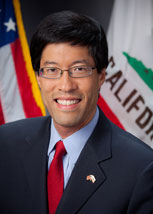
Richard Pan
DDemocratic
Co

Hannah-Beth Jackson
DDemocratic
Co
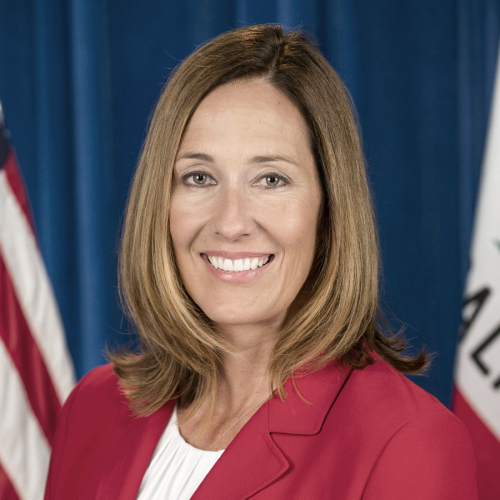
Jacqui Irwin
DDemocratic
Ask Maddy
·
AI policy assistant
Ask Maddy about SB 1189
Scope: CA
Hi! I can help you understand SB 1189. What would you like to know?
Try one of these
i
Maddy answers using official bill text and legislative records. Always verify before sharing.
Sources cited inline