

Existing law requires the Attorney General to establish and maintain an online database known as the Prohibited Armed Persons File, sometimes referred to as the Armed Prohibited Persons System, to cross-reference persons who have ownership or possession of a firearm on or after January 1, 1996, and who, subsequent to the date of that ownership or possession of a firearm, fall within a class of persons who are prohibited from owning or possessing a firearm. The Budget Act of 2019 appropriated $3,000,000 to the Counties of Alameda, San Diego, Santa Cruz, and Ventura to support local law enforcement activities related to seizing weapons and ammunition from persons who are prohibited from possessing them through a Gun Violence Reduction Pilot Program. This bill would require the Counties of Alameda, San Diego, Santa Cruz, and Ventura on or before 15 months after receiving these funds appropriated in the Budget Act of 2019, to submit a report to the Department of Justice and to the Legislature containing specified information relating to the efficacy of their programs.
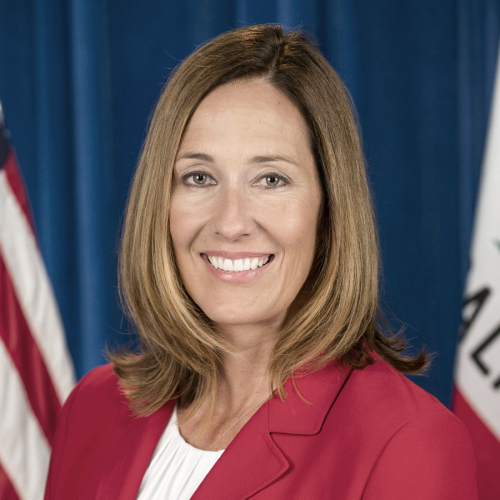
Sponsored bills
(1) Existing law, the California Beverage Container Recycling and Litter Reduction Act, requires every beverage container sold or offered for sale in this state to have a minimum refund value. Under the act, the Department of Resources Recycling and Recovery is required to calculate a processing fee for each beverage container with a specified scrap value, which is required to be paid by beverage manufacturers for each beverage container sold or transferred to a distributor or dealer. The department is required to calculate the processing fee in a specified manner so that the actual processing fee generally equals 65% of the processing payment that the department is required to pay to processors if the scrap value of the container having a refund value pursuant to the act is less than the cost of recycling. Existing law provides that a violation of the act or a regulation adopted pursuant to the act is a crime. This bill, on and after January 1, 2021, would require the total number of plastic beverage containers filled with a beverage by a beverage manufacturer, as specified, to contain, on average, specified amounts of postconsumer recycled plastic content per year pursuant to a tiered plan that would require the total number of plastic beverage containers to contain, on average, no less than 50% postconsumer recycled plastic content per year on and after January 1, 2030, except as specified. The bill would impose civil penalties, in specified amounts, on a beverage manufacturer for a violation of these requirements, except as specified. The bill would authorize the department to enforce these provisions and would authorize the department to conduct audits and investigations of a beverage manufacturer for the purpose of ensuring compliance. The bill would exempt from the California Public Records Act information resulting from those audits and investigations. The bill would require penalties collected to be deposited in the Recycling Enhancement Penalty Account, which the bill would create. The bill would require moneys in the Recycling Enhancement Penalty Account to be expended upon appropriation for the sole purpose of supporting the recycling, infrastructure, collection, and processing of plastic beverage containers in this state. The bill would require the department to contract with a research university for a specified study and would authorize the department to allocate moneys from the California Beverage Container Recycling Fund, upon appropriation, for the study. The bill would require the study to be completed by May 1, 2025. The bill would prohibit a city, county, or other local government jurisdiction from adopting an ordinance regulating the minimum recycled plastic content requirements for plastic beverage containers. Because a violation of these provisions would be a crime, the bill would impose a state-mandated local program. (2) The act requires the department to pay a market development payment to a reclaimer, as defined, for empty plastic beverage containers that have been collected for recycling in the state, and that the reclaimer washes and processes into flake, pellet, sheet, or any other form that is then usable as input for the manufacture of new plastic products, as defined, by product manufacturers in the state. The act also requires the department to pay a market development payment to a product manufacturer, as defined, for plastic flake, pellet, sheet, or any other form of plastic purchased from a reclaimer and used by that product manufacturer to manufacture a plastic product in the state. The act makes these provisions inoperative on July 1, 2022. This bill, for when the department is determining which entity to make a market development payment to, would require the department to prioritize allocations that increase the collection, production, procurement, and usage of beverage-grade recycling plastic in beverage containers, as specified. (3) Existing law requires a manufacturer of a beverage sold in a plastic beverage container subject to the California Redemption Value, as specified, to annually report to the department the amount of virgin plastic and postconsumer recycled plastic used by the manufacturer for plastic beverage containers subject to the California Redemption Value for sale in the state in the previous calendar year. This bill would require, beginning March 1, 2020, and annually thereafter, a plastic material reclaimer to report to the department, under penalty of perjury, the number of empty plastic beverage containers, as specified, that the plastic material reclaimer has collected and sold in the previous calendar year. The bill also would require, beginning March 1, 2020, and annually thereafter, a manufacturer of postconsumer recycled plastic to report to the department, under penalty of perjury, the amount in pounds of "food-grade" flake, pellet, sheet, fines, or other forms that were sold in the previous calendar year and their capacity to produce "food-grade" material, as specified. By requiring that the information be submitted under penalty of perjury, this bill would expand the crime of perjury and impose a state-mandated local program. The bill would require the department to post on its internet website, beginning July 1, 2020, a specified summary annually, and, beginning September 1, 2020, a specified analysis biennially. (4) Existing law requires all rigid plastic bottles and rigid plastic containers sold in the state to be labeled with a code indicating the resin used to produce the rigid plastic bottle or rigid plastic container. This bill would specify that the above labeling requirement does not apply to rigid plastic containers or rigid plastic bottles that are medical devices, medical products that are required to be sterile, prescription medicine, and packaging used for those products. (5) Existing constitutional provisions require that a statute that limits the right of access to the meetings of public bodies or the writings of public officials and agencies be adopted with findings demonstrating the interest protected by the limitation and the need for protecting that interest. This bill would make legislative findings to that effect. The California Constitution requires the state to reimburse local agencies and school districts for certain costs mandated by the state. Statutory provisions establish procedures for making that reimbursement. This bill would provide that no reimbursement is required by this act for a specified reason.
Existing law provides that 8 hours of labor constitutes a day's work. Under existing law, any work in excess of 8 hours in one workday and any work in excess of 40 hours in any one workweek, and the first 8 hours worked on the 7th day of work in any one workweek, is required to be compensated at the rate of no less than 112 times the regular rate of pay for an employee. Existing law also provides that hours worked in excess of 12 hours in one day as well as hours worked in excess of 8 hours on any 7th day of work are to be compensated at the rate of no less than twice the regular rate of pay of an employee. Existing law exempts from these provisions an individual employed as a teacher at a private elementary or secondary academic institution if specified requirements are met. Existing law, Wage Order No. 4-2001 of the Industrial Welfare Commission, applies to people employed in professional, technical, clerical, mechanical, and similar occupations and addresses wages, hours, and working conditions. The wage order exempts specified persons, including a person who is employed in a professional capacity whose duties meet certain requirements from various portions of the order. Existing law, Wage Order No. 5-2001 of the Industrial Welfare Commission, applies to persons employed in the public housekeeping industry, addresses wages, hours, and working conditions, and also exempts employees in administrative, executive, or professional capacities if their duties meet certain requirements. This bill would require that a person who is employed to provide instruction in the education field, as specified, be classified as employed in a professional capacity, and therefore exempt from the wage and hour provisions of Wage Order No. 4-2001, or those of Wage Order No. 5-2001, as well as specified provisions of the Labor Code, if that person meets specified criteria, including certain salary or collective bargaining requirements. The bill would prescribe 2 methods for the calculation of an employee's salary for these exceptions to apply. The employee would not be required to meet these salary requirements if an applicable collective bargaining agreement classifies the employee as employed in a professional capacity in clear and unambiguous terms, and the employee fulfills the bill's other requirements.
The California Constitution generally limits ad valorem taxes on real property to 1% of the full cash value of that property. For purposes of this limitation, "full cash value" is defined as the assessor's valuation of real property as shown on the 1975–76 tax bill under "full cash value" or, thereafter, the appraised value of that real property when purchased, newly constructed, or a change in ownership has occurred. Existing law defines "newly constructed" and "new construction" to mean any addition to real property since the last lien date and any alteration of land or of any improvement since the last lien date that constitutes a major rehabilitation thereof or that converts the property to a different use. Existing law, where real property has been damaged or destroyed by misfortune or calamity, excludes from the definition of "newly constructed" and "new construction" any timely reconstruction of the real property, or portion thereof, where the property after reconstruction is substantially equivalent to the property prior to damage or destruction. This bill would define the term "substantially equivalent" for purposes of the provisions described above to mean the size of the improvement after reconstruction does not exceed 120% of the size of the improvement prior to damage or destruction or the full cash value of the improvement after reconstruction does not exceed 120% of the full cash value of the improvement prior to damage or destruction. The bill would apply this definition to real property damaged or destroyed by misfortune or calamity on or after January 1, 2017. By imposing new duties upon local government officials, this bill would impose a state-mandated local program. This bill would make legislative findings and declarations regarding the public purpose served by the bill. The California Constitution requires the state to reimburse local agencies and school districts for certain costs mandated by the state. Statutory provisions establish procedures for making that reimbursement. This bill would provide that, if the Commission on State Mandates determines that the bill contains costs mandated by the state, reimbursement for those costs shall be made pursuant to the statutory provisions noted above. Existing law requires the state to reimburse local agencies annually for certain property tax revenues lost as a result of any exemption or classification of property for purposes of ad valorem property taxation. This bill would provide that, notwithstanding those provisions, no appropriation is made and the state shall not reimburse local agencies for property tax revenues lost by them pursuant to the bill.
This measure would recognize September 2020 as Sickle Cell Disease Awareness Month and encourage the Legislature to appropriate funds for research, treatment, and monitoring of sickle cell disease, and for related education and outreach.
This measure would urge specified state departments and the Attorney General to use their authority to ensure that health care service plans and health insurers subject to their authority comply with the federal Paul Wellstone and Pete Domenici Mental Health Parity and Addiction Equity Act of 2008.
Existing law, the California Consumer Privacy Act of 2018, beginning on January 1, 2020, grants consumers various rights with regard to their personal information held by businesses, including the right to request a business to disclose specific pieces of personal information it has collected and the right to request a business to delete any personal information collected by the business. The act generally provides for its enforcement by the Attorney General, but also provides for a private right of action in certain circumstances. The act defines "personal information" to mean information that identifies, relates to, describes, is capable of being associated with, or could reasonably be linked, directly or indirectly, with a particular consumer or household. The act excludes "publicly available information" from the definition of "personal information," and defines the term "publicly available" to mean information that is lawfully made available from federal, state, or local government records, if any conditions associated with that information. Existing law further specifies that information is not "publicly available" if that data is used for a purpose that is not compatible with the purpose for which the data is maintained and made available in the government records or for which it is publicly maintained and specifies that "publicly available" does not include consumer information that is deidentified or aggregate consumer information. This bill would redefine "personal information" to mean information that identifies, relates to, describes, is reasonably capable of being associated with, or could reasonably be linked, directly or indirectly, with a particular consumer or household. The bill would also define "publicly available" to mean information that is lawfully made available from federal, state, or local records. The bill would delete the above language specifying the conditions in which that information is not "publicly available." The bill would, instead, provide that "personal information" does not include deidentified or aggregate consumer information. The bill would make related changes. This bill would incorporate additional changes to Section 1798.140 of the Civil Code proposed by AB 1355 to be operative only if this bill and AB 1355 are enacted and this bill is enacted last.
Existing law requires the packaging of any firearm and any descriptive materials that accompany any firearm sold or transferred in this state, or delivered for sale in this state, by any licensed manufacturer or licensed dealer of firearms, to bear a label containing a warning statement, as specified. Existing law also requires a licensed dealer of firearms to conspicuously post a prescribed firearms safety warning message within the licensed premises. This bill would require, as of June 1, 2020, a specified statement regarding suicide prevention to be included on the firearm warning label, and to be posted on the premises of each licensed firearm dealer. Existing law requires the department to develop a written objective test for the issuance of a firearm safety certificate, which is generally required for the purchase or receipt of a firearm. Existing law also requires a specified warning to be given to a person who takes the firearms safety certificate examination and would require the applicant to acknowledge receipt of the prescribed warning prior to issuance of the firearm safety certificate. This bill would require, as of June 1, 2020, for the written test and the acknowledged warning to also cover the topic of suicide prevention.
(1) Existing law authorizes an immediate family member of a person or a law enforcement officer to request that a court, after notice and a hearing, issue a gun violence restraining order against that person. Under existing law, the petitioner has the burden of proving, by clear and convincing evidence, that the subject of the petition poses a significant danger of causing personal injury and that the order is necessary to prevent personal injury, as specified. Existing law prohibits a person subject to a gun violence restraining order from having in the person's custody or control, or owning, purchasing, possessing, or receiving, any firearms or ammunition while that order is in effect. Under existing law, a gun violence restraining order and a renewal gun violence restraining order have a duration of one year, subject to earlier termination or renewal by the court. This bill would authorize a law enforcement officer to file a petition for a gun violence restraining order in the name of the law enforcement agency in which the officer is employed. The bill would change the duration of the gun violence restraining order and the renewal of the gun violence restraining order from one year to a period of time between one to 5 years, subject to earlier termination or renewal by the court. The bill would require a court, in determining the duration of the gun violence restraining order, to consider the length of time that the threat of personal injury is likely to continue, and to issue the order based on that determination. (2) Existing law authorizes a person subject to a gun violence restraining order to submit one written request during the effective period of the order for a hearing to terminate the order. Existing law requires the gun violence restraining order to contain a statement advising the restrained person of that hearing right and also requires the court issuing the restraining order to inform the restrained person of that right. This bill would instead authorize a person subject to a gun violence restraining order to submit one written request per year for a hearing to terminate the restraining order. The bill would make conforming changes and other technical changes. (3) This bill would make its provisions operative on September 1, 2020. (4) This bill would incorporate additional changes to Sections 18170 and 18190 of the Penal Code proposed by AB 61 to be operative only if this bill and AB 61 are enacted and this bill is enacted last. The bill would also incorporate additional changes to Section 18175 of the Penal Code proposed by AB 1493 to be operative only if this bill and AB 1493 are enacted and this bill is enacted last.