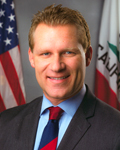
Photo of Chad Mayes
I California Assembly · District 42 · Former member

Asm. Chad Mayes

Compare
Total votes
16,300
all sessions
Attendance
89%
1,604 missed
Lower than 95% of chamber peers
With party
-
no party-line votes scored
Bipartisan score
-
no party-line votes scored
Sponsored
1,300
bills & resolutions
Near the chamber average
Committees
0
assignments
1,300 bills and resolutions

Sponsored bills

Total
1,300
Primary
95
Co-sponsor
1,205
This page
1,300
matching current filters
Primary AB 2495
Signed into law · California Assembly · Lead sponsor
Prosecuting attorneys: charging defendants for the prosecution costs of criminal violations of local ordinances.

Existing law establishes various procedures applicable to criminal prosecutions. This bill would, with exceptions, prohibit a city, county, or city and county, including an attorney acting on behalf of a city, county, or city and county, from charging a defendant for the costs of investigation, prosecution, or appeal in a criminal case, including, but not limited to, a criminal violation of a local ordinance.

Signed into law Sep 5, 2018 0 co-sponsors
Co-sponsor AJR 48
Signed into law · California Assembly · Co-sponsor
Consumer Financial Protection Bureau.

This measure would urge the President and the Congress of the United States to maintain the integrity of the Consumer Financial Protection Bureau to carry out its duties as intended to effectively protect consumers from abusive financial products and practices.

Signed into law Sep 5, 2018 1 co-sponsor
Co-sponsor SCR 161
Signed into law · California Senate · Co-sponsor
Relative to California Runaway and Homeless Youth Prevention Month.

This measure would designate the month of November 2018 as California Runaway and Homeless Youth Prevention Month and would recognize the need for individuals, schools, communities, businesses, local governments, and the state to take action on behalf of runaway and homeless youth in California.

Signed into law Sep 4, 2018 1 co-sponsor
Co-sponsor AJR 50
Passed · California Assembly · Co-sponsor
Relative to vehicular air pollution.

This measure would state that the Legislature strongly and unequivocally supports the existing fuel economy and greenhouse gas emissions standards and California's federal Clean Air Act waivers; will consider any and all appropriate actions to maintain vehicle emissions standards for the protection of public health, California residents, and the economy; and strongly urges the President and Vice President of the United States, the Secretary of the United States Department of Transportation, and the Administrator of the United States Environmental Protection Agency to reject the Safer and Affordable Fuel Efficient Vehicles Proposed Rule for Model Years 2021–2026.

Passed Aug 31, 2018 1 co-sponsor
Co-sponsor AJR 47
Passed · California Assembly · Co-sponsor
Relative to climate change and coastal resources.

This measure would affirm the Legislature's support for science-based action to conserve, protect, restore, and effectively manage California's coastal and ocean ecosystems, which the state holds in trust for the people of California, in the face of challenges presented by climate change, ocean acidification, hypoxia, and other changing ocean conditions, and would urge federal and state government entities to take specified actions to preserve the state's ocean and coastal resources as well as protect disadvantaged and low-income communities impacted by these challenges.

Passed Aug 31, 2018 1 co-sponsor
Co-sponsor AB 1971
Passed · California Assembly · Co-sponsor
Mental health services: involuntary detention: gravely disabled.

Existing law, the Lanterman-Petris-Short Act, authorizes the involuntary commitment and treatment of persons with specified mental health disorders for the protection of the persons so committed. Under the act, if a person, as a result of a mental health disorder, is a danger to others, or to himself or herself, or is gravely disabled, he or she may, upon probable cause, be taken into custody by a peace officer, a member of the attending staff of an evaluation facility, designated members of a mobile crisis team, or another designated professional person, and placed in a facility designated by the county and approved by the State Department of Social Services as a facility for 72-hour treatment and evaluation. For these purposes, existing law defines "gravely disabled" to mean either a condition in which a person, as a result of a mental health disorder or chronic alcoholism, is unable to provide for his or her basic personal needs for food, clothing, or shelter, or a condition in which a person has been found mentally incompetent, as specified. Existing law also provides immunity from civil and criminal liability for the detention by specified licensed general acute care hospitals, licensed acute psychiatric hospitals, licensed professional staff at those hospitals, or any physician and surgeon providing emergency medical services in any department of those hospitals if various conditions are met, including that the detained person cannot be safely released from the hospital because, in the opinion of treating staff, the person, as a result of a mental health disorder, presents a danger to himself or herself, or others, or is gravely disabled, as defined. Existing law prohibits a person from being tried or adjudged to punishment while that person is mentally incompetent. Existing law establishes a process by which a defendant's mental competency is evaluated and by which the defendant is committed to a facility for treatment. If the defendant is gravely disabled, as defined above, upon his or her return to the committing court, existing law requires the court to order the conservatorship investigator of the county to initiate conservatorship proceedings on the basis that the indictment or information pending against the person charges a felony involving death, great bodily harm, or a serious threat to the physical well-being of another person. This bill would, until January 1, 2024, expand the definition of "gravely disabled" for these purposes, as implemented in the County of Los Angeles, to also include a condition in which a person, as a result of a mental health disorder, is unable to provide for his or her basic personal needs for medical treatment, if the failure to receive medical treatment, as defined, results in a deteriorating physical condition that a medical professional, in his or her best medical judgment, attests in writing, will more likely than not, lead to death within 6 months, as specified. The bill would, on or before January 1, 2023, require the County of Los Angeles to submit a report to the Legislature evaluating the impact of the county's implementation of the above-mentioned provisions of the Lanterman-Petris-Short Act between January 1, 2019, and June 30, 2022, inclusive, with the expanded definition of "gravely disabled." The bill would also make certain legislative findings and declarations related to mental health. By expanding the above definition of "gravely disabled" in, and imposing new duties on, the County of Los Angeles, the bill would increase the duties on local agencies, and would therefore impose a state-mandated local program. This bill would make legislative findings and declarations as to the necessity of a special statute for the County of Los Angeles. The California Constitution requires the state to reimburse local agencies and school districts for certain costs mandated by the state. Statutory provisions establish procedures for making that reimbursement. This bill would provide that, if the Commission on State Mandates determines that the bill contains costs mandated by the state, reimbursement for those costs shall be made pursuant to the statutory provisions noted above.


Passed Aug 31, 2018 1 co-sponsor
Co-sponsor AB 2787
Passed · California Assembly · Co-sponsor
Long duration bulk energy storage: procurement.

Existing law provides for the establishment of an Independent System Operator (ISO) as a nonprofit public benefit corporation and requires the ISO to make certain filings with the Federal Energy Regulatory Commission (FERC) and to seek authority from the FERC as needed to give the ISO the ability to secure generating and transmission resources necessary to guarantee achievement of planning and operating reserve criteria no less stringent than those established by the Western Electricity Coordinating Council and the North American Electric Reliability Council. This bill would require the ISO, on or before December 31, 2019, to complete a process for the procurement of long duration energy storage projects that in aggregate have at least 1,000 megawatts capacity, but not more than 2,000 megawatts, except as provided. The bill would require the ISO to develop a methodology for allocating the cost of that procurement to all load-serving entities within the ISO-controlled electrical grid, as provided. Under existing law, a violation of the Public Utilities Act is a crime. Because the provisions of this bill would be a part of the act, a violation of which would be a crime, the bill would impose a state-mandated local program. The California Constitution requires the state to reimburse local agencies and school districts for certain costs mandated by the state. Statutory provisions establish procedures for making that reimbursement. This bill would provide that no reimbursement is required by this act for a specified reason. This bill would declare that it is to take effect immediately as an urgency statute.

Passed Aug 31, 2018 1 co-sponsor
Co-sponsor ACR 252
Signed into law · California Assembly · Co-sponsor
Relative to the 4th of July.

This measure would state the intent of the Legislature to take the opportunity preceding the 4th of July holiday to recognize and celebrate July 4, 2018, and the 242nd anniversary of the birth of our great nation and the signing of the Declaration of Independence that this day represents.

Signed into law Aug 30, 2018 1 co-sponsor
Showing 661 to 670 of 1,300 bills
Previous 1 … 66 67 68 … 130 Next