

Existing law establishes the Office of Farm to Fork within the Department of Food and Agriculture, and requires the office, to the extent that resources are available, to work with various entities, including, among others, the agricultural industry and other organizations involved in promoting food access, to increase the amount of agricultural products available to underserved communities and schools in the state. This bill would create the California Organic-to-School Pilot Program, to be administered by the Secretary of Food and Agriculture, through the Office of Farm to Fork. The bill would require the secretary to expend moneys allocated for the program to provide grants for school food authorities to purchase California organic food products for school meals, as specified. The bill would require the secretary to consult with the State Department of Education to determine the recipients and amounts of grants awarded under the program. The bill would require a school food authority that receives a grant under the program to submit a report to the secretary containing specified information and would require the secretary to report to the Legislature on the outcomes of the program. The bill would make the implementation of its provisions contingent on a one-time appropriation being made for its purposes by the Legislature in the annual Budget Act or another statute.
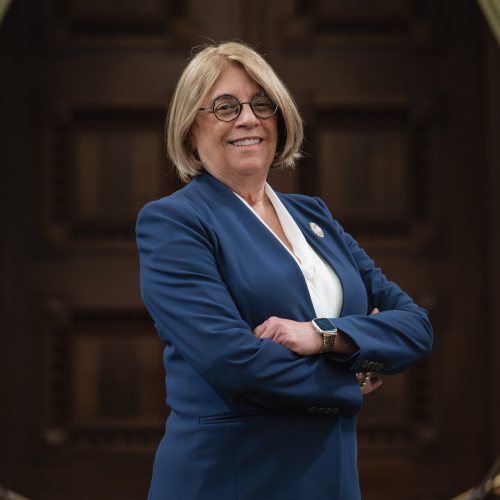
Asm. Cecilia Aguiar-Curry
Sponsored bills
Existing law provides for the federal Supplemental Nutrition Assistance Program (SNAP) , administered in California as CalFresh, under which each county distributes nutrition assistance benefits provided by the federal government to eligible households. Existing state law authorizes a county to deliver CalFresh benefits through the use of an electronic benefits transfer (EBT) acceptance system. Existing law, until January 1, 2022, encourages the Regents of the University of California, requires the Trustees of the California State University, and authorizes the Board of Governors of the California Community Colleges, to designate as a "hunger-free campus" each of the institutions' respective campuses that meet specified criteria, including having a campus employee designated to help ensure that students have the information they need to enroll in CalFresh. This bill would require the State Department of Social Services, the State Department of Public Health, the State Department of Education, and the Department of Food and Agriculture, to develop a plan to end hunger. The bill would require the State Department of Social Services to serve as the lead agency for the development of the plan. The bill would require the plan to be distributed to the Legislature no later than January 1, 2021, and would establish criteria for the plan, including that the plan establish a budget of $11,500,000, contingent upon an appropriation in the annual Budget Act or other measure, for the Department of Food and Agriculture to support local food hub efforts. The bill would also require the plan to request the Regents of the University of California, and direct the Trustees of the California State University and the Board of Governors of the California Community Colleges, to develop systems that allow EBT cards to be used on their respective campuses, and present a report to the Assembly Select Committee on Campus Climate on the progress that has been made, by July 1, 2020.
(1) Existing law declares that a thriving in-state forest products sector provides public benefits, including employment opportunities in both rural and urban areas, and economic development for rural communities. Existing law establishes the Forest Management Task Force pursuant to a specified executive order issued by the Governor, and requires the task force or its successor entity, on or before July 1, 2020, in consultation with specified entities, to develop recommendations for the siting of additional wood product manufacturing facilities in the state. Existing law specifies that it is the intent of the Legislature, in developing those recommendations, that the location and activities of the mass timber production facilities be, among other things, located in, or be proximate to, areas that are near the locations of large landscape fires, as described, and in areas identified as federal opportunity zones or in areas that have an average household income of 5% below the state's median household income. This bill would add a definition of the task force for purposes of those provisions and recast the median household income threshold from 5% below to at or below 5% of the state's median household income. (2) Existing law establishes the Strategic Growth Council in state government consisting of various state agency heads and 3 public members. Existing law assigns to the council certain duties relative to the identification and review of activities and funding programs of state agencies that may be coordinated to improve air and water quality, improve natural resource protection, increase the availability of affordable housing, improve transportation, meet greenhouse gas emissions reduction goals, encourage sustainable land use planning, and revitalize urban and community centers in a sustainable manner. This bill would require the council, in consultation with stakeholders and relevant permitting agencies, to prepare and submit a report to the Legislature that provides a scoping plan for the state to meet its organic waste, climate change, and air quality mandates, goals, and targets and would require the scoping plan to include, among other things, recommendations on policy and funding support for the beneficial reuse of organic waste.
This measure would name the public street, circle, and plaza at 914 and 915 Capitol Mall in the City of Sacramento as the Willie L. Brown, Jr. Circle and Plaza. The measure would request the Department of General Services to determine the cost of erecting the appropriate signage commemorating this special designation and, upon receiving donations from nonstate sources, to cover that cost to erect that signage.
Existing law requires the Attorney General to establish and maintain an online database known as the Prohibited Armed Persons File, sometimes referred to as the Armed Prohibited Persons System, to cross-reference persons who have ownership or possession of a firearm on or after January 1, 1996, and who, subsequent to the date of that ownership or possession of a firearm, fall within a class of persons who are prohibited from owning or possessing a firearm. The Budget Act of 2019 appropriated $3,000,000 to the Counties of Alameda, San Diego, Santa Cruz, and Ventura to support local law enforcement activities related to seizing weapons and ammunition from persons who are prohibited from possessing them through a Gun Violence Reduction Pilot Program. This bill would require the Counties of Alameda, San Diego, Santa Cruz, and Ventura on or before 15 months after receiving these funds appropriated in the Budget Act of 2019, to submit a report to the Department of Justice and to the Legislature containing specified information relating to the efficacy of their programs.
(1) Existing law requires the Secretary of State to provide every high school, community college, and California State University and University of California campus with voter registration forms. Existing law also expresses the intent of the Legislature that every eligible high school and college student receive a meaningful opportunity to apply to register to vote. This bill would create the High School Voter Education Pilot Program to be conducted in Yolo County. Under the pilot program, the Yolo County Elections Office and Yolo County Office of Education would be authorized to conduct mock student government elections on designated high school campuses, using, to the extent possible, the same standards, processes, and voting equipment used in the county for regularly-conducted elections. This bill would require the administering agencies to provide voter registration and preregistration opportunities for eligible students in conjunction with the program, and would require the administering agencies to report to the Legislature regarding the outcome of the program, as specified. The bill would repeal these provisions on January 1, 2027. (2) Existing law directs the Secretary of State to adopt regulations requiring each county to design and implement voter outreach programs intended to identify qualified electors who are not registered voters, and to register those persons to vote, including regulations prescribing minimum requirements for those programs. Existing law further provides that if the Secretary of State finds that a county has not designed and implemented a program meeting prescribed minimum requirements, the Secretary of State is required to design a program for the county and report the violation to the Attorney General. This bill would require the Secretary of State, in adopting those regulations, to require each county to periodically update its programs. This bill would also require the Secretary of State to periodically update the Secretary's own regulations promulgated pursuant to this provision. By imposing a new statutory duty on each county, this bill would impose a state-mandated local program. Existing law authorizes the Secretary of State to provide grants for voter outreach purposes. This bill would broaden the purposes of the voter outreach grant program described above, and it would permit the Secretary of State to provide grant funding pursuant to that provision. (3) The California Constitution requires the state to reimburse local agencies and school districts for certain costs mandated by the state. Statutory provisions establish procedures for making that reimbursement. This bill would provide that, if the Commission on State Mandates determines that the bill contains costs mandated by the state, reimbursement for those costs shall be made pursuant to the statutory provisions noted above.
Existing law requires each school district or county superintendent of schools maintaining kindergarten or any of grades 1 to 12, inclusive, and, commencing with the 2019–20 school year, each charter school, to provide each needy pupil with one nutritionally adequate free or reduced-price meal during each schoolday. Existing law authorizes a school district or county office of education, in order to comply with that requirement, to use funds made available through any federal or state program the purpose of which includes the provision of meals to a pupil, including, among other programs, the federal School Breakfast Program and the federal National School Lunch Program, or to provide those meals at the expense of the school district or county office of education. This bill would require a school district, county office of education, or charter school that does not participate in the federal National School Lunch Program or the federal School Breakfast Program to provide adequate space for children to consume those meals. The bill would require such a school district, county office of education, or charter school to annually report to the State Department of Education an alternative meal program each of its schoolsites will follow to ensure that each needy pupil is provided with a free or reduced-price meal, and would require the department to provide a form to report this information. The bill would require the department to conduct onsite reviews of schoolsites to verify a school district's, county office of education's, or charter school's compliance with the federal meal benefit issuance requirements and meal pattern regulations under the federal National School Lunch Program or the federal School Breakfast Program. The bill would require the department to report to the Legislature the results of the onsite reviews and a list of noncompliant schoolsites. To the extent the bill would impose additional duties on school districts, county offices of education, and charter schools, the bill would impose a state-mandated local program. This bill would incorporate additional changes to Section 47613.5 of the Education Code proposed by AB 842 to be operative only if this bill and AB 842 are enacted and this bill is enacted last. This bill would incorporate additional changes to Section 49550 of the Education Code proposed by AB 842 and AB 1595 to be operative only if this bill and either or both AB 842 and AB 1595 are enacted and this bill is enacted last. The California Constitution requires the state to reimburse local agencies and school districts for certain costs mandated by the state. Statutory provisions establish procedures for making that reimbursement. This bill would provide that, if the Commission on State Mandates determines that the bill contains costs mandated by the state, reimbursement for those costs shall be made pursuant to the statutory provisions noted above.
Existing law, including, among others, the Mello-Granlund Older Californians Act, provides programs and strategies to support the state's older population. These programs include the Aging and Disability Resource Connection program, established to provide information to consumers and their families on available long-term services and supports (LTSS) programs and to assist older adults, caregivers, and persons with disabilities in accessing LTSS programs at the local level. This bill would require the state to adopt a Master Plan for Aging, emphasizing workforce priorities. The bill would require the Master Plan for Aging to prioritize specified issues related to preparing and supporting the state's paid paraprofessionals and professionals, as well as unpaid family caregivers. These issues would include, but not be limited to, (1) addressing the need for a well-trained and culturally competent paid paraprofessional and professional health care and long-term care workforce, and (2) developing recommendations regarding the need for high-quality, affordable, and accessible respite services throughout the state for unpaid family caregivers. The bill would require the Master Plan for Aging to include an implementation plan specifying the goals, objectives, and timelines for meeting the requirements set forth in those provisions. The bill would make findings and declarations relating to the objectives of the master plan.