Maddy summaryThis House Resolution (HR 44) recognizes and commends homeless service providers in California during November 2025, designating it as "Homelessness Awareness Month." It acknowledges the critical work of these providers - public and nonprofit staff who deliver services like outreach, housing navigation, and support to people experiencing homelessness. The resolution highlights challenges they face, including low wages and staffing difficulties, but does not create new policies or allocate funding. As a symbolic gesture, it aims to raise awareness of their role in addressing homelessness.
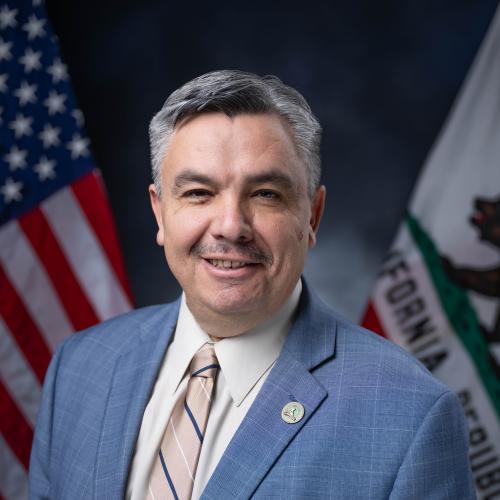
Asm. Juan Carrillo
Sponsored bills
Maddy summaryThis is a commemorative resolution (not a law), passed by the California Assembly on August 18, 2025. It recognizes the 105th anniversary of the 19th Amendment's ratification (August 18, 1920), which guaranteed women the right to vote. The resolution acknowledges California's earlier 1911 suffrage victory and notes that women of color and women with disabilities faced continued barriers to voting until the Voting Rights Act (1965) and ADA (1990), respectively. The Assembly urges all Californians to celebrate this milestone.
Maddy summaryThis resolution designates October 18, 2025, as Huell Howser Day to honor his contributions to California's history, culture, and people. It directly affects Californians by formally recognizing Huell Howser's legacy through a state-recognized observance. The bill has no policy changes or financial implications - it solely creates a commemorative date.
Maddy summaryACR 93 designates October 23, 2025, as "Aromatic L-Amino Acid Decarboxylase Deficiency Awareness Day" in California. The bill does not create new laws or alter regulations; it is a ceremonial resolution to raise public awareness about Aromatic L-Amino Acid Decarboxylase Deficiency (AADC deficiency), a rare genetic disorder affecting dopamine and serotonin production. It directly affects the AADC deficiency patient community and their families by promoting recognition of the condition. This designation has no legal or financial impact beyond symbolic acknowledgment.
Maddy summaryACR 99 designates June 29, 2025, as Scleroderma Awareness Day in California. This resolution has no binding effect but aims to raise public awareness about scleroderma, a rare autoimmune disease affecting the skin and internal organs. It directly affects California residents by encouraging community recognition of the disease. The measure serves solely as a commemorative statement without implementing new policies or funding.
This measure would, among other things, declare that using executive orders to silence opposition and chill legal advocacy is an unlawful attack on the right of Americans to seek counsel and would designate May 1 as Law Day to not only commemorate the importance that law plays in California but to stand in solidarity with the legal community.
This measure would urge the United States Congress to avoid any cuts to the Supplemental Nutrition Assistance Program (SNAP) , which could harm the state's children, older adults, and families, and impact the state's economic well-being.
Existing federal law requires the United States Secretary of Health and Human Services to enter into an agreement with each manufacturer of covered outpatient drugs to ensure the amount a covered entity is required to pay for those drugs does not exceed the average manufacturer price of the drug under the federal Medicaid program. Existing state law requires a covered entity to dispense only drugs subject to these federal pricing requirements to Medi-Cal beneficiaries. Existing law prohibits a pharmacy benefit manager from discriminating against a covered entity or its pharmacy in connection with dispensing a drug subject to federal pricing requirements or preventing a covered entity from retaining the benefit of discounted pricing for those drugs. This bill would prohibit a prescription drug manufacturer from engaging in discriminatory practices that would impose additional conditions, prohibit, restrict, deny, or interfere with a qualifying nonhospital 340B community clinic's purchase or delivery of a drug subject to federal pricing requirements if the qualifying nonhospital 340B community clinic utilizes a specified pharmacy, including a contract pharmacy, that dispenses the drug to an eligible patient of the qualifying nonhospital 340B community clinic. The bill would define "discriminatory practices" and "qualifying nonhospital 340B community clinic" for these purposes. The bill would require qualifying nonhospital 340B community clinics to annually perform specified activities to ensure compliance with program rules and guidance from the federal Health Resources and Services Administration. The bill would make related intent statements.
The California Public Records Act requires state and local agencies to make their records available for public inspection, except as specified. Existing law requires each agency, within 10 days of a request for a copy of records, to determine whether the request seeks copies of disclosable public records in possession of the agency and to promptly notify the person of the determination and the reasons therefor. Existing law authorizes that time limit to be extended by no more than 14 days under unusual circumstances, and defines "unusual circumstances" to include, among other things, the need to search for, collect, and appropriately examine records during a state of emergency when the state of emergency currently affects the agency's ability to timely respond to requests due to staffing shortages or closure of facilities, as provided. This bill would revise the definition of unusual circumstances as it applies to a state of emergency to require the state of emergency, in addition to currently affecting the agency's ability to timely respond to requests as described above, to also require the state of emergency to directly affect the agency's ability to timely respond to requests as described above. By restricting the time period in which a local agency may respond to requests, thus increasing the duties of local officials, this bill would create a state-mandated local program. This bill would also expand the definition of unusual circumstances to include the inability of the agency, because of a cyberattack, to access its electronic servers or systems in order to search for and obtain a record that the agency believes is responsive to a request and is maintained on the servers or systems in an electronic format. Under the bill, the extension would apply only until the agency regains its ability to access its electronic servers or systems and search for and obtain electronic records that may be responsive to a request. The California Constitution requires local agencies, for the purpose of ensuring public access to the meetings of public bodies and the writings of public officials and agencies, to comply with a statutory enactment that amends or enacts laws relating to public records or open meetings and contains findings demonstrating that the enactment furthers the constitutional requirements relating to this purpose. This bill would make legislative findings to that effect. Existing constitutional provisions require that a statute that limits the right of access to the meetings of public bodies or the writings of public officials and agencies be adopted with findings demonstrating the interest protected by the limitation and the need for protecting that interest. This bill would make legislative findings to that effect. The California Constitution requires the state to reimburse local agencies and school districts for certain costs mandated by the state. Statutory provisions establish procedures for making that reimbursement. This bill would provide that no reimbursement is required by this act for a specified reason.

This measure would recognize June 14, 2025, as Flag Day in California and encourage the citizens of the state to celebrate the symbol of our freedom and remember the hard work and sacrifices that so many made to ensure that freedom.