

Existing law declares the intent of the Legislature to preserve and strengthen a child's family ties whenever possible, removing the child from the custody of their parents only when necessary for the child's welfare or for the safety and protection of the public. Existing law declares the further intent of the Legislature that all children live with a committed, permanent, and nurturing family, with services and supports that are tailored to meet the needs of the individual child and family being served, with the ultimate goal of maintaining the family or, when this is not possible, transitioning the child or youth to a permanent family or preparing the child or youth for a successful transition into adulthood. This bill would make technical, nonsubstantive changes to those provisions.
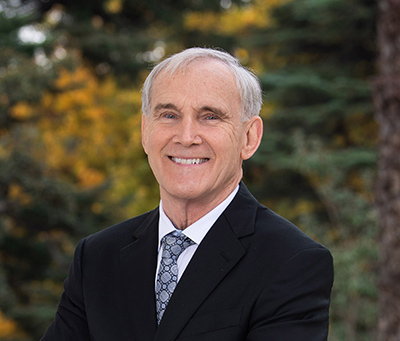
Asm. Steve Bennett
Sponsored bills
Existing law requires the Natural Resources Agency to update every 3 years the state's climate adaptation strategy, known as the Safeguarding California Plan, and to coordinate with other state agencies to identify vulnerabilities to climate change by sectors and priority actions needed to reduce the risks in those sectors. Existing law requires, to address the vulnerabilities identified in the plan, state agencies to maximize specified objectives, including promoting the use of the plan to inform planning decisions and ensure that state investments consider climate change impacts, as well as promote the use of natural systems and natural infrastructure, when developing physical infrastructure to address adaptation. This bill would add aquifers as part of the meaning of natural infrastructure. Existing law establishes the Department of Water Resources in the Natural Resources Agency. Existing law authorizes the department to investigate any natural situation available for reservoirs or reservoir systems for gathering and distributing flood or other water not under beneficial use in any stream, stream system, lake, or other body of water. Existing law also authorizes the department to ascertain the feasibility of projects for those reservoirs or reservoir systems, the supply of water that may thereby be made available, and the extent and character of the areas that may be thereby irrigated, as well as the cost of those projects. The bill would require the department to prepare and produce a report to the Legislature, by July 1, 2024, outlining best practices for aquifer recharge. The bill would require the report to include specified information, including, among other things, guidelines for a streamlined permitting process for aquifer recharge projects that implement the best practices outlined in the report. The bill would also require the department to create a grant program by July 1, 2025, to implement best practices in aquifer recharge, including a streamlined process for the issuance of grant funds.
Existing law, the Cortese-Knox-Hertzberg Local Government Reorganization Act of 2000, provides the exclusive authority and procedure for the initiation, conduct, and completion of changes of organization and reorganization for cities and districts, except as specified. This bill would make a nonsubstantive change to the provision naming the act.
Existing law requires the State Air Resources Board to develop and adopt hydrogen fuel regulations to ensure that state funding for the production and use of hydrogen fuel contributes to the reduction of greenhouse gas emissions, criteria air pollutant emissions, and toxic air contaminant emissions, including by requiring that, on a statewide basis, no less than 33.3% of the hydrogen produced for, or dispensed by, fueling stations that receive state funds be made from eligible renewable energy resources, as specified. Under existing law, a violation of those regulations, and other provisions pertaining to motor vehicle fuels, is a crime. This bill would require, on and after January 1, 2045, that all hydrogen produced or used in California for the generation of electricity or fueling of vehicles be renewable hydrogen of nonbiological origin, as defined, or renewable hydrogen of biological origin, as defined, in furtherance of the state's policy to achieve net zero greenhouse gas emissions as soon as possible, but no later than 2045. The bill would require the state board, in consultation with the Public Utilities Commission (PUC) and the State Energy Resources Conservation and Development Commission (Energy Commission) , to develop interim targets to ensure the state achieves that requirement. Because a violation of a state board regulation implementing this requirement would be a crime, the bill would impose a state-mandated local program. The California Renewables Portfolio Standard Program requires the PUC to establish a renewables portfolio standard requiring all retail sellers, as defined, to procure a minimum quantity of electricity products from eligible renewable energy resources, as defined, so that the total kilowatthours of those products sold to their retail end-use customers achieves 25% of retail sales by December 31, 2016, 33% by December 31, 2020, 44% by December 31, 2024, 52% by December 31, 2027, and 60% by December 31, 2030. This bill would prohibit renewable hydrogen of nonbiological origin or renewable hydrogen of biological origin used by a generating facility from qualifying as an eligible renewable energy resource for purposes of that requirement unless it satisfies all applicable requirements established by the Energy Commission and meets specified requirements. For all electricity generated using renewable hydrogen of nonbiological origin or renewable hydrogen of biological origin that is credited toward the renewables portfolio standard procurement obligations, the bill would require that sufficient renewable and environmental green attributes, as defined, of renewable hydrogen of nonbiological origin or renewable hydrogen of biological origin production and capture be transferred to the retail seller or local publicly owned electric utility that uses that renewable hydrogen of nonbiological origin or renewable hydrogen of biological origin to ensure that there are zero net emissions associated with the production of electricity from the generating facility using the renewable hydrogen of nonbiological origin or renewable hydrogen of biological origin. The bill would require all sellers and purchasers of renewable hydrogen of nonbiological origin or renewable hydrogen of biological origin to comply with a system for tracking and verifying the use of renewable hydrogen of nonbiological origin or renewable hydrogen of biological origin established by the Energy Commission, as specified. Under existing law, a violation of the Public Utilities Act or any order, decision, rule, direction, demand, or requirement of the PUC is a crime. Because certain of the above provisions would be part of the act and a violation of a PUC action implementing this bill's requirements would be a crime, the bill would impose a state-mandated local program. The California Constitution requires the state to reimburse local agencies and school districts for certain costs mandated by the state. Statutory provisions establish procedures for making that reimbursement. This bill would provide that no reimbursement is required by this act for a specified reason.
Existing law generally requires county boards of supervisors, city councils, and the governing boards of school districts, community college districts, and other special districts, if those bodies are elected using district-based elections, to adopt new boundaries for the districts following each federal decennial census. Notwithstanding that requirement, existing law authorizes a local jurisdiction other than a charter city to establish an independent redistricting commission to adopt new boundaries for the local jurisdiction's districts. This bill would require a county, general law city, charter city, or charter city and county that contains over 300,000 residents, and a school district or community college district that contains over 500,000 residents, to establish an independent redistricting commission to adopt district boundaries after each federal decennial census. The bill would require a county, general law city, charter city, or charter city or county with over 300,000 residents, and a school district or community college district with over 500,000 residents, that does not enact an ordinance, resolution, or charter amendment establishing an independent redistricting commission by January 1, 2030, and January 1 of every subsequent year ending in 0, to establish a 14-member independent redistricting commission according to specified procedures, including procedures for the random selection of the members of the commission from among applicants meeting certain qualifications. By requiring certain local jurisdictions to establish independent redistricting commissions to adopt district boundaries, the bill would impose a state-mandated local program. The bill would prohibit a member of an independent redistricting commission from communicating with any individual or organization regarding redistricting matters, except as provided. The bill would require the State Auditor to provide the contact information of any applicant to serve on the Citizens Redistricting Commission, which is responsible for adjusting the boundary lines of the congressional, legislative, and State Board of Equalization districts, to any city or county that has established an independent or hybrid redistricting commission, provided that the applicant has consented to share this information and the city or county has requested to receive this information, and to inform those applicants of opportunities to serve on an independent or hybrid redistricting commission. The bill would require the State Auditor to establish a database and create and advertise a process for this exchange of information. Under existing law, independent redistricting commissions have been established for the Counties of Los Angeles, San Diego, Riverside, Fresno, and Kern. The bill would exempt the Counties of Los Angeles, San Diego, Riverside, Fresno, and Kern from the bill's provisions requiring a county with over 300,000 residents to establish an independent redistricting commission, unless the existing law provisions establishing independent redistricting commissions for those counties are repealed or invalidated. The bill also would exempt a charter city with a population of at least 2,500,000 people from the bill's provisions if specified conditions are met, including if both this bill and Senate Bill 52 are enacted and if the city complies with certain provisions in Senate Bill 52 that require such cities to establish independent redistricting commissions. This bill would incorporate additional changes to Section 23003 of the Elections Code proposed by Assembly Bill 764 to be operative only if this bill and Assembly Bill 764 are enacted and this bill is enacted last. The bill would include findings that changes proposed by this bill address a matter of statewide concern rather than a municipal affair and, therefore, apply to all cities, including charter cities. The California Constitution requires the state to reimburse local agencies and school districts for certain costs mandated by the state. Statutory provisions establish procedures for making that reimbursement. This bill would provide that, if the Commission on State Mandates determines that the bill contains costs mandated by the state, reimbursement for those costs shall be made pursuant to the statutory provisions noted above.
Existing law sets forth provisions for the formation, duties, and other authorizations, among other things, relating to cities, counties, cities and counties, and other local agencies. This bill would state the intent of the Legislature to enact legislation relating to local government.
Existing law establishes the Department of General Services to provide centralized services, including, but not limited to, planning, acquisition, construction and maintenance of state buildings and property. Existing law authorizes the Director of General Services, with the consent of the state agency concerned, to lease state-owned real property when the Director of General Services deems that leasing serves a beneficial public purpose limited to the development of housing. This bill would enact the Social Housing Act and would create, in the Department of General Services, the Social Housing Program, the mission of which would be to ensure that qualified social housing developments are produced on leased state property to help address the housing crisis, as specified. The bill would authorize the program to identify and develop up to 3 qualified social housing projects, as specified, with the intent to use the results to inform public policy related to developing an independent public entity to develop statewide qualified social housing. The bill would require the program to solicit bids to develop qualified social housing units, and prioritize bids that demonstrate long-term revenue neutrality or a cost rent model, as those terms are defined. The bill would require the program to employ 2 different leasing models, the rental model and the ownership model, as specified, in creating social housing. The bill would prohibit a city or county from denying a social housing development authorized under the program. The bill would authorize a city or county to propose objective design review standards, as specified, and authorize a city or county to propose modifications to mitigate any specific, adverse impacts on public health or safety, as specified.
Existing law establishes various state water policies, including the policy that the use of water for domestic purposes is the highest use of water and that the next highest use is for irrigation. This bill would specify that the use of water for domestic purposes includes water use for human consumption, cooking, sanitary purposes, care of household livestock, animals, and gardens, fire suppression and other safety purposes, and a purpose determined to be a domestic purpose as established by the common law.
The Cannella Environmental Farming Act of 1995 requires the Department of Food and Agriculture to establish and oversee an environmental farming program to provide incentives to farmers whose practices promote the well-being of ecosystems, air quality, and wildlife and their habitat. The act also requires the department to establish the Healthy Soils Program and a technical assistance grant program, as specified. Existing law, the Farmer Equity Act of 2017, requires the department to ensure the inclusion of socially disadvantaged farmers and ranchers, as defined, in the development, adoption, implementation, and enforcement of food and agriculture laws, regulations, and policies and programs, as specified. This bill would require the department, upon appropriation by the Legislature and in collaboration with certain entities, to establish the Regional Farmer Equipment and Cooperative Resources Assistance Pilot Program as part of the Farmer Equity Act of 2017 to provide financial and technical assistance to support regional farm equipment sharing and enhance cooperative benefits first for socially disadvantaged farmers and ranchers and, if funding is available, for limited resource farmers and ranchers or eligible entities that serve socially disadvantaged or limited resource farmers and ranchers, as specified. The bill would specify the entities eligible for financial assistance under the program and would require that applications for financial assistance to develop and expand equipment sharing programs include certain information. The bill would repeal these provisions on January 1, 2029.