

Existing law provides for the regulation and supervision of dams and reservoirs by the state, and requires the Department of Water Resources, under the police power of the state, to supervise the construction, enlargement, alteration, repair, maintenance, operation, and removal of dams and reservoirs for the protection of life and property, as prescribed. Existing law requires the department to, upon appropriation by the Legislature, develop and administer the Dam Safety and Climate Resilience Local Assistance Program to provide state funding for repairs, rehabilitation, enhancements, and other dam safety projects at existing state jurisdictional dams and associated facilities that were in service prior to January 1, 2023, subject to prescribed criteria. This bill would include the removal of project facilities as additional projects eligible to receive funding under the program.
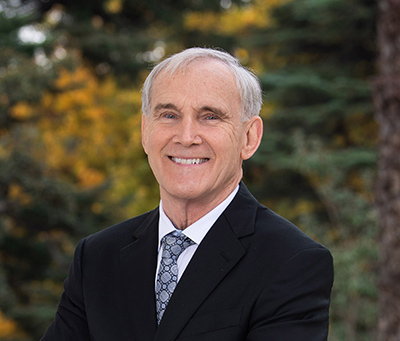
Asm. Steve Bennett
Sponsored bills
Existing law, the California Community Care Facilities Act, provides for the licensure and regulation of community care facilities, including foster family homes and foster family agencies, by the State Department of Social Services. Existing law requires a criminal record check of applicants for a license, special permit, or certificate of approval for a foster family home or certified family home, and other persons, including nonclients who reside in those homes and staff and employees. Existing law requires the department to check the child abuse and neglect registry of a different state for a licensee of a community care facility who has lived in another state in the preceding 5 years. Existing law generally makes violations of these requirements a crime. This bill would authorize a licensee of a community care facility to approve an individual to care for children before the completion of another state's child abuse and neglect registry check if certain specified conditions are met, including that the community care facility has submitted a request for the out-of-state abuse and neglect registry check to the department. The bill would require a licensee to remove an applicant from the community care facility immediately upon receipt of information that would disqualify the applicant from approval and notify the department of the removal within 3 business days. By expanding the scope of a crime, this bill would impose a state-mandated local program. The California Constitution requires the state to reimburse local agencies and school districts for certain costs mandated by the state. Statutory provisions establish procedures for making that reimbursement. This bill would provide that no reimbursement is required by this act for a specified reason.
The California Global Warming Solutions Act of 2006 designates the State Air Resources Board as the state agency charged with monitoring and regulating sources of emissions of greenhouse gases. The act authorizes the state board to include the use of market-based compliance mechanisms. Existing law requires all moneys, except for fines and penalties, collected by the state board as a part of the market-based compliance mechanism to be deposited in the Greenhouse Gas Reduction Fund. Existing law requires the Department of Resources Recycling and Recovery, upon appropriation, to administer a grant program to provide financial assistance to promote the in-state development of infrastructure, food waste prevention, or other projects to reduce organic waste, sort and aggregate or process organic and other recyclable materials into new, value-added products, or divert items from disposal through enhanced reuse opportunities. Existing law requires the grant program to provide eligible financial assistance for certain activities, including activities that expand and improve organic waste diversion and recycling, including, but not limited to, the recovery of food for human consumption and food waste prevention. Existing law specifies eligible infrastructure projects for purposes of the program, including, but not limited to, the construction of facilities to help develop, implement, or expand edible food waste recovery operations. This bill would expand the grant program to provide financial assistance for the recovery of edible food, as specified. The bill would specify that eligible infrastructure projects includes the construction or expansion of facilities to help develop, implement, or expand edible food waste recovery operations. The bill would require the department to consider the increased amount of edible food recovery capacity that the project will create when awarding a grant for edible food recovery.
The California Environmental Quality Act (CEQA) requires a lead agency, as defined, to prepare, or cause to be prepared, and certify the completion of an environmental impact report (EIR) on a project that it proposes to carry out or approve that may have a significant effect on the environment or to adopt a negative declaration if it finds that the project will not have that effect. CEQA also requires a lead agency to prepare a mitigated negative declaration for a project that may have a significant effect on the environment if revisions in the project would avoid or mitigate that effect and there is no substantial evidence that the project, as revised, would have a significant effect on the environment. Existing law exempts from CEQA a rezoning that implements the schedule of actions contained in an approved housing element, as specified, except, among other things, a rezoning that would allow for the construction of a distribution center or for oil and gas infrastructure. This bill would instead exempt a rezoning to the extent that it is necessary to implement a schedule of actions contained in an approved housing element, except, among other things, a rezoning that would allow for the construction of a distribution center, for a tourism facility, as defined, or for oil and gas infrastructure. Existing law, for a proposed housing development project, as defined, that would otherwise be exempt from CEQA pursuant to a statutory exemption or specified categorical exemptions, but for a single condition, limits the application of CEQA to the effects upon the environment that are caused by that single condition, except as provided. This bill, for purposes of those provisions, would modify the definition of housing development project to exclude a project that has any portion of the project designated for use as a tourism facility, as defined. To the extent that this would create new duties for a lead agency, this bill would impose a state-mandated local program. Existing law exempts specified projects from CEQA, including a project that consists exclusively of a facility for advanced manufacturing, as defined, if the project is located on a site zoned exclusively for industrial uses. Existing law excludes projects located on natural and protected lands, as defined, from these exemptions, as provided. Existing law includes in the definition of natural and protected lands, lands protected as preserve areas or reserve lands pursuant to an adopted natural community conservation plan or habitat conservation plan, as specified. This bill would instead include, for that portion of the definition of natural and protected lands, lands identified for conservation in an adopted natural community conservation plan, habitat conservation plan, or other adopted natural resource protection plan, as specified. The bill would also expand the definition of natural and protected lands to include habitat for protected species, as specified, fully protected species, or species protected by the federal Endangered Species Act of 1973, the California Endangered Species Act, or the Native Plant Protection Act. The bill would eliminate the exemption from CEQA for advanced manufacturing projects. The bill would instead exempt from CEQA, until January 1, 2030, a project that consists exclusively of a facility for semiconductor manufacturing if the project is located on a site that was zoned exclusively for heavy industrial use on or before August 1, 2025, and meets specified criteria, including, among other things, that the project does not involve the storage, use, or discharge of extremely hazardous gases or chemicals above California's accidental release program reporting thresholds, the project applicant demonstrates high road employment standards and certifies to the lead agency that it will maintain those standards in the development, construction, and operation of the facility, and the project applicant has provided a legally binding commitment to comply with specified labor-related requirements with respect to the initial construction of the facility and subsequent maintenance that is contracted out to a contractor in the construction industry, as specified. Because a lead agency would be required to determine the applicability of this exemption, the bill would impose a state-mandated local program. The bill would require the State Energy Resources Conservation and Development Commission to develop and make available to lead agencies guidelines for evaluating whether a project applicant demonstrates high road employment standards. The bill would require the Office of Land Use and Climate Innovation, on or before January 1, 2029, to report to the Legislature on projects that were exempted from CEQA pursuant to the above exemption, as provided, and require the report to include a list of the projects for semiconductor manufacturing facilities that have been approved for development in the state, as specified. CEQA requires in an action or proceeding to attack, review, set aside, void, or annul certain acts or decisions of a public agency to be commenced according to a specified process and requires the record of proceedings to contain specified information, including all internal agency communications, except as specified. Existing law provides that for those projects that do not include a distribution center or oil and gas infrastructure, internal agency communication does not include staff notes and electronic internal agency communications, including emails, that were not presented to the final decisionmaking body, other than those communications and documents consulted, or reviewed by the lead agency executive or a local agency executive, as provided, thereby limiting what the record of proceeding is required to contain for these projects. This bill would eliminate the above-described limitation on internal agency communication required to be included in the record of proceedings for those projects that do not include a distribution center or oil and gas infrastructure, thereby requiring additional information to be included in the record of proceeding. By imposing new duties on a lead agency in order to comply with this provision, the bill would create a state-mandated local program. The California Constitution requires the state to reimburse local agencies and school districts for certain costs mandated by the state. Statutory provisions establish procedures for making that reimbursement. This bill would provide that no reimbursement is required by this act for a specified reason.
Existing law requires the Office of the State Fire Marshal to develop and make available on its internet website a Wildland-Urban Interface Fire Safety Building Standards Compliance training intended for use in the training of local building officials, builders, and fire service personnel, as specified. Existing law requires the Office of the State Fire Marshal to develop and update a Wildland-Urban Interface Products listing of products and construction assemblies that comply with prescribed regulations regarding building in a wildland-urban interface area. Existing law authorizes the Office of the State Fire Marshal to expend funds from the Building Standards Administration Special Revolving Fund, upon an appropriation by the Legislature, for the purposes of researching and developing the products listing and the educational and training provisions. Existing law requires the Office of the State Fire Marshal to establish the State Fire Marshal's Wildfire Mitigation Advisory Committee. This bill would require, on or before January 1, 2027, the State Fire Marshal's Wildfire Mitigation Advisory Committee to develop a home hardening certification program that identifies home hardening measures, including defensible space, that can be implemented during renovation or property improvement projects, or both, to substantially reduce the risk of loss during a fire and bring existing building stock into alignment with state building standards for wildland-urban interface areas. The bill would authorize the Office of the State Fire Marshal to expend funds from the Building Standards Administration Special Revolving Fund, upon an appropriation by the Legislature, for the purposes of developing the home hardening certification program. This bill would incorporate additional changes to Section 13159.5 of the Health and Safety Code proposed by SB 514 to be operative only if this bill and SB 514 are enacted and this bill is enacted last.
Existing law designates all parks, public campgrounds, monument sites, landmark sites, and sites of historical interest established or acquired by the state, or that are under its control, as the state park system, except as specified. Under existing law, the Department of Parks and Recreation controls the state park system, which is made up of units. This bill would require the Director of Parks and Recreation to establish an Accessibility Advisory Committee that consists of the Chief of the Accessibility Division for the department and additional members appointed by the director, as provided. The bill would require the committee to serve in an advisory capacity to the director and make recommendations for improving the accessibility of units of the state park system for individuals with disabilities. The bill would require the committee to evaluate disability accessibility models and provisions, review services, programs, and activities provided by the department, and provide recommendations on general plans for the department, as provided. The bill would authorize the director to implement the committee's recommendations as the director deems appropriate.
Existing law establishes the office of county recorder and requires the county recorder to accept for recordation any instrument, paper, or notice that is authorized or required to be recorded, subject to the collection of specified fees. Existing law prohibits the fee for recording and indexing an instrument, paper, or notice from exceeding $10 for recording the first page and $3 for each additional page, which charges are to reimburse the county for the costs of services rendered. Existing law requires $1 of each $3 fee for each additional page to be deposited in the county general fund. This bill would set the fee for recording and indexing at $15 for recording the first page and $4 for each additional page, but would prohibit the fees from exceeding the reasonable costs of the county recorder's office for providing these services. The bill would provide that these funds are to be dedicated to, and solely utilized for, the county recorder's office, as specified. The bill would delete the provision requiring $1 of each $3 fee for each additional page to be deposited in the county general fund. Existing law specifies that $1 for recording the first page and $1 for each additional page shall be available solely to support, maintain, improve, and provide for the full operation for modernized creation, retention, and retrieval of information in each county's system of recorded documents. This bill would increase the $1 amount for each additional page to $3. Existing law authorizes the county board of supervisors to provide for an additional fee of $1 for each instrument, paper, or notice of record to order to defray the cost of converting the county recorder's document storage system to micrographics. Existing law, until January 1, 2026, authorizes the $1 fee to also be used for restoration and preservation of the county recorder's permanent archival microfilm, to implement and fund a county recorder archive program, or to implement and maintain or utilize a trusted system for the permanent preservation of recorded document images. This bill would delete the January 1, 2026, repeal date, thereby making these provisions operative indefinitely. The bill would replace a reference to "archival microfilm" with "archival mediums" and would repeal related provisions. The bill would include related legislative findings concerning county recorder fees. By imposing new duties on counties relative to recording fees, the bill would impose a state-mandated local program. The California Constitution requires the state to reimburse local agencies and school districts for certain costs mandated by the state. Statutory provisions establish procedures for making that reimbursement. This bill would provide that no reimbursement is required by this act for a specified reason.
Maddy summaryThis bill establishes January as National Human Trafficking Awareness Month in California to raise public awareness about human trafficking. The resolution recognizes the severity of human trafficking as a felony crime and highlights statistics showing its prevalence across the country and specific challenges with identifying male victims and labor trafficking cases. It aims to educate the public and encourage reporting and support for victims during this designated month.
(1) The Water Recycling Law generally provides for the use of recycled water. Existing law requires any person who, without regard to intent or negligence, causes or permits an unauthorized discharge of 50,000 gallons or more of recycled water in or on any waters of the state to immediately notify the appropriate regional water board. This bill would, for the purposes of the above provision, redefine "recycled water" and provide that water discharged from a decorative body of water during storm events is not to be considered an unauthorized discharge if recycled water was used to restore levels due to evaporation. (2) Existing law regulating the use of recycled water prohibits the use of prescribed potable water by state and local agencies for any nonpotable uses, including cemeteries, golf courses, parks, and highway landscaped areas if prescribed recycled water is available, and deems use of the recycled water in lieu of the potable water to constitute a reasonable beneficial use of that water. The bill would provide that incidental amounts of spray, mist, or runoff are to be permitted to enter outdoor eating areas of parks and open spaces when irrigated with disinfected tertiary treated recycled water that complies with a specified regulation regarding irrigation. (3) Existing law authorizes any public agency, including a state agency, city, county, city and county, district, or any other political subdivision of the state, to require the use of recycled water for irrigation of residential landscaping, as specified. The bill would provide that outdoor landscape irrigation of common areas that does not enter the boundaries of a residence is not to be considered a part of the same premises as an individual residence and is not to be considered a dual-plumbed system. The bill would require recycled water used for this purpose to comply with specified water quality and cost conditions. (4) Existing law authorizes any public agency, including a state agency, city, county, city and county, district, or any other political subdivision of the state, to require the use of recycled water for toilet and urinal flushing in structures, as specified. Existing law defines "structures" for the purposes of these provisions. This bill would include food handling and processing facilities as part of the definition of "structures." The bill would authorize the use of recycled water for toilet or urinal flushing or outdoor irrigation in and around food handling or processing facilities, commercial, institutional, and industrial buildings, and cafeterias, provided the recycled water does not enter the room where food handling or processing occurs, as specified.
Existing law provides generally for the regulation of wells, pumping plants, conduits, and streams. Existing law requires the State Fire Marshal to identify areas in the state as moderate, high, and very high fire hazard severity zones based on consistent statewide criteria and based on the severity of fire hazard that is expected to prevail in those areas. This bill would, beginning July 1, 2030, require a water supplier, as defined, to have access to sufficient backup energy sources to operate critical fire suppression infrastructure, as defined, needed to supply water for at least 24 hours for the purpose of fire suppression in high or very high fire hazard severity zones in the County of Ventura, or to have access to alternative sources of water supplied by a different water supplier or agency that can serve this same purpose of supplying backup water to critical wells and water pumps for 24 hours, as provided. The bill would require the water supplier to take various actions, including annually inspecting critical fire suppression infrastructure and backup energy sources and notifying the Ventura County Office of Emergency Services within 3 business days of any reduction in its water delivery capacity that could substantially hinder firefighting operations or significantly delay the replenishment of reservoirs. The bill would require, if any fire damages and makes uninhabitable more than 10 residential dwellings within the service area of a water supplier, a report be made by the Ventura County Fire Department in cooperation with the water supplier, as specified. By levying new requirements on the Ventura County Fire Department, this bill would create a state-mandated local program. This bill would make legislative findings and declarations as to the necessity of a special statute for County of Ventura. The California Constitution requires the state to reimburse local agencies and school districts for certain costs mandated by the state. Statutory provisions establish procedures for making that reimbursement. This bill would provide that, if the Commission on State Mandates determines that the bill contains costs mandated by the state, reimbursement for those costs shall be made pursuant to the statutory provisions noted above.