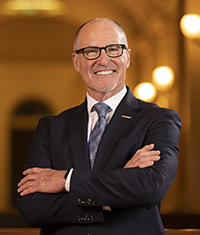
Photo of Gregg Hart
D California Assembly · District 37 On the 2026 ballot

Asm. Gregg Hart

Compare
Total votes
12,314
all sessions
Attendance
95%
423 missed
Near the chamber average
With party
99%
of cast votes
Near the chamber average
Bipartisan score
0%
crosses aisle rarely
Near the chamber average
Sponsored
767
bills & resolutions
Near the chamber average
Committees
11
assignments
767 bills and resolutions

Sponsored bills

Total
767
Primary
78
Co-sponsor
689
This page
767
matching current filters
Co-sponsor HR 6
Passed · California Assembly · Co-sponsor
Relative to school governance.

Maddy summaryThis bill is a House Resolution that formally recognizes the work of school board members across California by designating January 2025 as School Board Recognition Month. It directly affects local school districts and county offices of education by honoring the nearly 5,000 elected school board members who serve in these roles. The resolution expresses appreciation for their dedication to public education and encourages community members to support these local officials in their efforts to serve students. This is a commemorative measure rather than a policy change, as it does not alter laws or regulations but instead highlights the importance of school governance.

Passed Jan 30, 2025 1 co-sponsor
Co-sponsor ACA 1
In committee · California Assembly · Co-sponsor
A resolution to propose to the people of the State of California an amendment to the Constitution of the State, by amending Section 20 of Article XVI thereof, relating to public finance.

The California Constitution prohibits the total annual appropriations subject to limitation of the State and of each local government from exceeding the appropriations limit of the entity of government for the prior year adjusted for the change in the cost of living and the change in population. The California Constitution defines "appropriations subject to limitation" of the State for these purposes. The California Constitution establishes the Budget Stabilization Account and requires, for every fiscal year and based on the Budget Act for that fiscal year, the Controller to transfer from the General Fund to the Budget Stabilization Account, no later than October 1, a sum equal to 1.5% of the estimated amount of General Fund revenues for that fiscal year. The California Constitution requires other transfers between the General Fund and the Budget Stabilization Account, as specified. The California Constitution prohibits the amount transferred pursuant to these provisions for any fiscal year from exceeding an amount that would result in a balance in the account that, when the transfer is made, exceeds 10% of the amount of the General Fund proceeds of taxes for the fiscal year estimate, as specified. This measure would change the 1.5% required transfer to an undetermined percentage of the estimated amount of General Fund revenues for that fiscal year. The measure would change the 10% limit on the balance in the Budget Stabilization Account to 20% of the amount of the General Fund proceeds of taxes for the fiscal year estimate, as specified. The measure would specify that funds transferred under these provisions to the Budget Stabilization Account do not constitute appropriations subject to the above-described annual appropriations limit.

In committee Jan 29, 2025 1 co-sponsor
Primary AB 1
Signed into law · California Assembly · Lead sponsor
Energy: transportation fuels: inventories: turnaround and maintenance.

Existing law, beginning on June 26, 2023, establishes the Independent Consumer Fuels Advisory Committee within the State Energy Resources Conservation and Development Commission (Energy Commission) to advise the Energy Commission and the Division of Petroleum Market Oversight, as provided. Existing law prescribes the composition of the 8-member committee, including 6 specified members appointed by the Governor, one member appointed by the Speaker of the Assembly, and one member appointed by the Senate Committee on Rules. Existing law requires one member appointed by the Governor to represent labor. Existing law prohibits a member of the committee from having been employed by, contracted with, or received direct compensation from, a company that produces, refines, distributes, trades in, markets, or sells any petroleum product in the preceding 12 months, except as provided. Existing law specifies that the schedule of meetings of the committee is to be prescribed by the Energy Commission. This bill would specify that the above prohibition does not exclude a representative of a labor organization whose membership consists of, in whole or in part, individuals employed by a company that produces, refines, distributes, trades in, markets, or sells any petroleum product. The bill would require the gubernatorial appointee who represents labor to instead represent a labor organization with experience in refinery operations. The bill would require the committee to meet no less than annually. Existing law requires the Energy Commission, in consultation with the Labor and Workforce Development Agency and labor and industry stakeholders, to consider ways to manage necessary refinery turnarounds and maintenance that would protect the health and safety of employees and the public, and minimize the impacts of maintenance-related production losses on fuel prices. Existing law authorizes the Energy Commission, by regulation, to impose requirements governing the timing of turnaround and maintenance. This bill would expressly require those regulations to protect the health and safety of employees, local communities, and the public, and to include criteria that are required to be met before a refinery commences a turnaround or maintenance event, as provided. This bill would require the Energy Commission, in consultation with the committee, to consider the effects of refiners' inventories of fuel and feedstocks and blending components on the price of transportation fuels in California. The bill would authorize the Energy Commission, by regulation, to develop and impose requirements for refiners operating in the state to maintain minimum levels of inventories of refined transportation fuels meeting California specifications, including any feedstocks and blending components, as specified. The bill would prohibit the Energy Commission from applying a minimum inventory requirement to a refiner in a manner that would be met only by the construction of additional storage infrastructure, as determined by the Energy Commission. The bill would repeal these provisions on January 1, 2033. This bill would impose an administrative civil penalty on a refiner or person who fails to comply with regulations adopted pursuant to the above-described authority and would authorize the Energy Commission to seek any form of injunctive or remedial relief to enforce compliance with those regulations, as provided. Existing law requires the Energy Commission, on or before January 1, 2024, and every 3 years thereafter, to submit an assessment to the Governor and the Legislature that, among other things, identifies methods to ensure a reliable supply of affordable and safe transportation fuels in California, as provided. This bill, beginning with the first assessment submitted after the effective date of the bill, would require that the assessment also include an evaluation of California's future petroleum product and crude oil import needs, identification of steps that can be taken to ensure that marine infrastructure and port facilities will be adequate to accommodate the efficient movement of petroleum products to meet those needs, an evaluation of ways to maximize use of existing infrastructure and minimize cumulative pollution burdens, and an evaluation of the effects on supplies of transportation fuels of state regulations that the Energy Commission identifies may be causing supply constraints, or for which the Energy Commission believes alternative compliance pathways should be considered by state agencies to mitigate potential impacts on supply.


Signed into law Oct 14, 2024 0 co-sponsors
Co-sponsor AB 3145
Signed into law · California Assembly · Co-sponsor
Family preservation services: standards.

Existing law requires the State Department of Social Services (department) and county welfare departments to establish and support a public system of statewide child welfare services available in each county, as specified. Existing law declares the intent of the Legislature to encourage the continuity of the family unit by providing family preservation services, which may include counseling, mental health treatment, and transportation, among other things. Existing law requires an authorized participating county to provide specific programs of direct services based on individual family needs, as specified. Existing law authorizes a county to establish family preservation programs that serve one or more geographic areas of the county, subject to the approval of the department. Existing law requires that the services selected by a participating county be reasonable and meritorious, as specified. Existing law prescribes standards for services provided by each county to be deemed successful. This bill, the Foster Care Justice through Meaningful Help for Parents Act, would also require that those services have a track record of helping families, have their outcomes tracked and reported, and be designed to eradicate the situation that necessitated intervention. The bill would require, as of January 1, 2026, and to be implemented by each county on the next grant cycle or service provider selection cycle after January 1, 2026, that each service provider, at the time the provider is selected by a participating county, provide services that are reasonable, meritorious, and that demonstrate cost-effectiveness and success at avoiding out-of-home placement, or reduce the length of stay in out-of-home placement. The bill would require, commencing January 1, 2026, service providers to be reviewed for reasonableness, merit, and whether they demonstrated cost-effectiveness and success at avoiding out-of-home placement, or reduce the length of stay in out-of-home placement no less than every 3 years after selection. The bill would include, as of January 1, 2026, additional standards for services provided by each county to be deemed successful. The bill would make related findings and declarations. Under existing law, the program in each county is deemed successful if certain standards are met, including that at least 60% of the children receiving services remain at home one year, and 2 years, after services are terminated. This bill would add as a standard that, during the first year after services are terminated, no more than 25% of children whose parents or guardian received services are children who meet any of specified circumstances, including removal from the physical custody of their parents or guardians. The bill would also add, among other standards, 2 years after termination of the services, that no more than 10% of the children meet any of those circumstances. Existing law requires the Office of Child Abuse Prevention within the department to require counties to submit annual reports on program services and children and families served. This bill would require, commencing January 1, 2026, that the annual reports include certain information to demonstrate whether the services meet the standards for being deemed successful. The bill would require the department to post the annual report to its internet website within 30 business days of receipt of an annual report from a county.

Signed into law Sep 29, 2024 1 co-sponsor
Primary AB 2310
Signed into law · California Assembly · Lead sponsor
Parole hearings: language access.

Existing law imposes specified requirements on all hearings conducted by the Board of Parole Hearings for the purpose of reviewing a prisoner's parole suitability, or the setting, postponing, or rescinding of parole dates, including, among other things, that the incarcerated person be permitted to be present, to ask and answer questions, and to speak on their own behalf. This bill would require the board to translate specified blank templates of notices and forms into the 5 most common languages spoken by incarcerated persons who are eligible for a parole hearing. The bill would require the board, at least once every 5 years, to determine the applicable languages and, if there is a material change to one of those templates, to update the translated version within a reasonable time.

Signed into law Sep 28, 2024 0 co-sponsors
Primary AB 2407
Signed into law · California Assembly · Lead sponsor
Public postsecondary educational institutions: sexual harassment complaints: state audits.

Existing federal law, known as Title IX, prohibits a person, on the basis of sex, from being excluded from participation in, being denied the benefits of, or being subject to discrimination, which includes sexual harassment, under, any education program or activity receiving federal financial assistance. The Donahoe Higher Education Act establishes the California Community Colleges under the administration of the Board of Governors of the California Community Colleges, the California State University under the administration of the Trustees of the California State University, and the University of California under the administration of the Regents of the University of California as the 3 segments of public postsecondary education in the state. A portion of the Donahoe Higher Education Act, known as the Equity in Higher Education Act, requires, among other things, each postsecondary educational institution in the state to have a written policy on sexual harassment, including information on the complaint process and the timeline for the complaint process, as provided. This bill would require the California State Auditor, on or before September 1, 2026, and every 3 years thereafter, until January 1, 2036, to report the results of an audit of the ability of the California State University and the University of California to address and prevent sexual harassment on campus, and would require the findings of those audits to be reported to specified legislative committees, as provided. The bill would require the audits to, among other things, evaluate the systemwide policies and practices on sexual harassment and determine whether the policies and practices are consistent with federal and state law and best practices. This bill would require the California State Auditor, on or before September 1, 2028, and every 5 years thereafter, until January 1, 2044, to report the results of an audit of a sample of no less than 3 community college districts, and would require the findings of those audits to be reported to specified legislative committees, as provided. The bill would require the audits to, among other things, evaluate whether each community college district's policies and practices are adequate to detect, address, and prevent the reoccurrence of sexual harassment.

Signed into law Sep 28, 2024 0 co-sponsors
Primary AB 3077
Vetoed · California Assembly · Lead sponsor
Criminal procedure: borderline personality disorder.

Existing law prohibits a person from being tried for a criminal offense while they are mentally incompetent. Existing law prescribes the procedure for a person found to be mentally incompetent to be restored to competence. Existing law creates the Mental Health Diversion Fund to be used for the purpose of supporting county activities that will divert individuals with serious mental illnesses away from the criminal justice system and lead to a reduction of felony incompetent to stand trial determinations. Existing law describes the target population for mental health diversion as individuals diagnosed with a mental disorder, as specified, excluding antisocial personality disorder, borderline personality disorder, and pedophilia. This bill would remove borderline personality disorder as an exclusion for pretrial diversion. Existing law generally authorizes a court to dismiss an action or to strike or dismiss an enhancement in the furtherance of justice. Existing law requires a court to dismiss an enhancement if it is in the furtherance of justice to do so, except if dismissal of that enhancement is prohibited by any initiative statute. Existing law requires the court to consider and afford great weight to evidence offered by the defendant to prove that specified mitigating circumstances are present, including when the offense is connected to a mental illness, as specified, excluding antisocial personality disorder, borderline personality disorder, and pedophilia. This bill would remove borderline personality disorder as an exclusion for the purposes of the court's evaluation of mitigating circumstances under this provision. This bill would incorporate additional changes to Section 4361 of the Welfare and Institutions Code proposed by SB 1323 to be operative only if this bill and SB 1323 are enacted and this bill is enacted last.

Vetoed Sep 28, 2024 0 co-sponsors
Primary AB 2628
Signed into law · California Assembly · Lead sponsor
California State Auditor: internet website.

Existing law requires, by January 15th of each year, the State Auditor to report to the Joint Legislative Budget Committee, the Joint Legislative Audit Committee, and the Department of Finance with respect to each recommendation the State Auditor has made based on an audit or investigation that was reported more than one year prior and that has not been fully implemented by the affected agency. This bill would instead require the State Auditor to maintain a publicly accessible internet website that displays the status of recommendations the State Auditor has made based on an audit or investigation, as specified. The bill would require a state agency to submit an update to the State Auditor, and the State Auditor to post the update to the publicly available internet website on recommendations the State Auditor has determined are not fully implemented, as specified. Existing law requires the State Auditor to, among other things, identify five judicial branch entities, excluding the Administrative Office of the Courts, for audit every two years, as specified. This bill instead would require the State Auditor to take that action every three years. Existing law establishes within the State Treasury the State Audit Fund, which is a continuously appropriated fund for the expenses of the State Auditor. By expanding the duties of the State Auditor's Office, this bill would create an appropriation.

Signed into law Sep 28, 2024 0 co-sponsors
Co-sponsor SB 1098
Signed into law · California Senate · Co-sponsor
Passenger and freight rail: LOSSAN Rail Corridor.

Existing law establishes the Department of Transportation in the Transportation Agency. Existing law authorizes the department subject to approval of the Secretary of Transportation, to enter into an interagency transfer agreement under which a joint powers board assumes responsibility for administering state-funded intercity rail service in certain rail corridors, including the LOSSAN Rail Corridor. Existing law defines the LOSSAN Rail Corridor as the intercity passenger rail corridor between San Diego, Los Angeles, and San Luis Obispo. Pursuant to this authority, the department entered into an interagency transfer agreement with the LOSSAN Rail Corridor Agency to administer intercity passenger rail service in the LOSSAN Rail Corridor. This bill would require the Secretary of Transportation to provide guidance and recommendations to, and coordination between, stakeholders as necessary to ensure the performance of the LOSSAN Rail Corridor, as specified. This bill would also require the Secretary of Transportation, with technical and subject matter assistance from the Secretary for Environmental Protection and the Secretary of the Natural Resources Agency, to submit a report to the Legislature regarding the LOSSAN Rail Corridor that includes specified information no later than 2 years after an appropriation is made by the Legislature for purposes of this report. The bill would also require the Secretary of Transportation, in coordination with stakeholders responsible for operating rail services along the LOSSAN Rail Corridor, to submit a report to the Legislature on the performance of the LOSSAN Rail Corridor no later than 3 years after an appropriation is made by the Legislature for purposes of this performance report and biennially thereafter. This bill would require the Secretary of Transportation to convene a working group composed of representatives of certain types of entities, including, among others, metropolitan planning organizations from specified counties. The bill would require the working group to submit consensus recommendations and feedback in a report to the Legislature on or before February 1, 2026, on various topics relating to rail service in the LOSSAN Rail Corridor. Before submitting the report to the Legislature, the bill would require the recommendations and feedback to be submitted to the LOSSAN Rail Corridor Agency, the Southern California Regional Rail Authority, and the North County Transit District for review and consideration. By adding to the duties of local agencies, the bill would impose a state-mandated local program. This bill would make legislative findings and declarations as to the necessity of a special statute for the LOSSAN Rail Corridor. The California Constitution requires the state to reimburse local agencies and school districts for certain costs mandated by the state. Statutory provisions establish procedures for making that reimbursement. This bill would provide that, if the Commission on State Mandates determines that the bill contains costs mandated by the state, reimbursement for those costs shall be made pursuant to the statutory provisions noted above.

Signed into law Sep 27, 2024 1 co-sponsor
Primary AB 3017
Signed into law · California Assembly · Lead sponsor
State-funded assistance grants and contracts: advance payments.

(1) Existing law authorizes specified state departments and authorities, upon determination that an advance payment is essential for the effective implementation of a program, to advance to a community-based private nonprofit agency with which it has contracted for the delivery of services funds not exceeding 25% of the annual allocation to be made to the agency during the fiscal year. Existing law authorizes an administering state agency to advance a payment to a recipient entity, defined to mean a private, nonprofit organization qualified under federal law, subject to meeting specified requirements. Existing law requires the administering state agency to prioritize recipient entities and projects serving disadvantaged, low-income, and under-resourced communities, and to ensure an advance payment to the recipient entity does not exceed 25% of the total grant or contract amount. Existing law requires the recipient entity to satisfy certain minimum requirements, including providing an itemized budget, submitting documentation, as required by the administering state agency, to support the need for advance payment, and demonstrating its current status in good standing as an organization exempt from taxation under federal law. Existing law declares the intent of the Legislature to improve and expand the state's existing advance payment practices for state grants and contracts with nonprofits. This bill would expand the definition of a "recipient entity" to include a federally recognized Indian tribe whose territorial boundaries lie wholly or partially within the State of California, and any agencies, entities, or arms of the tribe, as applicable, either together or separately. The bill would exempt a tribe from the requirement to demonstrate good standing as an organization exempt from taxation under federal law. The bill would additionally declare the intent of the Legislature to improve and expand the state's existing advance payment practices for state grants and contracts with tribes. (2) Existing law imposes various limitations on emissions of air contaminants for the control of air pollution from vehicular and nonvehicular sources. Existing law generally designates the State Air Resources Board (CARB) as the state agency with the primary responsibility for the control of vehicular air pollution. Existing law authorizes CARB to provide advance payments to grantees of a grant program or project if CARB determines specified conditions are met, including a condition that the grantee agrees not to provide an advance payment to any other entity. This bill would repeal that condition prohibiting an advance payment to any other entity, and instead would authorize a grantee to make an advance payment to a subrecipient consistent with the above-described law relating to advance payments by state agencies. For purposes of these provisions, the bill would expand the definition of "recipient entity" to include a local agency or a nongovernmental entity. The bill would exempt a subrecipient that is a local agency or nongovernmental entity, other than a private, nonprofit organization, from the requirement to demonstrate good standing as an organization exempt from taxation under federal law and instead would require the agency or entity to demonstrate good standing with the United States Internal Revenue Service.

Signed into law Sep 27, 2024 0 co-sponsors
Showing 361 to 370 of 767 bills
Previous 1 … 36 37 38 … 77 Next