

Passed Jan 15, 2021
1 co-sponsor
Total votes
27,298
all sessions
Attendance
92%
1,511 missed
Near the chamber average
With party
99%
of cast votes
Higher than 90% of chamber peers
Bipartisan score
0%
crosses aisle rarely
Lower than 92% of chamber peers
Sponsored
2,006
bills & resolutions
Near the chamber average
Committees
0
assignments
2,006 bills and resolutions
Sponsored bills
Total
2,006
Primary
262
Co-sponsor
1,744
This page
2,006
matching current filters
Passed Jan 11, 2021
1 co-sponsor
Regional business training center network: pilot project.
Existing law establishes the Employment Training Panel within the Employment Development Department. Under existing law, the panel is charged with performing various duties, including establishing a 3-year plan based on the demand of employers for trained workers, changes in the state's economy and labor markets, and continuous reviews of the effectiveness of panel training contracts. Existing law establishes the California Community Colleges Economic and Workforce Development Program with the purpose of, among other things, using labor market information to advise the chancellor's office and regional community college bodies on the workforce needs of the state's competitive and emerging industry sectors, and collaborating and coordinating investment with other state, regional, or local agencies involved in education and workforce training in California. Existing law authorizes the governing board of any community college district to contract education programs by agreement with any public or private agency, corporation, association, or any other person or body, to provide specific educational programs or training to meet the specific needs of those bodies. This bill, upon appropriation by the Legislature, would require the Employment Training Panel to establish a pilot project to enhance the regionally focused statewide business training center network of community college contract education centers to partner with other assistance providers serving small businesses. The bill would authorize the pilot project to be guided through a partnership with the Employment Training Panel, including the California Community Colleges, the Governor's Office of Business and Economic Development, the Labor and Workforce Development Agency, and the California Workforce Development Board. This bill would state that the purpose of the pilot project is to support the enhancement of a regionally focused statewide network of at least 10 regional business training centers, and their subcontracted community college partners, to support the upskilling of the regional workforce to meet the demand for jobs in essential industry sectors during the COVID-19 pandemic and in the emerging and dominant industry sectors in the post COVID-19 economy, and to strengthen the capacity of a region's small business service providers to meet the demands being placed upon it by the COVID-19 pandemic, as specified. The bill would require community colleges participating in the pilot project to offer short-term training programs that assist displaced and incumbent workers in obtaining the skills necessary to work within essential, emerging, and dominant industry sectors, as specified. The bill would authorize the Employment Training Panel, and its partners, to establish an advisory board of businesses, workforces, and economic development stakeholders to provide advice and to review the pilot project. The bill would require the Employment Training Panel to submit 2 annual reports on the activities of the pilot project and a final report that includes an overall summary of the activities of the pilot project and an assessment of the effectiveness of the pilot project, as specified. The bill would repeal these provisions January 1, 2025.
Vetoed Sep 30, 2020
1 co-sponsor
Juveniles.
(1) Existing law authorizes a pupil to be referred to a school attendance review board, or to the probation department for services if the probation department has elected to receive these referrals, if the pupil is habitually truant, a chronic absentee, or is habitually insubordinate or disorderly at school. Existing law requires the school attendance review board or probation officer to direct those pupils or their parents or guardians to make use of community services, if available. Upon a determination that available community services cannot resolve the problem of truancy or insubordination, existing law authorizes the school attendance review board or probation officer to notify the district attorney in a county that has elected to participate in a truancy mediation program. In a county that has not elected to participate in a truancy mediation program, existing law authorizes the county superintendent of schools to petition the juvenile court on behalf of a pupil for proper disposition of a case. In a county that has not established a school attendance review board, existing law authorizes the school district to notify the district attorney or probation officer, as specified, that available community resources cannot resolve the problem of truancy or insubordination. This bill would eliminate the authority of the county superintendent of schools to petition the juvenile court on behalf of a pupil, as described above, in a county that has not elected to participate in a truancy mediation program. (2) Existing law requires a pupil who has once been adjudged an habitual truant or habitually insubordinate or disorderly during attendance at school by the juvenile court who is reported as truant, as specified, to be brought to the attention of the juvenile court and the pupil's probation or parole officer. Existing law authorizes the court to render judgment that a parent or guardian of an insubordinate or disorderly pupil deliver the pupil to school daily, as specified. Existing law authorizes the suspension of that judgment upon the execution of a bond in the amount of $200. This bill would revise and recast those provisions to repeal the requirements that those habitually truant, insubordinate, or disorderly pupils be brought to the attention of the juvenile court and the pupil's probation or parole officer. The bill would repeal the authority of the court to require the delivery of a pupil who is insubordinate or disorderly to school daily and the respective bond provisions. (3) Existing law permits a probation department to engage in activities designed to prevent juvenile delinquency, including rendering direct and indirect services to persons in the community. Under existing law, a probation department is not limited to providing services only to those persons who are on probation and under supervision, but is authorized to provide these services to any juveniles in the community. This bill would clarify that these services or programs that are offered to minors or minors' parents or guardians who are not on probation are voluntary, as specified, and would prohibit a probation department from taking specified actions as part of providing those services or programs to minors not on probation, including, among other things, maintaining a formal or informal caseload or creating mandated probation conditions. (4) Existing law places a person who is between 12 and 17 years of age within the jurisdiction of the juvenile court for certain offenses, including, among others, that the person habitually refuses to obey the reasonable and proper orders or directions of their parents or is habitually truant, as specified. Existing law authorizes a juvenile court to adjudge a person under these circumstances to be a ward of the court. Existing law authorizes a peace officer or school administrator to issue a notice to appear to a minor who is within the jurisdiction of the juvenile court pursuant to this provision. This bill would delete the authority of the juvenile court to adjudge a minor to be a ward of the court on the basis that the minor habitually refuses to obey the reasonable and proper orders or directions of school authorities. Prior to issuing a notice to appear under these provisions, the bill would instead require a peace officer to refer a minor under their jurisdiction to a community-based resource, the probation department, a health agency, a local educational agency, or other governmental entities that may provide services. To the extent the bill would impose new duties on peace officers, the bill would impose a state-mandated local program. Existing law also authorizes a probation officer or district attorney to petition the court to make a truant minor a ward of the court after the conclusion of certain meetings with the minor's parents or guardians. Existing law authorizes truancy mediation programs to be established by the district attorney or the probation officer. The bill would require the district attorney and the probation officer to cooperate in determining whether another public agency, a community-based organization, the probation department, or the district attorney is best able to operate those truancy mediation programs, as specified. By imposing new duties on local entities, the bill would impose a state-mandated local program. (5) Upon receipt of an application to commence proceedings in the juvenile court, as specified, existing law requires a probation officer to make any investigation the officer deems necessary to determine whether proceedings in the juvenile court should be commenced. Existing law requires the probation officer to make a referral for family services, if determined appropriate. This bill would require the probation officer to refer the youth to services provided by a community-based resource, the probation department, a health agency, a local educational agency, or other governmental entities that may provide services. By imposing new duties on probation officers, the bill would impose a state-mandated local program. (6) Existing law requires a probation officer to cause an affidavit to be taken within 48 hours to a prosecuting attorney in certain cases, including, but not limited to, when the minor has previously been placed in informal probation. This bill would repeal the requirement that the probation officer cause an affidavit to be filed under that circumstance. (7) Existing law authorizes a probation officer who, after investigation of an application for a petition or any other investigation the probation officer is authorized to make, concludes that a minor is within the jurisdiction of the juvenile court, or will probably soon be within that jurisdiction, to, in lieu of filing a petition to declare a minor a dependent child of the court or a ward of the court, or requesting that a petition be filed by the prosecuting attorney to declare a minor a ward of the court, as specified, with consent of the minor and the minor's parent or guardian, delineate specific programs of supervision for the minor, not to exceed 6 months, and attempt to adjust the situation that brings the minor within the jurisdiction of the court or creates the probability that the minor will soon be within that jurisdiction. Existing law requires the probation officer to immediately file a petition or request the filing of a petition upon the failure of a minor to participate in those programs, as specified. Existing law requires the program of supervision to require the parents or guardians of the minor to participate with the minor in counseling or education programs and specifies that the minor's parents may be required to reimburse the county for the cost of services rendered to the minor's family. Existing law also authorizes the probation officer to maintain and operate counseling and education centers, and requires the probation officer to prepare followup reports with respect to programs of supervision undertaken pursuant to these provisions. This bill would instead authorize a probation officer who concludes that a minor is within the jurisdiction of the juvenile court or would come within the jurisdiction of the court if a petition was filed, in lieu of filing a petition to declare a minor a ward of the court or requesting that a petition be filed by the prosecuting attorney to declare a minor a ward of the court, as specified, to refer the minor to services provided by a health agency, community-based organization, local educational agency, an appropriate non-law-enforcement agency, or the probation department. The bill would authorize, instead of require, the filing of a petition for the failure of a minor to participate in those programs, as specified. The bill would instead require the program of supervision under these provisions to encourage the parents or guardians of the minor to participate with the minor in counseling or education programs and delete the authority for the minor's parents to be required to reimburse the county for the cost of services rendered to the minor's family. The bill would also revise and recast the provision that authorizes counseling and education centers, and would further authorize the probation officer to contract with certain entities to provide vocational training or skills, counseling and mental health resources, educational supports, and arts, recreation, and other youth development services. (8) The California Constitution requires the state to reimburse local agencies and school districts for certain costs mandated by the state. Statutory provisions establish procedures for making that reimbursement. This bill would provide that, if the Commission on State Mandates determines that the bill contains costs mandated by the state, reimbursement for those costs shall be made pursuant to the statutory provisions noted above.
Signed into law Sep 30, 2020
1 co-sponsor
Peace officers: use of force.
Existing law authorizes a peace officer to make an arrest pursuant to a warrant or based upon probable cause, as specified. Under existing law, an arrest is made by the actual restraint of the person or by submission to the custody of the arresting officer. Existing law authorizes a peace officer to use reasonable force to effect the arrest, to prevent escape, or to overcome resistance. Existing law requires law enforcement agencies to maintain a policy on the use of force, as specified. Existing law requires the Commission on Peace Officer Standards and Training to implement courses of instruction for the regular and periodic training of law enforcement officers in the use of force. This bill would prohibit a law enforcement agency from authorizing the use of a carotid restraint or a choke hold, as defined. By requiring local agencies to amend use of force policies, this bill would impose a state-mandated local program. The California Constitution requires the state to reimburse local agencies and school districts for certain costs mandated by the state. Statutory provisions establish procedures for making that reimbursement. This bill would provide that, if the Commission on State Mandates determines that the bill contains costs mandated by the state, reimbursement for those costs shall be made pursuant to the statutory provisions noted above.
Signed into law Sep 30, 2020
1 co-sponsor
Unemployment and disability insurance: benefits: in-home supportive services and waiver personal care services.
Existing law provides for the payment of unemployment compensation benefits and extended benefits to eligible individuals who meet specified requirements. Existing law provides definitions for "employment" for purposes of these provisions. Existing federal and state law excludes services performed by a child in the employ of a parent, a parent in the employ of their child, or a person in the employ of their spouse, from the definition of "employment" for purposes of unemployment taxes and unemployment insurance benefit eligibility, as specified. Under existing law, unemployment benefits are generally paid from the Unemployment Compensation Disability Fund, which is continuously appropriated for these purposes. This bill would provide that the definition of "employment" for the purposes of unemployment insurance coverage includes services performed by an individual in the employ of their parent, child, or spouse if that individual is providing services through the In-Home Supportive Services program or the Waiver Personal Care Services program. This bill would, notwithstanding existing law, provide that no money is continuously appropriated for purposes of the provisions of this bill and would make the operation of the bill's provisions contingent upon appropriation by the Legislature. Existing law permits an employing unit for which services are performed that do not constitute employment because they are services performed by a minor child in the employ of parent, or services performed by an individual in the employ of their child or spouse, to elect that the services constitute employment for purposes of disability compensation laws and provides that, upon written approval from the Director of Employment Development, those services are deemed to constitute employment. This bill would require that an individual whose services are deemed to constitute employment pursuant to the above-described provisions be treated as an individual whose services ordinarily constitute employment for purposes of computing disability benefit rights and contributions, if that individual is providing services through the In-Home Supportive Services program or the Waiver Personal Care Services program. Under existing law, disability benefits are generally paid from the Unemployment Compensation Disability Fund, which is continuously appropriated for these purposes. This bill would, notwithstanding existing law, provide that no money is continuously appropriated for purposes of the provisions of this bill and would make the operation of the bill's provisions contingent upon appropriation by the Legislature. The California Constitution requires the state to reimburse local agencies and school districts for certain costs mandated by the state. Statutory provisions establish procedures for making that reimbursement. This bill would provide that, if the Commission on State Mandates determines that the bill contains costs mandated by the state, reimbursement for those costs shall be made pursuant to the statutory provisions noted above. This bill would declare that it is to take effect immediately as an urgency statute.
Vetoed Sep 30, 2020
1 co-sponsor
State Energy Resources Conservation and Development Commission: Blue Ribbon Commission on Lithium Extraction in California: report.
Existing law establishes in the Natural Resources Agency the State Energy Resources Conservation and Development Commission, consisting of 5 members appointed by the Governor, as specified. Existing law requires the commission to undertake a continuing assessment of trends in the consumption of electrical energy and other forms of energy and to analyze the social, economic, and environmental consequences of these trends, and to carry out, or cause to be carried out, under contract or other arrangements, research and development into alternative sources of energy, improvements in energy generation, transmission, and siting, fuel substitution, and other topics related to energy supply, demand, public safety, ecology, and conservation that are of particular statewide importance. This bill would require, on or before March 1, 2021, the commission to establish, as provided, and convene the Blue Ribbon Commission on Lithium Extraction in California, with specified members appointed as prescribed. The bill would require the Blue Ribbon Commission to review, investigate, and analyze certain issues and potential incentives, as described, regarding lithium extraction and use in California, and to consult, if feasible, with the United States Environmental Protection Agency and the United States Department of Energy in performing these tasks. The bill would require the Blue Ribbon Commission to submit, on or before October 1, 2022, a report to the Legislature documenting its findings and recommendations, as specified.
Signed into law Sep 29, 2020
0 co-sponsors
Cannabis: financial institutions.
Existing law, the Control, Regulate and Tax Adult Use of Marijuana Act (AUMA) , approved by the voters as Proposition 64 at the November 8, 2016, statewide general election, regulates the cultivation, distribution, transport, storage, manufacturing, testing, processing, sale, and use of marijuana for nonmedical purposes by people 21 years of age and older. The Medicinal and Adult-Use Cannabis Regulation and Safety Act (MAUCRSA) , among other things, consolidates the licensure and regulation of commercial medicinal and adult-use cannabis activities. MAUCRSA imposes duties on the Bureau of Cannabis Control in the Department of Consumer Affairs with respect to the creation, issuance, denial, suspension, and revocation of licenses issued for microbusinesses, transportation, storage, distribution, testing, and sale of cannabis and cannabis products pursuant to MAUCRSA. MAUCRSA requires the Department of Food and Agriculture, in consultation with the bureau, to establish a track and trace program for reporting the movement of cannabis and cannabis products throughout the distribution chain, as provided. This bill would provide that an entity, as defined, that receives deposits, extends credit, conducts fund transfers, transports cash or financial instruments, or provides other financial services, including public accounting, as provided, does not commit a crime under any California law solely by virtue of the fact that the person receiving the benefit of any of those services engages in commercial cannabis activity as a licensee. The bill would authorize a person licensed to engage in commercial cannabis activity to request, in writing, that a state or local licensing authority, state or local agency, or joint powers authority share the person's application, license, and other regulatory and financial information, as specified, with a financial institution of the person's designation and would require the request to include a waiver authorizing the transfer of that information and waiving any confidentiality or privilege that applies to that information. The bill would further authorize a state or local licensing authority, state or local agency, or joint powers authority upon receipt of a written request and waiver as described above, to share regulatory and financial information with the designated financial institution for the purpose of facilitating the provision of financial services for the requesting licensee until such time that the state or local licensing authority, state or local agency, or joint powers authority receives a withdrawal of the waiver.
Signed into law Sep 29, 2020
1 co-sponsor
Occupational safety and health: agricultural employers and employees: COVID-19 response.
Existing law, the California Occupational Safety and Health Act of 1973, provides the Division of Occupational Safety and Health within the Department of Industrial Relations with the power, jurisdiction, and supervision over all employment and places of employment necessary to enforce and administer all occupational health and safety laws and standards and to protect employees. Under the act, the Occupational Safety and Health Standards Board within the division is authorized to adopt, amend, or repeal occupational safety and health standards and orders. This bill would require the division to disseminate, in both English and Spanish, information on best practices for COVID-19 infection prevention, as specified, consistent with the Guidance Documents available on the division's internet website, including, but not limited to, the Guidance Document entitled, "Cal/OSHA Safety and Health Guidance: COVID-19 Infection Prevention for Agricultural Employers and Employees." The bill would also require the division to work collaboratively with community organizations and organizations representing employees and employers to conduct a statewide outreach campaign, targeted at agricultural employees, to assist with the statewide dissemination of the best practices information and to educate employees on any COVID-19-related employment benefits to which they are entitled, including access to paid sick leave and workers' compensation. The bill would require the campaign to include public service announcements on local Spanish radio stations and the distribution of workplace signs. The bill would require the division to routinely compile and report, via its internet website, information relating to the subject matter, findings, and results of any investigation by the division relating to practices or conditions prescribed in the Guidance Documents or a COVID-19 illness or injury at a workplace of agricultural employees, as specified. The bill would repeal these provisions when the state of emergency has been terminated by proclamation of the Governor or by concurrent resolution of the Legislature, as specified. The bill would also direct the division to enforce the Guidance Documents to the extent any specific Guidance Document applies to any specific workplace and to the extent the division has existing regulatory authority. This bill would declare that it is to take effect immediately as an urgency statute.
Signed into law Sep 28, 2020
1 co-sponsor
Electronic filing and service of documents.
Existing law authorizes a trial court to adopt local rules permitting electronic filing of documents, subject to specified conditions, including the conditions that if a document that is electronically filed in a civil action requires the signature of a person, not under penalty of perjury, the document is deemed to have been signed by the person who filed the document electronically and that any payment processing fee charged by the court, an electronic filing manager, or electronic filing service provider shall not exceed the costs incurred in processing the payment. Existing law authorizes a court to require electronic filing and service in civil actions, subject to rules adopted by the Judicial Council permitting mandatory electronic filing and service in specified civil actions, the conditions described above, and additional specified conditions, including the conditions that the court charge fees of no more than the actual cost of the electronic filing and service of the documents and that the court shall waive any fees charged if the court deems a waiver appropriate. This bill would instead provide that a document described above shall be deemed filed by the person who signed the document if either the filer is the signer of the document or the document has been signed pursuant to procedures established in the California Rules of Court. The bill would create additional conditions trial courts would be required to satisfy when adopting local rules permitting electronic filing of documents, as defined. The bill would require courts, electronic filing service providers, and electronic filing managers to send notices of receipt or rejection to parties or persons filing electronic documents, as specified. The bill would extend the statute of limitations for a cause of action asserted in a complaint or cross-complaint if a complaint or cross-complaint is rejected for filing, as specified. The bill would extend the condition that the court charge fees of no more than the actual cost of the electronic filing and service of the documents to actions in which electronic filing is permitted by local rule. The bill would require a court, electronic service provider, or electronic filing manager to waive fees for electronic filing if a party has been granted a fee waiver and to waive fees associated with electronic filing of specified types of documents, including a filing exempt from the payment of filing fees under any other law. The bill would prohibit an electronic filing service provider or an electronic filing manager from seeking payment of waived fees from the court. The bill would make technical and conforming changes. This bill would incorporate additional changes to Section 1010.6 of the Code of Civil Procedure proposed by SB 1146 to be operative only if this bill and SB 1146 are enacted and this bill is enacted last.
Signed into law Sep 28, 2020
1 co-sponsor
Ask Maddy
·
AI policy assistant
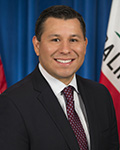
Ask Maddy about Eduardo Garcia
Scope: CA
Hi! I can help you understand Eduardo Garcia's legislative record. What would you like to know?
Try one of these
i
Maddy answers using official bill text and legislative records. Always verify before sharing.
Sources cited inline