

Passed Feb 20, 2024
1 co-sponsor
Total votes
27,298
all sessions
Attendance
92%
1,511 missed
Near the chamber average
With party
99%
of cast votes
Near the chamber average
Bipartisan score
0%
crosses aisle rarely
Near the chamber average
Sponsored
2,006
bills & resolutions
Near the chamber average
Committees
0
assignments
2,006 bills and resolutions
Sponsored bills
Total
2,006
Primary
262
Co-sponsor
1,744
This page
2,006
matching current filters
Office of Management and Budget: Uniform Guidance.
This measure would urge the federal Office of Management and Budget to update its Uniform Guidance in order to improve job creation, quality, and equity.
Signed into law Feb 15, 2024
1 co-sponsor
Relative to National Human Trafficking Awareness Month.
This measure would recognize the month of January 2024 as National Human Trafficking Awareness Month.
Signed into law Feb 15, 2024
1 co-sponsor
Relative to Data Privacy Week.
This measure would designate, in perpetuity, the 4th week of January as Data Privacy Week and the last Sunday of January as Data Privacy Day.
Signed into law Feb 13, 2024
1 co-sponsor
Passed Feb 8, 2024
1 co-sponsor
Planning and zoning: housing development approvals: student housing projects.
Existing law, the Planning and Zoning Law, authorizes the legislative body of any county or city, pursuant to specified procedures, to adopt ordinances that, among other things, regulate the use of buildings, structures, and land as between industry, business, residences, open space, and other purposes. Existing law, the Planning and Zoning Law, until January 1, 2026, authorizes a development proponent to submit an application for a multifamily housing development that is subject to a streamlined, ministerial approval process, as provided, and not subject to a conditional use permit, if the development satisfies specified objective planning standards, including, among other things, that the development and the site on which it is located satisfy specified location, urbanization, and zoning requirements. This bill would 1 2 mile of a university campus, as defined."?> enact The Student Housing Crisis Act of 2023. The bill would require a city, county, or city and county to classify student and faculty and staff housing as a permitted use on all real property within 1 2 mile"?> 1,000 feet of a university campus, as defined, for zoning purposes. The bill would require a proposed student or faculty and staff housing project, as defined, to be considered ministerially, without discretionary review or a hearing, if specified requirements are met, including that a minimum of 20% of the units in the project be rented by students or faculty and staff of the university. The bill would prohibit a local agency from imposing or enforcing on a student or faculty and staff housing project subject to ministerial consideration certain restrictions, including a minimum automobile parking requirement. The bill would require student or faculty and staff housing to have certain recorded deed restrictions, except as provided, that ensure for at least 55 years that, among other things, at least 20% of the units are affordable to lower income households, as defined, except as provided. In connection with an application submitted pursuant to these provisions, the bill would require a city, county, or city and county to take specified actions, including, upon the request of the applicant, provide a list of permits and fees that are required by the city, county, or city and county. By imposing new duties on local jurisdictions, this bill would impose a state-mandated local program. The bill would require a proponent of a student or faculty and staff housing project subject to ministerial consideration to require in contracts with construction contracts and certify to the local government that certain standards will be met in project construction, including that a student or faculty and staff housing project that is not in its entirety a public work, as defined, shall be subject to certain requirements, including to pay all construction workers employed in the executing of the student or faculty and staff housing project at least the general prevailing rate of per diem wages for the type of work and geographic area, as specified. The California Environmental Quality Act (CEQA) requires a lead agency, as defined, to prepare, or cause to be prepared, and certify the completion of, an environmental impact report on a project that it proposes to carry out or approve that may have a significant effect on the environment or to adopt a negative declaration if it finds that the project will not have that effect. CEQA also requires a lead agency to prepare a mitigated negative declaration for a project that may have a significant effect on the environment if revisions in the project would avoid or mitigate that effect and there is no substantial evidence that the project, as revised, would have a significant effect on the environment. CEQA does not apply to the approval of ministerial projects. By establishing a streamlined, ministerial approval process for certain housing developments, this bill would expand the exemption for the ministerial approval of projects under CEQA. The bill would include findings that changes proposed by this bill address a matter of statewide concern rather than a municipal affair and, therefore, apply to all cities, including charter cities. The California Constitution requires the state to reimburse local agencies and school districts for certain costs mandated by the state. Statutory provisions establish procedures for making that reimbursement. This bill would provide that no reimbursement is required by this act for a specified reason.
Failed Feb 1, 2024
0 co-sponsors
Workforce training: CaliforniaVolunteers: youth job corps.
Under existing law, by executive order, CaliforniaVolunteers is established in the Office of the Governor and is charged with overseeing programs and initiatives for service and volunteerism. Existing law authorizes CaliforniaVolunteers to form a nonprofit public benefit corporation or other entity exempt from income taxation, as provided, to raise revenues and receive grants or other financial support from private or public sources, for purposes of undertaking or funding any lawful activity authorized to be undertaken by CaliforniaVolunteers. Existing federal law, the National and Community Service Trust Act of 1993, also requires the state to create a commission to carry out specified duties relating to national service programs to be eligible for grants or allotments under certain programs, or to receive distributions of approved national service positions. Existing state law continues into existence the Board of Commissioners under CaliforniaVolunteers for purposes of meeting the requirements of the federal act and the act's implementing rules and regulations. #CaliforniansForAll Youth Jobs Corps is a program of the CaliforniaVolunteers. This bill would establish in statute the #CaliforniansForAll Youth Job Corps Program. The bill would require the CaliforniaVolunteers to expand the program, upon appropriation by the Legislature, which would fund supportive services, as specified, that are necessary for homeless youth and current or former foster youth to enable their participation in the workforce development program, as defined. Under the bill, grants would be awarded on a competitive basis. The bill would require the CaliforniaVolunteers to conduct outreach activities and to provide technical assistance to eligible applicants to ensure that grants are awarded to qualified applicants providing a broad spectrum of supportive services. The bill would prescribe definitions, duties for the CaliforniaVolunteers, and requirements for applications and applicants, including the requirement that applicants agree to provide the office any information that the office deems necessary to meet reporting requirements and other grant requirements. The bill would require the CaliforniaVolunteers to evaluate how grants awarded under the program address the needs of eligible targeted populations and, beginning one year after the initial award of grant funds, to post an annual report on its internet website regarding the progress and success of the program.
Failed Feb 1, 2024
1 co-sponsor
Licensed Physicians and Dentists from Mexico Pilot Program: requirements.
Existing law governs professions and vocations that are regulated by various boards within the Department of Consumer Affairs, including the Medical Board of California and the Dental Board of California. Existing law requires those boards to require a licensee, at the time of issuance of a license, to provide specified federal taxpayer information, including the applicant's social security number or individual taxpayer identification number. Existing law prohibits a licensing board from processing an application for an initial license unless the applicant provides that information where requested on the application. Existing law, the Licensed Physicians and Dentists from Mexico Pilot Program, allows licensed physicians and dentists from Mexico to be issued a license by the Medical Board of California or a permit by the Dental Board of California to practice medicine or dentistry in California for a period not to exceed 3 years and establishes requirements for the participants in the program, as specified. This bill would, for purposes of the pilot program, notwithstanding the above-described requirements to provide specified federal taxpayer information, require the Medical Board of California to issue a 3-year nonrenewable license to an applicant who has not provided an individual taxpayer identification number or social security number if the applicant meets specified conditions. This bill would require the applicant, pursuant to these conditions, to immediately seek an appropriate 3-year visa and social security number from the federal government within 14 days of being issued the medical license and immediately provide the medical board with their social security number within 10 days of issuance of that card by the federal government. The bill would prohibit the applicant from engaging in the practice of medicine until the board determines that these conditions have been met. The bill would require the board to notify the applicant of their eligibility to practice medicine if the board determines the applicant has met these conditions. This bill would also authorize the Medical Board of California to extend the 3-year nonrenewable license period under specified circumstances, including during the timeframe in which a licensee is unable to work due to an ongoing medical condition or due to a delay in the visa application process, subject to providing sufficient documentation to the board for the extension. The bill would require the board, upon receipt of documentation from the licensee, to grant an extension for the timeframe in which the licensee was unable to work if that board determines that the licensee has satisfied the requirements for an extension. The bill would authorize the medical board, upon appropriation by the Legislature, to expend funds to cover staffing costs of monitoring the extensions, as specified.
Failed Feb 1, 2024
0 co-sponsors
State parks: park entrance fees: waivers: 4th grade children.
Existing law gives control of the state park system to the Department of Parks and Recreation, and requires the Director of Parks and Recreation to promote and regulate the use of the state park system in a manner that conserves the scenery, natural and historic resources, and wildlife for the enjoyment of future generations. Existing law authorizes the department to collect fees, rents, and other returns for use of any state park system area, as provided. Existing law prohibits the department from collecting from any group of pupils in kindergarten or grades 1 to 12, inclusive, or their escorts, any fee, rental, or other return for use of any unit in the state park system when the group is visiting the area pursuant to a school outing or field trip under the direction of a school personnel, as provided. This bill, commencing on July 1, 2024, would require the department to waive the day use entrance fees to a unit of the state park system for any child in the 4th grade, or the 4th grade equivalent, who holds a valid federally issued "Every Kid Outdoors" pass, as provided. The bill would require the department to post on its internet website information on how to obtain the federal "Every Kid Outdoors" pass, including a hyperlink to the federal program establishing the pass.
Failed Feb 1, 2024
1 co-sponsor
California Global Warming Solutions Act of 2006: Greenhouse Gas Reduction Fund: competitive grant programs: funding objectives.
The California Global Warming Solutions Act of 2006 designates the State Air Resources Board as the state agency responsible for monitoring and regulating sources emitting greenhouse gases. The act authorizes the state board to include the use of market-based compliance mechanisms in regulating these sources. Existing law requires all moneys, except for fines and penalties, collected by the state board from the auction or sale of allowances as part of a market-based compliance mechanism to be deposited in the Greenhouse Gas Reduction Fund and to be available upon appropriation by the Legislature. Existing law requires the moneys from the fund to be used to facilitate the achievement of reductions of greenhouse gas emissions consistent with the act and, where applicable and to the extent feasible, to maximize economic, environmental, and public health benefits to the state, among other goals. This bill, beginning July 1, 2025, would require state agencies administering competitive grant programs that allocate moneys from the fund to give specified communities preferential points during grant application scoring for programs intended to improve air quality, to provide for a specified application timeline, and to allow applicants from the Counties of Imperial and San Diego to include daytime population numbers in grant applications. This bill, for competitive grant programs that involve housing, urban forestry, urban greening, or planning and that allocate moneys from the fund after July 1, 2025, would require state agencies administering those moneys from the fund to develop at least 3 categories for applications based on the population and density of the communities in which the proposed project is to be located and to develop scoring criteria for each category. This bill would additionally require the moneys in the fund to be used to facilitate the achievement of reductions of greenhouse gas emissions consistent with the act and, where applicable and to the extent feasible, to promote climate adaptation, accelerate the development of low-carbon technology and reduce vehicle miles traveled, and promote partnerships between jurisdictions and public agencies, Native American tribes in the state, nonprofits, and other community institutions, among other objectives. This bill also would require the Department of Finance to include in an annual report to the Legislature specified information on the applications received for each grant program allocating moneys from the fund.
Failed Feb 1, 2024
0 co-sponsors
Ask Maddy
·
AI policy assistant
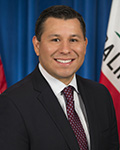
Ask Maddy about Eduardo Garcia
Scope: california
Hi! I can help you understand Eduardo Garcia's legislative record. What would you like to know?
Try one of these
i
Maddy answers using official bill text and legislative records. Always verify before sharing.
Sources cited inline