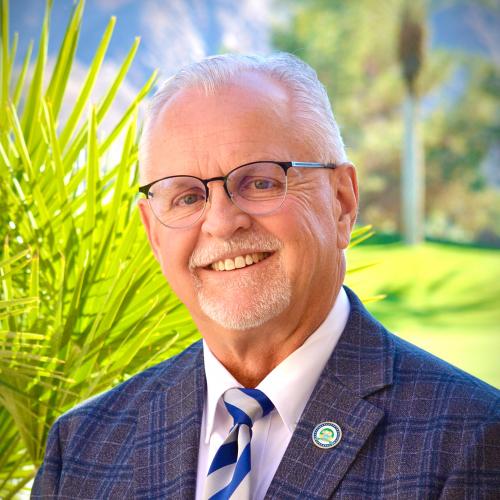
Photo of Tom Lackey
R California Assembly · District 34

Asm. Tom Lackey

Compare
Total votes
27,218
all sessions
Attendance
91%
2,152 missed
Lower than 95% of chamber peers
With party
97%
of cast votes
Near the chamber average
Bipartisan score
1%
crosses aisle rarely
Near the chamber average
Sponsored
2,638
bills & resolutions
Near the chamber average
Committees
11
assignments
2,638 bills and resolutions

Sponsored bills

Total
2,638
Primary
235
Co-sponsor
2,403
This page
2,638
matching current filters
Co-sponsor SB 964
Vetoed · California Senate · Co-sponsor
Behavioral health.

Existing law establishes various health professions development programs, within the Department of Health Care Access and Information, for the promotion of education and training of health professionals to address workforce shortage and distribution needs. The bill would require the department to commission consultants to prepare a report for the Legislature, on or before January 1, 2024, that provides a landscape analysis of the current behavioral health workforce and the state's behavioral health workforce needs, and to make recommendations on how to address the state's behavioral health workforce shortage.

Vetoed Sep 27, 2022 1 co-sponsor
Co-sponsor SB 1342
Signed into law · California Senate · Co-sponsor
Aging multidisciplinary personnel teams.

Existing law authorizes area agencies on aging and other county agencies that provide services to older adults through an established multidisciplinary team to provide information regarding older adult clients only to other county agencies with staff designated as members of a multidisciplinary team that are, or may be, providing services to the same individuals for purposes of identifying and coordinating the treatment of individuals served by more than one agency. This bill would specifically authorize an area agency on aging or a county, or both, to establish an aging multidisciplinary personnel team, as defined, with the goal of facilitating the expedited identification, assessment, and linkage of older adults to services and to allow provider agencies and members of the personnel team to share confidential information, as specified, for the purpose of coordinating services. Under the bill, any discussion relative to the disclosure or exchange of the information or writings during a team meeting would be confidential and testimony concerning that discussion would not be admissible in any criminal, civil, or juvenile court proceeding. The bill would require the sharing of information permitted under these provisions to be governed by protocols developed by each area agency on aging or county, as specified, and would require each area agency on aging or county to provide a copy of its protocols to the California Department of Aging. The bill would require the protocols to include a requirement that, unless otherwise permitted by law, an area agency on aging or county obtain the affirmative consent of an individual or their representative before the individual's information is shared and a requirement to notify an individual, among other things, that they may opt out of sharing information at any time. This bill would authorize the aging multidisciplinary personnel team to designate qualified persons to be members of the team for a particular case and would require every member who receives information or records regarding adults and families in their capacity as a member of the team to be under the same privacy and confidentiality obligations and subject to the same confidentiality penalties as the person disclosing or providing the information or records. The bill would also require the information or records to be maintained in a manner that ensures the maximum protection of privacy and confidentiality rights. Existing constitutional provisions require that a statute that limits the right of access to the meetings of public bodies or the writings of public officials and agencies be adopted with findings demonstrating the interest protected by the limitation and the need for protecting that interest. This bill would make legislative findings to that effect. The California Constitution provides for the Right to Truth-In-Evidence, which requires a 23 vote of each house of the Legislature to exclude any relevant evidence from any criminal proceeding or any trial or hearing of a juvenile for a criminal offense, as specified. Because this bill would exclude from a criminal or juvenile court proceeding any discussion relative to the disclosure or exchange of information or writings during an aging multidisciplinary personnel team meeting, which would otherwise be admissible, it requires a 23 vote of each house of the Legislature.

Signed into law Sep 27, 2022 1 co-sponsor
Co-sponsor AB 1595
Signed into law · California Assembly · Co-sponsor
Veterans cemetery: County of Orange.

Existing law requires the Department of Veterans Affairs to acquire, study, design, develop, construct, and equip a state-owned and state-operated Southern California Veterans Cemetery in the County of Orange at one of 2 possible sites, as specified. Existing law requires the department to, after completing acquisition studies on both sites, consult with the Department of General Services to determine which site to pursue based on the economic feasibility, benefits to veterans and City of Irvine residents, and availability of each location. Existing law makes honorably discharged veterans, their spouses, and dependent children eligible for interment in the cemetery, as specified. This bill would delete those site selection requirements and would instead require the department to acquire, study, design, develop, construct, and equip a state-owned and state-operated Southern California Veterans Cemetery in the County of Orange. The bill would require the department to conduct an acquisition study, in consultation with the Department of General Services, to assess the feasibility and costs of construction of the cemetery. The bill would additionally create the Southern California Veterans Cemetery Study Donation Fund, and would authorize any local governmental entity or private organization in the County of Orange to donate to the fund. The bill would authorize the department, upon receipt of sufficient moneys, to conduct a study of the feasibility of a site formally proposed by a local government in the County of Orange for the purpose of establishing a Southern California Veterans Cemetery, as specified. The bill would continuously appropriate moneys in the fund to the department for these purposes. The bill would require any excess funds to be returned to the donor if requested, and to otherwise be used for the design, development, construction, and equipment of the cemetery. This bill would declare that it is to take effect immediately as an urgency statute.

Signed into law Sep 27, 2022 1 co-sponsor
Primary AB 2281
Vetoed · California Assembly · Lead sponsor
Early Childhood Mental Health Services Act.

Existing law establishes the Mental Health Student Services Act, administered by the Mental Health Services Oversight and Accountability Commission, to award grants to county mental health or behavioral health departments to fund partnerships between educational and county mental health entities. This bill, contingent upon an appropriation in the Budget Act, would establish the Early Childhood Mental Health Services Act, administered in a similar manner by the commission, to award grants to eligible entities or partnerships to improve access to, and quality of care, services, and supports for, children from birth to 5 years of age, inclusive, and their parents, families, and caregivers, with emphasis on prevention and early intervention and disparities, as specified.

Vetoed Sep 18, 2022 0 co-sponsors
Co-sponsor AB 1796
Signed into law · California Assembly · Co-sponsor
Public postsecondary education: reenrollment.

Existing law establishes the University of California, under the administration of the Regents of the University of California, and the California State University, under the administration of the Trustees of the California State University, as 2 of the segments of public postsecondary education in the state. A provision of the Donahoe Higher Education Act expresses the intent of the Legislature that specified categories of applicants be prioritized in a specified order for the purpose of enrollment planning and admission priority practice at the undergraduate resident student level for the California State University and the University of California, including applicants who have been previously enrolled at the campus to which they are applying, as specified. The act applies to the University of California only to the extent that the regents, by appropriate resolution, make it applicable. This bill would require the California State University, and request the University of California, to require each campus in their respective systems to grant students the right to reenroll in their baccalaureate degree program after withdrawing or stopping out, if the student was in good academic standing with the university.

Signed into law Sep 15, 2022 1 co-sponsor
Co-sponsor SCR 97
Signed into law · California Senate · Co-sponsor
Relative to the Stan Statham Memorial Highway.

This measure would designate a specified portion of State Highway Route 44, near Oak Run in the County of Shasta, as the Stan Statham Memorial Highway. This measure would request the Department of Transportation to determine the cost of appropriate signs showing this special designation and, upon receiving donations from nonstate sources covering that cost, to erect those signs.

Signed into law Sep 13, 2022 1 co-sponsor
Co-sponsor SCR 70
Signed into law · California Senate · Co-sponsor
Relative to state government.

This measure would designate the East End Complex-Block 171 in Sacramento as the Mario Obledo Building, and would request the Department of General Services to determine the cost of erecting appropriate plaques and markers showing the designation and, upon receiving donations from nonstate sources, to cover that cost to erect signage.

Signed into law Sep 13, 2022 1 co-sponsor
Co-sponsor SJR 5
Signed into law · California Senate · Co-sponsor
Relative to Social Security benefits.

This measure would urge the United States Congress to amend the United States Social Security Administration's index of earnings to ensure that a decline in aggregate wages due to COVID-19 does not result in decreased benefits.

Signed into law Sep 13, 2022 1 co-sponsor
Co-sponsor AB 2238
Signed into law · California Assembly · Co-sponsor
Extreme heat: statewide extreme heat ranking system.

Existing law establishes the California Environmental Protection Agency under the supervision of the Secretary for Environmental Protection, and vests the agency with authority over various environmental matters. Existing law requires the agency to address heat and heat reduction by, among other things, identifying the extent and severity of the urban heat island effect for cities to set quantifiable goals for heat reduction. Existing law establishes the Office of Planning and Research in state government in the Governor's office. Existing law establishes the Integrated Climate Adaptation and Resiliency Program (ICARP) to be administered by the office to coordinate regional and local efforts with state climate adaptation strategies to adapt to the impacts of climate change, as prescribed. Existing law creates the Department of Insurance, headed by the Insurance Commissioner, and prescribes the commissioner's powers and duties. Existing law requires the commissioner to convene a working group to identify, assess, and recommend risk transfer market mechanisms that, among other things, promote investment in natural infrastructure to reduce the risks of climate change related to catastrophic events. This bill would require the agency, by January 1, 2025, to develop a statewide extreme heat ranking system in coordination with the ICARP, the State Department of Public Health, and the Department of Insurance, as provided. The bill would also require the Department of Insurance, by July 1, 2024, to transmit a study of, among other things, past extreme heat events and the effectiveness of insurance coverages, as specified, to prevent losses or help communities plan public health initiatives related to combating the effects of extreme heat, insurance options that will support specified adaptation, preparedness, and resilience measures, and recommendations for overcoming barriers encountered by local governments that are trying to use insurance or other financing tools to fund or support heat risk mitigation or adaptation strategies to the agency, the ICARP, and certain legislative policy committees, and to post the study on its internet website. The bill would require the agency, in coordination with the ICARP, the State Department of Public Health, and the Department of Insurance, to periodically review and update the extreme heat ranking system, as appropriate. The bill would require the ICARP to develop a public communication plan for the statewide extreme heat ranking system, recommend partnerships with local health departments and local and tribal governments, and develop statewide guidance for local and tribal governments in the preparation and planning for extreme heat events, and review the heat ranking system, as specified. The bill would also make findings and declarations related to extreme heat.


Signed into law Sep 9, 2022 1 co-sponsor
Showing 901 to 910 of 2,638 bills
Previous 1 … 90 91 92 … 264 Next