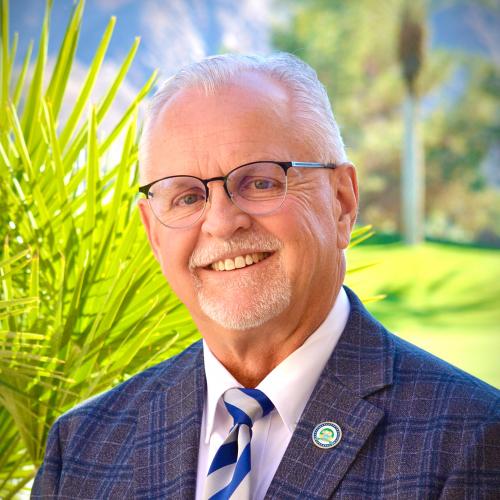
Photo of Tom Lackey
R California Assembly · District 34

Asm. Tom Lackey

Compare
Total votes
27,091
all sessions
Attendance
91%
2,122 missed
Lower than 96% of chamber peers
With party
97%
of cast votes
Near the chamber average
Bipartisan score
2%
crosses aisle rarely
Near the chamber average
Sponsored
2,638
bills & resolutions
Near the chamber average
Committees
11
assignments
2,638 bills and resolutions

Sponsored bills

Total
2,638
Primary
235
Co-sponsor
2,403
This page
2,638
matching current filters
Primary AB 738
Failed · California Assembly · Lead sponsor
California Actuarial Advisory Panel: reports.

Existing law establishes the California Actuarial Advisory Panel to provide impartial and independent information on pensions, other postemployment benefits, and best practices to public agencies, among other things. Under existing law, the panel is required to report to the Legislature on or before February 1 of each year. This bill would change the deadline for that report to January 31 of each year.

Failed Feb 1, 2024 0 co-sponsors
Co-sponsor AB 293
Failed · California Assembly · Co-sponsor
Lifetime hunting and sport fishing licenses: Gold Star Family members.

Existing law requires the Department of Fish and Wildlife to issue lifetime hunting licenses and lifetime sport fishing licenses, and grants certain lifetime privileges to holders of those licenses, upon the one-time payment of specified fees. This bill would require, upon application to the department, lifetime hunting licenses and lifetime sport fishing licenses to be issued at no cost to Gold Star Family members who meet certain eligibility requirements.

Failed Feb 1, 2024 1 co-sponsor
Co-sponsor AB 462
Failed · California Assembly · Co-sponsor
Overdose response teams.

Existing law requires the State Department of Public Health, subject to an appropriation in the Budget Act of 2016, to award funding to local health departments, local government agencies, or on a competitive basis to other organizations, as specified, to support or establish programs that provide naloxone to first responders and to at-risk opioid users through programs that serve at-risk drug users. This bill would, until January 1, 2029, establish the Overdose Response Team Fund, to be available upon appropriation by the Legislature, for the administration of grants by the Board of State and Community Corrections to county sheriffs' departments' task forces established for overdose response. The bill would authorize a department receiving a grant to establish and implement overdose response teams with the sheriffs' departments of those counties. The bill would require the teams to respond to and investigate overdose deaths and nonfatal overdoses. The bill would require counties participating in these programs to send annual reports to the Assembly Committee on Public Safety, including the number of arrests for specified crimes, the amount of fentanyl and opioids seized in each county, and the number of units of opioid antagonists administered, distributed, or recovered at each overdose scene.

Failed Feb 1, 2024 1 co-sponsor
Primary AB 532
died · California Assembly · Lead sponsor
Emergency medical services.

Existing law, the Emergency Medical Services System and the Prehospital Emergency Medical Care Personnel Act, establishes the Emergency Medical Services Authority. Under existing law, the authority is responsible for the coordination and integration of all state activities concerning emergency medical services. This bill would make technical, nonsubstantive changes to those provisions.

died Feb 1, 2024 0 co-sponsors
Co-sponsor SB 431
In committee · California Senate · Co-sponsor
Grandparents: caregivers support.

Existing law establishes the California Department of Aging within the California Health and Human Services Agency to provide leadership to the area agencies on aging in developing systems of home- and community-based services that maintain individuals in their own homes or least restrictive homelike environments. Existing law requires the Secretary of California Health and Human Services, in coordination with the Director of the California Department of Aging, to lead the development and implementation of the Master Plan for Aging established pursuant to Executive Order N-14-19. Existing law also establishes the grounds for removal of a dependent child from the custody of the dependent child's parent or guardian and establishes procedures to determine the placement of a dependent child. Existing law requires foster care placement, if possible, to be made in the home of a relative unless the placement would not be in the best interest of the child. Existing law establishes the Kinship Guardianship Assistance Payment Program (Kin-GAP) , which provides aid on behalf of eligible children who are placed in the home of a relative guardian, and the Kinship Support Services Program to provide community-based support services to relative caregivers and children placed in their homes. This bill would require the California Department of Aging, in consultation with the Department of Justice and the State Department of Social Services, to conduct a study to examine the issues faced by grandparents who are 60 years of age or older and are primary caregivers for their grandchildren, and requires the California Department of Aging to report the findings of the study to the Legislature.

In committee Feb 1, 2024 1 co-sponsor
Primary AB 739
Failed · California Assembly · Lead sponsor
Public retirement systems: defined benefit plans: funding.

Existing law, the California Public Employees' Pension Reform Act of 2013 (PEPRA) , generally requires a public retirement system, as defined, to modify its plan or plans to comply with the act. PEPRA prohibits a public employer's contribution to a defined benefit plan, in combination with employee contributions to the plan, from being less than the normal cost rate, as defined, for the plan in a fiscal year. Existing law authorizes a public retirement system to suspend contributions if certain conditions are satisfied, one of which is that the plan be funded by more than 120%, based on a computation by the retirement system actuary in accordance with specified standards, that is included in the annual valuation. This bill would revise the conditions for suspending contributions to a public retirement system defined benefit plan to increase the threshold percentage amount of plan funding to more than 130%.

Failed Feb 1, 2024 0 co-sponsors
Co-sponsor AB 330
Failed · California Assembly · Co-sponsor
Domestic violence: victim's information card.

Existing law directs the Commission on Peace Officer Standards and Training to establish training and guidelines for law enforcement officers, as defined, in the handling of domestic violence complaints, such as how to respond to domestic violence incidents, the legal duties imposed on law enforcement officers to make arrests and offer assistance, and techniques to promote the safety of the victim, as specified. Existing law requires law enforcement agencies to develop and implement written policies for officer responses to domestic violence incidents, including furnishing written notice to victims at the scene in the form of a Victims of Domestic Violence card that contains, among other information, telephone numbers for local hotlines, shelters, and counseling centers. This bill would add the issuance of Victims of Domestic Violence cards as a topic in the course of instruction for the training of law enforcement officers. This bill would additionally require the Victims of Domestic Violence card to be a different color than other cards issued by officers, to include a disclaimer, to be available in languages other than English, and to include various information such as the definition of domestic violence and the statute of limitations for domestic violence. This bill would make these changes operative on January 1, 2025. Because this bill would expand an existing local program, it would impose a state-mandated local program. Existing law establishes the Office of Emergency Services and makes it responsible for providing assistance such as financial, technical, and educational support, as specified, on the topic of domestic violence to local entities including domestic violence support centers and law enforcement. This bill, commencing January 1, 2025, would require the office to develop a model Victims of Domestic Violence card that can be modified by cities and counties. The bill would also require the office to publish on an internet website maintained by the office specified information and resources to assist victims of domestic violence, including, among other things, a summary of state mandatory arrest policies for domestic violence crimes. The California Constitution requires the state to reimburse local agencies and school districts for certain costs mandated by the state. Statutory provisions establish procedures for making that reimbursement. This bill would provide that, if the Commission on State Mandates determines that the bill contains costs mandated by the state, reimbursement for those costs shall be made pursuant to the statutory provisions noted above.


Failed Feb 1, 2024 1 co-sponsor
Co-sponsor SB 453
died · California Senate · Co-sponsor
Criminal procedure: speedy trial.

Existing law requires that a defendant be brought to trial within 60 days of arraignment on an indictment or information in a felony case, or within 30 or 45 days of arraignment or entry of plea in a misdemeanor case, as specified. Under existing law, the case must be dismissed if the defendant did not waive that time limit or consent to an extension of time, as specified, and the case is not brought to trial within the time limit. This bill would specify certain scenarios that would qualify as good cause to extend these deadlines, including, among other things, if a prosecutor or defense counsel is ill and the anticipated recovery period is shorter than the time it would take for a replacement to prepare for trial, as specified.

died Feb 1, 2024 1 co-sponsor
Co-sponsor SB 6
In committee · California Senate · Co-sponsor
California Commission on the United States Semiquincentennial.

Existing law establishes various commissions within state government. This bill would, until January 1, 2029, establish the California Commission on the United States Semiquincentennial in state government to celebrate the 250th anniversary of the signing of the Declaration of Independence and the founding of the United States of America. The bill would require the commission to plan and coordinate commemorations and observances of the 250th anniversary of the Declaration of Independence and the American Revolution. The bill would require the commission to be solely supported by private or federal funds made available for the purpose of supporting the commission. The bill would require that these funds be deposited in the Semiquincentennial Fund, and would create that fund in the State Treasury. The bill would require funds in the Semiquincentennial Fund to be available, upon appropriation by the Legislature, as specified. The bill would require the records, files, and other memoranda of the commission, other than any private possessions, to be deposited and filed with the State Archives before January 1, 2029, and would require the State Archives to receive those materials.

In committee Feb 1, 2024 1 co-sponsor
Co-sponsor AB 1488
Failed · California Assembly · Co-sponsor
California Environmental Quality Act: environmental leadership development projects: water storage, water conveyance, and groundwater recharge projects: streamlined review.

The California Environmental Quality Act (CEQA) requires a lead agency, as defined, to prepare, or cause to be prepared, and certify the completion of an environmental impact report (EIR) on a project that the lead agency proposes to carry out or approve that may have a significant effect on the environment or to adopt a negative declaration if it finds that the project will not have that effect. CEQA also requires a lead agency to prepare a mitigated negative declaration for a project that may have a significant effect on the environment if revisions in the project would avoid or mitigate that effect and there is no substantial evidence that the project, as revised, would have a significant effect on the environment. CEQA establishes a procedure by which a person may seek judicial review of the decision of the lead agency made pursuant to CEQA. The Jobs and Economic Improvement Through Environmental Leadership Act of 2021 authorizes the Governor, until January 1, 2024, to certify environmental leadership development projects that meet specified requirements for certain streamlining benefits related to CEQA. The act, among other things, requires a lead agency to prepare the record of proceedings for an environmental leadership development project, as provided, and to include a specified notice in the draft EIR and final EIR. The act is repealed by its own term on January 1, 2026. This bill would extend the application of the act to water storage projects, water conveyance projects, and groundwater recharge projects that provide public benefits and drought preparedness. The bill would authorize the Governor, until January 1, 2025, to certify water storage projects, water conveyance projects, and groundwater recharge projects as environmental leadership development projects. The bill would make other conforming changes. Because a lead agency would be required to prepare the record of proceedings for water storage projects, water conveyance projects, and groundwater recharge projects pursuant to the act, this bill would impose a state-mandated local program. The California Constitution requires the state to reimburse local agencies and school districts for certain costs mandated by the state. Statutory provisions establish procedures for making that reimbursement. This bill would provide that no reimbursement is required by this act for a specified reason.

Failed Feb 1, 2024 1 co-sponsor
Showing 621 to 630 of 2,638 bills
Previous 1 … 62 63 64 … 264 Next