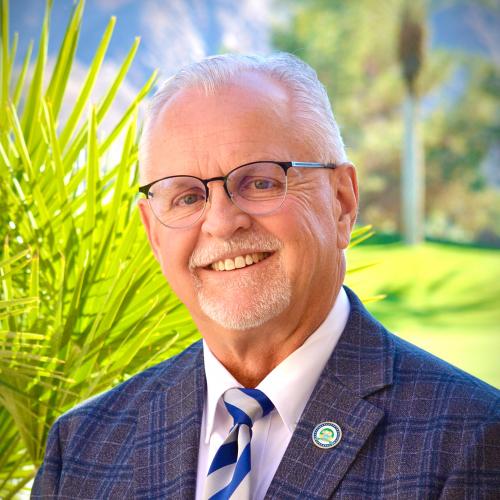
Photo of Tom Lackey
R California Assembly · District 34

Asm. Tom Lackey

Compare
Total votes
27,091
all sessions
Attendance
91%
2,122 missed
Lower than 96% of chamber peers
With party
97%
of cast votes
Near the chamber average
Bipartisan score
2%
crosses aisle rarely
Near the chamber average
Sponsored
2,638
bills & resolutions
Near the chamber average
Committees
11
assignments
2,638 bills and resolutions

Sponsored bills

Total
2,638
Primary
235
Co-sponsor
2,403
This page
2,638
matching current filters
Co-sponsor AJR 10
Signed into law · California Assembly · Co-sponsor
Relative to access to counsel.

This measure would urge the Congress of the United States to support S. 349, the Access to Counsel Act, which would ensure that those persons held or detained while attempting to enter the United States, whether at a border crossing or a port of entry, would be guaranteed access to legal counsel.

Signed into law Sep 7, 2017 1 co-sponsor
Primary AJR 13
Signed into law · California Assembly · Lead sponsor
Relative to the National Aeronautics and Space Administration.

This measure would urge the President and the Congress of the United States to continue to place an emphasis on increasing funding to NASA's budget and encouraging the expansive use of public-private partnerships to propel the industry forward into the next generation of advancement.

Signed into law Sep 7, 2017 0 co-sponsors
Co-sponsor ACR 8
Signed into law · California Assembly · Co-sponsor
Adverse childhood experiences: post-traumatic "street" disorder.

This measure would recognize adverse childhood experiences (ACEs) , also known as post-traumatic "street" disorder in communities of color, as having lasting negative outcomes to both physical and mental health with growing implications for our state.

Signed into law Sep 7, 2017 1 co-sponsor
Primary AB 979
Signed into law · California Assembly · Lead sponsor
Local agency formation commissions: district representation.

Existing law, the Cortese-Knox-Hertzberg Local Government Reorganization Act of 2000, provides for the selection of representatives of independent special districts on each local agency formation commission by an independent special district selection committee pursuant to a nomination and election process. Existing law requires the executive officer of the commission to call and hold a meeting of the special district selection committee upon, among other things, receipt of a written request by one or more members of the selection committee, as specified. This bill would additionally require the executive officer to call and hold a meeting of the special district selection committee upon the adoption of a resolution of intention by the committee relating to proceedings for representation of independent special districts upon the commission pursuant to specified law. The bill would also require the executive officer to call and hold a meeting of the special district selection committee upon receipt of a written request by one or more members of the selection committee notifying the executive officer of the need to appoint a member representing independent special districts to an oversight board of a successor agency to a dissolved redevelopment or community development agency. By increasing the duties of the executive officer, this bill would impose a state-mandated local program. If the independent special district selection committee has determined to conduct business by mail or if the executive officer determines that a meeting of the special district selection committee, for the purpose of appointing the special district members or filling vacancies, is not feasible, existing law requires the executive officer to conduct the business of the committee, including elections, by mail in accordance with specified procedures. Existing law, for an election pursuant to these procedures to be valid, requires that at least a quorum of the special districts submit valid ballots. This bill, for a vote on special district representation to be valid, would require that at least a quorum of the special districts submit valid ballots. The bill would require the selection committee, by majority vote of those district representatives voting on the issue, to either accept or deny representation. Existing law requires the commission, if it does not have representation from independent special districts on January 1, 2001, to initiate proceedings for representation of those districts upon the commission if requested by independent special districts. Existing law, upon receipt of resolutions proposing representation of independent special districts upon the commission by a majority of the independent special districts within a county, requires the commission to adopt a resolution of intention and specifies the procedures for those proceedings. This bill would instead require the commission to adopt a resolution of intention upon either the receipt of a written request by one or more members of the selection committee representing districts having 10% or more of the assessed value of taxable property within the county or the adoption of a resolution by the commission proposing representation of special districts upon the commission. The California Constitution requires the state to reimburse local agencies and school districts for certain costs mandated by the state. Statutory provisions establish procedures for making that reimbursement. This bill would provide that no reimbursement is required by this act for a specified reason.

Signed into law Sep 1, 2017 0 co-sponsors
Co-sponsor AB 1002
Passed · California Assembly · Co-sponsor
Center for Cannabis Research.

(1) Existing law authorizes the creation by the University of California of the California Cannabis Research Program, the purpose of which is to develop and conduct studies intended to ascertain the general medical safety and efficacy of cannabis and, if found valuable, to develop medical guidelines for the appropriate administration and use of cannabis. Existing law authorizes the program to conduct focused controlled clinical trials on the usefulness of cannabis in patients diagnosed with specified conditions, including cancer and glaucoma. This bill would expand the purview of the program to include the study of naturally occurring constituents of cannabis and synthetic compounds that have effects similar to naturally occurring cannabinoids. The bill would authorize the program to cultivate cannabis to be used exclusively for research purposes and to contract with a private entity to provide expertise in cultivating medical cannabis. The bill would also authorize the controlled clinical trials to focus on examining testing methods for detecting harmful contaminants in cannabis, including mold and bacteria. (2) Existing law requires the President of the University of California, if the program is implemented, to appoint a multidisciplinary Scientific Advisory Council, not to exceed 15 members, to provide policy guidance in the creation and implementation of the program. This bill would require the president to appoint the advisory council on the advice of the director of the program. The bill would also require the program, by July 1, 2018, to report to the Legislature, the Governor, and the Attorney General on the progress of the cannabis studies and to report every year thereafter to the Legislature detailing the progress of the studies. (3) Existing law, the Control, Regulate and Tax Adult Use of Marijuana Act (AUMA) , an initiative statute approved by the voters at the November 8, 2016, statewide general election as Proposition 64, among other things, establishes the California Marijuana Tax Fund as a continuously appropriated fund consisting of specified taxes, interest, penalties, and other amounts imposed by AUMA. AUMA requires, after other specified disbursements are made from the fund, the Controller to disburse the sum of $10,000,000 annually to a public university or universities in California, beginning with the 2018–19 fiscal year until the 2028–29 fiscal year, to research and evaluate the implementation and effect of AUMA and, if appropriate, make recommendations to the Legislature and the Governor regarding possible amendments to AUMA. Existing law requires the Bureau of Marijuana Control to select the universities to be funded. This bill would provide that it is the intent of the Legislature that the state commission objective scientific research by the University of California under the California Cannabis Research Program to study the implementation and effect of the Control, Regulate and Tax Adult Use of Marijuana Act. The bill would also amend the provisions of AUMA to require the Bureau of Marijuana Control to consider selecting the University of California and the California Cannabis Research Program when selecting a public university or public universities to be funded to research and evaluate the implementation and effect of AUMA. This bill would also make conforming changes to a related provision of law. (4) AUMA authorizes legislative amendment of its provisions with a 23 vote of both houses of the Legislature, without submission to the voters, to further its purposes and intent. This bill would declare that its provisions further specified purposes and intent of the Control, Regulate and Tax Adult Use of Marijuana Act.

Passed Sep 1, 2017 1 co-sponsor
Co-sponsor AB 76
Passed · California Assembly · Co-sponsor
Adult-use marijuana: marketing.

Existing law, the Control, Regulate and Tax Adult Use of Marijuana Act (AUMA) , approved by the voters at the November 8, 2016, statewide general election, regulates the cultivation, distribution, transport, storage, manufacturing, testing, processing, sale, and use of marijuana for nonmedical purposes by people 21 years of age and older. The AUMA prohibits any advertising or marketing placed in broadcast, cable, radio, print, and digital communications from being displayed unless at least 71.6% of the audience is reasonably expected to be 21 years of age or older. This bill would prohibit an operator, as defined, of an Internet Web site, online service, online application, or mobile application from marketing or advertising any marijuana, marijuana product, or marijuana business to a person who is under 21 years of age if the operator has actual knowledge that a person under 21 years of age is using its Internet Web site, online service, online application, or mobile application, and if the marketing or advertising is specifically directed to that person based upon information specific to that person, including, but not limited to, the person's profile, activity, address, or location. The bill would prohibit an operator of an Internet Web site, online service, online application, or mobile application from knowingly using, disclosing, compiling, or allowing a third party to use, disclose, or compile, the personal information of a person under 21 years of age with the actual knowledge that the use, disclosure, or compilation is for the purpose of marketing or advertising marijuana, marijuana products, or marijuana businesses to that person under 21 years of age. Existing law prohibits an operator of an Internet Web site, online service, online application, or mobile application directed to minors from marketing or advertising certain products or services, including any instrument or paraphernalia that is designed for the smoking or ingestion of tobacco or any controlled substance. This bill would additionally prohibit an operator of an Internet Web site, online service, online application, or mobile application directed to minors, from marketing or advertising any marijuana, marijuana product, marijuana business, or marijuana-related instrument or paraphernalia on its Internet Web site, online service, online application, or mobile application. AUMA authorizes the Legislature to amend the act to further the purposes and intent of the act with a 23 vote of the membership of both houses of the Legislature, except as provided. This bill would declare that its provisions further specified purposes and intent of AUMA.

Passed Sep 1, 2017 1 co-sponsor
Co-sponsor AB 64
Passed · California Assembly · Co-sponsor
Cannabis: licensure and regulation.

(1) Existing law, the Control, Regulate and Tax Adult Use of Marijuana Act (AUMA) , an initiative measure enacted as Proposition 64 at the November 8, 2016, statewide general election, authorizes a person who obtains a state license under AUMA to engage in commercial adult-use cannabis activity pursuant to that license and applicable local ordinances. Existing law, the Medical Cannabis Regulation and Safety Act (MCRSA) , also authorizes a person who obtains both a state license under MCRSA and the relevant local license to engage in commercial medicinal cannabis activity pursuant to those licenses, as specified. Both MCRSA and AUMA generally divide responsibility for state licensure and regulation between the Bureau of Marijuana Control (bureau) within the Department of Consumer Affairs, which serves as the lead state agency, the Department of Food and Agriculture, and the State Department of Public Health. AUMA requires the licensing authorities to begin issuing licenses to engage in commercial adult-use cannabis activity by January 1, 2018. Senate Bill 94 of the 2017–18 Regular Session (SB 94) , effective immediately upon enactment, would consolidate the provisions providing for the licensure and regulation of commercial medicinal cannabis activity and commercial adult-use cannabis activity under a single regulatory scheme, which would be known as the Medicinal and Adult-Use Regulation and Safety Act (MAUCRSA) , by repealing MCRSA, incorporating certain provisions of MCRSA into the licensing provisions of AUMA, and making a variety of conforming and related changes. AUMA defines "delivery" for the above-described purposes as meaning the commercial transfer of adult-use cannabis or cannabis products to a customer and including the use by a retailer of any technology platform owned and controlled by the retailer, or independently licensed, that enables customers to arrange for or facilitate the commercial transfer by a licensed retailer of adult-use cannabis or cannabis products. Under MAUCRSA, if SB 94 is enacted, "delivery" would no longer include the use by a retailer of any technology platform independently licensed. This bill would expand MAUCRSA's definition of "delivery" to include the use by a retailer of any technology platform owned, leased, or controlled by the retailer. (2) MCRSA and AUMA prohibit, and if SB 94 is enacted, MAUCRSA would prohibit, a person licensed to test cannabis or cannabis products from obtaining licensure for any other commercial cannabis activity. Although MCRSA also prohibits testing licensees from owning or having an ownership interest in any entity or premises licensed under a different category pursuant to MCRSA, and although AUMA also prohibits testing licensees from owning or having an ownership interest in a non-testing facility, SB 94 would repeal these additional prohibitions and instead prohibit a testing licensee from employing an individual who is also employed by any other licensee that does not hold a state testing laboratory license. SB 94 would condition a person's eligibility for more than one license under MAUCRSA upon a requirement that the licensed premises be separate and distinct. This bill, if SB 94 is enacted, would repeal that separate and distinct premises requirement. The bill would also prohibit a testing licensee under MAUCRSA from owning, or having an ownership interest in, a premises licensed under MAUCRSA for any activity except testing. (3) Existing law makes it an infraction punishable by a fine not exceeding $100 for a person to possess not more than one ounce of cannabis while driving a motor vehicle, as specified, unless otherwise authorized by law. SB 94, effective immediately upon enactment, would repeal that provision and instead make it an infraction punishable by a fine not exceeding $100 for a person to possess a receptacle containing cannabis or cannabis product that has been opened, or a seal broken, or to possess loose cannabis flower not in a container, while driving a motor vehicle, with certain exceptions. This bill would require a retailer, microbusiness, or nonprofit licensed under MAUCRSA to display a sign educating its customers on California's laws on transporting cannabis or cannabis products in a vehicle, in accordance with the above-described provisions. (4) Existing law, the Model State Trademark Law, provides for the registration of trademarks and service marks with the Secretary of State and requires the classification of goods and services for those purposes to conform to the classifications adopted by the United States Patent and Trademark Office. This bill, for purposes of marks for which a certificate of registration is issued on or after January 1, 2018, would, notwithstanding those provisions, authorize the use of specified classifications for marks related to cannabis, including medicinal cannabis, goods and services that are lawfully in commerce under state law in the State of California. (5) Existing law exempts qualified medicinal cannabis patients with valid identification cards, the designated primary caregivers of those patients, and persons with identification cards who associate within the State of California in order, collectively or cooperatively, to cultivate cannabis for medicinal purposes from specified criminal liability, including possession, cultivation, and transport of cannabis until one year after the bureau posts a notice on its Internet Web site that licenses for commercial cannabis activity have begun being issued. This bill would authorize these collectives and cooperatives to operate for profit or not for profit. The bill would limit the protection for collectives and collaboratives operating for profit to those collectives and collaboratives that possess a valid seller's permit from the State Board of Equalization and a valid local license, permit, or other authorization. (6) AUMA authorizes the Legislature to amend its provisions by a 23 vote of each house if the amendment furthers its purposes and intent. This bill would state that the bill furthers the purposes and intent of AUMA for specified reasons.


Passed Sep 1, 2017 1 co-sponsor
Co-sponsor AB 229
Passed · California Assembly · Co-sponsor
Human trafficking: vertical prosecution program.

Existing law establishes the Office of Emergency Services, which is required to, among other things, allocate and award funds to communities developing and providing ongoing citizen involvement and crime resistance programs. This bill would require the office, to the extent funds are available for this purpose and until January 1, 2022, to allocate and award funds to up to 11 district attorney offices that employ a vertical prosecution methodology for the prosecution of human trafficking crimes and that meet other specified criteria, including minimum staffing levels for the program. The bill would require the office, on or before January 1, 2020, to submit to the Legislature and the Governor's office a report that describes the counties that received funding pursuant to this program, the number of prosecutions for human trafficking cases filed by the counties receiving funding, the number of human trafficking convictions obtained by those counties, and the sentences imposed for human trafficking crimes in those counties. The bill would also appropriate $2,600,000 from the General Fund to the office for this program.

Passed Sep 1, 2017 1 co-sponsor
Primary AB 702
Passed · California Assembly · Lead sponsor
Driving under the influence: chemical tests.

(1) When a person is convicted of violating specified driving-under-the-influence (DUI) provisions, and at the time of the arrest leading to that conviction the person willfully refused a peace officer's request to submit to, or willfully failed to complete, a specified chemical test, existing law requires a court to impose additional penalties, as specified. This bill would make it a crime for a person to willfully refuse to submit to, or willfully fail to complete, a breath test after being lawfully arrested for a violation of specified offenses. The bill would specify that this crime does not apply to a person who has submitted to and completed a blood test, as specified. By creating a new crime, this bill would impose a state-mandated local program. (2) When a person is convicted of violating specified DUI provisions, existing law requires a court to consider a concentration of alcohol in a person's blood of 0.15% or more, by weight, or the refusal of the person to take a chemical test as a special factor that may justify enhancing the penalties in sentencing, in determining whether to grant probation, and, if probation is granted, in determining additional or enhanced terms and conditions of probation. This bill would change the provision described above to no longer require a court to consider a person's refusal to take a chemical test as a special factor. (3) Existing law provides that a person who drives a motor vehicle is deemed to have given his or her consent to chemical testing of his or her blood or breath for the purpose of determining the alcoholic or drug content of his or her blood if lawfully arrested for driving under the influence of alcohol or drugs. Existing law requires a person to be told that his or her failure to submit to, or the failure to complete, the required chemical test will result in a fine, mandatory imprisonment if convicted of specified DUI offenses, and suspension or revocation of his or her driving privilege, as specified. Existing law exempts a person afflicted with hemophilia or a heart condition, as specified, from this blood test requirement and instead requires him or her to submit to, and complete, a urine test. This bill would repeal the presumption that a person consents to submit to chemical testing of his or her blood or breath and would instead require a motor vehicle driver who is lawfully arrested for a specified DUI offense to submit to chemical testing of his or her blood or breath for the purpose of determining the alcoholic or drug content of his or her blood. The bill would require a peace officer to advise the person that he or she is entitled to a number of constitutional protections as to the manner in which the testing will occur, but that failure to take a blood or urine test may result in suspension or revocation of his or her driving privilege, and refusal to take a breath test may result in the same penalty and a fine or mandatory imprisonment if the person is convicted of a specified DUI offense. The bill would require a person exempted from the blood test requirement because of hemophilia or a heart condition, as specified, to submit to, and complete, a breath test or a urine test, as specified. Because this bill would impose new requirements on peace officers, it would impose a state-mandated local program. (4) The bill would also make legislative findings and declarations about the privilege of driving on public streets and highways in California and reasonable conditions imposed on that privilege. The California Constitution requires the state to reimburse local agencies and school districts for certain costs mandated by the state. Statutory provisions establish procedures for making that reimbursement. This bill would provide that with regard to certain mandates no reimbursement is required by this act for a specified reason. With regard to any other mandates, this bill would provide that, if the Commission on State Mandates determines that the bill contains costs so mandated by the state, reimbursement for those costs shall be made pursuant to the statutory provisions noted above.

Passed Sep 1, 2017 0 co-sponsors
Showing 2,051 to 2,060 of 2,638 bills