

Under existing law, the guardian or conservator of a minor has specified powers over the care, custody, and control of the minor. Existing law authorizes a caregiver, who properly completes and signs a caregiver's authorization affidavit, to provide specified care to a minor, including, among other care, enrolling the minor in school and consenting to school-related medical care on behalf of the minor. This bill, the Standby Caretaker Act, would authorize, if specified conditions are met, a custodial parent of a minor child to nominate a person to serve as a standby caretaker of a minor child upon the occurrence of an activating event, as defined. The bill would prescribe the requirements for the nomination of a standby caretaker or alternate standby caretaker, including a required statutory form that would be signed and witnessed under penalty of perjury. By expanding the definition of the crime of perjury, the bill would impose a state-mandated local program. This bill would prescribe the actions to be taken in the event of an activating event and at the conclusion of an activating event, including hearings to be conducted by the court. The bill would authorize a custodial parent to file a petition to terminate a standby caretaker nomination at any time and would impose a presumption that such a request is in the child's best interest. The bill would require all related court records and documents to be kept confidential and accessible only to the parties to the proceeding and the court absent a valid court order, but would allow parties to the proceeding to share any court order appointing the standby caretaker or terminating the standby caretaker's rights as necessary. Existing law provides that a pupil complies with the residency requirements for school attendance in a school district when, among other things, the pupil resides with a caregiving adult who is located within the boundaries of that school district. Under existing law, it is a sufficient basis for a determination of residency if the caregiving adult has submitted an affidavit, as specified, under penalty of perjury, unless the school district determines from actual facts that the pupil is not living in the home of the caregiving adult. This bill would also make execution of the Standby Caretaker's Authorization form a sufficient basis for a determination of residency of a minor child under these provisions, as specified. The California Constitution requires the state to reimburse local agencies and school districts for certain costs mandated by the state. Statutory provisions establish procedures for making that reimbursement. This bill would provide that no reimbursement is required by this act for a specified reason.
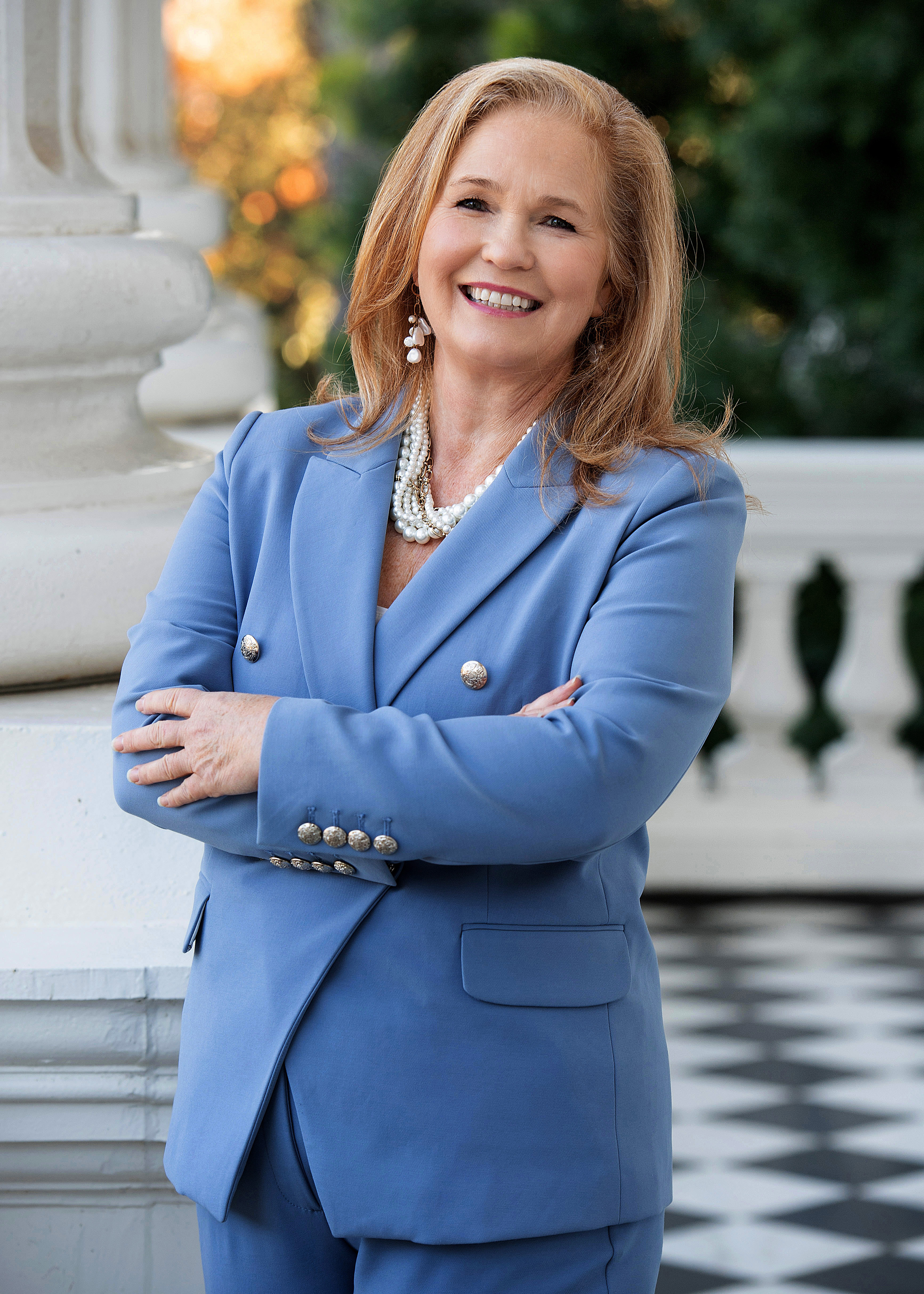
Asm. Gail Pellerin
Sponsored bills
Existing law establishes the Department of Health Care Access and Information to oversee and administer various health programs and to collect health data. Existing law establishes the Medical Board of California and the Osteopathic Medical Board of California for the licensure and regulation of physicians and surgeons and osteopathic physicians and surgeons. Existing law requires the boards to adopt and administer standards, including for the continuing education of those licensees. This bill would require the department to work with the Medical Board of California, the Osteopathic Medical Board of California, and state higher education entities to assess, among other things, physicians and surgeons' education and training, as specified, relating to menopause diagnosis and treatment. The bill would require the department to prepare a report to the Legislature on or before January 1, 2027, that, among other things, identifies gaps in medical education and training related to menopause and in menopause diagnosis and management practices among physicians and surgeons.
The California Coastal Act of 1976 requires oceanfront land suitable for recreational use to be protected for recreational use and development unless present and foreseeable future demand for public or commercial recreational activities that could be accommodated on the property is already adequately provided for in the area. Existing law establishes the State Coastal Conservancy with prescribed powers and responsibilities for implementing and administering various programs intended to preserve, protect, and restore the state's coastal areas. Existing law establishes surfing as the official state sport. This bill would require, on or before July 1, 2026, the conservancy to establish criteria and an application process for purposes of designating an area of the coastline as a state surfing reserve, as defined. The bill would authorize a local government, as defined, to apply to the conservancy for purposes of designating an area of the coastline within the jurisdiction of the local government as a state surfing reserve. The bill would require the local government to include in its application, among other things, a description of the proposed surfing reserve. The bill would require the conservancy to approve the application if the area of the coastline meets the established criteria. The bill would require, once the application is approved, the conservancy to designate the area as a state surfing reserve. The bill would require the conservancy to, upon appropriation, publicize the state surfing reserve and partner with local governments to erect signs designating an approved surfing reserve, and would authorize the conservancy to accept donations for these purposes. The bill would authorize the conservancy to revoke the designation if the surfing reserve no longer meets the established criteria. The bill would require the conservancy to transmit notice of the approval of a designated surfing reserve to the Ocean Protection Council for consideration and inclusion in the state's 30x30 goal.
The California Global Warming Solutions Act of 2006 establishes the State Air Resources Board as the state agency responsible for monitoring and regulating sources emitting greenhouse gases and requires the state board to ensure that statewide greenhouse gas emissions are reduced to at least 40% below the 1990 level by 2030. The act declares the policy of the state to achieve net zero greenhouse gas emissions as soon as possible, but no later than 2045, and to achieve and maintain net negative greenhouse gas emissions thereafter. The act requires the state board to prepare and approve a scoping plan for achieving the maximum technologically feasible and cost-effective reductions in greenhouse gas emissions and to update the scoping plan at least once every 5 years. The act also requires the Natural Resources Agency, in collaboration with specified entities, including the state board, to determine an ambitious range of targets for natural carbon sequestration, and for nature-based climate solutions, that reduce greenhouse gas emissions for 2030, 2038, and 2045 to support state goals to achieve carbon neutrality and foster climate adaptation and resilience. The act requires these targets to be integrated into the above-described scoping plan and other state policies. This bill would specify that it is the goal of the state to achieve each of the targets established by the Natural Resources Agency by the applicable date for the target, with priority given to activities that most rapidly, significantly, and cost effectively increase carbon stocks and net sequestration, protect and support ecosystem function, and reduce emissions of greenhouse gases. The bill would also revise the definition of "natural carbon sequestration" for purposes of the above-described provisions.
Existing law requires the State Board of Education to adopt statewide academically rigorous content standards in the core curriculum areas of reading, writing, mathematics, history/social science, and science, as specified. Existing law requires the Instructional Quality Commission to, among other things, recommend curriculum frameworks to the state board and develop criteria for evaluating instructional materials. This bill would require the state board to, on or before January 1, 2028, develop and adopt academically rigorous content standards for ethnic studies instruction in high school. The bill would require the commission, on or before January 1, 2028, to review and recommend to the state board curriculum frameworks and instructional materials for ethnic studies instruction in high school, as specified. The bill would require the state board to provide the commission with evaluation criteria to use in providing its review and recommendations. The bill would state the intent of the Legislature to enact subsequent legislation to establish an advisory committee with a majority of the advisory committee's members being experts in African American studies, Asian American and Pacific Islander studies, Native American studies, and Latino and Chicanx studies, to provide input to the state board on proposed content standards and to the commission on proposed curriculum frameworks and instructional materials for ethnic studies instruction in high school. Existing law requires a pupil to complete designated coursework while in grades 9 to 12, inclusive, in order to receive a diploma of graduation from high school. These graduation requirements include, commencing for pupils graduating in the 2029–30 school year, the completion of a one-semester course in ethnic studies meeting specified requirements. Under existing law, the requirement to complete an ethnic studies course may be fulfilled by the completion of, among others, a course based on the model curriculum developed by the Instructional Quality Commission, an ethnic studies course taught as part of a course that has been approved as meeting the A–G requirements of the University of California and the California State University, or a locally developed ethnic studies course approved by the governing board of a school district or the governing body of a charter school. Existing law requires the curriculum, instruction, and instructional materials for these ethnic studies courses to meet specified requirements, including that they not reflect or promote any bias, bigotry, or discrimination against any person or group of persons on the basis of certain characteristics. Existing law makes these provisions relating to ethnic studies courses operative only upon an appropriation of funds by the Legislature for purposes of these provisions. This bill would require the curriculum, instruction, and instructional materials for any high school ethnic studies course, including ethnic studies courses meeting high school graduation requirements, to meet the above-described requirements, and would require the curriculum, instruction, and instructional materials for all high school ethnic studies courses to additionally, among other things, foster multicultural respect and understanding and focus on the domestic experience and stories of historically marginalized peoples in American society. To the extent that the bill would impose new duties on local educational agencies, the bill would impose a state-mandated local program. The bill would require a school district, county office of education, or charter school to provide, on or before June 30, 2026, the State Department of Education with a copy of all curricula, instruction, and instructional materials in ethnic studies that schools offer or plan to offer to pupils in any of grades 9 to 12, inclusive, and the adoption calendar for curricula, instruction, and instructional materials in ethnic studies proposed for adoption by the governing board or body of the local educational agency for instruction to these pupils. The bill would require a local educational agency that does not have an ethnic studies course in place for its pupils in any of grades 9 to 12, inclusive, on or before June 30, 2026, to provide the department with a copy of all curricula, instruction, and instructional materials in ethnic studies that its schools seek to adopt at least 60 days before being first presented at a public meeting of the governing board or body of the local educational agency for instruction to these pupils. The bill would require the department to post the information received pursuant to these requirements on its internet website. To the extent that the bill would impose new duties on local educational agencies, it would impose a state-mandated local program. The bill would require the department to monitor compliance with the requirements of this bill as part of its annual compliance monitoring of state and federal programs and to provide a report to the relevant policy and fiscal committees of the Legislature summarizing the data collected through compliance monitoring, as specified. The California Constitution requires the state to reimburse local agencies and school districts for certain costs mandated by the state. Statutory provisions establish procedures for making that reimbursement. This bill would provide that, if the Commission on State Mandates determines that the bill contains costs mandated by the state, reimbursement for those costs shall be made pursuant to the statutory provisions noted above.
(1) Existing law, the Medical Practice Act, provides for the licensure and regulation of physicians and surgeons by the Medical Board of California and requires the board to adopt and administer standards for the continuing education of those licensees. Existing law requires the board, in determining its continuing education requirements, to consider including a course in menopausal mental or physical health. This bill would delete that requirement of the board. The bill would require, beginning July 1, 2026, and until July 1, 2032, a qualifying physician and surgeon, as defined, who completes continuing medical education courses in perimenopause, menopause, and postmenopausal care to receive 2 hours of credit for each hour completed of that coursework, as specified. Existing law, the Osteopathic Act, provides for the licensure and regulation of osteopathic physicians and surgeons by the Osteopathic Medical Board of California and requires the board to adopt and administer standards for the continuing education of those licensees. This bill would require osteopathic physicians and surgeons to receive the same credit as described above for completed coursework relating to perimenopause, menopause, and postmenopausal care. (2) Existing law, the Knox-Keene Health Care Service Plan Act of 1975, provides for the licensure and regulation of health care service plans by the Department of Managed Health Care and makes a willful violation of the act a crime. Existing law also provides for the regulation of health insurers by the Department of Insurance. Existing law sets forth specified coverage requirements for health care service plan contracts and health insurance policies. This bill would require a health care service plan contract or health insurance policy that covers outpatient prescription drugs, except as specified, that is issued, amended, or renewed on or after January 1, 2026, to include coverage for evaluation and treatment options for symptoms of perimenopause and menopause. The bill would require a health care service plan or health insurer to annually provide clinical care recommendations, as specified, for hormone therapy to all contracted primary care providers who treat individuals with perimenopause and menopause. Because a willful violation of these provisions by a health care service plan would be a crime, the bill would impose a state-mandated local program. (3) The California Constitution requires the state to reimburse local agencies and school districts for certain costs mandated by the state. Statutory provisions establish procedures for making that reimbursement. This bill would provide that no reimbursement is required by this act for a specified reason.
The California AI Transparency Act requires a person that creates, codes, or otherwise produces a generative artificial intelligence system that has over 1,000,000 monthly visitors or users and is publicly accessible within the geographic boundaries of the state to make available an AI detection tool at no cost to the user that, among other things, allows a user to assess whether image, video, or audio content, or content that is any combination thereof, was created or altered by the covered provider's generative artificial intelligence system. The California Consumer Privacy Act of 2018 prohibits certain businesses from selling or sharing the personal information of consumers if the business has actual knowledge that the consumer is less than 16 years of age, unless the consumer, if the consumer is at least 13 years of age and less than 16 years of age, or the consumer's parent or guardian, if the consumer is less than 13 years of age, has affirmatively authorized the sale or sharing of the consumer's personal information. This bill, the Leading Ethical AI Development (LEAD) for Kids Act, would, among other things related to the use of certain artificial intelligence systems by children, prohibit a person, partnership, corporation, business entity, or state or local government agency that makes a companion chatbot available to users from making a companion chatbot available to a child unless the companion chatbot is not foreseeably capable of doing certain things that could harm a child, including encouraging the child to engage in self-harm, suicidal ideation, violence, consumption of drugs or alcohol, or disordered eating. The act would authorize the Attorney General to recover a certain civil penalty for a violation of the bill, as prescribed. The act would authorize a child who suffers actual harm as a result of a violation of the bill, or a parent or guardian acting on behalf of that child, to bring a civil action to recover, among other relief, actual damages. This bill would provide that its provisions are severable.
Maddy summaryThis bill establishes January as National Human Trafficking Awareness Month in California to raise public awareness about human trafficking. The resolution recognizes the severity of human trafficking as a felony crime and highlights statistics showing its prevalence across the country and specific challenges with identifying male victims and labor trafficking cases. It aims to educate the public and encourage reporting and support for victims during this designated month.
Existing law authorizes the limit line, intersection, or other places where a driver is required to stop to be equipped with an automated traffic enforcement system if the governmental agency utilizing the system meets certain requirements, including identifying the system with signs and ensuring that the system meets specified criteria on minimum yellow light change intervals. Existing law authorizes, until January 1, 2032, the Cities of Los Angeles, San Jose, Oakland, Glendale, and Long Beach, and the City and County of San Francisco to establish a speed safety system pilot program for speed enforcement that utilizes a speed safety system in specified areas, if the system meets specified requirements. Existing law prescribes specified requirements for a notice of violation issued pursuant to these provisions, and requires a violation of a speed law that is recorded by a speed safety system to be subject only to a specified civil penalty. This bill would additionally authorize a city, county, or city and county to establish an automated traffic enforcement system program to use those systems to detect a violation of a traffic control signal, if the system meets specified requirements. The bill would require a violation of a traffic control signal that is recorded by an automated traffic enforcement system to be subject to escalating civil penalties, as specified. The bill would, among other things, provide for the issuance of a notice of violation, an initial review, an administrative hearing, and an appeals process, as specified, for a violation under this program. The bill would clarify that a local jurisdiction may utilize an automated traffic enforcement system pursuant to these provisions or the above-described provisions authorizing the utilization of an automated traffic enforcement system. The bill would require a local jurisdiction utilizing the above-described provisions to take into account the relative risk to traffic and pedestrian safety posed by prohibited right turns on red compared to proceeding through the intersection against a red signal. Existing law establishes a $25 filing fee for specified appeals and petitions. This bill would require a $25 filing fee for an appeal challenging a notice of violation issued as a result of an automated traffic enforcement system. Existing provisions require that a statute that limits the right of access to the meetings of public bodies or the writings of public officials and agencies be adopted with findings demonstrating the interest protected by the limitation and the need for protecting that interest. This bill would make legislative findings to that effect. This bill would incorporate additional changes to Section 70615 of the Government Code proposed by AB 289 to be operative only if this bill and AB 289 are enacted and this bill is enacted last.
Existing law, the Contractors State License Law, establishes the Contractors State License Board within the Department of Consumer Affairs and sets forth its powers and duties relating to the licensure and regulation of contractors. Existing law makes it a misdemeanor for a person to engage in the business, or act in the capacity, of a contractor without a license, unless exempted. Existing law exempts from the Contractors State License Law, among other things, a nonprofit corporation providing assistance to an owner, as specified. This bill would exempt from that law an artist who draws, paints, applies, executes, restores, or conserves a mural, as defined, pursuant to an agreement with a person who could legally authorize the work.