This measure would express the intent of the Legislature to formalize a sister-state relationship between the State of Zacatecas in Mexico and the State of California, in recognition of their shared heritage, economic opportunities, and mutual commitment to prosperity, dignity, and understanding.
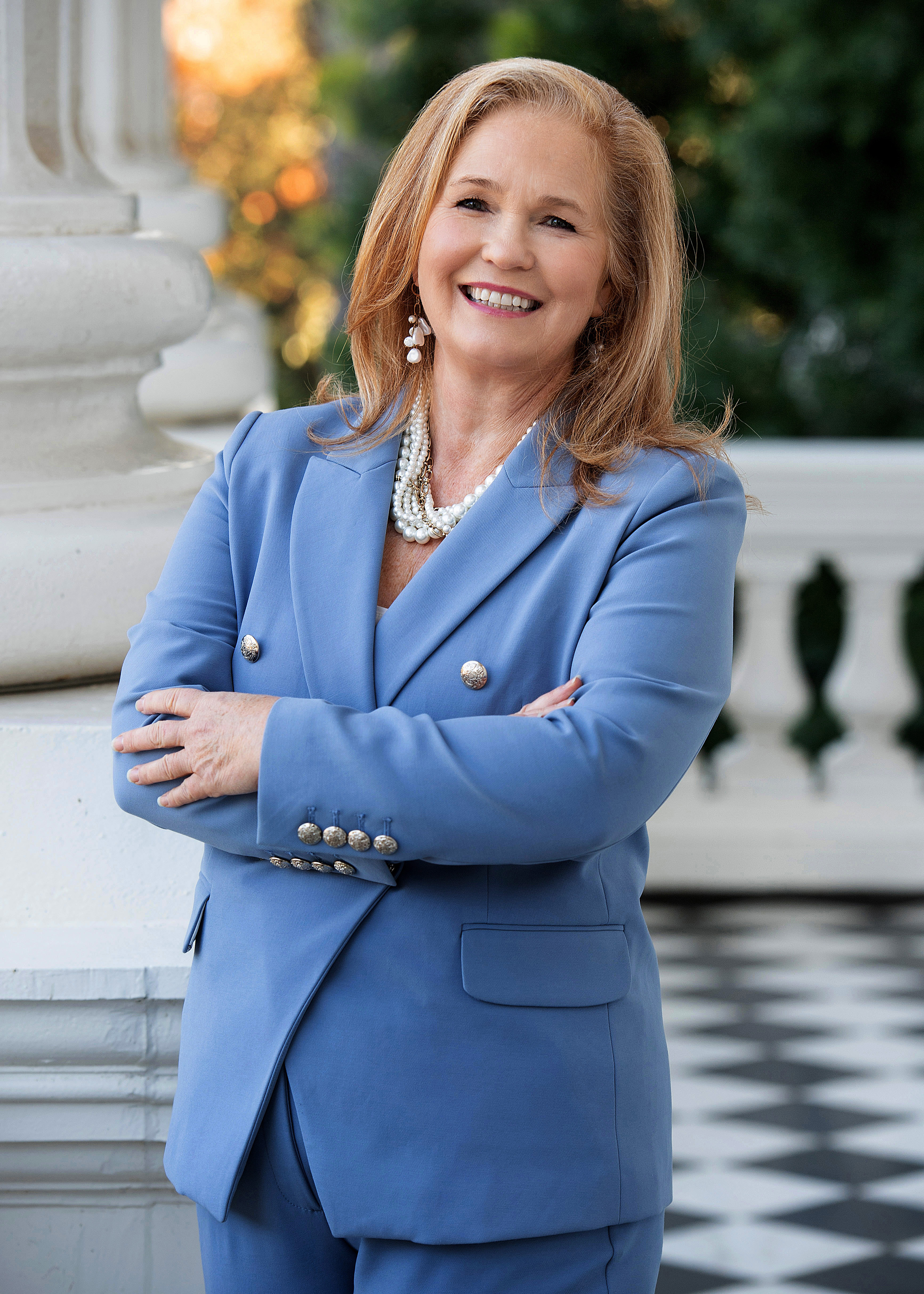
Asm. Gail Pellerin
Sponsored bills
Existing law establishes various entities for specified purposes over specific geographic areas of the state, including the San Francisco Bay Restoration Authority and California Tahoe Regional Planning Agency, among others. This bill would establish the Monterey Bay Area Stewardship Authority, a regional entity with jurisdiction extending throughout the Monterey Bay region, as defined. The bill would provide that the purpose of the authority is to raise and allocate public and private funds for restoring, enhancing, protecting, engaging in long-term stewardship, and improving access for the enjoyment of natural and working lands, as defined, in the Counties of Monterey, San Benito, and Santa Cruz, as specified. The bill would establish a 9-member governing board to govern the authority that consists of county board of supervisors, city officials, and public members of these counties, as specified. The bill would require the board to, among other things, establish policies for the operation of the authority, and convene an advisory committee to assist and advise the board in carrying out its functions. The bill would authorize the authority to award grants to public and private entities for eligible projects, including projects that restore, protect, enhance, or maintain natural, working, or open space lands in the Counties of Monterey, San Benito, and Santa Cruz, as specified. The bill would also authorize the authority to, among other things, levy a benefit assessment, special tax, or property related fee, apply for and receive grants from federal and state agencies, solicit and accept gifts, fees, grants, and allocations from public and private entities, issue revenue bonds, incur general bond indebtedness, and enter into joint powers agreements, as provided. By imposing additional duties on local governmental agencies relating to the membership of the authority's governing board, the bill would impose a state-mandated local program. This bill would make legislative findings and declarations as to the necessity of a special statute for the Counties of Monterey, San Benito, and Santa Cruz. The California Constitution requires the state to reimburse local agencies and school districts for certain costs mandated by the state. Statutory provisions establish procedures for making that reimbursement. This bill would provide that, if the Commission on State Mandates determines that the bill contains costs mandated by the state, reimbursement for those costs shall be made pursuant to the statutory provisions noted above.
This measure would establish a formal sister state relationship between the State of California and Lagos State, Nigeria, to promote collaboration across key strategic areas.
Maddy summaryThis bill designates May 31, 2026, as World No Tobacco Day within the state. It serves as a formal proclamation to raise awareness about the dangers of tobacco use without imposing new laws or regulations. The measure does not change existing policies or affect specific individuals beyond encouraging public health awareness on this specific date.
This measure would recommit to formalizing the sister state relationship between the State of Jalisco in Mexico and the State of California, as specified.
Maddy summaryThis bill designates the month of May 2026 as National Stroke Awareness Month. The primary effect is to officially recognize this time period for public education and awareness campaigns regarding stroke prevention and treatment. It does not alter laws, allocate funding, or impose new requirements on individuals or organizations. The measure serves as a symbolic gesture to highlight the importance of stroke awareness during the specified month.
This measure would recognize the historical wrongdoing committed against California Native Americans and urge the federal government to work alongside tribal leaders to address historic injustices, uphold treaty obligations, and ensure equitable access to resources, healthcare, education, and environmental stewardship.
(1) Existing state and federal law provides for the enforcement of laws related to elections. This bill would prohibit a peace officer from interfering with the administration of an election, as specified. This bill would authorize certain persons to enforce those prohibitions by filing a civil action, as specified. This bill would also prohibit any individual from permitting an agent of a law enforcement agency, as specified, to access, disrupt, modify, or take possession of rosters, combined rosters, or voter lists unless authorized by a court order or to investigate certain types of voting fraud. The bill would additionally require the Attorney General to provide guidance and information regarding how to respond to requests by law enforcement, as defined, to access areas where ballots are present. (2) Existing law requires an elections official, upon receiving a vote by mail ballot, to compare the signature on the identification envelope with the voter's prior signatures, and it also provides a mechanism by which a voter can verify their signature and cure this defect. Existing law provides that the processing of vote by mail ballots is open to the public and permits specified persons and organizations to observe this processing. This bill would prohibit a vote by mail observer from challenging a signature on a vote by mail ballot that has been verified by the voter. (3) Under existing law, it is a crime for a person in possession of a firearm, a uniformed peace officer, private guard, or security personnel, or any person wearing the uniform of a peace officer, guard, or security personnel, to be stationed in the immediate vicinity of, or posted at, a polling place without authorization from the appropriate elections official. It is also a crime for a person to hire or arrange for such a person to be stationed in the immediate vicinity of, or posted at, a polling place without authorization from the elections official. This bill would authorize the Secretary of State or Attorney General to object to authorization provided by the appropriate elections official, in which case the person stationed or posted at the polling place, or the person who hired or arranged for such a person to be stationed or posted at the polling place, is guilty of a crime. By expanding the scope of these crimes, the bill would create a state-mandated local program. (4) Existing law authorizes the Secretary of State, Attorney General, and any local elections official in the county in which the act occurs, to bring a civil action against an individual, business, or other legal entity that commits any specified act of tampering with a voting system or voting equipment before, during, or after an election. This bill would additionally authorize the Secretary of State, Attorney General, and the appropriate local elections official to bring a civil action against a person, business, or entity that takes a package containing ballots from the custody of an elections official. (5) Existing law makes it a crime for an individual to undertake a number of enumerated actions that would result in interference with an election, including displaying a container for the purpose of collecting ballots with the intent to deceive a voter into casting a ballot in an unofficial ballot box. This bill would also make it a crime to take a package containing voted ballots out of the custody of an elections official. By expanding the scope of this crime, the bill would impose a state-mandated local program. (6) Existing law requires the elections official of any county or city using a voting system to inspect the machines or devices at least once every 2 years. This bill would prohibit an individual from permitting an agent of a law enforcement agency, as defined, to access, disrupt, modify, or take possession of certified voting technology unless authorized by a court order. To the extent this bill would establish new procedures for the conduct of elections, it would create a state-mandated local program. (7) The California Constitution requires the state to reimburse local agencies and school districts for certain costs mandated by the state. Statutory provisions establish procedures for making that reimbursement. This bill would provide that with regard to certain mandates no reimbursement is required by this act for a specified reason. With regard to any other mandates, this bill would provide that, if the Commission on State Mandates determines that the bill contains costs so mandated by the state, reimbursement for those costs shall be made pursuant to the statutory provisions noted above. (8) This bill would declare that it is to take effect immediately as an urgency statute.

Existing law establishes the Medi-Cal program, which is administered by the State Department of Health Care Services and under which qualified low-income individuals receive health care services. The Medi-Cal program is in part governed by, and funded pursuant to, federal Medicaid program provisions. Existing federal law, Public Law 119-21, enacted on July 4, 2025, sets forth various changes to different health care programs, including certain requirements for Medicaid eligibility with regard to work or community engagement reporting, redeterminations, and cost sharing, among other factors, for certain Medicaid populations pursuant to a specified implementation timeline. Existing law, the federal Patient Protection and Affordable Care Act, imposes a certain assessment on an applicable large employer, as defined, that offers full-time employees and their dependents the opportunity to enroll in minimum essential coverage, and for whom one or more full-time employees have been certified as having enrolled in a qualified health plan for which a premium tax credit or cost-sharing reduction is allowed or paid. This bill would create the Employer Responsibility for Medi-Cal Trust Fund to consist of new taxes and deposits, including employer penalties specified in the Budget Act of 2026. The bill would continuously appropriate moneys in the fund to the department to fund the costs of administering the Medi-Cal program in a manner necessary to prevent loss of or to restore health care coverage, benefits, or access to care following the passage of Public Law 119-21 and subsequent state budget actions. The bill would state that these provisions would become operative only if the Medicaid provisions of Public Law 119-21 are not repealed prior to January 1, 2027. By creating a continuously appropriated fund, the bill would make an appropriation. This bill would declare that it is to take effect immediately as an urgency statute.

This measure would recognize the significance of Vesak Day to people of Buddhist faith and extend sincere best wishes to the state's Buddhist community in celebrating Vesak Day.