

(1) Existing law categorizes certain drugs and other substances as controlled substances and prohibits various actions related to those substances, including their manufacture, transportation, sale, possession, and ingestion. This bill would, on and after January 1, 2025, make lawful the possession, preparation, obtaining, or transportation of, specified quantities of psilocybin, psilocyn, dimethyltryptamine (DMT) , and mescaline, for personal use, as defined, by and with persons 21 years of age or older. The bill would provide penalties for possession of these substances on school grounds, or possession by, or transferring to, persons under 21 years of age. The bill would require the California Health and Human Services Agency to convene a workgroup to study and make recommendations on the establishment of a framework governing the therapeutic use, including facilitated or supported use, of those substances. The bill would require that workgroup to send a report to the Legislature containing those recommendations on or before January 1, 2025. (2) Existing law prohibits the cultivation, transfer, or transportation, as specified, of any spores or mycelium capable of producing mushrooms or other materials that contain psilocybin or psilocyn. This bill would, on and after January 1, 2025, make lawful the cultivation or transportation of specified quantities of spores or mycelium capable of producing mushrooms or other materials that contain psilocybin or psilocyn for personal use, as defined, by and with persons 21 years of age or older. (3) Existing law prohibits the possession of drug paraphernalia, as defined. This bill would exempt from this prohibition, paraphernalia related, as specified, to these specific substances. The bill would also exempt from the prohibition items used for the testing and analysis of controlled substances. (4) Existing law states the intent of the Legislature that the messages and information provided by various state drug and alcohol programs promote no unlawful use of any drugs or alcohol. This bill would repeal those provisions. (5) By eliminating and changing the elements of existing crimes and creating new offenses, and by requiring new duties of local prosecutors, this bill would impose a state-mandated local program. The California Constitution requires the state to reimburse local agencies and school districts for certain costs mandated by the state. Statutory provisions establish procedures for making that reimbursement. This bill would provide that with regard to certain mandates no reimbursement is required by this act for a specified reason. With regard to any other mandates, this bill would provide that, if the Commission on State Mandates determines that the bill contains costs so mandated by the state, reimbursement for those costs shall be made pursuant to the statutory provisions noted above. (6) This bill would state that its provisions are severable.
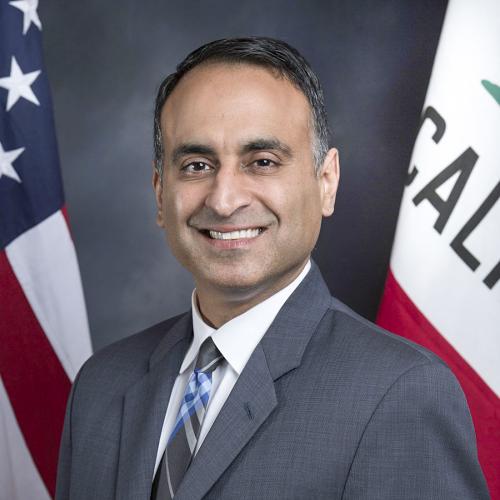
Asm. Ash Kalra
Sponsored bills
Existing law, until December 31, 2024, requires an employer, as defined, to offer certain employees laid off due to the COVID-19 pandemic specified information about job positions that become available for which the laid-off employees are qualified, and to offer positions to those laid-off employees based on a preference system, in accordance with specified timelines and procedures. Existing law requires an employer that declines to recall a laid-off employee on the grounds of lack of qualifications and instead hires someone other than a laid-off employee to provide the laid-off employee a written notice within 30 days including specified reasons for the decision, and other information on those hired. Existing law prohibits an employer from taking adverse action against any laid-off employee for seeking to enforce their rights under existing law. Existing law gives the Division of Labor Standards Enforcement jurisdiction over enforcement of these provisions and prescribes enforcement, remedies, and civil penalties for violations. Existing law prohibits the imposition of criminal penalties for a violation of these provisions. Existing law authorizes the division to promulgate and enforce rules and regulations, and issue determinations and interpretations concerning existing law. This bill would require a chain employer to provide each covered worker and their exclusive representative, if any, a displacement notice at least 60 days before the expected date of closure of a covered establishment. The bill would define terms for its purposes, including defining a "covered establishment" as a chain establishment that is subject to closure resulting in layoffs of workers, a "chain" as a business in this state that consists of 100 or more establishments nationally that share a common brand and are owned and operated by the same parent company, and a "chain employer" as any person, including a corporate officer or executive, who directly or indirectly or through an agent or any other person, owns or operates a chain and employs or exercises control over the wages, hours, or working conditions of workers. A "chain employer" would also include a franchisee that owns and operates 100 or more establishments nationally under an agreement with one franchisor. This bill would require a chain employer, for a year after the closure of a covered establishment, to provide to all covered workers the opportunity to transfer to a location of the chain within 25 miles of the covered establishment subject to closure as positions become available. A franchisee subject to the bill would only be required to make an offer of transfer to a covered worker to a location within 25 miles of the covered location that the franchisee owns and operates under an agreement with one franchisor. The bill would require the chain employer to maintain a preferential transfer list of covered workers. The bill would require a chain employer to make offers of transfer to qualified covered workers based on length of service, as specified. The bill would require a covered worker who is offered a position to be given at least 5 business days, from the date of receipt, to accept or decline the offer. The bill would require a chain employer to retain for a minimum of 3 years prescribed records relating to the closure and offers of employment. The bill would prohibit a chain employer from taking adverse action against a covered worker for asserting their rights under the bill. Under the bill, the division would have jurisdiction over enforcement of these provisions. The bill would prescribe enforcement, remedies, and civil penalties for violations. The bill would prohibit the imposition of criminal penalties for a violation of these provisions. The bill would authorize the division to promulgate and enforce rules and regulations, and issue determinations and interpretations concerning existing law.
Existing law provides for the payment of unemployment compensation benefits and extended benefits to eligible individuals who meet specified requirements. Under existing law, unemployment benefits are paid from the Unemployment Fund, which is continuously appropriated for these purposes. Existing law makes an employee ineligible for benefits if the employee left work because of a trade dispute and specifies that the employee remains ineligible for the duration of the trade dispute. Existing case law holds that employees who left work due to a lockout by the employer, even if it was in anticipation of a trade dispute, are eligible for benefits. This bill would restore eligibility after the first 2 weeks for an employee who left work because of a trade dispute. The bill would codify specified case law that holds that employees who left work due to a lockout by the employer, even if it was in anticipation of a trade dispute, are eligible for benefits. The bill would specify that the bill's provisions do not diminish eligibility for benefits of individuals deprived of work due to an employer lockout or similar action, as specified. Because this bill would expand the categories of people eligible to receive benefits from a continuously appropriated fund, it would make an appropriation.
Existing law, the California Fair Employment and Housing Act (FEHA) , protects the right to seek, obtain, and hold employment without discrimination because of prescribed characteristics. FEHA makes various employment practices unlawful and empowers the Civil Rights Department to investigate and prosecute complaints alleging unlawful practices. FEHA makes it an unlawful practice for an employer or other entity to fail to make reasonable accommodation for the known physical or mental disability of an applicant or employee. FEHA further makes it an unlawful practice for an employer or other entity to fail to engage in a timely, good faith, interactive process with the employee or applicant to determine effective reasonable accommodations, if any, in response to a request for reasonable accommodation by an employee or applicant with a known physical or mental disability or known medical condition. This bill would make it an unlawful employment practice for an employer to fail to provide to an employee who is working from home at least 30 calendar days' advance notice before requiring the employee to return to work in person. The bill would prohibit an employee from being required to return to work in person until the employer provides notice in accordance with the bill. The bill would require that notice be written and sent by mail or email and include, at a minimum, prescribed text with information about the rights of an employee to reasonable accommodation for a disability. The bill would establish specified restrictions on the interpretation of its provisions.
Existing law, the California Building Standards Law, establishes the California Building Standards Commission within the Department of General Services and sets forth its powers and duties, including approval and adoption of building standards and codification of those standards into the California Building Standards Code. Existing law requires the commission to adopt specific building standards, including standards for graywater, and to publish, or cause to be published, editions of the California Building Standards Code in its entirety once every 3 years. Existing law establishes the Building Standards Administration Special Revolving Fund, and makes the moneys in the fund available, upon appropriation, to state entities to carry out various related provisions, as specified. This bill would require the department to research, develop, and propose building standards to reduce potable water use in new residential buildings and imposes those duties on the commission with respect to new nonresidential buildings, as specified. The bill would require the commission to perform a review of water efficiency and water reuse standards in the California Buildings Standards Code every 3 years, commencing with the next triennial edition, and update as needed. Existing law establishes, within the California Environmental Protection Agency, the State Water Resources Control Board for the purposes of orderly and efficient administration of the state's water resources. Existing law requires the board, in consultation with the commission and the Department of Housing and Community Development, to adopt regulations for risk-based water quality standards for the onsite treatment and reuse of nonpotable water in multifamily residential, commercial, and mixed-use buildings, as specified. Existing law requires the department, in consultation with the board, to develop and propose for adoption any necessary corresponding building standards to support those risk-based water quality standards by a specified date. This bill, instead, would require the department, in consultation with the board, to develop and propose the corresponding building standards within 12 months of the board adopting those regulations. This bill would also make related findings and declarations.
(1) The California Beverage Container Recycling and Litter Reduction Act, of which a violation is a crime, requires a distributor to pay a redemption payment for every beverage container sold or offered for sale in the state. The act defines the term "beverage container" to mean the individual, separate bottle, can, jar, carton, or other receptacle, however denominated, in which a beverage is sold, and which is constructed of metal, glass, or plastic, or other material, or any combination of these materials, but does not include cups or other similar open or loosely sealed receptacles. The act defines "beverage" to include certain types of products in liquid, ready-to-drink form, including carbonated fruit drinks and noncarbonated fruit drinks that contain any percentage of fruit juice, but not 100% fruit juice in 46-ounce containers or larger or vegetable juice containers with more than 16 ounces. This bill would expand the application of the act to any size container of 100% fruit juice and any size container of vegetable juice, beginning January 1, 2024. Since the additional payments for the beverage containers that this bill would make subject to the act would be deposited in a continuously appropriated fund, the bill would make an appropriation. The bill would impose a state-mandated local program by creating new crimes under the act relating to the regulation of beverage containers. (2) The act defines a "beverage manufacturer" as a person who bottles, cans, or otherwise fills beverage containers, or imports filled beverage containers, for sale to distributors, dealers, or consumers. This bill would amend the definition of "beverage manufacturer" to mean the same as above, except that for a beverage container containing beer, wine, or distilled spirits, the "beverage manufacturer" would be the person who holds the license from the Department of Alcoholic Beverage Control authorizing the manufacture of the beer, wine, or distilled spirits, regardless of whether that person contracts with a third party to bottle, can, or otherwise fill the beverage container, so long as the beverage container is provided for sale to a distributor, dealer, or consumer by the holder of the license. (3) The act requires plastic beverage containers sold by a beverage manufacturer, as specified, to contain a specified average percentage of postconsumer recycled plastic. The act provides for periodic increases in the required percentage, but authorizes the Director of Resources Recycling and Recovery to lower the required percentage, based on specified criteria. The act imposes an administrative penalty on a beverage manufacturer that fails to include the required percentage of postconsumer recycled plastic in its plastic beverage containers. This bill would exempt beverage containers of 46 ounces or more of 100% fruit juice and beverage containers with more than 16 ounces of vegetable juice from consideration in calculating the required percentage of postconsumer recycled plastic for a beverage manufacturer until January 1, 2026. (4) The act requires a beverage manufacturer to label a beverage container sold or offered for sale by that beverage manufacturer in the state with one of several specified redemption value messages. The act prohibits a person from offering to sell, or selling, to a consumer a beverage container that has not been labeled as required by the act. The act exempts a beverage container included within the scope of the act beginning on January 1, 2024, from the act's labeling requirements until July 1, 2025. This bill would additionally exempt from the act's labeling requirements a beverage container included within the scope of the act beginning on January 1, 2024, that was filled and labeled before January 1, 2024, and a beverage container with 46 ounces or more of 100% fruit juice or more than 16 ounces of vegetable juice that was filled and labeled before July 1, 2024. (5) Existing law requires a dealer, as defined, to separately identify the amount of any redemption payment imposed on a beverage container on the shelf labels of the dealer's establishment, as specified. This bill would exempt from this shelf labeling requirement until January 15, 2024, a beverage container included within the scope of the act beginning on January 1, 2024. (6) The act requires a beverage manufacturer to pay to the Department of Resources Recycling and Recovery a processing fee for each beverage container sold or transferred and requires the department to distribute those fees, with other moneys, as processing payments to processors and recycling centers. The act requires the department to calculate the processing payment annually and authorizes quarterly adjustments, both based on the prior 12-month scrap value. This bill would authorize the department to adjust the processing payment quarterly, based on the lower of either the applicable preceding 12-month or 3-month average scrap value instead of only the prior 12-month scrap value. The bill would require a processing payment equal to the processing payment applied to HDPE beverage containers to be applied to a beverage container that is a box, bladder, pouch, or similar container, containing wine or distilled spirits. This bill would require the department to pay to a recycling center in a rural area, as specified, in addition to a processing payment, a transportation, operations, and logistics payment for glass beverage containers, as specified, until January 1, 2030. The bill would continuously appropriate moneys in the California Beverage Container Recycling Fund to the department for this purpose, thereby making an appropriation. (7) The act requires a beverage distributor to pay to the department a redemption payment for a beverage container sold or offered for sale in the state by the distributor, as specified. The act exempts any lodging, eating, or drinking establishment, licensed wine or distilled spirits tasting room, or soft drink vending machine operator from the definition of dealer, as specified. This bill, commencing January 1, 2024, would exempt a beverage distributor from being required to pay a redemption payment for a beverage container that is used solely to pour wine, beer, or distilled spirits at a licensed wine, beer, or distilled spirits tasting room. The bill would additionally exempt a licensed beer tasting room from the definition of dealer. (8) The act requires the department, not less than once every 6 months, to post on its internet website an updated condition statement for the California Beverage Container Recycling Fund, and other specified information, for the current fiscal year and budget year and to provide a written copy of that information to specified committees of the Legislature. This bill would instead require the department to notify certain committees of the Legislature of the posting of the above-described information. (9) Existing law provides that the Division of Recycling in the department succeeds to and is vested with specified authority, duties, powers, purposes, responsibilities, and jurisdiction that once belonged to the Department of Conservation regarding the act. This bill would provide that the department, instead of the division within the department, succeeds to and is vested with the specified authority, duties, powers, purposes, responsibilities, and jurisdiction that once belonged to the Department of Conservation regarding the act. (10) The California Constitution requires the state to reimburse local agencies and school districts for certain costs mandated by the state. Statutory provisions establish procedures for making that reimbursement. This bill would provide that no reimbursement is required by this act for a specified reason. (11) This bill would declare that it is to take effect immediately as an urgency statute.
Existing law prohibits a local authority from enacting or enforcing an ordinance on matters covered by the Vehicle Code unless expressly authorized by the Vehicle Code. Existing law authorizes local authorities to adopt rules and regulations by ordinance or resolution regarding specified matters, including, among others, crossing guards, the operation of bicycles, the removal of illegally parked vehicles, and cruising, as defined. This bill would remove the authorization for a local authority to adopt rules and regulations by ordinance or regulation regarding cruising. Existing law makes it unlawful to operate a passenger vehicle, or commercial vehicle under 6,000 pounds, that has been modified from its original design so that any portion of the vehicle, other than the wheels, has less clearance from the surface of a level roadway than the clearance between the roadway and the lowermost portion of any rim of any wheel in contact with the roadway. This bill would repeal that prohibition. This bill would incorporate additional changes to Section 21100 of the Vehicle Code proposed by AB 825 and SB 50 to be operative only if this bill and AB 825, this bill and SB 50, or this bill, AB 825, and SB 50 are enacted and this bill is enacted last.