

Existing federal law, the federal Patient Protection and Affordable Care Act (PPACA) , requires each state to establish an American Health Benefit Exchange to facilitate the purchase of qualified health benefit plans by qualified individuals and qualified small employers. PPACA defines a "qualified health plan" as a plan that, among other requirements, provides an essential health benefits package. Existing state law creates the California Health Benefit Exchange, also known as Covered California, to facilitate the enrollment of qualified individuals and qualified small employers in qualified health plans as required under PPACA. Existing law, the Knox-Keene Health Care Service Plan Act of 1975 (Knox-Keene) , provides for the licensure and regulation of health care service plans by the Department of Managed Health Care. Existing law provides for the regulation of health insurers by the Department of Insurance. Existing law provides for the Medi-Cal program, which is administered by the State Department of Health Care Services, under which qualified low-income individuals receive health care services. The Medi-Cal program is, in part, governed and funded by federal Medicaid program provisions. This bill, the California Guaranteed Health Care for All Act, would create the California Guaranteed Health Care for All program, or CalCare, to provide comprehensive universal single-payer health care coverage and a health care cost control system for the benefit of all residents of the state. Under the bill, CalCare would be a health care service plan subject to Knox-Keene. The bill, among other things, would provide that CalCare cover a wide range of medical benefits and other services and would incorporate the health care benefits and standards of other existing federal and state provisions, including the federal Children's Health Insurance Program, Medi-Cal, ancillary health care or social services covered by regional centers for persons with developmental disabilities, Knox-Keene, and the federal Medicare Program. The bill would make specified persons eligible to enroll as CalCare members during the implementation period, and would provide for automatic enrollment. The bill would require the board to seek all necessary waivers, approvals, and agreements to allow various existing federal health care payments to be paid to CalCare, which would then assume responsibility for all benefits and services previously paid for with those funds. This bill would create the CalCare Board to govern CalCare, made up of 9 voting members with demonstrated and acknowledged expertise in health care, and appointed as provided, plus the Secretary of California Health and Human Services or their designee as a nonvoting, ex officio member. The bill would provide the board with all the powers and duties necessary to establish CalCare, including determining when individuals may start enrolling into CalCare, employing necessary staff, negotiating pricing for covered pharmaceuticals and medical supplies, establishing a prescription drug formulary, and negotiating and entering into necessary contracts. The bill would require the board, on or before July 1 of an unspecified year, to conduct and deliver a fiscal analysis to determine whether or not CalCare may be implemented and if revenue is more likely than not to pay for program costs, as specified. The bill would establish an Advisory Commission on Long-Term Services and Supports to advise the board on matters of policy related to long-term services and supports. The bill would require the board to convene a CalCare Public Advisory Committee to advise the board on all matters of policy for CalCare, an Advisory Committee on Public Employees' Retirement System Health Benefits to provide recommendations related to public employee retiree health benefits, and a CalCare Health Workforce Working Group to provide the board with input on issues related to health care workforce education, recruitment, and retention. The bill would establish an Office of Health Equity within CalCare and under the direction of the Director of the Department of Health Care Access and Information to ensure health equity under the program and other health programs of the California Health and Human Services Agency and to support the board through specified actions. This bill would provide for the participation of health care providers in CalCare, including the requirements of a participation agreement between a health care provider and the board, provide for payment for health care items and services, and specify program participation standards. The bill would prohibit a participating provider from discriminating against a person by, among other things, reducing or denying a person's benefits under CalCare because of a specified characteristic, status, or condition of the person. This bill would prohibit a participating provider from billing or entering into a private contract with an individual eligible for CalCare benefits regarding a covered benefit, but would authorize contracting for a health care item or service that is not a covered benefit if specified criteria are met. The bill would authorize health care providers to collectively negotiate fee-for-service rates of payment for health care items and services using a third-party representative, as provided. The bill would require the board to annually determine an institutional provider's global budget, to be used to cover operating expenses related to covered health care items and services for that fiscal year, and would authorize payments under the global budget. This bill would state the intent of the Legislature to enact legislation that would develop a revenue plan, taking into consideration anticipated federal revenue available for CalCare. The bill would create the CalCare Trust Fund in the State Treasury, as a continuously appropriated fund, consisting of any federal and state moneys received for the purposes of the act. The bill would specify uses for moneys in the CalCare budget, including special projects for which not-for-profit or governmental entities may apply. Because the bill would create a continuously appropriated fund, it would make an appropriation. This bill would prohibit specified provisions of this act from becoming operative until the Secretary of California Health and Human Services gives written notice to the Secretary of the Senate and the Chief Clerk of the Assembly that the CalCare Trust Fund has the revenues to fund the costs of implementing the act. The California Health and Human Services Agency would be required to publish a copy of the notice on its internet website. Existing constitutional provisions require that a statute that limits the right of access to the meetings of public bodies or the writings of public officials and agencies be adopted with findings demonstrating the interest protected by the limitation and the need for protecting that interest. This bill would make legislative findings to that effect.
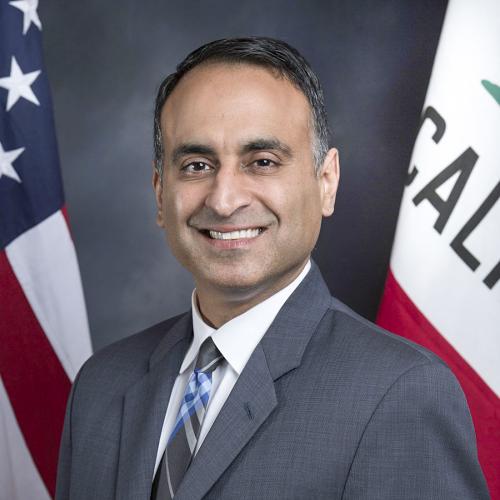
Asm. Ash Kalra
Sponsored bills
Existing law, the Mobilehome Residency Law, requires the owner of a mobilehome park who enters into a written listing agreement with a licensed real estate broker for the sale of the mobilehome park or who offers to sell the mobilehome park to any party to provide written notice of the owner's intention to sell to specified members of a resident organization formed by homeowners for purposes of converting the mobilehome park to condominium or stock cooperative ownership interests and for purchasing the mobilehome park. Existing law requires the owner to provide this notice not less than 30 days nor more than one year before entering into the listing agreement or offering to sell the mobilehome park. Existing law prohibits an offer to sell a park from being construed as an offer unless it is initiated by the park owner or their agent. Existing law provides various exceptions to this notice requirement, including that no notice is required unless the resident organization has first furnished the park owner or park manager with a written notice of the name and address of the president, secretary, and treasurer of the resident organization, as specified. This bill would require the owner to provide the above-described notice if they accept an offer from any buyer. The bill would also require the owner to provide the above-described notice to all residents of the mobilehome park and the Department of Housing and Community Development not less than 120 days nor more than one year before entering into the listing agreement or offering to sell the mobilehome park. The bill would grant the resident organization a right of first refusal to the mobilehome park and give them 120 days from the time they receive the above-described notice to make an offer. The bill would require the owner to engage in good faith negotiations, as defined, with the resident organization if they are interested in purchasing the park and prohibit the owner from negotiating with or accepting an offer from another party until the above-described 120-day right of first refusal time period has elapsed. The bill would remove the above-described exceptions to the notice requirement and would remove the prohibition on an offer to sell a park from being construed as an offer unless it is initiated by the park owner or their agent.
This measure would proclaim the week of April 14, 2024 to April 20, 2024, to be Cities Week, and would encourage all Californians to be involved in their communities and be civically engaged with their local government.
This measure would join Asian and Pacific Islander communities throughout the state, nation, and world in celebrating April 13, 2024, to April 15, 2024, as the Songkran New Year Festival.
Maddy summaryThis bill is a House Resolution that formally recognizes May 2024 as Asian and Pacific Islander American Heritage Month in California. It directly affects the state legislature and the broader public by establishing an official period to honor the history and contributions of Asian and Pacific Islander communities. The resolution highlights the diverse backgrounds of these populations, their significant roles in California's development, and their ongoing achievements in various fields. By adopting this measure, the Assembly commends these communities for their accomplishments and acknowledges the hardships they have faced throughout history.
This measure would proclaim the week of April 7 through April 13, 2024, as Adult Education Week, and would salute the teachers, administrators, classified staff, and students of adult education programs statewide, honoring their efforts, persistence, and accomplishments.
This measure would designate the week of April 14, 2024, to April 20, 2024, inclusive, as Family Physician Week.