Maddy summaryThis bill establishes April 27 as Harvey Milk Day to honor the first openly gay man elected to public office in a major U.S. city. The resolution recognizes Milk's legacy as a civil rights leader who fought against discrimination and advocated for LGBTQ+ visibility and unity among minority communities. It recounts key events in his life, including his assassination in 1978 and the subsequent legal proceedings against his killer. The measure serves as a commemorative acknowledgment of Milk's impact on California and national history rather than creating new laws or policies.
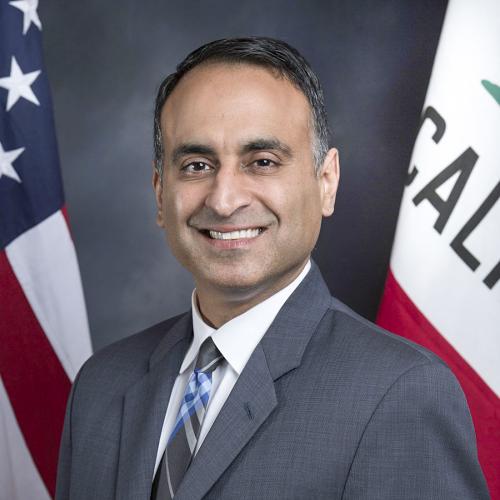
Asm. Ash Kalra
Sponsored bills
(1) Existing law provides for the regulation of various professions and vocations by boards established under the jurisdiction of the Department of Consumer Affairs in the Business, Consumer Services, and Housing Agency. Existing law, the California Uniform Controlled Substances Act, classifies controlled substances into 5 schedules, and places the greatest restrictions and penalties on the use of those substances placed in Schedule I. Existing law classifies dimethyltryptamine, mescaline, 3,4-methylenedioxymethamphetamine (MDMA) , ibogaine, psilocybin, and psilocyn as Schedule I substances, and prohibits various actions related to those substances, including their sale, possession, transportation, manufacture, or cultivation. (2) This bill would enact the Regulated Psychedelic Facilitators Act, which would establish the Board of Regulated Psychedelic Facilitators in the Department of Consumer Affairs to license and regulate psychedelic facilitators, as defined. The bill would require the board to be appointed, as specified, by April 1, 2025. The bill would require the board to establish educational, training, and other qualifications and requirements for obtaining a license as a regulated psychedelic facilitator and would establish conditions of licensure. The bill would require the board to establish fees for the reasonable regulatory costs to the board to administer the act. The bill would require the board to begin accepting license applications by April 1, 2026. The bill would make a license subject to renewal every 2 years. The bill would create the Regulated Psychedelic Facilitators Fund in the State Treasury, would require all funds received pursuant to the act to be credited to the fund, and would make moneys in the fund available to the board for the act's purposes upon appropriation by the Legislature. The bill would require the board, consistent with recommendations made by the Regulated Psychedelic Substances Advisory Committee, which would be created by the bill, to adopt regulations, on or before January 1, 2026, governing the safe provision of regulated psychedelic facilitation, including regulations governing the scope of practice for regulated psychedelic facilitators and recordkeeping requirements, provided the recordkeeping does not result in the disclosure of personally identifiable information of participants. The bill would require the board to determine which schools and programs meet the requirements of the act and to adopt regulations governing the requirements and process for approving schools and programs related to the provision of psychedelic facilitation training. The bill would authorize the board to charge a reasonable fee for the inspection or approval of schools or programs. The bill would make a violation of the act a misdemeanor and subject a licenseholder's license to suspension or revocation. The bill would make a violation of specified acts subject to discipline or denial of a license by the board in accordance with specified procedures. By creating a new crime, the bill would impose a state-mandated local program. The bill would make specified practices unfair business practices, including a person without a license holding themselves out as a regulated psychedelic facilitator. The bill would authorize a local government to reasonably regulate the time, place, and manner of regulated psychedelic facilitation within its boundaries. (3) This bill would enact the Regulated Psychedelic-Assisted Therapy Act to establish a comprehensive system to control and regulate the production, distribution, transportation, storage, processing, manufacturing, testing, quality control, and sale of regulated psychedelic substances for use in conjunction with psychedelic facilitation, as defined, the provision of psychedelic facilitation, the approval of locations where regulated psychedelic facilitation may take place, and the collection and publication of data on the implementation and outcomes of the act. The bill would define "regulated psychedelic substances" to include dimethyltryptamine; mescaline; 3,4-methylenedioxymethamphetamine (MDMA) ; psilocybin; psilocyn; and spores or mycelium capable of producing mushrooms that contain psilocybin or psilocyn. The bill would establish the Division of Regulated Psychedelic-Assisted Therapy, to be under the supervision and control of a director appointed by the Governor, in the Business, Consumer Services, and Housing Agency to administer and enforce the act. The bill would require the division to take specified actions to carry out its duties under the act, including conducting investigations and employing peace officers. The bill would grant to specified personnel the authority of peace officers while engaged in investigating the laws administered by the division or commencing criminal prosecution arising from investigations, as specified. The bill would require the division, no later than April 1, 2025, to convene a Regulated Psychedelic Substances Expert Oversight Committee, to be appointed by the Governor, to advise the division and the Board of Regulated Psychedelic Facilitators on the development of standards and regulations that include best practices and guidelines that protect public health and safety. The bill would require the oversight committee, commencing on January 1, 2026, to publish an annual public report that includes, among other things, the oversight committee's recommendations to the division and the board and whether those recommendations were implemented. The bill would require the division to adopt regulations, consistent with the recommendations of the oversight committee, for the administration and enforcement of laws regulating regulated psychedelic substances and services, including regulations that establish categories of licensure and registration. The bill would require the division, no later than April 1, 2026, to begin to accept and process applications for licensure. The bill would authorize the division to collect fees in connection with activities it regulates. The bill would create the Regulated Psychedelic-Assisted Therapy Fund within the State Treasury, and would allocate the funds, upon appropriation by the Legislature, to the division for the purposes of implementing, administering, and enforcing the act. The bill would also create the Psychedelic Substances Public Education and Harm Reduction Fund, to be available to the Office of Community Partnerships and Strategic Communications, upon appropriation by the Legislature, to award grants for public education and harm reduction relating to psychedelic substances. The bill would authorize the division to accept moneys from private sources to supplement state funds, which may be appropriated by the Legislature to the fund. The bill would make a violation of the act a misdemeanor. By creating a new crime, the bill would impose a state-mandated local program. The bill would require the division to work with state and local enforcement agencies to implement, administer, and enforce the division's rules and regulations. (4) Existing law provides that a physician and surgeon, psychotherapist, or alcohol and drug abuse counselor who engages in specified sexual conduct with a patient or client or certain former patients or clients is guilty of sexual exploitation and prescribes specified criminal penalties for acts of sexual exploitation. This bill would make those provisions applicable to registered psychedelic facilitators. By expanding the scope of a crime, the bill would impose a state-mandated local program. (5) This bill would declare that it is the public policy of the people of the State of California that contracts related to the operation of licenses under the Regulated Psychedelic Facilitators Act and the Regulated Psychedelic-Assisted Therapy Act shall be enforceable. (6) This bill would make conforming changes to the California Uniform Controlled Substances Act. (7) This bill would state that its provisions are severable. (8) This bill would include findings that changes proposed by this bill address a matter of statewide concern rather than a municipal affair and, therefore, apply to all cities, including charter cities. (9) Existing constitutional provisions require that a statute that limits the right of access to the meetings of public bodies or the writings of public officials and agencies be adopted with findings demonstrating the interest protected by the limitation and the need for protecting that interest. This bill would make legislative findings to that effect. (10) The California Constitution requires the state to reimburse local agencies and school districts for certain costs mandated by the state. Statutory provisions establish procedures for making that reimbursement. This bill would provide that no reimbursement is required by this act for a specified reason.

Existing law establishes various programs for the enforcement of environmental protection. Existing law defines environmental justice, for certain purposes, as the fair treatment of people of all races, cultures, and incomes with respect to the development, adoption, implementation, and enforcement of environmental laws, regulations, and policies. Existing law makes legislative findings and declarations that it is in the public interest to provide the people of the state through the Attorney General with adequate remedy to protect the natural resources of the state from pollution, impairment, or destruction. Existing law authorizes the Attorney General to intervene in any judicial or administrative proceeding in which facts are alleged concerning pollution or adverse environmental effects that could affect the public generally. This bill would continue in existence, within the Department of Justice, the Bureau of Environmental Justice for the purpose of protecting people and communities that endure a disproportionate share of environmental pollution and public health hazards. The bill would require the bureau to ensure fair treatment of people of all races, cultures, and incomes with respect to the development, adoption, implementation, and enforcement of environmental laws, regulations, and policies, pursuant to the existing authority of the Attorney General, as specified. The bill would require the Attorney General to ensure the bureau is staffed with a minimum of 12 attorneys and an appropriate number of support staff.
Existing law establishes the Department of Housing and Community Development and sets forth its powers and duties. Existing law creates a housing authority in each county or city, which functions upon the adoption of a specified resolution by the relevant governing body. Existing law authorizes these housing authorities, within their jurisdictions, to construct, reconstruct, improve, alter, or repair all or part of any housing project. Existing law establishes various programs that provide housing assistance. This bill would enact the Social Housing Act and would create the California Housing Authority as an independent state body, the mission of which would be to ensure that social housing developments that are produced and acquired align with the goals of eliminating the gap between housing production and regional housing needs assessment targets and preserving affordable housing. The bill would prescribe a definition of social housing that would describe, in addition to housing owned by the authority, housing owned by other entities, as specified, provided that all social housing developed or authorized by the authority would be owned by the authority. This bill would prescribe the composition of the California Housing Authority Board, which would govern the authority, and which would be composed of appointed members and members who would be elected by residents of social housing developments, as specified. The bill would set forth the powers and duties of the authority and the board. The bill would require the authority to seek to achieve revenue neutrality, as defined, and would require the authority to seek to recuperate the cost of development and operations over the life of its properties through mechanisms that maximize the number of Californians who can be housed without experiencing rent burden. This bill would require the authority to prioritize the development of specified property, including vacant parcels and parcels near transit, and would establish a process for the annual determination of required social housing units. Under the bill, social housing would accommodate a mix of household income ranges and would provide specified protections for residents, who would participate in the operation and management of the units in which they reside. This bill would require the California Housing Authority to employ 2 leasing models in social housing developments, referred to as the rental model and the ownership model, and would set forth the characteristics of both models. Under the ownership model, the authority would extend a 99-year lease, in the form of a limited equity arrangement, as defined, to individuals who commit to a minimum 5-year term of residence, and would authorize the authority to act as a lender for residents. The bill would specify how the units may be sold and transferred. The bill would establish eligibility requirements for social housing residents and would provide for the selection of residents by lottery, as specified, providing that people who may have been displaced from a property as part of its development would be granted a preference for occupancy. The bill, among other things, would require the authority to accept a local jurisdiction's preference for a project parcel if specified conditions are met. This bill would establish the Social Housing Revolving Loan Fund within the State Treasury to provide, upon appropriation by the Legislature, zero-interest loans for the purposes of constructing housing to accommodate a mix of household incomes. The bill would declare the intent of the Legislature to enact subsequent legislation to provide financing for the activities of the authority through the issuance of general obligation bonds. The bill would authorize the authority to issue revenue bonds, as specified. The bill would require the board to provide for regular audits of the authority's accounts and records, as specified. The bill would also require the authority to prepare and submit specified reporting information regarding its business plan and progress to the Legislature on an annual basis.
Existing law, the Veterinary Medicine Practice Act, provides for the licensure and registration of veterinarians and registered veterinary technicians and the regulation of the practice of veterinary medicine by the Veterinary Medical Board. Existing law permits registered veterinary technicians and veterinary assistants to carry out specified acts in the veterinary care and treatment of animals, and authorizes the board to regulate the veterinary care activities of registered veterinary technicians and veterinary assistants, including prohibiting registered veterinary technicians and veterinary assistants from performing surgery. This bill would authorize a registered veterinarian technician to perform neuter surgery on a male domestic cat under the direct supervision of a California-licensed veterinarian, as specified. The bill would require a registered veterinary technician authorized to perform neuter surgery under the requirements of this act to obtain training, as specified, in cat neuter surgery procedures before receiving board approval.
Existing law creates the Governor's Office of Business and Economic Development (GO-Biz) and requires GO-Biz to serve the Governor as the lead entity for economic strategy and the marketing of California on issues relating to business development, private sector investment, and economic growth. This bill would establish the Antidisplacement Commercial Property Acquisition Program, to be administered by GO-Biz to provide low-interest loans to eligible community-based acquisition partners to acquire commercial property in communities that are vulnerable to gentrification and displacement. The bill would specify the goals of the program, including ensuring local businesses remain in high-risk communities vulnerable to gentrification and displacement. The bill would establish the Antidisplacement Commercial Property Acquisition Revolving Loan Fund, and would authorize GO-Biz, upon appropriation by the Legislature to the fund for purposes of the program, to provide low-interest loans for purposes of the program. The bill would require GO-Biz to adopt regulations to administer the program, including qualifications that prioritize the preservation of Black-, indigenous-, people of color-, and women-owned businesses and the acquisition of commercial property in culturally significant commercial corridors. The bill would require GO-Biz to report to the Legislature on the progress of the program by January 1, 2030, or 5 years after the disbursement of the first loan by GO-Biz, whichever is later. The bill would make the program contingent upon appropriation by the Legislature in the annual Budget Act or another statute for its purposes.
(1) Existing law prohibits the state from seeking a criminal conviction or sentence on the basis of race, ethnicity, or national origin. Existing law authorizes a defendant to file a motion in the trial court or, if judgment has been imposed, to file a petition for writ of habeas corpus to allege a violation of this prohibition or to allege a violation on appeal. Existing law requires all public records to be made available for inspection to the public, except as specifically exempted. Existing law exempts from disclosure certain records of law enforcement agencies. This bill would require the disclosure of specified arrest records and data and specified probation reports to a licensed attorney that has submitted a request for such records and declared, under penalty of perjury, that the records are being requested for the purpose of investigating a claim or potential claim under the California Racial Justice Act of 2020, as specified. By requiring additional duties of local agencies, this bill would impose a state-mandated local program. By expanding the crime of perjury, this bill would impose a state-mandated local program. (2) Existing law requires the Judicial Council to collect data on criminal cases statewide relating to the disposition of those cases according to the race and ethnicity of the defendant, and report annually to the Legislature. Existing law additionally requires the Department of Justice to compile specified crime statistics and make that information available to the public, as specified. This bill would require the Judicial Council to include additional data in their annual report to the Legislature, and to make the data available to the public in a machine-readable format. The bill would also require the Department of Justice to include additional data in their crime statistics and make those data available to the public in a machine-readable format. The bill would additionally require the Department of Corrections and Rehabilitation to annually publish specified inmate data and to make those data available to the public in a machine-readable format. (3) The California Constitution requires local agencies, for the purpose of ensuring public access to the meetings of public bodies and the writings of public officials and agencies, to comply with a statutory enactment that amends or enacts laws relating to public records or open meetings and contains findings demonstrating that the enactment furthers the constitutional requirements relating to this purpose. This bill would make legislative findings to that effect. (4) The California Constitution requires the state to reimburse local agencies and school districts for certain costs mandated by the state. Statutory provisions establish procedures for making that reimbursement. This bill would provide that no reimbursement is required by this act for specified reasons.
Existing federal law, the Victims of Crime Act of 1984, creates the Crime Victims Fund and authorizes federal financial assistance to states for the purpose of supporting eligible crime victim assistance programs. Existing law creates various programs under the Office of Emergency Services related to crime prevention and education, including, among other things, programs concerning family violence prevention and domestic violence prevention. This bill would require the office to allocate funds, upon appropriation by the Legislature, to fill the gap in the federal Victims of Crime Act funding and to prioritize continuity and stability of crime victim services if the federal grant funding that is awarded to the office is 10% or more lower than the amount awarded in the prior year. The bill would require the office to regularly consult, collaborate with, and consider the recommendations regarding allocation of funding from the Victims of Crime Act Steering Committee.
Existing law authorizes the Department of Corrections and Rehabilitation to contract for, among other things, clothing, provisions, and supplies necessary to support prisons. This bill would require the department to provide its employees with reasonable and appropriate personal protective equipment based on the employee's individual needs. This bill would prohibit the department from enforcing its policy that staff be clean shaven. The bill would require the department to establish a task force, as specified, to ensure the department's policies are inclusive and address their impact on minority racial and religious communities. The bill would require the department to develop a step-by-step procedure for submission of accommodation requests and the interactive process the department will follow when engaging with employees.
Maddy summaryThis bill designates October 2024 as Menopause Awareness Month in California to highlight the health and societal impacts of menopause on women. It acknowledges that millions of women face symptoms that can affect their daily lives and work, noting that women of color are at higher risk for complications like premature menopause and heart disease. The resolution encourages the state to provide better health information and services to support women's well-being before, during, and after this transition. While the text outlines these goals, the bill itself is a formal recognition rather than a law that creates new funding or mandates specific programs.