Maddy summaryACR 10 designates January 13, 2025, as Korean American Day in California. The resolution commemorates the arrival of the first Korean immigrants to the U.S. on January 13, 1903, and recognizes Korean Americans' historical contributions to California and the nation. It does not create new laws or policies, but serves as a ceremonial acknowledgment of this community's heritage and impact.
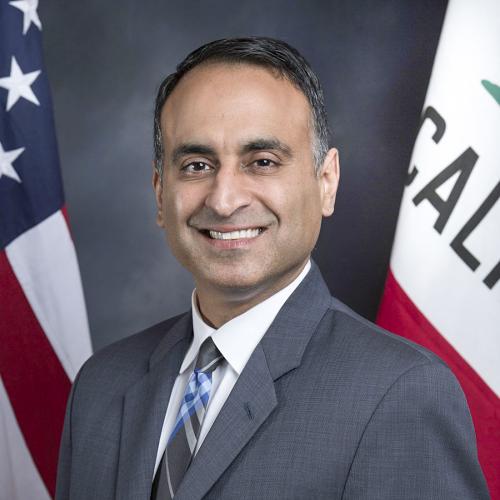
Asm. Ash Kalra
Sponsored bills
Maddy summaryThis bill is a House Resolution that formally recognizes the work of school board members across California by designating January 2025 as School Board Recognition Month. It directly affects local school districts and county offices of education by honoring the nearly 5,000 elected school board members who serve in these roles. The resolution expresses appreciation for their dedication to public education and encourages community members to support these local officials in their efforts to serve students. This is a commemorative measure rather than a policy change, as it does not alter laws or regulations but instead highlights the importance of school governance.
Existing law, beginning on June 26, 2023, establishes the Independent Consumer Fuels Advisory Committee within the State Energy Resources Conservation and Development Commission (Energy Commission) to advise the Energy Commission and the Division of Petroleum Market Oversight, as provided. Existing law prescribes the composition of the 8-member committee, including 6 specified members appointed by the Governor, one member appointed by the Speaker of the Assembly, and one member appointed by the Senate Committee on Rules. Existing law requires one member appointed by the Governor to represent labor. Existing law prohibits a member of the committee from having been employed by, contracted with, or received direct compensation from, a company that produces, refines, distributes, trades in, markets, or sells any petroleum product in the preceding 12 months, except as provided. Existing law specifies that the schedule of meetings of the committee is to be prescribed by the Energy Commission. This bill would specify that the above prohibition does not exclude a representative of a labor organization whose membership consists of, in whole or in part, individuals employed by a company that produces, refines, distributes, trades in, markets, or sells any petroleum product. The bill would require the gubernatorial appointee who represents labor to instead represent a labor organization with experience in refinery operations. The bill would require the committee to meet no less than annually. Existing law requires the Energy Commission, in consultation with the Labor and Workforce Development Agency and labor and industry stakeholders, to consider ways to manage necessary refinery turnarounds and maintenance that would protect the health and safety of employees and the public, and minimize the impacts of maintenance-related production losses on fuel prices. Existing law authorizes the Energy Commission, by regulation, to impose requirements governing the timing of turnaround and maintenance. This bill would expressly require those regulations to protect the health and safety of employees, local communities, and the public, and to include criteria that are required to be met before a refinery commences a turnaround or maintenance event, as provided. This bill would require the Energy Commission, in consultation with the committee, to consider the effects of refiners' inventories of fuel and feedstocks and blending components on the price of transportation fuels in California. The bill would authorize the Energy Commission, by regulation, to develop and impose requirements for refiners operating in the state to maintain minimum levels of inventories of refined transportation fuels meeting California specifications, including any feedstocks and blending components, as specified. The bill would prohibit the Energy Commission from applying a minimum inventory requirement to a refiner in a manner that would be met only by the construction of additional storage infrastructure, as determined by the Energy Commission. The bill would repeal these provisions on January 1, 2033. This bill would impose an administrative civil penalty on a refiner or person who fails to comply with regulations adopted pursuant to the above-described authority and would authorize the Energy Commission to seek any form of injunctive or remedial relief to enforce compliance with those regulations, as provided. Existing law requires the Energy Commission, on or before January 1, 2024, and every 3 years thereafter, to submit an assessment to the Governor and the Legislature that, among other things, identifies methods to ensure a reliable supply of affordable and safe transportation fuels in California, as provided. This bill, beginning with the first assessment submitted after the effective date of the bill, would require that the assessment also include an evaluation of California's future petroleum product and crude oil import needs, identification of steps that can be taken to ensure that marine infrastructure and port facilities will be adequate to accommodate the efficient movement of petroleum products to meet those needs, an evaluation of ways to maximize use of existing infrastructure and minimize cumulative pollution burdens, and an evaluation of the effects on supplies of transportation fuels of state regulations that the Energy Commission identifies may be causing supply constraints, or for which the Energy Commission believes alternative compliance pathways should be considered by state agencies to mitigate potential impacts on supply.

Existing law requires the State Registrar to create a document, no later than March 1, 2020, with annual updates, containing information received by a local registrar concerning marriage certificates in which one or both of the parties were minors at the time of solemnization of the marriage. Existing law requires the local registrar, at least annually, to submit information, as specified, to the State Registrar for those purposes. Under existing law, a local registrar is not required to submit this information to the State Registrar if the local registrar did not receive a copy of the court order, as specified. This bill would remove that exception and require a local registrar to submit information to the State Registrar, as specified. By increasing the reporting requirements for local registrars, this bill would impose a state-mandated local program. The bill would require the State Registrar to create a report containing the number of marriage certificates that were submitted by a local registrar, as specified. This bill would require the State Registrar, on or before September 1, 2027, to publish the report on its internet website and submit the report to the Legislature. The bill would repeal this provision on January 1, 2028. This bill would also require the State Registrar, subject to an appropriation, to establish a grant program to study extralegal marriages, as defined. The bill would require a report completed through the grant program to address the prevalence of, conditions of, and circumstances surrounding extralegal marriages in the state, as specified. The California Constitution requires the state to reimburse local agencies and school districts for certain costs mandated by the state. Statutory provisions establish procedures for making that reimbursement. This bill would provide that, if the Commission on State Mandates determines that the bill contains costs mandated by the state, reimbursement for those costs shall be made pursuant to the statutory provisions noted above.
Existing law, the Elder Abuse and Dependent Adult Civil Protection Act, provides for the award of attorney's fees and costs to, and the recovery of damages by, a plaintiff when it is proven by clear and convincing evidence that the defendant is liable for physical abuse or neglect, and the defendant has also been found guilty of recklessness, oppression, fraud, or malice in the commission of that abuse. This bill would instead apply a preponderance of the evidence standard to any claim brought against a residential care facility for the elderly or a skilled nursing facility, except as specified, for remedies sought pursuant to the above provisions, upon circumstances in which spoliation of evidence, as defined, has been committed by the defendant, as specified. The bill would make this provision inoperative if there is a final judicial determination in any action by any party, or a final determination by the Centers for Medicare and Medicaid Services, that the state is required by state or federal law or regulation to provide reimbursement under the Medi-Cal program to those facilities for costs associated with this bill and the Legislature does not appropriate sufficient funds to pay for those costs. The bill would make conforming changes to a related provision.
Existing law, the Song-Beverly Consumer Warranty Act, provides that if a manufacturer of a new motor vehicle, as defined, or the manufacturer's in-state representative, is unable to service or repair the vehicle to conform to the applicable express warranties after a reasonable number of attempts, the manufacturer must either repurchase or replace the vehicle, as specified. Existing law, the Tanner Consumer Protection Act, creates the presumption that a reasonable number of attempts have been made to conform a new motor vehicle to the applicable express warranties if specified conditions are met. Under existing law, the buyer of a new motor vehicle may not assert this presumption until after the buyer has initially resorted to a qualified third-party dispute resolution process, if that process exists and certain additional conditions are met. Existing law provides that if, among other things, a qualified third-party dispute resolution process does not exist, the buyer of a new motor vehicle may assert the above presumption in an action to enforce the buyer's rights under the Song-Beverly Consumer Warranty Act. Existing law provides that the buyer of a new motor vehicle who is damaged by a manufacturer's failure to comply with specified requirements of the Song-Beverly Consumer Warranty Act or the Tanner Consumer Protection Act may bring an action for the recovery of damages and other equitable and legal relief. Existing law provides that if the buyer establishes that the manufacturer's failure to comply was willful, the judgment may also include a civil penalty which shall not exceed 2 times the amount of actual damages. This bill would provide that an action seeking the restitution for or replacement of a new motor vehicle, or for civil penalties, pursuant to the provisions of the Song-Beverly Consumer Warranty Act or Tanner Consumer Protection Act described above must be commenced within one year after the expiration of the applicable express warranty, and in no event may be brought later than 6 years after the date of original delivery of the vehicle, subject to specified tolling provisions. Beginning April 1, 2025, the bill would require the consumer to, prior to seeking civil penalties, provide a written notice to the manufacturer that, among other things, demands the manufacturer's restitution for or replacement of the consumer's vehicle. The bill would require mediation in an action seeking the restitution for or replacement of a new motor vehicle, or for civil penalties, and would stay all discovery, except a limited set of disclosures and depositions, in such actions until mediation is concluded. The bill would, for such actions filed on or after January 1, 2025, authorize the court to impose specified sanctions on represented parties who fail to comply with its provisions. The bill would provide that the duties and obligations it imposes are cumulative with, and do not limit or expand, duties and obligations imposed under any other law.
Existing law, the Planning and Zoning Law, authorizes a local agency, by ordinance or ministerial approval, to provide for the creation of accessory dwelling units in areas zoned for residential use, as specified. Existing law prohibits a local agency from denying a permit for an unpermitted accessory dwelling unit that was constructed before January 1, 2018, because the accessory dwelling unit is in violation of building standards or state or local standards applicable to accessory dwelling units, unless the local agency makes a finding that correcting the violation is necessary to protect the health and safety of the public or the occupants of the structure. Existing law makes those provisions inapplicable to a substandard building, as specified. This bill would instead prohibit a local agency from denying a permit for an unpermitted accessory dwelling unit or junior accessory dwelling unit that was constructed before January 1, 2020, for those violations, unless the local agency makes a finding that correcting the violation is necessary to comply with conditions that would otherwise deem a building substandard. The bill would require a local agency to inform the public about the provisions prohibiting denial of a permit for an unpermitted accessory dwelling unit or junior accessory dwelling unit. The bill would require this information to include a checklist of the conditions that deem a building substandard and to inform homeowners that, before submitting a permit application, the homeowner may obtain a confidential third-party code inspection from a licensed contractor. The bill would prohibit a local agency from requiring a homeowner to pay impact fees or connection or capacity charges except under specified circumstances. By imposing additional duties on local agencies, the bill would impose a state-mandated local program. The bill would authorize an inspector from a local agency, upon receiving an application for a permit for a previously unpermitted accessory dwelling unit or junior accessory dwelling unit constructed before January 1, 2020, to inspect the unit for compliance with health and safety standards and provide recommendations to comply with health and safety standards. The bill would prohibit the local agency from penalizing an applicant for having the unpermitted accessory dwelling unit and would require the local agency to approve necessary permits to correct noncompliance with health and safety standards. The California Constitution requires the state to reimburse local agencies and school districts for certain costs mandated by the state. Statutory provisions establish procedures for making that reimbursement. This bill would provide that, if the Commission on State Mandates determines that the bill contains costs mandated by the state, reimbursement for those costs shall be made pursuant to the statutory provisions noted above.
The Planning and Zoning Law, among other things, authorizes a development proponent to submit an application for a housing development that is subject to a specified streamlined, ministerial approval process not subject to a conditional use permit, if the development satisfies certain objective planning standards. The California Environmental Quality Act (CEQA) requires a lead agency, as defined, to prepare, or cause to be prepared, and certify the completion of, an environmental impact report on a project that it proposes to carry out or approve that may have a significant effect on the environment or to adopt a negative declaration if it finds that the project will not have that effect. CEQA does not apply to the approval of ministerial projects. This bill would make a development that meets specified objective planning standards, including that, among other things, it is on a parcel that is within a zone where office, retail, health care, or parking are a principally permitted use, a permitted use and would require a local agency to review an application for that development on an administrative, nondiscretionary basis. The bill would require a local agency, within 60 calendar days of receiving an application pursuant to these provisions, to approve or deny the application subject to specified requirements, including that, among other things, if the local agency determines that the development is in conflict with any of the above-described standards, the local agency is required to provide the development proponent written documentation of which standard or standards the development conflicts with, as specified. The bill would provide that a development eligible for approval pursuant to this process is not a "project" for purposes of CEQA, thereby expanding the exemption for ministerial approval of projects under CEQA. By increasing duties on local governments in reviewing and approving these developments, the bill would impose a state-mandated local program. The bill would authorize a development proponent to bring an action to enforce the bill's provisions, as specified, and would make its provisions enforceable by the Attorney General and provide the Attorney General an unconditional right to intervene to enforce the bill's provisions. The bill would define various terms for these purposes. The California Constitution requires the state to reimburse local agencies and school districts for certain costs mandated by the state. Statutory provisions establish procedures for making that reimbursement. This bill would provide that no reimbursement is required by this act for a specified reason. The bill would include findings that changes proposed by this bill address a matter of statewide concern rather than a municipal affair and, therefore, apply to all cities, including charter cities.
The California Integrated Waste Management Act of 1989, administered by the Department of Resources Recycling and Recovery, generally regulates the disposal, management, and recycling of solid waste. The act establishes stewardship programs for various products, including, among others, carpet, mattresses, and pharmaceutical and sharps waste. This bill would enact a stewardship program known as the Responsible Textile Recovery Act of 2024, which would require a producer of apparel, as defined, or textile articles, as defined, to form and join a producer responsibility organization or PRO. The bill would require the PRO to be approved by the department pursuant to the requirements of the bill, as provided. The bill would require the department to adopt regulations to implement the program no earlier than July 1, 2028. The bill would require the PRO to submit to the department, for approval or disapproval, a complete plan for the collection, transportation, repair, sorting, and recycling, and the safe and proper management, of apparel and textile articles in the state. Upon approval of a plan, or commencing July 1, 2030, whichever is earlier, the bill would make a producer subject to specified civil penalties, unless the producer is a participant of a PRO and all apparel and textiles are accounted for in the plan. The bill would require the PRO to review the plan at least every 5 years after approval. The bill would also require a PRO to submit an annual report to the department, as provided. The bill would require all reports and records provided to the department to be provided under penalty of perjury. By expanding the scope of the crime of perjury, the bill would impose a state-mandated local program. The bill would restrict public access to certain information collected for the purpose of administering the program. This bill would require the department to post on its internet website a list of producers that are in compliance with the requirements of the program. The bill would require PROs to pay fees to the department, not to exceed the department's actual and reasonable regulatory costs to implement and enforce the act. The bill would establish the Textile Stewardship Recovery Fund in the State Treasury for the deposit of all moneys received from PROs and would make the moneys in the fund available to the department, upon appropriation by the Legislature, for purposes of the program. The bill would also authorize the department to impose administrative civil penalties for a violation of the program's requirements, not to exceed $10,000 per day, or not to exceed $50,000 per day for an intentional or knowing violation, as specified. The bill would create the Textile Stewardship Recovery Penalty Account in the fund for the deposit of penalties, which would be available for expenditure upon appropriation by the Legislature, as specified. The bill would also require an online marketplace, as defined, to notify the department and the PRO of all third-party sellers with sales of apparel or textile articles over $1,000,000 sold on their online marketplace in the preceding year and provide all required information, as specified, and to provide those sellers with information regarding the related laws governing the PRO plan, as provided. Existing constitutional provisions require that a statute that limits the right of access to the meetings of public bodies or the writings of public officials and agencies be adopted with findings demonstrating the interest protected by the limitation and the need for protecting that interest. This bill would make legislative findings to that effect. The California Constitution requires the state to reimburse local agencies and school districts for certain costs mandated by the state. Statutory provisions establish procedures for making that reimbursement. This bill would provide that no reimbursement is required by this act for a specified reason.
Existing law provides for the regulation and development of aquaculture and requires the owner of each aquaculture facility to register with the Department of Fish and Wildlife. Existing law makes it unlawful to spawn, incubate, or cultivate any transgenic species of finfish belonging to the family Salmonidae anywhere in this state, except as specified. A violation of the Fish and Game Code is a crime. This bill would prohibit the aquaculture of any species of octopus for the purpose of human consumption. The bill would prohibit a business owner or operator from selling, possessing, or transporting any species of octopus that is the result of aquaculture. By creating a new crime, the bill would impose a state-mandated local program. The California Constitution requires the state to reimburse local agencies and school districts for certain costs mandated by the state. Statutory provisions establish procedures for making that reimbursement. This bill would provide that no reimbursement is required by this act for a specified reason.