

Existing law requires a farm labor contractor to be licensed by the Labor Commissioner and to comply with specified employment laws applicable to farm labor contractors. Existing law provides that a person who violates the above-described provision is subject to a civil penalty, including, for any initial citation, $100 for each farmworker employed by the unlicensed person, plus $100 for each calendar day that a violation occurs, for a total penalty not to exceed $10,000. This bill would instead provide that a person who violates employment laws applicable to farm labor contractors, unless otherwise specified, is subject to a civil penalty, including, for any initial citation, $100 for each farmworker employed by the unlicensed person or licensed farm labor contractor, plus $100 for each calendar day that a violation occurs, for a total penalty not to exceed $10,000. Existing law prohibits the Labor Commissioner from issuing or renewing a license to act as a farm labor contractor unless specified requirements are met. Existing law requires an applicant for the issuance or renewal of a farm labor contractor license to have deposited with the Labor Commissioner a surety bond to be payable for, among other things, interest on wages and for any damages arising from violation of orders of the Industrial Welfare Commission and for any other monetary relief awarded to an agricultural worker as a result of a violation of specified employment laws. Existing law requires the amount of the surety bond to be based on the size of the person's annual payroll for all employees, and requires, for payrolls up to $500,000, a $25,000 bond, for payrolls of $500,000 to $2,000,000, a $50,000 bond, and for payrolls greater than $2,000,000, a $75,000 bond. Existing law requires the Labor Commissioner to require documentation of the size of the person's annual payroll for purposes of these provisions, as provided. This bill would instead require, for payrolls up to $500,000, a $50,000 bond, for payrolls of $500,000 to $2,000,000, a $100,000 bond, and for payrolls greater than $2,000,000, a $150,000 bond. The bill would require the bond amounts to be deposited when a farm labor contractor first registers or files the application for their first annual renewal. The bill would require the Labor Commissioner to, among other things, include bond information on the public farm labor contractor license database, as described.
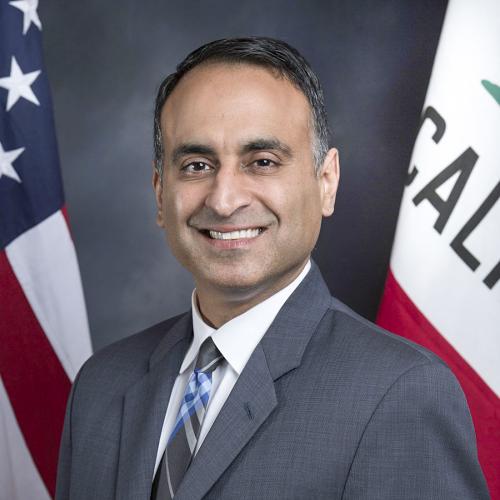
Rep. Ash Kalra
Sponsored bills
Existing law, the State Civil Service Act, regulates employment with the state and vests in the Department of Human Resources all powers, duties, and authority necessary to operate the state civil service system. Existing law establishes standards for the use of personal services contracts by state agencies. Existing law permits personal services contracting to achieve cost savings when specified conditions are met, including that the contract does not cause the displacement of civil service employees. This bill would require specified state departments to provide certain information, by facility, on a quarterly basis to the relevant employee representatives regarding positions, vacancies, and registry contract data of their state-run health facilities. The bill would require the departments to make the information available to the public on a publicly accessible website.
Existing law, the Davis-Stirling Common Interest Development Act, governs the management and operation of common interest developments. Existing law limits the authority of the governing documents, as defined, to regulate the use of a member's separate interest. This bill would prohibit the governing documents from imposing restrictions on a member's use of public streets, except as specified. Existing law requires that a common interest development be managed by an association and requires that the association levy assessments to fulfill its obligations. Existing law provides that assessments of the association, late charges, reasonable costs of collection, attorney's fees, and interest, as specified, are a debt of a member at the time the assessment or other sums are levied. Existing law requires that an association provide a member making a payment a receipt, upon request, that indicates the date of payment and the person who received it and to provide a mailing address for overnight payment of assessments in the annual statement. This bill would require the association to notify the members through individual notice by either electronic delivery or first-class mail, evidenced by a certificate of mailing, as specified, if the person or entity authorized to receive payment of assessments on behalf of the association changes, within 60 days of the change. The bill would require the association, if a member fails to make the next 2 consecutive assessment payments following the individual notice, to send a notice by certified mail with return receipt requested to that member, except as specified. The bill would require the association to maintain records confirming that individual notices were distributed. Existing law provides that assessments, including the costs of collection, late charges, and interest, are a lien on the member's separate interest when the association records a notice of delinquent assessment and follows a specified process, including providing the owner of record a specified notice, at least 30 days prior to recording a lien upon the separate interest. Existing law requires that an association that fails to comply with these procedures recommence the required notice process, prior to recording a lien, and bear the cost of recommencing the notice process. The bill would make the association liable to the member for specified fees if the association fails to comply with these procedures. If the association fails to comply with these procedures, as specified, and the failure is the 3rd failure within a 5-year period, the bill would make the board liable to the member for a civil penalty of $1,000 and would require it to notify members by general notice of its failure to comply.
Existing law grants to higher education employees the right to form, join, and participate in the activities of employee organizations for purposes of representation on all matters of employer-employee relations and for the purpose of meeting and conferring. Existing law, for the California State University, prohibits written memoranda reached that require budgetary or curative action by the Legislature or other agencies from being effective unless that action has been taken, and requires an appropriate request for financing or budgetary funding for all state-funded employees or for necessary legislation to be forwarded to the Legislature and the Governor or other funding agencies. Existing law requires the entire memorandum to be referred back to the parties for further meeting and conferring when the memorandum requires legislative action and the Legislature or the Governor fails to fully fund the memorandum or take the requisite curative action, except as specified. This bill would require the above-described determination of whether a memorandum requires legislative action and the Legislature or the Governor fails to fully fund the memorandum or take the requisite curative action to be made by the Public Employment Relations Board by written notification to the parties.
(1) Existing law, the California Fair Employment and Housing Act (FEHA) , establishes the Civil Rights Department to enforce civil rights laws with respect to housing and employment, as prescribed. The FEHA recognizes and declares to be a civil right the opportunity to seek, obtain, and hold employment and housing without discrimination because of a specified characteristic. The FEHA makes certain discriminatory practices based on those characteristics unlawful. The FEHA also declares that its purpose is to provide effective remedies that will eliminate these discriminatory practices. The FEHA defines terms used in connection with unlawful practices. These include "sex," which includes pregnancy or medical conditions related to pregnancy, childbirth or medical conditions related to childbirth, and breastfeeding or medical conditions related to breastfeeding. This bill would include perimenopause, menopause, or postmenopause or other related medical conditions within the above definition of sex. The FEHA separately defines the term "medical condition" to mean either a health impairment related to or associated with a diagnosis of cancer or a record or history of cancer or specified genetic characteristics. The Unruh Civil Rights Act (Unruh Act) establishes that all persons within the jurisdiction of the state are free and equal and, regardless of their sex, race, color, religion, ancestry, national origin, disability, medical condition, genetic information, marital status, sexual orientation, citizenship, primary language, or immigration status are entitled to the full and equal accommodations, advantages, facilities, privileges, or services in all business establishments, as prescribed. The Unruh Act defines "sex" to include, among other things, pregnancy, childbirth, or medical conditions related to pregnancy or childbirth. This bill would provide that "medical condition" as used in the definition of "sex" in FEHA and the Unruh Act includes, but is not limited to, the conditions included in the definition of "medical condition" in FEHA. (2) Existing law requires the Civil Rights Department to provide a poster on discrimination in employment to an employer or a member of the public upon request. Existing law requires the poster to be available at each office of the department and requires each employer to post the poster in a prominent and accessible location in the workplace, as prescribed. This bill would require the department, on or before July 1, 2027, to update the poster to notify people of their rights and protections in regard to perimenopause, menopause, postmenopause, or related medical conditions. (3) This bill would incorporate additional changes to Section 51 of the Civil Code proposed by AB 2563 to be operative only if this bill and AB 2563 are enacted and this bill is enacted last. This bill would incorporate additional changes to Section 12926 of the Government Code proposed by AB 2563 to be operative only if this bill and AB 2563 are enacted and this bill is enacted last.
Existing law generally regulates artificial intelligence, including companion chatbots, as defined. Existing law requires an operator, as defined, to prevent a companion chatbot on its companion chatbot platform from engaging with users unless the operator maintains a protocol for preventing the production of suicidal ideation, suicide, or self-harm content to the user. Existing law requires an operator, for a user the operator knows is a minor, to take certain prescribed action, including disclosing to the user that the user is interacting with artificial intelligence. This bill would delete those provisions imposing requirements on an operator if the operator knows the user is a minor. The Digital Age Assurance Act requires a person who owns, maintains, or controls a software application, as defined, to request age bracket data sent by a real-time secure application programming interface or operating system with respect to a particular user from an operating system provider or a covered application store when the application is downloaded and launched. This bill would require an operator, as defined, of a companion chatbot to, beginning July 1, 2027, before making a new or substantially modified companion chatbot available to users in the state, do various things with respect to child safety, including perform and document a comprehensive risk assessment related to the design, configuration, and operation of the companion chatbot with respect to minor users that contains, among other things, a summary of the results of any evaluation of each covered harm, as defined, pertaining to the companion chatbot. The bill would require an operator to submit to independent child safety audits of its compliance with the bill, as specified. The bill would require an auditor to produce a report that describes whether the operator has established and adhered to policies and practices to comply with the bill that includes, among other things, the signature of the lead auditor certifying the results of the audit under penalty of perjury. By expanding the scope of the crime of perjury, this bill would impose a state-mandated local program. The bill would authorize the Attorney General to, for cause, request and obtain a copy of an AI child safety audit report from the operator and would make a child safety audit report submitted to the Attorney General confidential. This bill would authorize certain public prosecutors to bring a civil action to enforce the bill's provisions, as specified, and would authorize a child who suffers an actual harm as a result of a violation of this chapter, or a parent or guardian acting on behalf of that child, to bring a civil action against the operator, as specified. Existing constitutional provisions require that a statute that limits the right of access to the meetings of public bodies or the writings of public officials and agencies be adopted with findings demonstrating the interest protected by the limitation and the need for protecting that interest. This bill would make legislative findings to that effect. The California Constitution requires the state to reimburse local agencies and school districts for certain costs mandated by the state. Statutory provisions establish procedures for making that reimbursement. This bill would provide that no reimbursement is required by this act for a specified reason.
The California Environmental Quality Act (CEQA) requires a lead agency, as defined, to prepare, or cause to be prepared, and certify the completion of, an environmental impact report on a project that it proposes to carry out or approve that may have a significant effect on the environment or to adopt a negative declaration if it finds that the project will not have that effect. CEQA also requires a lead agency to prepare a mitigated negative declaration for a project that may have a significant effect on the environment if revisions in the project would avoid or mitigate that effect and there is no substantial evidence that the project, as revised, would have a significant effect on the environment. CEQA defines various terms, including "natural and protected lands" for its purposes. This bill would revise the definition of that term to include habitats for protected species identified as candidate, sensitive, or species of special status by state or federal agencies. CEQA exempts from its requirement projects that consist exclusively of a day care center that is not located in a residential area and projects that consist exclusively of an advanced manufacturing facility located on a site zoned exclusively for industrial uses. This bill would additionally exempt projects consisting exclusively of a family day care home, as defined. The bill would, for the exemption for the day care center and family day care home, instead require the projects for those facilities not be located in an area zoned for industrial use or within 3,200 feet of a facility that actively extracts or refines oil or natural gas in order for the exemption to apply. The bill would revise the exemption for advanced manufacturing facility projects to require those projects to be used exclusively for final tier manufacturing, as defined. The bill would require an applicant of an advanced manufacturing project that is exempted from CEQA under the bill's requirement to enter into a bona fide community benefits agreement, as provided, and to comply with certain labor requirements, as provided. The bill would require the lead agency, before determining that an advanced manufacturing project is exempt from CEQA, to hold at least one public hearing on the project and to ensure that the applicant complies with the requirement to enter into a bona fide community benefits agreement and the labor requirements. CEQA exempts from its requirements a rezoning that implements the schedule of actions contained in an approved housing element. CEQA specifies that this exemption does not apply to a rezoning that would allow for the construction of certain facilities, including oil and gas infrastructure. CEQA also specifies that this exemption does not apply rezoning that would allow for construction to occur within the boundaries of any natural and protected lands, except as provided. This bill would repeal the exception from the CEQA exemption for rezoning that would allow for oil and gas infrastructure. The bill would specify that the definition of "natural and protected land" does not include habitats for protected species that would be added to that definition by this bill for purposes the exception for rezoning that would allow for construction to occur within the boundaries of any natural and protected lands to the CEQA exemption. CEQA specifies, for a proposed housing development project that would otherwise be exempt from its requirements but for a single condition required for the exemption to apply, that the application of CEQA is limited to the effects upon the environment that are caused by that single condition. CEQA provides that this limited application of CEQA does not apply if the proposed housing project is located on natural and protected land, but does not include "natural and protected land" that is a site within a very high fire hazard severity zone or within the state responsibility area, except as provided. This bill would additionally specify that "natural and protected land" does not include habitats for protected species that would be added to that definition by this bill. Because the bill would imposes additional duties on a lead agency, this bill would impose a state-mandated local program. The California Constitution requires the state to reimburse local agencies and school districts for certain costs mandated by the state. Statutory provisions establish procedures for making that reimbursement. This bill would provide that no reimbursement is required by this act for a specified reason.
Existing law, the Proprietary Security Services Act, prohibits a person from engaging in the business of a proprietary private security officer or a proprietary private security employer unless registered with the Department of Consumer Affairs. Existing law makes a violation of these provisions an infraction, as specified. Existing law requires a person who is registered and hired as a proprietary private security officer to complete training in security officer skills within 6 months from the date upon which registration is issued, or within 6 months of their employment with a proprietary private security employer, as specified. Existing law prohibits a proprietary private security employer from engaging in specified acts and authorizes the Director of Consumer Affairs to issue a citation, which may include an order to pay specified administrative fines for a violation of these provisions. This bill, commencing January 1, 2029, would recast those training provisions to require the training to be 42 hours, to require an applicant for a proprietary private security officer registration to complete, within the first 6 months of their employment date, a course in the exercise of the power to arrest and the appropriate use of force as a condition of issuance of the registration, and to require that the training be conducted through traditional classroom instruction, as defined. The bill would require 2 hours of training to be dedicated to training employees on specified workers' rights contained in a notice employers are required to provide employees, as specified. The bill would require the Bureau of Security and Investigative Services to administer certain provisions governing the approval of training providers, and would create a certificate authorizing a labor organization that represents security guards of a proprietary private security employer to provide the 2-hour training, as specified. The bill would also require a registered proprietary private security employee annually to complete a minimum of 12 hours of security officer skills training, with at least 4 hours of training dedicated to practicing deescalation skills, as specified, and that the time spent attending the annual training be compensated by the employer. The bill would require the bureau to determine the criteria to evaluate whether the deescalation trainings conform to the required principles and methods, as specified. This bill, commencing January 1, 2029, would increase the administrative fine that the director may impose upon a proprietary private security employer for failure to properly maintain accurate and current employment and training records or failure to administer to registered employees of the licensee the review or practice training, as specified, from $500 to $1,000, and would specify that the fine is for each violation. The bill would require a private security employer to ensure that the security skills training occurs and to compensate employees for training, as specified. The bill would authorize the director to impose an administrative fine for a violation of these provisions not exceeding $5,000 per violation and $2,500 per violation, respectively. Existing law requires a person registered as a proprietary private security employer to deliver to the director a written report describing the circumstances surrounding any physical altercation by a registered proprietary private security officer with a member of the public while on duty and while acting within the course and scope of their employment within 7 business days after the qualifying incident. The report is required only for certain physical altercations, including those resulting in a member of the public requiring first aid or other medical attention. This bill, commencing January 1, 2029, would expand the circumstances requiring a report to include those in which the physical altercation resulted in a security officer requiring first aid or other medical attention. The bill would expand the information required in the report to include the apparent race and gender of the member of the public and whether the security officer involved had received all required training at the time of the incident. The bill would require the bureau to release a report annually with respect to these reports describing the circumstances surrounding the physical altercations with members of the public containing specified information. Existing law, the Private Security Services Act, requires the director to administer its provisions. Existing law prohibits a person licensed as a private patrol operator from engaging in specified acts. Existing law requires a person registered as a security guard or patrolperson, and their employer, to deliver to the director a written report fully describing the circumstances surrounding any discharge of any firearm or physical altercation with a member of the public in which they were involved while acting within the course and scope of their employment within 7 days after the incident, as specified. Existing law makes any person who violates any of these provisions relating to private patrol operator licensure guilty of a misdemeanor. This bill, commencing January 1, 2029, would require the firearm discharge or altercation report to include the apparent race and gender of the member of the public and whether the security officer involved had received all required training at the time of the incident. The bill would also require the altercation report to specify whether a security officer required first aid or other medical attention. Because the bill would change the definition of a crime, it would impose a state-mandated local program. The bill would require the Bureau of Security and Investigative Services to release a report annually with respect to these reports describing the circumstances surrounding the discharge of any firearm, or physical altercation with a member of the public containing specified information. Existing law requires persons licensed under these provisions and persons who are employed and compensated by a licensee as a security guard or patrolperson, and who in the course of that employment or business carries a firearm, to undergo specified training in the exercise of the power to arrest and the appropriate use of force and a course of training in the carrying and use of firearms. This bill, commencing January 1, 2029, would require the department to develop and establish a standard course and curriculum that includes a minimum number of hours of instruction for training individuals on the role of implicit and explicit bias on racial profiling and the use of firearms in various settings. Existing law requires each applicant for a security guard registration to complete a course in the exercise of the power to arrest and the appropriate use of force as a condition for the issuance of the registration. Existing law requires a security guard registrant to, as specified, complete 32 hours of training in security officer skills within 6 months from the date of an initial registration, 16 of which are required to be completed within 30 days from the date that the registration is issued. This bill, commencing January 1, 2029, would recast these training provisions, increase the required hours of security guard training to 42, and require that the training be conducted through traditional in-person classroom instruction, as defined. The bill would increase the requirement that a registrant annually complete 8 hours of review or practice of security officer skills to 12 hours, require that 4 of those hours be dedicated to deescalation skills, as specified, and make other conforming changes. The bill would require 2 hours of training to be dedicated to training employees on specified workers' rights contained in a notice employers are required to provide employees, as specified. The bill would require the bureau to administer certain provisions governing the approval of training providers, and would create a certificate authorizing a labor organization that represents security guards of a proprietary private security employer to provide the 2-hour training, as specified. The bill would require a person licensed as a private patrol operator to ensure that security skills training occurs and to compensate employees for this training. The bill would require the bureau to determine the criteria to evaluate whether the deescalation trainings conform to the required principles and methods, as specified. This bill, commencing January 1, 2029, would revise provisions that describe those entities that are qualified to administer, test, and certify the course of training in the exercise of the power to arrest and the appropriate use of force. This bill, commencing January 1, 2029, would require the Bureau of Security and Investigative Services to annually solicit feedback from representatives from the security industry, as specified, regarding possible changes to a rule or regulation relating to the provisions described above for private patrol operators. Existing law authorizes the director to issue a citation to a licensee or registrant for violation of specified provisions which may contain an assessment of an administrative fine not exceeding $2,500. This bill would increase the amount of the administrative fine that may be assessed by the director to $10,000 per violation. Existing law authorizes the director to impose fines on licensed private patrol operators in the amount of $500 for each violation relating to a failure to properly maintain employment records or proof of completion of required training, as specified. Existing law also authorizes the director to impose fines on licensed private patrol operators in the amount of $250 for each violation relating to a failure to administer required security skills training, as specified. This bill, commencing January 1, 2029, would increase these fine amounts to $1,000 for each violation. Existing law authorizes the director to impose fines on licensed private patrol operators in the amount of $5,000 for each violation relating to a failure to deliver to the director a report describing the circumstances surrounding the discharge of any firearm or physical altercation with a member of the public while on duty, as specified. This bill, commencing January 1, 2029, would reduce the fine for violating these provisions to $2,500 per violation. This bill would declare the severability of its provisions. This bill would incorporate additional changes to Sections 7574.18 and 7583.6 of the Business and Professions Code proposed by SB 1148 to be operative only if this bill and SB 1148 are enacted and this bill is enacted last. The California Constitution requires the state to reimburse local agencies and school districts for certain costs mandated by the state. Statutory provisions establish procedures for making that reimbursement. This bill would provide that no reimbursement is required by this act for a specified reason.
Existing law establishes the Medi-Cal program, which is administered by the State Department of Health Care Services and under which qualified low-income individuals receive health care services. The Medi-Cal program is in part governed by, and funded pursuant to, federal Medicaid program provisions. Under existing law, home- and community-based services (HCBS) approved by the United States Department of Health and Human Services are covered for eligible individuals to the extent that federal financial participation is available for those services under the state plan or waivers granted in accordance with certain federal provisions. Existing law authorizes the Director of Health Care Services to seek waivers for any or all approvable HCBS. Existing law sets forth provisions for the implementation of the Nursing Facility/Acute Hospital Transition and Diversion Waiver, which is the predecessor of the Home and Community-Based Alternatives (HCBA) Waiver, for purposes of providing care management services to individuals who are at risk of nursing facility or institutional placement, subject to federal cost neutrality. Existing law authorizes the director to propose that the waiver provide for achievement of annual cost neutrality in the aggregate to allow enrollment and authorization of waiver services based on medical necessity, and to require care management contractors to enroll at least 60% of all total annual enrollments from certain health care settings or populations. Existing law additionally sets forth provisions authorizing the director to expand the number of waiver slots up to 5,000 additional slots. This bill would recast the above-described waiver provisions to refer to the HCBA Waiver. The bill would authorize the director, beginning January 1, 2027, to semiannually evaluate the populations receiving the priority enrollment described above, and to designate additional populations to receive priority enrollment based on this evaluation, subject to applicable cost-neutrality requirements. The bill would delete the provision relating to the 5,000 slots. The bill would instead require the department, beginning in 2027, and for the HCBA Waiver period, to increase the total number of waiver slots by 5,000, in addition to any planned expansion of waiver slots federally approved as of January 1, 2026, as specified, consistent with the above-described requirements.
Existing law prohibits a person from being subject to civil arrest in a courthouse while attending a court proceeding or having legal business in a courthouse, except pursuant to a valid judicial warrant. Existing law confers specified powers to judicial officers, including to preserve and enforce order in the officer's immediate presence and in proceedings before the officer, to compel obedience to the officer's lawful orders, and to prohibit activities that threaten access to courthouses and court proceedings, including protecting the privilege from civil arrest at courthouses and court proceedings. This bill would prohibit a person from being subject to civil arrest while traveling to, while present at, or while traveling from a courthouse for any lawful activity, as defined. The bill would authorize a court to issue appropriate judicial orders to protect the privilege from civil arrest. Under the bill, a civil arrest in violation of these provisions or the common law privilege against civil arrest would constitute false imprisonment or false arrest if the person was going to, remaining at, or returning from court for any lawful activity, and each person in violation of these provisions or who assists in the violation of these provisions would be liable for civil damages for the tort of false imprisonment or false arrest, including actual damages and statutory damages of $10,000. The bill would authorize a party in a successful action to recover court costs and reasonable attorney's fees. The bill would exempt a court, judicial officer, or court personnel acting lawfully pursuant to their duty to maintain safety and order in the courts from any action or proceeding pursuant to these provisions. This bill would require, when court security personnel are aware that any representative of a law enforcement agency, while acting in an official capacity, enters a courthouse, that court security personnel request the law enforcement representative or representatives identify themselves and state their specific law enforcement purposes and intended enforcement action to be taken, and request from the law enforcement representative or representatives a copy of a valid judicial warrant concerning the intended enforcement action to be taken. The bill would require, if court security personnel are aware there is an attorney representing a person named in the judicial warrant in any capacity, that court security personnel request the law enforcement representative to afford the attorney the right to review the warrant. This bill would require the Judicial Council to annually prepare a report compiling statistics, aggregated by county, of information related to civil arrests, as specified. The bill would require the Judicial Council to publicly post the report on its public internet website. This bill would also make related findings and declarations and specify that the provisions of this act are severable.