

Existing law requires, upon court order or, in certain cases, upon request of a party to the action, an official court reporter or reporter pro tempore to take down in shorthand all testimony, objections made, rulings of the court, exceptions taken, arraignments, pleas, sentences, arguments of the attorneys to the jury, and statements and remarks made and oral instructions given by the judge or other judicial officer. Existing law requires shorthand reporters to be licensed and regulated by the Court Reporters Board of California, which is within the Department of Consumer Affairs. Existing law prohibits a person from being appointed to the position of official reporter of any court unless the person has first obtained a license to practice as a certified shorthand reporter from the Court Reporters Board of California. Existing law requires licensees to pay a fee that is deposited into the Court Reporters' Fund, which is continuously appropriated. Existing law makes a violation of these provisions a misdemeanor. This bill, on and after January 1, 2019, would authorize an individual or entity to engage in the business of providing or arranging for certified shorthand reporters for the transcription of court proceedings if specified conditions are met, including that an individual be a certified shorthand reporter, that an entity be a shorthand reporting corporation, or that the individual or entity be registered as a court reporter provider, as defined. The bill would require an individual or entity that registers with the board as a court reporter provider to adhere to the same laws and regulations that are applicable to the conduct of certified shorthand reporters, including the requirement for a licensee to pay a fee, as specified, that will be deposited into the Court Reporters' Fund. By requiring a court reporter provider to pay a fee that is deposited into a continuously appropriated fund, the bill would make an appropriation. The bill would require the board to adopt regulations prescribing the process and procedure for registration as a court reporter provider. The bill would require the board to create and make available on its Internet Web site a directory of registered court reporter providers. Because a violation of these provisions would be a crime, the bill would impose a state-mandated local program. The California Constitution requires the state to reimburse local agencies and school districts for certain costs mandated by the state. Statutory provisions establish procedures for making that reimbursement. This bill would provide that no reimbursement is required by this act for a specified reason.
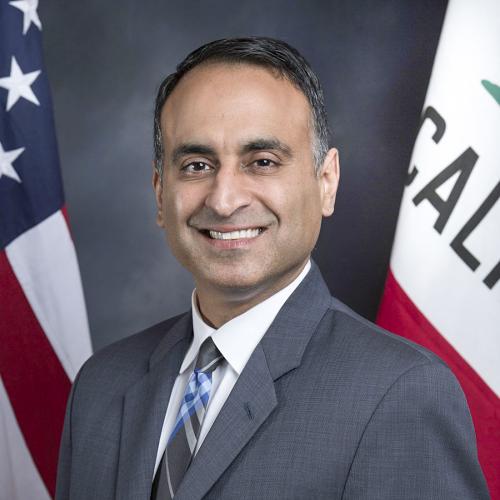
Asm. Ash Kalra
Sponsored bills
Existing law establishes the Home Care Services Consumer Protection Act, which provides for the licensure and regulation of home care organizations, as defined, by the State Department of Social Services, and for the registration of home care aides. The act requires the department to establish and maintain a registry of registered home care aides and home care aide applicants on the department's Internet Web site, as provided. The act prohibits the registry on the Internet Web site from providing any additional, individually identifiable information about a registered home care aide or home care aide applicant. Existing law authorizes the department to maintain additional information for registered home care aides or home care aide applicants, as necessary for the administration of the act, but prohibits the department from making that information publicly available on the registry. A violation of the act is a misdemeanor, punishable by a fine not to exceed $1,000, by imprisonment in a county jail for a period not to exceed 180 days, or by both that fine and imprisonment. This bill would require, beginning September 1, 2018, an electronic copy of a registered home care aide's name, telephone number, and cellular telephone number, if available, on file with the department to be made available, upon request, to a labor organization, as specified. The bill would prohibit a labor organization from using or disclosing this information, as specified. The bill would also require the department to establish a simple opt-out procedure by which a registered home care aide may request that his or her contact information on file with the department not be disclosed in response to a request by a labor organization. The bill would require the department to provide a written notice with information about the opt-out procedure to registered home care aides, as specified. Because a violation of the Home Care Services Consumer Protection Act is punishable as a misdemeanor and this bill would expand requirements under the act, this bill would impose a state-mandated local program. The California Constitution requires the state to reimburse local agencies and school districts for certain costs mandated by the state. Statutory provisions establish procedures for making that reimbursement. This bill would provide that no reimbursement is required by this act for a specified reason.
The Government Claims Act governs the liability and immunity of public entities and their officers and employees, claims and actions against public entities and their officers and employees, insurance indemnification, and the defense of public officers and employees. This bill would express the intent of the Legislature to enact legislation that would require an elected official to reimburse a public entity that pays any compromise or settlement of a claim or action involving conduct that constitutes sexual harassment, if an investigation reveals evidence supporting the claim of sexual harassment against the elected official.
This measure would recognize August 6, 2017, as the 52nd anniversary of the signing of the federal Voting Rights Act of 1965.
This measure would proclaim the period of October 23, 2017, to October 31, 2017, inclusive, as Red Ribbon Week and would encourage all Californians to help build drug-free communities and to participate in drug prevention activities.
(1) In counties where the Secretary of State has determined that it is appropriate, existing law requires each precinct board to post, in a conspicuous location in the polling place, at least one facsimile copy of the ballot with the ballot measures and ballot instructions printed in Spanish. Existing law requires that facsimile ballots be printed in other languages and posted in the same manner if a significant and substantial need is found by the Secretary of State. This bill, the California Voting for All Act, would instead require the county elections official to post one facsimile copy of the ballot that is printed in Spanish or other applicable languages, as determined by the Secretary of State, and to provide at least one facsimile copy of the ballot for voters at the polling place to use as a reference when casting a private ballot. If the Secretary of State determines that the number of voting-age residents in a precinct who are members of a single language minority and who lack sufficient skills in English to vote without assistance exceeds 20% of the voting-age residents in that precinct, the bill would require the county elections official to post one facsimile copy of the ballot, as described above, and to provide at least 3 facsimile copies of the ballot for voters at the polling place to use as a reference when casting a private ballot. The bill would require, in polling places where facsimile copies of the ballot are necessary, precinct board members to be trained on the purpose and proper handling of facsimile copies of ballots. The bill would also provide that a county elections official is not required to provide facsimile copies of the ballot in a particular language if the county elections official is required to provide translated ballots in that language under other provisions of law, as specified. The bill would authorize a vote by mail voter to request that a facsimile copy of a ballot be sent by regular mail or electronic mail in the language of his or her preference, as specified. The bill would require a county elections official to prepare the requested facsimile copies no later than 10 days before election day and to process any requests for facsimile copies, as specified. By imposing new duties on county elections officials, the bill would create a state-mandated local program. (2) Existing law, the California Voter's Choice Act, authorizes 14 specified counties, on or after January 1, 2018, and on or after January 1, 2020, any county except for the County of Los Angeles, to conduct any election as an all-mailed ballot election if certain conditions are satisfied. On or after January 1, 2020, the act authorizes the County of Los Angeles to conduct any election as a vote center election if certain conditions are satisfied, including conditions related to ballot dropoff locations and vote centers. This bill would apply certain requirements relating to the availability and accessibility of non-English facsimile ballots and the public posting of voter information to the County of Los Angeles if it conducts a vote center election pursuant to the California Voter's Choice Act. For an all-mailed ballot election or vote center election conducted pursuant to the California Voter's Choice Act, the bill would require a county elections official to determine if a voter has previously identified a preferred language other than English, and would also require a county elections official to provide a facsimile copy of the ballot in the voter's language preference, as specified, if the county is providing facsimile copies of the ballot in that language. (3) Existing law states the intent of the Legislature that non-English-speaking citizens, like all other citizens, should be encouraged to vote and that appropriate efforts should be made to minimize obstacles to non-English-speaking citizens voting without assistance. Existing law requires an elections official to make reasonable efforts to recruit election officials who are fluent in a non-English language and in English, if the official finds that non-English-speaking citizens approximate 3% or more of the voting-age residents of a precinct, or if interested citizens or organizations provide information that the elections official believes indicates a need for voting assistance for qualified non-English-speaking citizens. This bill would require county elections officials to report to the Secretary of State within 150 days following each statewide general election the number of individuals recruited to serve as members of precinct boards, including the number of those individuals recruited who are fluent in each language required to be represented at polling places. The bill would require, at each polling place, a precinct board member to identify the non-English languages spoken by him or her, other than English, by wearing a mechanism identifying the non-English languages spoken by that member. The bill would also make conforming changes to other provisions of law. (4) This bill would incorporate additional changes to Section 14200 of the Elections Code proposed by SB 286 to be operative only if this bill and SB 286 are enacted and this bill is enacted last. (5) The California Constitution requires the state to reimburse local agencies and school districts for certain costs mandated by the state. Statutory provisions establish procedures for making that reimbursement. This bill would provide that, if the Commission on State Mandates determines that the bill contains costs mandated by the state, reimbursement for those costs shall be made pursuant to the statutory provisions noted above.
(1) Existing law authorizes a person who was born in this state and who has undergone clinically appropriate treatment for the purpose of gender transition to obtain a new birth certificate from the State Registrar. This bill would enact the Gender Recognition Act. For purposes of obtaining a new birth certificate under the provisions above, the bill would delete the requirement that an applicant have undergone any treatment, and instead would authorize a person to submit to the State Registrar an application to change gender on the birth certificate and an affidavit attesting, under penalty of perjury, that the request for a change of gender is to conform the person's legal gender to the person's gender identity and not for any fraudulent purpose. By requiring the affidavit to be attested to under penalty of perjury, the bill would create a crime, thereby imposing a state-mandated local program. The bill would authorize the change of gender on a new birth certificate to be female, male, or nonbinary. (2) Existing law authorizes a person who has undergone clinically appropriate treatment for the purpose of gender transition to petition for a court judgment recognizing the change of gender, and to petition for a court order conforming the person's name to the person's gender identity. Existing law provides specific procedures to seek these orders and judgments, either separately or in combination. This bill, commencing on September 1, 2018, would delete the requirement that a person have undergone any treatment to seek a court judgment to recognize a change of gender and instead would authorize the petitioner to attest, under penalty of perjury, that the request is to conform the person's legal gender to the person's gender identity and not for any fraudulent purpose. By requiring the affidavit to be attested to under penalty of perjury, the bill would create a crime, thereby imposing a state-mandated local program. The bill would authorize a change of gender in the court judgment to female, male, or nonbinary. The bill would provide modified procedures to obtain a court order for a change of name to conform to the petitioner's gender identity and a court judgment to recognize a change in the petitioner's gender. The bill would provide a separate procedure for a person under 18 years of age to petition for a court judgment to recognize a change of gender to female, male, or nonbinary. (3) Existing law requires the Department of Motor Vehicles to issue a driver's license to an applicant when the department determines that the applicant is lawfully entitled to a license, and requires the license to contain, among other things, a brief description and engraved picture or photograph of the licensee for the purpose of identification. Existing law requires the application for an original driver's license or renewal of a driver's license to contain specified information, as provided by the applicant. Existing law also authorizes the department to issue identification cards and requires an identification card to adequately describe the applicant. Existing law requires the department, upon issuance of a new identification card or renewal of an identification card, to provide information regarding organ and tissue donation, including an enrollment form for the California Organ and Tissue Donor Registry that requires an applicant to mark his or her sex. This bill, on January 1, 2019, would require an applicant for an original driver's license or renewal of a driver's license to choose a gender category of female, male, or nonbinary, as specified, and would require the department to adopt regulations to provide a process for an amendment to a gender category under these provisions. The bill would also require the enrollment form for the California Organ and Tissue Donor Registry to instead require an applicant to mark his or her gender. This bill would make legislative findings and declarations in support of its provisions. (4) The California Constitution requires the state to reimburse local agencies and school districts for certain costs mandated by the state. Statutory provisions establish procedures for making that reimbursement. This bill would provide that no reimbursement is required by this act for a specified reason.
Under existing law, programs have been established pursuant to bond acts for, among other things, the development and enhancement of state and local parks and recreational facilities. Existing law, the Water Quality, Supply, and Infrastructure Improvement Act of 2014, approved by the voters as Proposition 1 at the November 4, 2014, statewide general election, authorizes the issuance of general obligation bonds in the amount of $7,545,000,000 to finance a water quality, supply, and infrastructure improvement program. Existing law, the Safe Drinking Water, Water Quality and Supply, Flood Control, River and Coastal Protection Bond Act of 2006, an initiative measure approved by the voters as Proposition 84 at the November 7, 2006, statewide general election, authorizes the issuance of bonds in the amount of $5,388,000,000 for the purposes of financing safe drinking water, water quality and supply, flood control, natural resource protection, and park improvements. Existing law, the California Clean Water, Clean Air, Safe Neighborhood Parks, and Coastal Protection Act of 2002, approved by the voters as Proposition 40 at the March 5, 2002, statewide primary election, authorizes the issuance of bonds in the amount of $2,600,000,000, for the purpose of financing a program for the acquisition, development, restoration, protection, rehabilitation, stabilization, reconstruction, preservation, and interpretation of park, coastal, agricultural land, air, and historical resources. This bill would enact the California Drought, Water, Parks, Climate, Coastal Protection, and Outdoor Access For All Act of 2018, which, if approved by the voters, would authorize the issuance of bonds in an amount of $4,000,000,000 pursuant to the State General Obligation Bond Law to finance a drought, water, parks, climate, coastal protection, and outdoor access for all program. The bill, upon voter approval, would reallocate $100,000,000 of the unissued bonds authorized for the purposes of Propositions 1, 40, and 84 to finance the purposes of a drought, water, parks, climate, coastal protection, and outdoor access for all program. The bill would provide for the submission of these provisions to the voters at the June 5, 2018, statewide primary direct election. This bill would declare that it is to take effect immediately as an urgency statute.
Existing law authorizes a governing body of a political subdivision, as defined, to declare a shelter crisis if the governing body makes a specified finding. Existing law authorizes a political subdivision to allow persons unable to obtain housing to occupy designated public facilities, as defined, during the period of a shelter crisis. Existing law provides that certain state and local laws, regulations, and ordinances are suspended during a shelter crisis, to the extent that strict compliance would in any way prevent, hinder, or delay the mitigation of the effects of the shelter crisis. Existing law, upon a declaration of a shelter crisis by the City of San Jose, authorizes emergency housing to include an emergency bridge housing community for the homeless in that city. This bill, until January 1, 2021, upon a declaration of a shelter crisis by the City of Berkeley, Emeryville, Los Angeles, Oakland, or San Diego, the County of Santa Clara, or the City and County of San Francisco, would authorize emergency housing to include homeless shelters in the City of Berkeley, Emeryville, Los Angeles, Oakland, or San Diego, the County of Santa Clara, or the City and County of San Francisco, respectively. The bill, in lieu of compliance with local building approval procedures or state housing, health, habitability, planning and zoning, or safety standards, procedures, and laws, would authorize those jurisdictions to adopt by ordinance reasonable local standards for homeless shelters, as specified. The bill would require the Department of Housing and Community Development to review and approve the draft ordinance to ensure it addresses minimum health and safety standards and to provide its findings to committees of the Legislature, as provided. The bill would require the city, county, or city and county to develop a plan to address the shelter crisis, as specified. The bill would further require any of the specified jurisdictions that have declared a shelter crisis to annually report to the committees of the Legislature specific information on homeless shelters and permanent supportive housing, through January 1, 2021. This bill would make legislative findings and declarations as to the necessity of a special statute for the Cities of Berkeley, Emeryville, Los Angeles, Oakland, and San Diego, the County of Santa Clara, and the City and County of San Francisco.
Existing law requires pet store operators, as defined, to comply with laws governing, among other things, the care of animals in pet stores. Existing law makes a pet store operator who violates these provisions guilty of a misdemeanor, under certain conditions. Existing law also regulates the retail sale of dogs and cats. Existing law requires an animal control officer, a humane officer, or a peace officer who detects any of certain violations of the laws governing pet store operators to issue a single notice to correct the violation, except as specified. Existing law makes a pet store operator who fails to comply with a notice to correct, or who violates the laws regulating pet store operators, as specified, guilty of a crime. This bill would prohibit, on and after January 1, 2019, a pet store operator from selling a live dog, cat, or rabbit in a pet store unless the dog, cat, or rabbit was obtained from a public animal control agency or shelter, society for the prevention of cruelty to animals shelter, humane society shelter, or rescue group, as defined, that is in a cooperative agreement with at least one private or public shelter, as specified. The bill would require all sales of dogs and cats authorized by this provision to be in compliance with laws requiring the spaying or neutering of animals, as specified. The bill would require each pet store to maintain records sufficient to document the source of each dog, cat, or rabbit the pet store sells or provides space for, for at least one year, and to post, in a conspicuous location on the cage or enclosure of each animal, a sign listing the name of the entity from which each dog, cat, or rabbit was obtained, and would authorize public animal control agencies or shelters to periodically require pet stores engaged in sales of dogs, cats, or rabbits to provide access to those records. The bill would make a pet store operator who violates these provisions subject to a civil penalty of $500, as specified. The bill would also exempt a pet store operator who is subject to these provisions from certain requirements relating to the retail sale of dogs and cats, except as specified. Existing law authorizes a public or private shelter to enter into cooperative agreements with animal rescue or adoption organizations regarding dogs and cats. This bill would authorize a public or private shelter to enter into cooperative agreements with animal rescue or adoption organizations regarding rabbits that are equivalent to the cooperative agreements authorized regarding dogs and cats described above.