

(1) Existing law, the California Finance Lenders Law, generally provides for the licensure and regulation of finance lenders and brokers by the Commissioner of Business Oversight and makes a willful violation of its provisions a crime. Existing law prescribes limits on the maximum rate of charges and administrative fees that a licensee may contract for, and receive, on loans of up to $2,500. The California Finance Lenders Law, until January 1, 2023, establishes the Pilot Program for Increased Access to Responsible Small Dollar Loans, which requires licensees and other entities that wish to participate in the program to file an application and pay a specified fee to the commissioner to participate in the program. The program authorizes a licensee approved by the commissioner to participate in the program to impose specified alternative interest rates and charges, including an administrative fee and delinquency fees, on unsecured loans of at least $300 and less than $2,500, subject to certain requirements. This bill would apply the prescribed limits on charges and administrative fees that a licensee under the California Finance Lenders Law may contract for, and receive, described above, to loans of up to $5,000. This bill would delete the repeal of the Pilot Program for Increased Access to Responsible Small Dollar Loans, thereby extending the program indefinitely. The bill would increase the amount of a permissible loan under the program from $2,500 to $5,000, make conforming changes, and revise the statement of legislative findings for the program. By broadening the definition of a crime, this bill would impose a state-mandated local program. (2) The California Constitution requires the state to reimburse local agencies and school districts for certain costs mandated by the state. Statutory provisions establish procedures for making that reimbursement. This bill would provide that no reimbursement is required by this act for a specified reason.
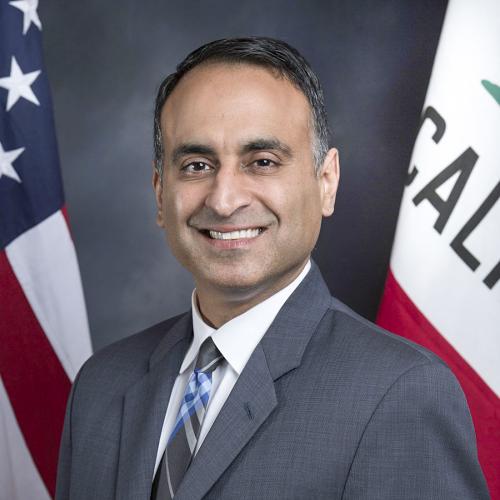
Asm. Ash Kalra
Sponsored bills
Existing law creates the Division of Labor Standards Enforcement in the Department of Industrial Relations for the purpose of enforcing labor laws. Existing law, with certain exceptions, establishes 8 hours as a day's work and a 40-hour workweek, and requires payment of prescribed overtime compensation for additional hours worked. This bill would create the Opportunity to Work Act. The bill would require an employer with 10 or more employees to offer additional hours of work to an existing nonexempt employee before hiring an additional employee or subcontractor, except as specified, would require an employer to post a notice of employee rights, as specified, and would require the employer to maintain certain documentation. The bill would authorize an employee to file a complaint for violation of these provisions with the division and to, in the alternative, bring a civil action for remedies under the act. The bill would require the division to enforce these provisions, as specified and would authorize the division to, among other things, adopt rules and regulations. The bill would make a violation of these provisions punishable by a civil penalty. The bill would also define various terms for these purposes.
The California Global Warming Solutions Act of 2006 designates the State Air Resources Board as the state agency charged with monitoring and regulating sources of emissions of greenhouse gases. The act authorizes the state board to include the use of market-based compliance mechanisms. The act requires the state board to approve a statewide greenhouse gas emissions limit equivalent to the statewide greenhouse gas emissions level in 1990 to be achieved by 2020 and to ensure that statewide greenhouse gas emissions are reduced to at least 40% below the 1990 level by 2030. The act requires the state board, when adopting rules and regulations to achieve greenhouse gas emissions reductions beyond the statewide greenhouse gas emissions limit and to protect the state's most impacted and disadvantaged communities, to follow specified requirements, consider the social costs of the emissions of greenhouse gases, and prioritize specified emission reduction rules and regulations. This bill would additionally require the state board to consider and account for the social costs of the emissions of greenhouse gases when adopting those rules and regulations. The bill would authorize the state board to adopt or amend regulations that establish a market-based compliance mechanism, applicable from January 1, 2021, to December 31, 2030, to complement direct emissions reduction measures in ensuring that statewide greenhouse gas emissions are reduced to at least 40% below the 1990 level by 2030. The bill would authorize the state board to adopt no-trade zones or facility-specific declining greenhouse gas emissions limits where facilities' emissions contribute to a cumulative pollution burden that creates a significant health impact. This bill would require the state board, in consultation with affected air pollution control and air quality management districts, to adopt air pollutant emissions standards for emissions of criteria air pollutants and toxic air contaminants at industrial facilities that are subject to a market-based compliance mechanism. The bill would prohibit the state board from allocating allowances as part of a market-based compliance mechanism to industrial facilities that do not meet the air pollutant emissions standards for criteria air pollutants and toxic air contaminants. This bill would require the state board, in ensuring that statewide greenhouse gas emissions are reduced to at least 40% below the 1990 level by 2030, to adopt the most effective and equitable mix of emissions reduction measures and ensure that emissions reduction measures collectively and individually support achieving air quality and other environmental and public health goals.
(1) Existing law, the Political Reform Act of 1974, provides for the comprehensive regulation of campaign financing and activities. The act requires a committee that supports or opposes ballot measures to name and identify itself using a name or phrase that clearly identifies the economic or other special interests of its major donors of $50,000 or more. The act also requires that the identity of a common employer shared by major donors be disclosed. This bill would repeal these provisions. (2) The act defines "expenditure" as a payment, a forgiveness of a loan, a payment of a loan by a third party, or an enforceable promise to make a payment, unless it is clear from the surrounding circumstances that it is not made for political purposes. This bill would describe circumstances in which a payment would be made for political purposes within the meaning of the definition of "expenditure." (3) The act prohibits a candidate, committee, or slate mailer organization from expending campaign funds to pay for specified telephone calls that advocate support of, or opposition to, a candidate, ballot measure, or both, unless the name of the organization that authorized or paid for the call is disclosed to the recipient of the call during the course of each call. This bill would instead apply these requirements to a candidate, a candidate controlled committee established for an elective office for the controlling candidate, a political party committee, and a slate mailer organization that expends campaign funds to pay for such telephone calls. (4) The act also requires advertisements, as defined, to include prescribed disclosure statements, including, among others, a requirement that the disclosure statements include the names of the persons who made the 2 highest cumulative contributions, as defined, to the committee paying for the advertisement. This bill would repeal and recast provisions of the act relating to advertisement disclosure statements. The bill would revise the definition of "advertisement" to exclude a number of communications, including communications that involve wearing apparel, sky writing, and certain electronic media communications, as specified. The bill would prohibit specified entities from sending a mass electronic mailing, as defined, unless the name of the candidate or committee are shown in the electronic mailing preceded by the words "Paid for by" in at least the same size font as a majority of the text in the mass electronic mailing. The bill would also replace existing advertisement disclosure statements with newly prescribed disclosure statements that identify the name of the committee paying for the advertisement and the top contributors to that committee. The bill would define "top contributors" for purposes of these provisions as the persons from whom the committee paying for the advertisement received its 3 highest cumulative contributions, as specified. The bill would exempt certain committees, including committees that make independent expenditures totaling $1,000 or more in a calendar year, from the requirement to disclose the top contributors in advertisement disclosure statements. The bill would also prescribe location and format criteria for the disclosure statements that are specific to radio and telephone, television and video, print, and electronic media advertisements. (5) The act prohibits a person from making a contribution as an intermediary on behalf of another person without disclosing to the recipient of the contribution specified information about both the intermediary and the source of the contribution. The act also prohibits a person from making a contribution to a committee on the condition or with the agreement that it will be contributed to a particular candidate unless the contribution is disclosed in compliance with those requirements for contributions made by an intermediary. This bill would prohibit a person from making a contribution to a committee or candidate that is earmarked unless the contribution is disclosed in compliance with the requirements for contributions made by an intermediary. The bill would also describe circumstances in which a contribution is deemed to be earmarked. (6) Because a violation of the act is punishable as a misdemeanor, this bill would impose a state-mandated local program. The California Constitution requires the state to reimburse local agencies and school districts for certain costs mandated by the state. Statutory provisions establish procedures for making that reimbursement. This bill would provide that no reimbursement is required by this act for a specified reason. (7) The Political Reform Act of 1974, an initiative measure, provides that the Legislature may amend the act to further the act's purposes upon a 23 vote of each house of the Legislature and compliance with specified procedural requirements. This bill would declare that it furthers the purposes of the act. This bill would declare that it is to take effect immediately as an urgency statute.
Existing law provides for the State Supplementary Program for the Aged, Blind and Disabled (SSP) , which requires the State Department of Social Services to contract with the United States Secretary of Health and Human Services to make payments to SSP recipients to supplement Supplemental Security Income (SSI) payments made available pursuant to the federal Social Security Act. Under existing law, benefit payments under SSP are calculated by establishing the maximum level of nonexempt income and federal SSI and state SSP benefits for each category of eligible recipient. The state SSP payment is the amount required, when added to the nonexempt income and SSI benefits available to the recipient, to provide the maximum benefit payment. Existing law prohibits, for each calendar year, commencing with the 2011 calendar year, any cost-of-living adjustment from being made to the maximum benefit payment unless otherwise specified by statute, except for the pass along of any cost-of-living increase in the federal SSI benefits. Existing law continuously appropriates funds for the implementation of SSP. This bill would reinstate the cost-of-living adjustment beginning January 1 of the 2018 calendar year. The bill would also require a maximum aid payment provided to an individual or a married couple that does not equal or exceed 96% of the 2017 federal poverty level, or 100% of the 2018 federal poverty level, as specified, to be increased to an amount that equals 96% or 100% of the federal poverty level, respectively. By reinstating the cost-of-living adjustment and by increasing the amount of benefits paid under the SSP, this bill would make an appropriation.
(1) Existing law establishes a low-income housing tax credit program pursuant to which the California Tax Credit Allocation Committee provides procedures and requirements for the allocation, in modified conformity with federal law, of state insurance, personal income, and corporation tax credit amounts to qualified low-income housing projects that have been allocated, or qualify for, a federal low-income housing tax credit, and farmworker housing. Existing law limits the total annual amount of the state low-income housing credit for which a federal low-income housing credit is required to the sum of $70,000,000, as increased by any percentage increase in the Consumer Price Index for the preceding calendar year, any unused credit for the preceding calendar years, and the amount of housing credit ceiling returned in the calendar year. Existing law additionally allows a state credit, which is not dependent on receiving a federal low-income housing credit, of $500,000 per calendar year for projects to provide farmworker housing. For purposes of determining the credit amount, existing law defines the term "applicable percentage" depending on, among other things, whether the qualified low-income building is a new building that is not federally subsidized, a new building that is federally subsidized, or is an existing building that is "at risk of conversion." Except for specified special needs applications for projects within a difficult development area (DDA) or qualified census tract (QCT) , existing law authorizes all credit ceiling applications to request state credits provided that the applicant is not requesting a 130% basis adjustment for purposes of calculating the federal credit award amount. This bill, under the law governing the taxation of insurers, the Personal Income Tax Law, and the Corporation Tax Law, for calendar years beginning in 2018, would increase the aggregate housing credit dollar amount that may be allocated among low-income housing projects by an additional $300,000,000, as specified, and would allocate to farmworker housing projects $25,000,000 per year of that amount. The bill, under those laws, would modify the definition of applicable percentage relating to qualified low-income buildings to depend on whether the building is a new or existing building and federally subsidized, or a building that is, among other things, at least 15 years old, serving households of very low income or extremely low income, and will complete substantial rehabilitation, as specified. (2) The Personal Income Tax Law allows various deductions in computing the income that is subject to the taxes imposed by that law, including allowing a deduction for a limited amount of interest paid or accrued on mortgages for a taxpayer's 2nd residence, in modified conformity with federal income tax laws. This bill would disallow that deduction. This bill would declare that it is to take effect immediately as an urgency statute.
Existing law requires the Department of Toxic Substances Control, and a local health officer or local public officer designated by the Director of Toxic Substances Control, to enforce the standards in the hazardous waste control law and the regulations adopted by the department to implement that law, except as specified. Existing law authorizes a representative of the department or the local officer or agency authorized to enforce the hazardous waste control law to, among other things, enter and inspect a factory, plant, construction site, disposal site, transfer facility, or an establishment or any other place or environment where hazardous wastes are stored, handled, processed, disposed of, or being treated to recover resources. This bill would require the department to adopt regulations establishing inspection frequencies for permitted hazardous waste treatment, storage, and disposal facilities, hazardous waste generators, and hazardous waste transporters, as specified. The bill would require the inspection frequency for a hazardous waste land disposal facility to be no less than 2 times per calendar year and for any other permitted hazardous waste treatment, storage, or disposal facility to be no less than once per calendar year.
Existing law declares that the fostering, continuance, and development of public transportation systems are a matter of statewide concern. Existing law authorizes the Department of Transportation to administer various programs and allocates moneys for various public transportation purposes. This bill would, upon an appropriation of moneys from the Public Transportation Account by the Legislature, create the Transit Pass Pilot Program to be administered by the department to provide free or reduced-fare transit passes, directly or through a 3rd party, including a transit agency, to specified pupils and students by supporting new, or expanding existing, transit pass programs. The bill would require the department to develop guidelines that describe the application process and selection criteria for awarding the moneys made available for the program, and would exempt the development of those guidelines from the Administrative Procedure Act. The bill would require the department to develop performance measures and reporting requirements to evaluate the effectiveness of the program, and would require the department to submit a report to specified committees of the Legislature on or before January 1, 2020, on the outcomes of the program and the status of transit pass programs statewide. The bill would provide that its requirements become effective only upon an appropriation that would trigger the creation of the program. The pilot program would be repealed on January 1, 2022.
Existing law requires a corporation, limited liability company, or common interest development, among others, to file a statement of information with the Secretary of State, providing specified information about the entity. Existing law regulates the terms and conditions of employment, including the payment of wages. Existing law generally prohibits an employer from paying any of its employees at rates less than the rates paid to employees of the opposite sex for substantially similar work, as specified. This bill would require, on and after July 1, 2019, and biennially thereafter, that an employer that is required to file a statement of information with the Secretary of State and that has 500 or more employees in California to collect specified information on gender wage differentials. The bill would require the employer to submit the information to the Secretary of State as specified, by July 1, 2020, and biennially thereafter. The bill would require the Secretary of State to publish the information described above on an Internet Web site available to the public upon receiving necessary funding and establishing adequate mechanisms and procedures.