

Existing federal law establishes the Program of All-Inclusive Care for the Elderly (PACE) , which provides specified services for older individuals at a PACE center, defined, in part, as a facility that includes a primary care clinic, so that they may continue living in the community. Federal law authorizes states to implement the PACE program as a Medicaid state option. Existing state law establishes the California Program of All-Inclusive Care for the Elderly (PACE program) , to provide community-based, risk-based, and capitated long-term care services as optional services under the state's Medi-Cal State Plan, as specified. Existing law authorizes the State Department of Health Care Services to enter into contracts with various entities for the purpose of implementing the PACE program and fully implementing the single state agency responsibilities assumed by the department pursuant to those contracts, as specified. Existing law establishes the State Department of Public Health and sets forth its powers and duties, including, but not limited to, duties relating to the licensing and regulation of various entities, including primary care clinics, adult day health care centers, and home health agencies. This bill would exempt from licensure by the State Department of Public Health a primary care clinic, an adult day health care center, or a home health agency, that is approved by the State Department of Health Care Services to operate exclusively as part of a PACE organization or that provides services to individuals who are being assessed for eligibility to enroll in the PACE program for not more than 60 calendar days after an individual submits an application for enrollment. The bill would instead subject those entities to oversight and regulation by the State Department of Health Care Services. The bill would require those entities to comply with the operating standards described in their respective provisions, except as modified by the State Department of Health Care Services, to meet the needs of PACE participants or those individuals being assessed. The bill would require those entities to apply for licensure with the State Department of Public Health if they provide services to any other individuals, as specified. The bill would repeal related provisions as part of conforming changes. The bill would condition the transfer of powers between the 2 departments on the Director of Health Care Services determining, and communicating that determination in writing to the State Department of Public Health, that operating standards compliance programs have been established. The bill would require those PACE organizations to cooperate with the State Department of Health Care Services by providing the department with requested records or information or with access to inspect physical locations. The bill would authorize the department to refuse to enter into, or to terminate, a contract with a noncompliant or noncooperative PACE organization, or to require that PACE organization to submit a corrective action plan to bring it into compliance, as specified. The bill would authorize the department to enter into contracts, or to amend existing contracts, on a bid or negotiated basis, to implement these provisions, and would authorize the department to implement, interpret, or make specific these provisions by means of letters, bulletins, or other similar instructions, without taking regulatory action. The bill would require the department to implement these provisions no later than January 1, 2021, but only to the extent any necessary federal approvals are obtained and federal financial participation is available. The bill would require the department to establish an administrative fee to be paid by each of those PACE organizations, as specified, in an amount necessary to pay for reasonable costs of implementing and administering these provisions. The bill would create a special fund, the PACE Oversight Fund of the State Department of Health Care Services, for the deposit of the fees, to be expended upon appropriation by the Legislature. This bill would incorporate additional changes to Section 1206 of the Health and Safety Code proposed by AB 1037 to be operative only if this bill and AB 1037 are enacted and this bill is enacted last.
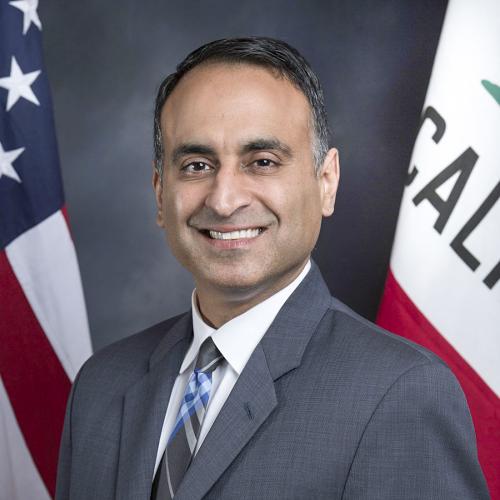
Asm. Ash Kalra
Sponsored bills
Existing law, the Knox-Keene Health Care Service Plan Act of 1975, provides for the licensure and regulation of health care service plans by the Department of Managed Health Care, and makes a willful violation of the act a crime. Existing law provides for the regulation of health insurers by the Department of Insurance. Existing law requires a health care service plan or health insurer offering a contract or policy in the individual or small group market to file specified information, including total earned premiums and total incurred claims for each contract or policy form, with the appropriate department at least 120 days before implementing a rate change. Existing law requires a health plan that exclusively contracts with no more than 2 medical groups in the state to disclose actual trend experience information in lieu of disclosing specified annual medical trend factor assumptions and projected trends, as specified. Existing law requires the Department of Managed Health Care to conduct an annual public meeting regarding large group rates. This bill, commencing July 1, 2020, would expand those requirements to apply to large group health care service plan contracts and health insurance policies, and would impose additional rate filing requirements on large group contracts and policies. On and after July 1, 2020, the bill would require a plan or insurer to disclose with a rate filing specified information by geographic region for individual, grandfathered group, and nongrandfathered group contracts and policies, including the price paid compared to the price paid by the Medicare Program for the same services in each benefit category. The bill would eliminate separate reporting and disclosure requirements for a health plan that exclusively contracts with no more than 2 medical groups in the state. On and after July 1, 2020, the bill would require a health care service plan that fails to file specified information to disclose other information by market and by geographic region. If a plan or insurer fails to provide all the information required, the bill would specify that the filing is an unjustified rate on and after July 1, 2020. The bill would authorize a large group contractholder that has experience-rated or blended coverage and meets specified criteria to apply to the Department of Managed Health Care or Department of Insurance, as appropriate, within 60 days of receiving notice of a rate change to review a rate change and determine if it is unreasonable or not justified, and would require the appropriate department to use reasonable efforts to complete the review within 60 days of receiving all the information required to make a determination. The bill would require the Department of Managed Health Care to conduct a public meeting regarding large group rates in every even-numbered year. Because a willful violation of the bill's requirements relative to health care service plans would be a crime, the bill would impose a state-mandated local program. The California Constitution requires the state to reimburse local agencies and school districts for certain costs mandated by the state. Statutory provisions establish procedures for making that reimbursement. This bill would provide that no reimbursement is required by this act for a specified reason.
(1) Proposition 6, an initiative measure approved by the electors at the November 3, 1998, general election, enacted the Prohibition of Horse Slaughter and Sale of Horsemeat for Human Consumption Act of 1998. The act makes it unlawful, and punishable as a felony, for any person to possess, to import into or export from the state, or to sell, buy, give away, hold, or accept any horse with the intent of killing, or having another kill, that horse, if that person knows or should have known that any part of that horse will be used for human consumption. The act also makes it unlawful to offer horsemeat for sale for human consumption. The Equine Protection Act of 1991 creates a program of equine protection and identification in the Department of Food and Agriculture. The act prohibits any person from purchasing, consigning, selling, or accepting the donation of an animal, defined as a horse, pony, mule, or burro, that is destined for slaughter unless a written bill of sale or any written instrument containing specified information is provided, as prescribed. The act makes it a misdemeanor if any person does not keep the necessary written records with respect to these transactions and other transactions subject to the act, refuses to show the records to a peace officer or to allow copies to be made of the record, or destroys the record within a specified period of time. This bill would instead require a written bill of sale or written instrument to be provided when any person purchases, consigns, sells, or accepts the donation of an animal, as defined in the act, at a public or private auction, as prescribed. The bill would require a person who purchases an animal in these circumstances to sign a sworn statement, under penalty of perjury, acknowledging and agreeing to comply with Proposition 6. The bill would require, before any animal could be sold at an auction, the operator of the auction yard to determine whether the animal has an implanted microchip or has been tattooed or branded with an identifying mark. If the animal has an implanted microchip, a tattoo, or a brand, the bill would require the operator of the auction yard to post, on its internet website and through any active social media in which the operator of the auction yard participates, all identifying information, as provided, for at least 24 hours. The bill would also require, for a minimum of one year following the date of sale of each animal sold at auction, the operator of the auction yard to maintain specified records that document compliance with the above provisions. The bill would require the operator of the auction yard to provide access to these records upon the request of the Department of Food and Agriculture, a law enforcement officer, an animal control agency, or a humane officer, as provided. Because a violation of these provisions would be a crime, and by expanding the scope of the crime of perjury, the bill would impose a state-mandated local program. The bill would require, in addition to any other penalties available under law, a person who violates these provisions to be subject to a civil penalty of $1,000 for the first offense and $2,000 for the 2nd and each subsequent offense. (2) Existing law requires that, at any public auction or sale where equines are sold, a specified notice be posted conspicuously or inserted into the consignment agreement, as specified, by the management of the auction or sale warning buyers and sellers that horses sold there may be purchased for slaughter and that, as a possible safeguard, the seller can set the minimum bid above current slaughter prices. Existing law requires the management of the auction or sale to post current slaughter prices or to make them available to sellers upon request. This bill would instead require that notice or agreement to warn buyers that the sale of horses in California for slaughter for human consumption is a felony and would make a conforming change. (3) The California Constitution requires the state to reimburse local agencies and school districts for certain costs mandated by the state. Statutory provisions establish procedures for making that reimbursement. This bill would provide that no reimbursement is required by this act for a specified reason.
Existing law uses the term "at-risk" to describe youth for purposes of various provisions of the Education and Penal Codes. This bill would delete the term "at-risk" and would replace it with the term "at-promise" for purposes of these provisions. The bill would, for purposes of the Education Code, define "at-promise" to have the same meaning as "at-risk." The bill would also make other technical, nonsubstantive changes.
Existing law establishes the policy of the Legislature to ensure equal access to specific information about the many local regulating and advisory boards, commissions, and committees and to ensure equal opportunity to be informed of vacancies on those boards. Existing law requires each legislative body of a local agency to prepare an appointments list of all regular and ongoing boards, commissions, and committees that are appointed by the legislative body of the local agency. This bill, on and after January 1, 2030, would require, with respect to a city with a population of 50,000 or more, that the city not appoint members of nonsalaried, nonelected boards or commissions consisting of 5 or more members such that individuals of the same gender identity comprise more than 60% of the board or commission's membership. The bill would also prohibit a board or commission with 4 or fewer nonelected and nonsalaried members from being comprised exclusively of people with the same gender identity. The bill would define "gender identity" for purposes of the bill, and would exclude from its provisions a board or commission that has as its primary purpose addressing issues of relevance to a particular gender identity. By imposing new requirements on cities, the bill would impose a state-mandated local program. This bill would include findings that the changes proposed by this bill address a matter of statewide concern rather than a municipal affair and, therefore, apply to all cities, including charter cities. The California Constitution requires the state to reimburse local agencies and school districts for certain costs mandated by the state. Statutory provisions establish procedures for making that reimbursement. This bill would provide that, if the Commission on State Mandates determines that the bill contains costs mandated by the state, reimbursement for those costs shall be made pursuant to the statutory provisions noted above.
(1) Under existing law, the State Lands Commission has jurisdiction over certain public lands in the state, including tidelands and submerged lands. Existing law authorizes the commission to enter into an exchange, with any person or any private or public entity, of filled or reclaimed tidelands and submerged lands or beds of navigable waterways, or interests in these lands, that are subject to the public trust for commerce, navigation, and fisheries, for other lands or interests in lands, if the commission finds that specified conditions are met, as prescribed. This bill would enact the Oakland Waterfront Sports and Mixed-Use Project, Waterfront Access, Environmental Justice, and Revitalization Act and would authorize the State Lands Commission and the San Francisco Bay Conservation and Development Commission to take certain actions related to the development of the Howard Terminal property located in the City of Oakland for the Oakland Sports and Mixed-Used Project, as defined. The bill would require the San Francisco Bay Conservation and Development Commission and the Metropolitan Transportation Commission to take certain actions related to the San Francisco Bay Seaport Plan and San Francisco Bay Plan. By imposing additional duties on the Metropolitan Transportation Commission, this bill would impose a state-mandated local program. (2) This bill would make legislative findings and declarations as to the necessity of a special statute governing public trust lands at the Howard Terminal property in the City of Oakland. (3) The California Constitution requires the state to reimburse local agencies and school districts for certain costs mandated by the state. Statutory provisions establish procedures for making that reimbursement. This bill would provide that, if the Commission on State Mandates determines that the bill contains costs mandated by the state, reimbursement for those costs shall be made pursuant to the statutory provisions noted above.
Existing law requests the University of California to compile specified information, including a survey of existing resources throughout California's governmental and administrative structure that are available to address the needs of an aging society. Existing law requires the Secretary of the California Health and Human Services Agency, based upon the information compiled by the University of California and with the consultation or advice of specified entities, to develop a statewide strategic plan on aging for long-term planning purposes and submit the plan to the Legislature. By executive order, the Governor ordered that a master plan for aging be developed and issued to serve as a blueprint to implement strategies and partnerships that promote healthy aging and prepare the state for upcoming demographic changes. The executive order requires the Secretary of the California Health and Human Services Agency to convene a Cabinet-level Workgroup for Aging to advise the secretary in developing and issuing the master plan. This bill would require the secretary, in coordination with the Director of the California Department of Aging, to lead the development and implementation of the master plan established pursuant to that executive order. The bill would require the secretary and the director, with the assistance of the workgroup, to work with specified agencies, as needed, to identify policies, efficiencies, and strategies necessary to implement the master plan. The bill would also require the workgroup to solicit input and gather information to assist with the implementation of the master plan. The bill would require the department to submit a report to the Governor and the Legislature by October 1, 2020, and submit updates annually thereafter, until October 1, 2030, regarding the master plan.
Existing law requires the Department of Industrial Relations, by interagency agreement with the State Department of Public Health, to establish a repository of current data on toxic materials and harmful physical agents in use or potentially in use in places of employment in the state. That repository is known as the Hazard Evaluation System and Information Service (HESIS) . Existing law requires the HESIS, among other things, to provide information and collect and evaluate data relating to possible hazards to employees resulting from exposure to toxic materials or harmful physical agents. Existing law establishes the Division of Occupational Safety and Health within the Department of Industrial Relations and requires the division to, among other things, monitor, analyze, and propose health and safety standards for workers. Existing law authorizes the Division of Occupational Safety and Health to adopt regulations to implement health and safety standards. This bill would require the State Department of Public Health (department) to consider a report from a laboratory of an employee's blood lead level at or above 20 micrograms per deciliter to be injurious to the health of the employee and to report that case within 5 business days of receiving the report to the Division of Occupational Safety and Health (division) . The bill would further provide that the above-described report would constitute a serious violation and subject the employer or place of employment to an investigation, as provided, by the division, and would require the division to make any citations or fines imposed as a result of the investigation publicly available on an annual basis. The bill would specify that the blood lead levels identified in these provisions that trigger action by the department and the division do not supersede any lower blood lead levels established by regulations adopted by the division that would trigger required action by an employer.
Existing law, the California Fair Employment and Housing Act, makes specified employment and housing practices unlawful, including discrimination against or harassment of employees and tenants, among others. Existing law authorizes a person claiming to be aggrieved by an alleged unlawful practice to file a verified complaint with the Department of Fair Employment and Housing within one year from the date upon which the unlawful practice occurred, unless otherwise specified. This bill would extend the above-described period to 3 years for complaints alleging employment discrimination, as specified. The bill would specify that the operative date of the verified complaint is the date that the intake form was filed with the Labor Commissioner. The bill would make conforming changes in provisions that grant a person allegedly aggrieved by an unlawful practice who first obtains knowledge of the facts of the alleged unlawful practice after the expiration of the limitations period, as specified. Existing law authorizes the Director of Fair Employment and Housing to bring a civil action in the name of the department on behalf of a person claiming to be aggrieved in the case of failure to eliminate an unlawful practice through conference, conciliation, mediation, or persuasion. Existing law requires the director to bring the civil action within a specified time after the filing of the complaint. This bill would, for those purposes, define filing a complaint to mean filing an intake form with the department, and would specify that the operative date of the verified complaint relates back to the filing of the form. This bill would prohibit its provisions from being interpreted to revive lapsed claims.
(1) The California Financing Law (CFL) provides for the licensure and regulation of finance lenders and brokers by the Commissioner of Business Oversight. The CFL prohibits anyone from engaging in the business of a finance lender or broker without obtaining a license. A willful violation of the CFL is a crime, except as specified. Under existing law, a licensee who lends any sum of money is authorized to contract for and receive charges at a maximum rate that does not exceed specified sums on the unpaid principal balance per month, ranging from 2 12 % to 1%, based on the consumer loan amount, as specified. This provision, however, does not apply to any loan of a bona fide principal amount of $2,500 or more, as determined in accordance with a provision governing regulatory ceilings and evasion of the CFL. The CFL also authorizes a licensee, as an alternative to the above-described rate charges for consumer loan amounts, to instead contract for and receive charges at the greater of a rate not exceeding 1.6% per month on the unpaid principal balance or a rate not exceeding 5 56 of 1% per month, plus a specified percentage per month, as established by the Federal Reserve Bank of San Francisco, on advances to member banks under federal law, or if there is no single determinable rate, the closest counterpart of this rate. Under existing law, these provisions do not apply to a loan of a bona fide principal amount of $2,500 or more, as specified. The CFL further authorizes a licensee to contract for and receive an administrative fee of a specified amount that varies with the bona fide principal amount of the loan. This bill, entitled the Fair Access to Credit Act, would authorize a finance lender, with respect to a loan of a bona fide principal amount of $2,500 or more but less than $10,000, to contract for or receive charges at a rate not exceeding an annual simple interest rate of 36% plus the Federal Funds Rate. The bill would require finance lenders making loans subject to these provisions to, among other requirements, report each borrower's payment performance to at least one consumer reporting agency that compiles and maintains files on consumers on a nationwide basis and to also offer, at no cost to the borrower, a credit education program or seminar that has been previously reviewed and approved by the commissioner, in accordance with specific requirements. The bill would further specify that a licensee may contract for and receive an administrative fee, as described above, in addition to these charges. (2) Under the CFL, certain principles apply in determining whether a loan is a loan of a bona fide principal amount under specified provisions and whether the regulatory ceiling provision is used for purposes of evading the CFL. This bill would apply these principles to loans of a bona fide principal amount of $2,500 or more but less than $10,000. The bill would also apply these principles to any fees paid to a licensee for the privilege of participating in an open-end credit program. (3) Existing law prohibits licensees subject to the CFL from entering into a contract for a consumer loan that provides for a scheduled repayment of principal over more than the maximum terms set forth in relation to the respective size of the loan. Among other things, this provision prohibits a loan of at least $3,000 but less than $5,000 from exceeding a maximum term of 60 months and 15 days. This bill would increase the maximum principal loan amount under the above schedule to $10,000. The bill would also prohibit a licensee from entering into a contract for a consumer loan that is at least $2,500 but less than $10,000 that provides for a scheduled repayment of principal that is less than 12 months. The bill would also specify that the maximum loan term of 60 months and 15 days does not apply to a loan secured by real property of a bona fide principal amount of at least $5,000. The bill would also prohibit a licensee from charging, imposing, or receiving any penalty for the prepayment of a loan under the CFL, except as specified. (4) The CFL regulates a specific type of consumer loan known as an open-ended loan. The CFL prescribes the amount upon which charges authorized by the CFL may be based, the amount of a minimum monthly payment, the amount of fees, costs, and expenses a licensee may receive, and the amount to be delivered by the licensee at the time the open-ended loan is made. The CFL applies these provisions only to a loan of a bona fide principal amount not exceeding $5,000, as specified. This bill would apply those provisions to an open-ended loan in a bona fide principal amount not exceeding $10,000, as specified. The bill would make conforming and nonsubstantive changes. By expanding the application of the CFL to cover more loans, the bill would expand the scope of an existing crime, thereby imposing a state-mandated local program. The California Constitution requires the state to reimburse local agencies and school districts for certain costs mandated by the state. Statutory provisions establish procedures for making that reimbursement. This bill would provide that no reimbursement is required by this act for a specified reason.