

Equines: protection.
Summary
(1) Proposition 6, an initiative measure approved by the electors at the November 3, 1998, general election, enacted the Prohibition of Horse Slaughter and Sale of Horsemeat for Human Consumption Act of 1998. The act makes it unlawful, and punishable as a felony, for any person to possess, to import into or export from the state, or to sell, buy, give away, hold, or accept any horse with the intent of killing, or having another kill, that horse, if that person knows or should have known that any part of that horse will be used for human consumption. The act also makes it unlawful to offer horsemeat for sale for human consumption. The Equine Protection Act of 1991 creates a program of equine protection and identification in the Department of Food and Agriculture. The act prohibits any person from purchasing, consigning, selling, or accepting the donation of an animal, defined as a horse, pony, mule, or burro, that is destined for slaughter unless a written bill of sale or any written instrument containing specified information is provided, as prescribed. The act makes it a misdemeanor if any person does not keep the necessary written records with respect to these transactions and other transactions subject to the act, refuses to show the records to a peace officer or to allow copies to be made of the record, or destroys the record within a specified period of time. This bill would instead require a written bill of sale or written instrument to be provided when any person purchases, consigns, sells, or accepts the donation of an animal, as defined in the act, at a public or private auction, as prescribed. The bill would require a person who purchases an animal in these circumstances to sign a sworn statement, under penalty of perjury, acknowledging and agreeing to comply with Proposition 6. The bill would require, before any animal could be sold at an auction, the operator of the auction yard to determine whether the animal has an implanted microchip or has been tattooed or branded with an identifying mark. If the animal has an implanted microchip, a tattoo, or a brand, the bill would require the operator of the auction yard to post, on its internet website and through any active social media in which the operator of the auction yard participates, all identifying information, as provided, for at least 24 hours. The bill would also require, for a minimum of one year following the date of sale of each animal sold at auction, the operator of the auction yard to maintain specified records that document compliance with the above provisions. The bill would require the operator of the auction yard to provide access to these records upon the request of the Department of Food and Agriculture, a law enforcement officer, an animal control agency, or a humane officer, as provided. Because a violation of these provisions would be a crime, and by expanding the scope of the crime of perjury, the bill would impose a state-mandated local program. The bill would require, in addition to any other penalties available under law, a person who violates these provisions to be subject to a civil penalty of $1,000 for the first offense and $2,000 for the 2nd and each subsequent offense. (2) Existing law requires that, at any public auction or sale where equines are sold, a specified notice be posted conspicuously or inserted into the consignment agreement, as specified, by the management of the auction or sale warning buyers and sellers that horses sold there may be purchased for slaughter and that, as a possible safeguard, the seller can set the minimum bid above current slaughter prices. Existing law requires the management of the auction or sale to post current slaughter prices or to make them available to sellers upon request. This bill would instead require that notice or agreement to warn buyers that the sale of horses in California for slaughter for human consumption is a felony and would make a conforming change. (3) The California Constitution requires the state to reimburse local agencies and school districts for certain costs mandated by the state. Statutory provisions establish procedures for making that reimbursement. This bill would provide that no reimbursement is required by this act for a specified reason.
Bill status
signed
all 5 stages cleared
Introduction
Dec 2018
Committee Review
Aug 2019
Assembly Passage
May 2019
Senate Passage
Sep 2019
Signed into Law
Oct 2019
Introduced Dec 4, 2018
Signed Oct 12, 2019
Floor votes · Senate Sep 4, 2019 · Assembly May 9, 2019
How they voted
32–3
Passed · 2 other
Total votes 37
Sep 4, 2019
D
Democratic28
100% Yea
R
Republican9
44% Yea
Vote distribution
All Yea
All Nay
Mixed
No data
Full legislative history
Actions timeline
Total actions
31
Key actions
13
Committee
10
Amendments
6
Oct 12, 2019
Signed into law
Approved by the Governor.
legislature
Sep 9, 2019
Lower · Passed
Senate amendments concurred in. To Engrossing and Enrolling. (Ayes 73. Noes 0. Page 3118.).
lower
Sep 5, 2019
Introduced
In Assembly. Concurrence in Senate amendments pending. May be considered on or after September 7 pursuant to Assembly Rule 77.
lower
Sep 4, 2019
Upper · Passed
Read third time. Passed. Ordered to the Assembly. (Ayes 33. Noes 5. Page 2513.).
upper
Aug 26, 2019
Upper · Passed
Read third time and amended. Ordered to second reading.
upper
Aug 15, 2019
Upper · Passed
Read third time and amended. Ordered to second reading.
upper
Aug 12, 2019
Upper · Passed
From committee: Be ordered to second reading pursuant to Senate Rule 28.8.
upper
Jul 10, 2019
Upper · Passed
From committee: Do pass and re-refer to Com. on APPR. (Ayes 7. Noes 1.) (July 9). Re-referred to Com. on APPR.
upper
Jun 6, 2019
Upper · Passed
In committee: Hearing postponed by committee.
upper
May 22, 2019
Committee
Referred to Com. on JUD.
upper
May 9, 2019
Lower · Passed
Read third time. Passed. Ordered to the Senate. (Ayes 70. Noes 0. Page 1573.)
lower
May 1, 2019
Lower · Passed
From committee: Do pass. (Ayes 14. Noes 0.) (May 1).
lower
Apr 25, 2019
Committee
Re-referred to Com. on APPR.
lower
Apr 22, 2019
Committee
Re-referred to Com. on APPR.
lower
Apr 11, 2019
Lower · Passed
Read second time and amended.
lower
Apr 10, 2019
Lower · Passed
From committee: Amend, and do pass as amended and re-refer to Com. on APPR. (Ayes 10. Noes 1.) (April 9).
lower
Apr 1, 2019
Committee
Re-referred to Com. on W., P., & W.
lower
Mar 28, 2019
Committee
Referred to Com. on W., P., & W.
lower
Dec 5, 2018
Lower · Passed
From printer. May be heard in committee January 4.
lower
Dec 4, 2018
Introduced
Introduced. To print.
lower
1 primary · 10 co-sponsors
Sponsors
Role
Legislator
Party
State
District
P
TG
Todd Gloria
DDemocratic
Co

Anthony Portantino
DDemocratic
Co

Ash Kalra
DDemocratic
Co

Ling Ling Chang
RRepublican
Co

Marc Levine
DDemocratic
Co

Marie Waldron
RRepublican
Co

Richard Bloom
DDemocratic
Co

Robert M. Hertzberg
DDemocratic
Co

Sabrina Cervantes
DDemocratic
Co
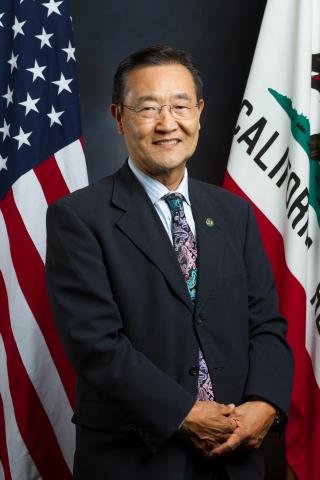
Steve Choi
RRepublican
Co

Tasha Boerner
DDemocratic
Ask Maddy
·
AI policy assistant
Ask Maddy about AB 128
Scope: CA
Hi! I can help you understand AB 128. What would you like to know?
Try one of these
i
Maddy answers using official bill text and legislative records. Always verify before sharing.
Sources cited inline