This measure would proclaim the week of May 23 through May 27, inclusive, as Firefighter Mental Health Awareness Week.
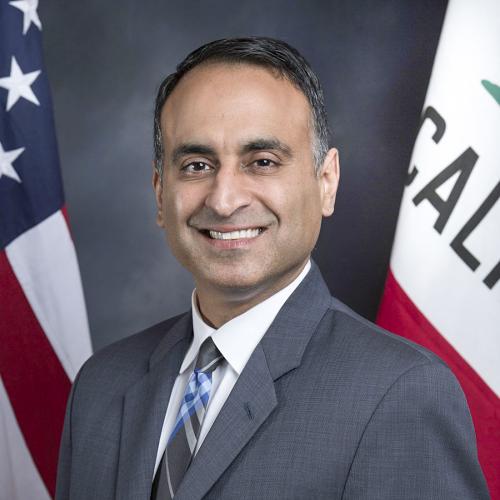
Asm. Ash Kalra
Sponsored bills
This measure would designate the month of May 2022 as California Fairgrounds Appreciation Month and would extend the Legislature's warmest regards and appreciation to the thousands of volunteers, fair directors, staff, business supporters, and sponsors who keep the network of California state fairgrounds strong, vibrant, relevant, and successful.
This measure would proclaim Friday, May 27, 2022, as National Poppy Day.
This measure would declare June 8, 2022, as California Nonprofits Day in recognition of the importance of nonprofit organizations to the economy and well-being of this state.
This measure would urge the President, the Congress of the United States, and the United States Department of Veterans Affairs to take all measures to ensure that military veterans can access necessary treatment for mental health and substance abuse disorders in a timely manner.
Existing law provides that every individual possesses a fundamental right of privacy with respect to their personal reproductive decisions. Existing law prohibits the state from denying or interfering with the right to choose or obtain an abortion before the fetus is viable, or when the abortion is necessary to protect the life or health of the pregnant person. Existing law requires an abortion to be performed by a specified licensed or certified health care provider and prohibits an abortion from being performed on a viable fetus if continuation of the pregnancy did not pose a risk to the life or health of the pregnant person. The United States Constitution generally requires a state to give full faith and credit to the public acts, records, and judicial proceedings of every other state. Existing law sets forth procedures by which a person may enforce a judgment for the payment of money issued by the court of a state other than California. This bill would declare another state's law authorizing a civil action against a person or entity that receives or seeks, performs or induces, or aids or abets the performance of an abortion, or who attempts or intends to engage in those actions, to be contrary to the public policy of this state. The bill would prohibit the application of that law to a case or controversy heard in state court, and would prohibit the enforcement or satisfaction of a civil judgment received under that law. The bill would declare these provisions to be severable. This bill would declare that it is to take effect immediately as an urgency statute.
Existing law, except as specified, prohibits enforcement of a personal service contract beyond 7 years from the commencement of service under the contract. Under existing law, an employee who is a party to a contract to render personal services in the production of specified phonorecords is prohibited from invoking this provision without first giving written notice to the employer that the employee, from and after a specified date, will no longer render service under the contract by reason of the above provision. Existing law specifies that a party to a contract to render personal services in the production of specified phonorecords may still pursue an action for certain damages. This bill would authorize any music talent who is a party to a contract to render personal services in the production of specified phonorecords to invoke that limitation by giving written notice and paying a third party any contractual advances actually paid by the third party, as specified. The bill would repeal the provisions related to damages. This bill would prohibit a contract for the exclusive personal services of a music talent, as defined, from containing a term that includes option periods that extend more than 12 months after the initial commercial release of the applicable music product. The bill would authorize a music talent, if their option has not been formally exercised within that time period, to terminate at any time their personal services agreement by sending notice to the contracting party. This bill would prohibit the waiver of any of its provisions in an individual contract negotiation, a collective bargaining agreement, or other agreement. The bill would provide that it voids any provision in a contract that would deprive an employee or music talent of its protections.
Existing law establishes a workers' compensation system, administered by the Administrative Director of the Division of Workers' Compensation, to compensate an employee for injuries sustained in the course of employment. Existing law creates a rebuttable presumption that specified injuries sustained in the course of employment of a specified member of law enforcement or a specified first responder arose out of and in the course of employment. Existing law, until January 1, 2023, creates a rebuttable presumption of injury for various employees, including an employee who works at a health facility, as defined, to include an illness or death resulting from COVID-19, if specified circumstances apply. This bill would define "injury," for a hospital employee who provides direct patient care in an acute care hospital, to include infectious diseases, cancer, musculoskeletal injuries, post-traumatic stress disorder, and respiratory diseases. The bill would include the novel coronavirus 2019 (COVID-19) , among other conditions, in the definitions of infectious and respiratory diseases. The bill would create rebuttable presumptions that these injuries that develop or manifest in a hospital employee who provides direct patient care in an acute care hospital arose out of and in the course of the employment. The bill would extend these presumptions for specified time periods after the hospital employee's termination of employment.
Existing law, the California Fair Employment and Housing Act (FEHA) , establishes the Department of Fair Employment and Housing (DFEH) within the Business, Consumer Services, and Housing Agency, under the direction of the Director of Fair Employment and Housing, to enforce civil rights laws with respect to housing and employment and to protect and safeguard the right of all persons to obtain and hold employment without discrimination based on specified characteristics or status. The FEHA makes certain discriminatory employment and housing practices unlawful, and authorizes a person claiming to be aggrieved by an alleged unlawful practice to file a verified complaint with the DFEH. The FEHA requires the DFEH to make an investigation in connection with a filed complaint alleging facts sufficient to constitute a violation of the FEHA, and requires the DFEH to endeavor to eliminate the unlawful practice by conference, conciliation, and persuasion. With regard to unlawful employment practices, if conference, conciliation, mediation, or persuasion fails and the DFEH has required all parties to participate in a mandatory dispute resolution, as specified, the FEHA authorizes the director, in their discretion, to bring a civil action in the name of the DFEH on behalf of the person claiming to be aggrieved. With regard to housing discrimination, if conference, conciliation, mediation, or persuasion fails and the DFEH has required all parties to participate in a mandatory dispute resolution, as specified, the FEHA requires the director to bring a civil action in the name of the DFEH on behalf of the person claiming to be aggrieved. This bill would provide that, by performing the functions and duties and exercising the powers set forth in the FEHA, the DFEH represents the interests of the state and effectuates the declared public policy of the state to protect and safeguard the rights and opportunities of all persons from unlawful discrimination and other violations of the FEHA and that this statement is declarative of existing law as stated in specified case law. The bill would specify that the DFEH is acting in the public interest in bringing these civil actions.

This measure would proclaim May 18, 2022, as AAPI Day Against Bullying and Hate.