

Passed Aug 30, 2016
1 co-sponsor
Total votes
13,993
all sessions
Attendance
95%
515 missed
Near the chamber average
With party
99%
of cast votes
Near the chamber average
Bipartisan score
0%
crosses aisle rarely
Near the chamber average
Sponsored
815
bills & resolutions
Near the chamber average
Committees
0
assignments
815 bills and resolutions
Sponsored bills
Total
815
Primary
120
Co-sponsor
695
This page
815
matching current filters
Privacy: commercial health monitoring programs.
Existing federal law, the Health Insurance Portability and Accountability Act of 1996 (HIPAA) , establishes certain requirements relating to the provision of health insurance, including provisions relating to the confidentiality of health records. HIPAA prohibits a covered entity that uses electronic means to perform HIPAA-covered transactions, from using or disclosing personal health information except pursuant to a written authorization signed by the patient or for treatment, payment, or health care operations. Notwithstanding those provisions, HIPAA allows a covered entity to maintain a directory of patients in its facility for specified purposes, and to disclose the protected health information of a patient to family members, relatives, or other persons identified by the patient, if certain conditions are met. Covered entities include health plans, health care clearinghouses, such as billing services and community health information systems, and health care providers that transmit health care data in a way that is regulated by HIPAA. HIPAA further provides that if its provisions conflict with a provision of state law, the provision that is most protective of patient privacy prevails. Existing law, the Confidentiality of Medical Information Act, prohibits a provider of health care, a health care service plan, a contractor, a corporation and its subsidiaries and affiliates, or any business that offers software or hardware to consumers, including a mobile application or other related device, as defined, from intentionally sharing, selling, using for marketing, or otherwise using any medical information, as defined, for any purpose not necessary to provide health care services to a patient, except as expressly authorized by the patient, enrollee, or subscriber, as specified, or as otherwise required or authorized by law. This bill would prohibit an operator of a commercial health monitoring program from intentionally sharing, selling, or disclosing individually identifiable health monitoring information in possession of or derived from a commercial health monitoring program to a 3rd party, as defined, without first providing clear and conspicuous notice and obtaining the consumer's affirmative consent, as provided, and would provide that individually identifiable information may be disclosed to specified entities without consent under specified circumstances, including to a government official if necessary to prevent an emergency involving the danger of death or serious physical injury to a person, if the disclosing entity provides notice of the disclosure as soon as practicable. The bill would also require an employer that receives health monitoring information in possession of or derived from a commercial health monitoring program to establish procedures to preserve the confidentiality and security of that information, as provided. The bill would further prohibit an employer from discriminating against an employee based on an employee's health monitoring information or if that employee does not consent to the use of his or her health monitoring information. The bill would exempt a covered entity, provider of health care, business associate, health care service plan, contractor, employer, or any other person subject to the federal Health Insurance Portability and Accountability Act of 1996 (HIPAA) or the Confidentiality of Medical Information Act from these requirements.
Passed Aug 30, 2016
0 co-sponsors
Relative to the transport by rail of flammable and combustible liquids.
This measure would urge the United States Department of Transportation, Department of Energy, and the Office of Management and Budget to expedite the rulemaking and implementation processes for federal safety regulations governing the transport by rail of flammable and combustible liquids, including crude oil, and would also urge the President and the Congress of the United States to pass specified federal legislation mandating public safety measures regulating the transport by rail of those liquids.
Signed into law Aug 30, 2016
1 co-sponsor
Passed Aug 25, 2016
1 co-sponsor
Relative to Equal Pay Day.
This measure would proclaim April 12, 2016, as Equal Pay Day in recognition of the need to eliminate the gender gap in earnings by women and to promote policies to ensure equal pay for all.
Signed into law Aug 25, 2016
1 co-sponsor
Relative to sun safety.
This measure would encourage teaching sun safety practices to children to enable them to identify the importance of sun safety, practice strategies to protect against the harmful effects of the sun, and understand why and how to stay safe from overexposure to the sun.
Signed into law Aug 25, 2016
0 co-sponsors
California Conservation Corps: 40th Anniversary.
This measure would recognize the contributions of the California Conservation Corps on the 40th anniversary of its creation.
Signed into law Aug 24, 2016
1 co-sponsor
Relative to Alzheimer's and Brain Awareness Month and The Longest Day.
This measure would recognize the month of June 2016 as Alzheimer's and Brain Awareness Month, would recognize June 21, 2016, as The Longest Day in California, and would urge all residents to wear purple on this day to help spread global awareness of the Alzheimer's Association's vision of imagining a world without Alzheimer's disease.
Signed into law Aug 19, 2016
1 co-sponsor
California's community-based developmental services system: 50th anniversary.
This measure would recognize the year of 2016 as the 50th anniversary of California's community-based developmental services system, and would reaffirm the commitment of the Legislature to support this system. This measure would declare the importance of ensuring a sustainable system that protects the rights of individuals with developmental disabilities.
Signed into law Aug 17, 2016
1 co-sponsor
Relative to Calexico West Land Port of Entry project.
This measure would respectfully urge Congress to appropriate $248 million in funding to complete Phase 2 of the Calexico West Land Port of Entry reconfiguration and expansion project in order to realize the benefits the improvements of this project will have on the nation's economy.
Signed into law Aug 17, 2016
1 co-sponsor
Ask Maddy
·
AI policy assistant
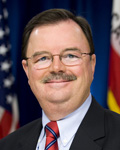
Ask Maddy about Richard Gordon
Scope: california
Hi! I can help you understand Richard Gordon's legislative record. What would you like to know?
Try one of these
i
Maddy answers using official bill text and legislative records. Always verify before sharing.
Sources cited inline