

Passed Feb 27, 2014
1 co-sponsor
Total votes
13,993
all sessions
Attendance
95%
515 missed
Near the chamber average
With party
99%
of cast votes
Near the chamber average
Bipartisan score
0%
crosses aisle rarely
Near the chamber average
Sponsored
815
bills & resolutions
Near the chamber average
Committees
0
assignments
815 bills and resolutions
Sponsored bills
Total
815
Primary
120
Co-sponsor
695
This page
815
matching current filters
Passed Feb 10, 2014
1 co-sponsor
California Global Warming Solutions Act of 2006: market-based compliance mechanisms: Clean Technology Investment Account.
The California Global Warming Solutions Act of 2006, hereafter the Global Warming Solutions Act, designates the State Air Resources Board as the state agency charged with monitoring and regulating sources of emissions of greenhouse gases. The act authorizes the state board to include use of market-based compliance mechanisms. Existing law requires all moneys, except for fines and penalties, collected by the state board as part of a market-based compliance mechanism to be deposited in the Greenhouse Gas Reduction Fund and to be available upon appropriation by the Legislature. Existing law requires the Department of Finance, in consultation with the state board and any other relevant state agency, to develop, as specified, a 3-year investment plan for the moneys deposited in the Greenhouse Gas Reduction Fund. Existing law permits moneys from the fund be allocated for the research, development, and deployment of innovative technologies, measures, and practices related to programs and projects funded under the Global Warming Solutions Act. This bill would create the Clean Technology Investment Account within the Greenhouse Gas Reduction Fund and would require the Legislature to annually appropriate moneys from the Greenhouse Gas Reduction Fund into the Clean Technology Investment Account. This bill would make those moneys available to the state board for the purposes of accelerating the development, demonstration, and deployment of clean technologies that will reduce greenhouse gas emissions and foster job creation in the state. The bill would require the implementation of these provisions be contingent on the appropriation of moneys by the Legislature for these purposes.
Failed Feb 3, 2014
1 co-sponsor
Residential care facilities for the elderly.
Existing law, the California Residential Care Facilities for the Elderly Act, provides for the licensure of residential care facilities for the elderly by the State Department of Social Services. Existing law exempts from these provisions specified facilities, including general acute care hospitals, clinics, and recovery houses for individuals with drug or alcohol addiction. This bill would add to the list of facilities that are exempt from regulation as a residential care facility for the elderly a home or facility approved and annually reviewed by the United States Department of Veterans Affairs as a medical foster home, as defined, in which care is provided exclusively to three or fewer veterans.
Failed Feb 3, 2014
0 co-sponsors
Medi-Cal: reimbursement: provider payments.
The Medi-Cal Act establishes the Medi-Cal program, which is administered by the State Department of Health Care Services, under which qualified low-income individuals receive health care services. The Medi-Cal program is, in part, governed and funded by federal Medicaid Program provisions. Existing law requires, except as otherwise provided, Medi-Cal provider payments to be reduced by 1% or 5%, and provider payments for specified non-Medi-Cal programs to be reduced by 1%, for dates of service on and after March 1, 2009, and until June 1, 2011. Existing law requires, except as otherwise provided, Medi-Cal provider payments and payments for specified non-Medi-Cal programs to be reduced by 10% for dates of service on and after June 1, 2011. This bill would instead require that, to the extent permitted by federal law, this payment reduction not apply to skilled nursing facilities or subacute care units that are a distinct part of a general acute care hospital, intermediate care or other specified facilities serving developmentally disabled individuals, or specified Medi-Cal provider payments for fee-for-service benefits, including payments to pharmacies, for dates of service on or after June 1, 2011. The bill would also provide that this payment reduction shall not apply to managed health care plans for dates of service after the effective date of the bill. This bill would declare that it is to take effect immediately as an urgency statute.
In committee Feb 3, 2014
1 co-sponsor
State Air Resources Board: Local Emission Reduction Program.
Existing law designates the State Air Resources Board as the state agency with the primary responsibility for the control of vehicular air pollution and air pollution control districts and air quality management districts with the primary responsibility for the control of air pollution from all sources other than vehicular sources. This bill would create the Local Emission Reduction Program and would require money to be available from the General Fund, upon appropriation by the Legislature, for purposes of providing grants and other financial assistance to develop and implement greenhouse gas emissions reduction projects in the state. The bill would require the state board, in coordination with the Strategic Growth Council, to administer the program, as specified. The bill would require the implementation of the program to be contingent on the appropriation of moneys by the Legislature, as specified.
Failed Feb 3, 2014
0 co-sponsors
Timber harvesting plans: exempt activities.
The Z'berg-Nejedly Forest Practice Act of 1973 prohibits a person from conducting timber operations unless a timber harvesting plan prepared by a registered professional forester has been submitted to the Department of Forestry and Fire Protection. The act authorizes the State Board of Forestry and Fire Protection to exempt from those provisions of the act a person engaging in specified forest management activities, including, among other things, the harvesting of only trees less than 18 inches in stump diameter, measured at 8 inches above ground level. However, existing law permits the removal of trees less than 24 inches in stump diameter to achieve the goal of fuel reduction if the removal of any such tree is within 500 feet of a legally permitted structure, or in an area prioritized as a shaded fuel break in a community wildfire protection plan approved by a public fire agency, if the goal of fuel reduction cannot be achieved by removing only trees less than 18 inches in stump diameter. This bill would, instead, exempt the removal of trees less than 28 inches in stump diameter, measured at 8 inches above ground level. However, the bill would permit the removal of trees less than 28 inches in stump diameter to achieve the goal of fuel reduction if the removal of any such tree is within 500 feet of a legally permitted structure, in an area prioritized as a shaded fuel break in a community wildfire protection plan approved by a public fire agency, if the goal of fuel reduction cannot be achieved by removing only trees less than 28 inches in stump diameter.
Failed Feb 3, 2014
1 co-sponsor
Solid waste: single-use carryout bags.
Existing law, until January 1, 2020, requires an operator of a store, as defined, to establish an at-store recycling program that provides to customers the opportunity to return clean plastic carryout bags to that store. With specified exceptions, this bill, as of January 1, 2015, would prohibit stores that have a specified amount of dollar sales or retail floor space from providing a single-use carryout bag to a customer. The bill would require these stores to meet other specified requirements regarding providing recycled paper bags and compostable bags to customers. The bill would require these stores to make reusable grocery bags available to customers. The bill would, on and after July 1, 2016, additionally impose these prohibitions and requirements on convenience food stores, foodmarts, and certain other specified stores. The bill, beginning January 1, 2016, would require reusable grocery bags that are sold or provided to a store by a reusable grocery bag producer meet specified requirements, and would require a producer to provide an independent certification to the Department of Resources Recycling and Recovery that the bags meet the requirements, and to pay a specified fee. The bill would require the department to deposit all penalties collected for violations of these requirements into the Reusable Bag Account, which would be established by the bill in the Integrated Waste Management Fund. The bill would require that moneys in the account be expended by the department, upon appropriation by the Legislature, to implement these requirements. The bill would allow a city, county, or city and county, or the state to impose civil penalties for a violation of the bill's requirements, except for the certification requirements. The bill would require these civil penalties to be paid to the office of the city attorney, city prosecutor, district attorney, or Attorney General, whichever office brought the action, and would allow the penalties collected by the Attorney General to be expended by the Attorney General, upon appropriation by the Legislature, to enforce the bill's provisions. The bill would provide that these remedies are not exclusive, as specified. This bill would prohibit enforcement and implementation of local ordinances and other local regulations on this subject that were enacted on or after January 1, 2014, as specified.
died Feb 3, 2014
1 co-sponsor
Charter schools: facilities.
Existing law, the Smaller Classes, Safer Schools, and Financial Accountability Act, requires that each school district make available to each charter school operating in the school district facilities sufficient for the charter school to accommodate all of the charter school's in-district students in conditions reasonably equivalent to those in which the students would be accommodated if they were attending other public schools of the district. Existing law provides that it is the intent of the people that public school facilities should be shared fairly among all public school pupils, including those in charter schools. Existing law authorizes a school district to charge a charter school a pro rata share of the school district facilities costs that the school district pays for with unrestricted General Fund revenues. This bill would require a school district to give the same degree of consideration to pupils attending schools operated by the school district as pupils attending charter schools, for purposes of determining appropriate facilities to offer to eligible charter schools. The bill would require the school district to consider certain things when allocating reasonably equivalent facilities to charter schools, including the impact of the facilities offer on pupils attending schools operated by the school district and the in-district students attending, or proposed to attend, the charter school, as provided. The bill would state that a school district is not required to provide additional facilities to a charter school if the charter school owns or leases facilities that are able to accommodate in-district students in conditions reasonably equivalent to those in which the in-district students would be accommodated if they were attending public schools of the district, as provided. By imposing new requirements on school districts, the bill would impose a state-mandated local program. This bill would state certain legislative findings and declarations regarding the Smaller Classes, Safer Schools, and Financial Accountability Act and the provision of school facilities to charter schools. The California Constitution requires the state to reimburse local agencies and school districts for certain costs mandated by the state. Statutory provisions establish procedures for making that reimbursement. This bill would provide that, if the Commission on State Mandates determines that the bill contains costs mandated by the state, reimbursement for those costs shall be made pursuant to these statutory provisions.
Failed Feb 3, 2014
0 co-sponsors
Passed Jan 29, 2014
1 co-sponsor
Ask Maddy
·
AI policy assistant
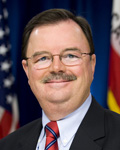
Ask Maddy about Richard Gordon
Scope: california
Hi! I can help you understand Richard Gordon's legislative record. What would you like to know?
Try one of these
i
Maddy answers using official bill text and legislative records. Always verify before sharing.
Sources cited inline