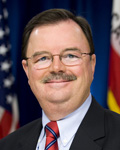
Photo of Richard Gordon
D California Assembly · District 24

Asm. Richard Gordon

Compare
Total votes
13,993
all sessions
Attendance
95%
515 missed
Near the chamber average
With party
99%
of cast votes
Near the chamber average
Bipartisan score
0%
crosses aisle rarely
Near the chamber average
Sponsored
815
bills & resolutions
Near the chamber average
Committees
0
assignments
815 bills and resolutions

Sponsored bills

Total
815
Primary
120
Co-sponsor
695
This page
815
matching current filters
Co-sponsor ACR 9
Signed into law · California Assembly · Co-sponsor
Relative to Pet Care Education Month.

This measure would declare the month of January 2016 as Pet Care Education Month and would request Californians to observe the month by ensuring that their companion animals receive the proper preventative care by establishing a financial plan for pet health emergencies and by contributing to charitable organizations that provide low-cost spay and neuter services and vaccinations or funds to help low-income individuals pay for veterinary care.

Signed into law Feb 10, 2016 1 co-sponsor
Co-sponsor SB 243
In committee · California Senate · Co-sponsor
Medi-Cal: reimbursement: provider rates.

(1) Existing law establishes the Medi-Cal program, administered by the State Department of Health Care Services, under which health care services are provided to qualified, low-income persons. The Medi-Cal program is, in part, governed and funded by federal Medicaid provisions. Existing law requires the department to develop and implement a Medi-Cal inpatient hospital reimbursement payment methodology based on diagnosis-related groups, subject to federal approval, that reflects the costs and staffing levels associated with quality of care for patients in all general acute care hospitals, as specified. Existing law generally requires the diagnosis-related group-based payments to apply to all claims. This bill would require claims for payments pursuant to the inpatient hospital reimbursement methodology described above to be increased by 16% for the 2015–16 fiscal year, and would require, commencing July 1, 2016, and annually thereafter, the department to increase each diagnosis-related group payment claim amount based, at a minimum, on increases in the medical component of the California Consumer Price Index. Commencing with the 2015–16 fiscal year, and annually thereafter, the bill would require managed care rates for Medi-Cal managed care health plans to be increased by a proportionately equal amount for increased payments for hospital services. (2) Existing law requires, except as otherwise provided, Medi-Cal provider payments to be reduced by 1% or 5%, and provider payments for specified non-Medi-Cal programs to be reduced by 1%, for dates of service on and after March 1, 2009, and until June 1, 2011. Existing law requires, except as otherwise provided, Medi-Cal provider payments and payments for specified non-Medi-Cal programs to be reduced by 10% for dates of service on and after June 1, 2011. This bill would, instead, prohibit the application of those reductions for payments to providers for dates of service on or after June 1, 2011. The bill would also require payments for managed care health plans for dates of service following the effective date of the bill to be determined without application of some of those reductions. The bill would require the Director of Health Care Services to implement this provision to the maximum extent permitted by federal law and for the maximum time period for which the director obtains federal approval for federal financial participation for those payments. (3) Prior law required, beginning January 1, 2013, through and including December 31, 2014, that payments for primary care services provided by specified physicians be no less than 100% of the payment rate that applies to those services and physicians as established by the Medicare program, for both fee-for-service and managed care plans. This bill, commencing January 1, 2016, would require payments for specified medical care services to not be less than 100% of the payment rate that applies to those services as established by the Medicare program for services rendered by fee-for-service providers, and would require rates paid to Medi-Cal managed care plans to be actuarially equivalent to payment rates established by the Medicare program. The bill, commencing January 1, 2016, would require rates paid to Denti-Cal providers for dental services provided to adults and children to be increased by the equivalent percentage as the percentage increase required for other fee-for-service Medi-Cal providers. The bill would require those provisions to be implemented only to the extent permitted by federal law and that federal financial participation is available. The bill would authorize the department to implement those provisions through provider bulletins without taking regulatory action until regulations are adopted, and would require the department to adopt those regulations by July 1, 2018. The bill would require, commencing July 1, 2016, the department to provide a status report to the Legislature on a semiannual basis until regulations have been adopted. (4) This bill would declare that it is to take effect immediately as an urgency statute.

In committee Feb 1, 2016 1 co-sponsor
Co-sponsor AB 203
died · California Assembly · Co-sponsor
State responsibility areas: fire prevention fees.

Existing law requires the state to have the primary financial responsibility for preventing and suppressing fires in areas that the State Board of Forestry and Fire Protection has determined are state responsibility areas, as defined. Existing law requires the State Board of Forestry and Fire Protection, by September 1, 2011, to adopt emergency regulations to establish a fire prevention fee in an amount not to exceed $150 to be charged on each habitable structure on a parcel that is within a state responsibility area. Existing law authorizes the State Board of Forestry and Fire Protection, on July 1, 2013, and annually thereafter, to adjust the fire prevention fee, as specified. Existing law requires the fire prevention fee to be collected annually by the State Board of Equalization, in accordance with specified procedures, and specifies that the annual fee shall be due and payable 30 days from the date of assessment by the state board. Existing law authorizes a petition for redetermination of the fee to be filed within 30 days after service of a notice of determination, as specified. This bill would require the State Board of Forestry and Fire Protection, by July 1, 2016, to amend those emergency regulations to establish a fire prevention fee in an amount not to exceed $152.33 and would authorize the board, on July 1, 2017, and annually thereafter, to adjust the fire prevention fee, as specified. The bill would extend the time when the fire prevention fee is due and payable from 30 to 60 days from the date of assessment by the State Board of Equalization and would authorize the petition for redetermination to be filed within 60 days after service of the notice of determination, as specified.

died Feb 1, 2016 1 co-sponsor
Co-sponsor SB 41
died · California Senate · Co-sponsor
Public contracts: 2024 Olympic Games and Paralympic Games.

Existing law provides specified requirements in awarding certain public contracts. This bill would authorize the Governor to sign agreements required by the United States Olympic Committee as part of the bid process for the City of Los Angeles or the City and County of San Francisco to become the United States applicant city and candidate city for the 2024 Olympic Games and Paralympic Games. This bill would make legislative findings and declarations that, among other things, the endorsing municipality, as defined, has developed a self-sufficient bid for financing the games. This bill would authorize the Governor to enter into an agreement for the state to be jointly liable, not to exceed a specified amount, with the Organizing Committee for the Olympic Games (OCOG) , as specified, for obligations of the OCOG, and for any financial deficit relating to the games, as provided. This bill would declare that it is to take effect immediately as an urgency statute.

died Feb 1, 2016 1 co-sponsor
Co-sponsor SB 718
In committee · California Senate · Co-sponsor
Hazardous Materials Response and Restoration Subaccount.

Existing law establishes the Oil Spill Response Trust Fund, a continuously appropriated fund, for, among other purposes, providing funds to cover promptly the costs of response, containment, and cleanup of oil spills into waters of the state, including damage assessment costs and wildlife rehabilitation. Existing law establishes the Hazardous Materials Response and Restoration Subaccount, a continuously appropriated subaccount in the Fish and Wildlife Pollution Account in the Fish and Game Preservation Fund, for, among other purposes, the protection, preservation, and restoration of fish and wildlife impacted by discharges of hazardous materials into the environment of the state. This bill would authorize the administrator for oil spill response, upon making a specified finding, to loan moneys from the Oil Spill Response Trust Fund to the Hazardous Materials Response and Restoration Subaccount in an amount, not exceeding $500,000 annually, necessary to reimburse organizations providing wildlife rescue and rehabilitation services for expenses incurred by rescue and rehabilitation operations for wildlife injured by spill events of nonoil materials, thereby making an appropriation. The bill would prohibit the administrator from making a loan if the total amount of moneys made from these loans that has not been repaid exceeds $2,500,000. The bill would require the administrator to notify the Joint Legislative Budget Committee of the loan. The bill would require the administrator, through a public process, to develop and adopt guidelines identifying expenses eligible for reimbursement.

In committee Feb 1, 2016 1 co-sponsor
Primary AB 1159
Failed · California Assembly · Lead sponsor
Product stewardship: pilot program: household batteries and home-generated sharps waste.

The California Integrated Waste Management Act of 1989, administered by the Department of Resources Recycling and Recovery, is required to reduce, recycle, and reuse solid waste generated in the state to the maximum extent feasible in an efficient and cost-effective manner to conserve water, energy, and other natural resources. Existing law requires a pharmaceutical manufacturer selling or distributing medication that is intended to be self-injected at home to submit, on an annual basis, to the Department of Resources Recycling and Recovery a plan supporting the safe collection and proper disposal of specified waste devices. Existing law leaves in operation Department of Toxic Substances Control regulations, adopted until January 1, 2008, to exempt a hazardous waste management activity, including management of hazardous waste batteries, from certain statutory requirements related to hazardous waste management if specified conditions for exemption are met, including that the regulations identify the waste as a universal waste. This bill would establish the Product Stewardship Pilot Program and, until January 1, 2024, would require producers and product stewardship organizations of covered products, defined to mean a consumer product that is used or discarded in this state and is either home-generated sharps waste or household batteries, to develop and implement a product stewardship plan, as specified. This bill would require, by July 1, 2017, a producer of a covered product, individually or through a product stewardship organization, to submit a product stewardship plan to the Department of Resources Recycling and Recovery. The bill would require the product stewardship plan to include specified elements, including strategies to achieve performance standards and a funding mechanism that provides sufficient funding to carry out the plan. The department would be required to review and determine whether the plan is complete and, if complete, determine whether to approve or not approve the plan. The bill would require the department to notify the submitter of its decision to approve or not approve the plan, and, if the department does not approve the plan, would require the department to describe the reasons for its disapproval. The bill would authorize the submitter to revise and resubmit the plan and would specify that a plan not approved by January 1, 2018, is out of compliance. The bill would require a producer or product stewardship organization implementing a product stewardship plan to prepare and submit to the department an annual report describing the activities carried out pursuant to the product stewardship plan, including whether the producer or product stewardship organization, in implementing the plan, attained the performance standards for the covered product, and if the performance standards were not met, what actions the producer or product stewardship organization will be taking to attain those performance standards. A producer or product stewardship organization submitting a product stewardship plan would be required to pay the department an annual administrative fee, as determined by the department. The bill would require the fee be set at an amount that, when paid by every product stewardship organization that submits a product stewardship plan, is adequate to cover the department's full costs of administering and enforcing the program. The bill would provide for the imposition of administrative civil penalties upon a person who violates the bill and would provide that a plan submitter whose plan is not approved by the department by July 1, 2018, is subject to those penalties until the plan is approved. The bill would establish the Product Stewardship Account in the Integrated Waste Management Fund and would require the fees collected by the department to be deposited in that account, for expenditure by the department, upon appropriation by the Legislature, to cover the department's cost to implement the bill's provisions. The bill would also establish the Product Stewardship Penalty Subaccount in the Integrated Waste Management Fund and would require that the civil penalties collected by the department pursuant to the bill's provisions be deposited in that subaccount, for expenditure by the department, upon appropriation by the Legislature, to cover the department's costs to implement the bill's provisions. The bill would provide that certain actions of a product stewardship organization or its members are not violations of the Cartwright Act or certain provisions regulating unfair business practices or unfair competition. The bill would require the department, by January 1, 2017, to adopt regulations to implement these provisions, including setting performance standards for each covered product, which would include a minimum collection rate and appropriate geographic coverage, and procedures for product stewardship plan submittal. By March 1, 2017, the department would also be required to appoint a stakeholder advisory committee for each covered product to provide technical feedback to a product stewardship organization. The bill would also require the advisory committee to annually report to the department on the progress of the product stewardship organizations' implementation of the bill's provisions. The bill would require the department, by July 1, 2023, to report, for each covered product, specified information to the appropriate committees of the Legislature, including, the department's evaluation of each product stewardship organization, product stewardship organization evaluations of the department and stakeholder advisory committee, stakeholder advisory committee reports, and audited financials of each product stewardship organization. The bill would authorize the department to impose additional reporting requirements on product stewardship organizations and the stakeholder advisory committees to meet the department's reporting requirements to the Legislature.


Failed Feb 1, 2016 0 co-sponsors
Co-sponsor SCR 91
Signed into law · California Senate · Co-sponsor
Relative to India Republic Day.

This measure would proclaim January 26, 2016, as India Republic Day, and would urge all Californians to join in celebrating India Republic Day.

Signed into law Feb 1, 2016 1 co-sponsor
Co-sponsor AB 1335
died · California Assembly · Co-sponsor
Building Homes and Jobs Act.

Under existing law, there are programs providing assistance for, among other things, emergency housing, multifamily housing, farmworker housing, homeownership for very low and low-income households, and downpayment assistance for first-time homebuyers. Existing law also authorizes the issuance of bonds in specified amounts pursuant to the State General Obligation Bond Law. Existing law requires that proceeds from the sale of these bonds be used to finance various existing housing programs, capital outlay related to infill development, brownfield cleanup that promotes infill development, and housing-related parks. This bill would enact the Building Homes and Jobs Act. The bill would make legislative findings and declarations relating to the need for establishing permanent, ongoing sources of funding dedicated to affordable housing development. The bill would impose a fee, except as provided, of $75 to be paid at the time of the recording of every real estate instrument, paper, or notice required or permitted by law to be recorded, per each single transaction per single parcel of real property, not to exceed $225. By imposing new duties on counties with respect to the imposition of the recording fee, the bill would create a state-mandated local program. The bill would require that revenues from this fee, after deduction of any actual and necessary administrative costs incurred by the county recorder, be sent quarterly to the Department of Housing and Community Development for deposit in the Building Homes and Jobs Fund, which the bill would create within the State Treasury. The bill would, upon appropriation by the Legislature, require that 20% of the moneys in the fund be expended for affordable owner-occupied workforce housing, 10% of the moneys for housing purposes related to agricultural workers and their families, and would authorize the remainder of the moneys in the fund to be expended to support affordable housing, homeownership opportunities, and other housing-related programs, as specified. The bill would impose certain auditing and reporting requirements and would establish the Building Homes and Jobs Trust Fund Governing Board that would, among other things, review and approve recommendations made by the Department of Housing and Community Development for the distribution of moneys from the fund. This bill would state the intent of the Legislature to enact legislation that would create the Secretary of Housing within state government to oversee all activities related to housing in the state. The California Constitution requires the state to reimburse local agencies and school districts for certain costs mandated by the state. Statutory provisions establish procedures for making that reimbursement. This bill would provide that no reimbursement is required by this act for a specified reason. This bill would declare that it is to take effect immediately as an urgency statute.

died Feb 1, 2016 1 co-sponsor
Primary AB 1406
Failed · California Assembly · Lead sponsor
Insurance: bail licenses.

(1) Existing law provides for the issuance of bail licenses under the jurisdiction of the Insurance Commissioner. Existing law requires persons soliciting or negotiating the execution or delivery of an undertaking of bail on behalf of a surety insurer to be licensed as a bail agent. This bill would require each surety insurer or bail permittee to pay a fee of $15 per bail bond transaction. These fees would go to the Bail Investigation and Prosecution Fund, created as a special account in the Insurance Fund. This bill would provide that moneys in the Bail Investigation and Prosecution Fund be distributed by the commissioner, upon appropriation, to fund the reasonable costs incurred in regulating entities involved in the undertaking of bail, as specified. This bill would require the commissioner to reduce the amount of the assessment, as specified, if the total amount in the Bail Investigation and Prosecution Fund ever exceeds $8,000,000. This bill would authorize the commissioner to develop guidelines to implement or clarify these provisions. This bill would require the commissioner to provide an annual report on the department's Internet Web site including various information, as specified. (2) Existing constitutional provisions require that a statute that limits the public's right of access to the meetings of public bodies or the writings of public officials and agencies be adopted with findings demonstrating the interest protected by the limitation and the need for protecting that interest. This bill would make legislative findings to that effect.

Failed Feb 1, 2016 0 co-sponsors
Co-sponsor SCR 88
Signed into law · California Senate · Co-sponsor
Relative to Human Trafficking Awareness Month.

This measure would proclaim the month of January 2016 as Human Trafficking Awareness Month, encourage all Californians to become educated about human trafficking and work to eradicate these criminal practices within and beyond our borders, and encourage Members of the Legislature, as well as organizations, businesses, and individuals, to host or sponsor and attend community events in order to bring visibility and support to efforts made by nongovernmental organizations to recognize and combat human trafficking.

Signed into law Feb 1, 2016 1 co-sponsor
Showing 161 to 170 of 815 bills
Previous 1 … 16 17 18 … 82 Next