

(1) Existing law categorizes certain drugs and other substances as controlled substances and prohibits various actions related to those substances, including their manufacture, transportation, sale, possession, and ingestion. This bill would, on and after January 1, 2025, make lawful the possession, preparation, obtaining, or transportation of, specified quantities of psilocybin, psilocyn, dimethyltryptamine (DMT) , and mescaline, for personal use, as defined, by and with persons 21 years of age or older. The bill would provide penalties for possession of these substances on school grounds, or possession by, or transferring to, persons under 21 years of age. The bill would require the California Health and Human Services Agency to convene a workgroup to study and make recommendations on the establishment of a framework governing the therapeutic use, including facilitated or supported use, of those substances. The bill would require that workgroup to send a report to the Legislature containing those recommendations on or before January 1, 2025. (2) Existing law prohibits the cultivation, transfer, or transportation, as specified, of any spores or mycelium capable of producing mushrooms or other materials that contain psilocybin or psilocyn. This bill would, on and after January 1, 2025, make lawful the cultivation or transportation of specified quantities of spores or mycelium capable of producing mushrooms or other materials that contain psilocybin or psilocyn for personal use, as defined, by and with persons 21 years of age or older. (3) Existing law prohibits the possession of drug paraphernalia, as defined. This bill would exempt from this prohibition, paraphernalia related, as specified, to these specific substances. The bill would also exempt from the prohibition items used for the testing and analysis of controlled substances. (4) Existing law states the intent of the Legislature that the messages and information provided by various state drug and alcohol programs promote no unlawful use of any drugs or alcohol. This bill would repeal those provisions. (5) By eliminating and changing the elements of existing crimes and creating new offenses, and by requiring new duties of local prosecutors, this bill would impose a state-mandated local program. The California Constitution requires the state to reimburse local agencies and school districts for certain costs mandated by the state. Statutory provisions establish procedures for making that reimbursement. This bill would provide that with regard to certain mandates no reimbursement is required by this act for a specified reason. With regard to any other mandates, this bill would provide that, if the Commission on State Mandates determines that the bill contains costs so mandated by the state, reimbursement for those costs shall be made pursuant to the statutory provisions noted above. (6) This bill would state that its provisions are severable.
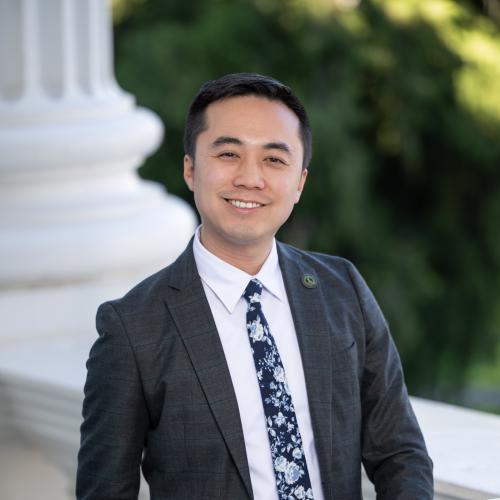
Asm. Alex Lee
Sponsored bills
Existing law provides for the payment of unemployment compensation benefits and extended benefits to eligible individuals who meet specified requirements. Under existing law, unemployment benefits are paid from the Unemployment Fund, which is continuously appropriated for these purposes. Existing law makes an employee ineligible for benefits if the employee left work because of a trade dispute and specifies that the employee remains ineligible for the duration of the trade dispute. Existing case law holds that employees who left work due to a lockout by the employer, even if it was in anticipation of a trade dispute, are eligible for benefits. This bill would restore eligibility after the first 2 weeks for an employee who left work because of a trade dispute. The bill would codify specified case law that holds that employees who left work due to a lockout by the employer, even if it was in anticipation of a trade dispute, are eligible for benefits. The bill would specify that the bill's provisions do not diminish eligibility for benefits of individuals deprived of work due to an employer lockout or similar action, as specified. Because this bill would expand the categories of people eligible to receive benefits from a continuously appropriated fund, it would make an appropriation.
The California Constitution provides that a proposed constitutional amendment and a statewide initiative measure each take effect only if approved by a majority of the votes cast on the amendment or measure. This measure would further provide that an initiative measure that includes one or more provisions that would amend the Constitution to increase the voter approval requirement to adopt any state or local measure would be approved by the voters only if the proportion of votes cast in favor of the initiative measure is equal to or greater than the highest voter approval requirement that the initiative measure would impose. The measure would specify that this voter approval requirement would apply to statewide initiative measures that appear on the ballot on or after January 1, 2024. The California Constitution also permits initiative and referendum powers to be exercised by the voters of each city or county under procedures provided by the Legislature. This measure would expressly authorize a local governing body to hold an advisory vote concerning any issue of governance for the purpose of allowing voters within the jurisdiction to voice their opinions on the issue. The measure would specify that an advisory question is approved only if a majority of the votes cast on the question are in favor. This measure would further declare that its provisions are severable and that if any provision is held invalid, the other provisions of the act remain valid, as specified.
Existing law, the Mobilehome Residency Law, governs the term and conditions of mobilehome park tenancies. Existing law, if the management of a mobilehome park elects to separately bill water utility service to homeowners, limits charges and fees on homeowners in connection with those services to specified types of charges and fees. Existing law authorizes the Public Utilities Commission to regulate public utilities, including water corporations. Under existing law, a person or corporation that maintains a mobilehome park and provides water service to users through a submeter service system is not a public utility and is not subject to the jurisdiction, control, or regulation of the commission if each user of the submeter service system is charged at the rate which would be applicable if the user were receiving the water directly from the water corporation. This bill would provide that a person or other entity that maintains a mobilehome park or a multiple unit residential complex, and provides water service through a submeter service system, is exempt from regulation as a public utility if management of the mobilehome park complies with the limitations on charges and fees provided for in the Mobilehome Residency Law. This bill would also provide that those limitations on charges and fees in connection with water utility service apply to all management that elects to separately bill water utility service to homeowners, including where the water purveyor or the mobilehome park is subject to the jurisdiction, control, or regulation of the commission.
Existing law establishes a basic speed law that prohibits a person from driving a vehicle upon a highway at a speed greater than is reasonable or prudent given the weather, visibility, traffic, and highway conditions and in no event at a speed that endangers the safety of persons or property. This bill would authorize, until January 1, 2032, the Cities of Los Angeles, San Jose, Oakland, Glendale, and Long Beach, and the City and County of San Francisco to establish a Speed Safety System Pilot Program if the system meets specified requirements. The bill would require a participating city or city and county to adopt a Speed Safety System Use Policy and a Speed Safety System Impact Report before implementing the program, and would require the participating city or city and county to engage in a public information campaign at least 30 days before implementation of the program, including information relating to when the systems would begin detecting violations and where the systems would be utilized. The bill would require a participating city or city and county to issue warning notices rather than notices of violations for violations detected within the first 60 calendar days of the program. The bill would also require a participating city or city and county to develop uniform guidelines for, among other things, the processing and storage of confidential information. The bill would designate all photographic or administrative records, not including data about the number of violations issued or the speeds at which they were issued for, made by a system as confidential, and would only authorize public agencies to use and allow access to these records for specified purposes. This bill would specify that any violation of a speed law recorded by a speed safety system authorized by these provisions would be subject only to the provided civil penalties. The bill would, among other things, provide for the issuance of a notice of violation, an initial review, an administrative hearing, and an appeals process, as specified, for a violation under this program. The bill would require any program created pursuant to these provisions to offer a diversion program for indigent speed safety system violation recipients, as specified. The bill would require a city or city and county participating in the pilot program to submit a report to evaluate the speed safety system to determine the system's impact on street safety and economic impact on the communities where the system is utilized. Existing law establishes a $25 filing fee for specified appeals and petitions. This bill would require a $25 filing fee for an appeal challenging a notice of violation issued as a result of a speed safety system until January 1, 2032. Existing constitutional provisions require that a statute that limits the right of access to the meetings of public bodies or the writings of public officials and agencies be adopted with findings demonstrating the interest protected by the limitation and the need for protecting that interest. This bill would make legislative findings to that effect. This bill would make legislative findings and declarations as to the necessity of a special statute for the Cities of Los Angeles, San Jose, Oakland, Glendale, and Long Beach, and the City and County of San Francisco.
(1) The California Safe Drinking Water Act provides for the operation of public water systems and imposes on the State Water Resources Control Board various duties and responsibilities for the regulation and control of drinking water in the state. Existing law imposes certain responsibilities on public water systems and authorizes the state board to issue a citation to a public water system if the state board determines that the public water system is in violation of the act, or any regulation, permit, standard, or order issued or adopted under the act. Existing law requires a public water system to reimburse the state board for actual costs incurred by the state board for specified enforcement activities related to that water system, as provided. Existing law makes it a crime to knowingly commit certain acts related to the act, including violating an order issued by the board pursuant to the act that has a substantial probability of presenting an imminent danger to the health of persons. This bill would authorize the state board to issue a citation to any person, not just a public water system, if the state board determines that the person is in violation of the act, or any regulation, permit, standard, or order issued or adopted under the act. The bill would also require persons, not just public water systems, to reimburse the state board for actual costs incurred by the state water board for specified enforcement activities related to that person, as provided. The bill would expand the definition of "person," to also include the United States, to the extent authorized by federal law. The bill would also revise the act's definition of "public water system." To the extent that this bill would expand the scope of coverage of the act by applying its provisions to more persons and entities, thereby expanding the application of a crime, this bill would impose a state-mandated local program. (2) Existing law authorizes the board to order consolidation with a receiving water system, or extension of service to an area in preparation for consolidation, where a disadvantaged community is substantially reliant on domestic wells that consistently fail to provide an adequate supply of safe drinking water, or are at-risk domestic wells. Existing law provides that any domestic well owner within a consolidation or extended service area that does not provide written consent to the consolidation or extension of service shall be ineligible, until the consent is provided, for any future water-related grant funding from the state other than funding to mitigate a well failure, disaster, or other emergency. This bill would require the owner of any domestic well that serves a rental property and is located within a consolidation or extended service area, if the owner does not provide written consent, to ensure that tenants of rental properties served solely by that domestic well have access to an adequate supply of safe drinking water. Until consent is provided, the bill would require the domestic well owner to test the drinking water from the domestic well once per year for primary and secondary water contaminants, provide the testing results to tenants and the local health officer or other relevant health agency, and provide or pay for uninterrupted replacement water service if the testing results demonstrate a violation of primary or secondary drinking water contaminant standards. The bill would require the state board to enforce these provisions relating to tenant rights only if the Legislature appropriates sufficient funds in the annual Budget Act or otherwise for that purpose. To the extent that knowingly violating an order of the board under these provisions, including an order to provide an adequate supply of safe drinking water in these circumstances, would expand the scope of a crime, this bill would impose a state-mandated local program. (3) The California Constitution requires the state to reimburse local agencies and school districts for certain costs mandated by the state. Statutory provisions establish procedures for making that reimbursement. This bill would provide that no reimbursement is required by this act for a specified reason.
Existing law, notwithstanding the requirement that each person between 6 and 18 years of age who is not otherwise exempted is subject to compulsory full-time education, requires a pupil to be excused from school for specified types of absences, including, among others, for certain justifiable personal reasons. Existing law includes attendance at a religious retreat among these justifiable personal reasons and prohibits attendance at religious retreats from exceeding 4 hours per semester for purposes of this provision. This bill, for purposes of the above-described provisions, would instead prohibit attendance at religious retreats from exceeding one schoolday per semester. To the extent that this bill would impose additional duties on local educational entities, the bill would impose a state-mandated local program. This bill would incorporate additional changes to Section 48205 of the Education Code proposed by SB 350 to be operative only if this bill and SB 350 are enacted and this bill is enacted last. The California Constitution requires the state to reimburse local agencies and school districts for certain costs mandated by the state. Statutory provisions establish procedures for making that reimbursement. This bill would provide that, if the Commission on State Mandates determines that the bill contains costs mandated by the state, reimbursement for those costs shall be made pursuant to the statutory provisions noted above.
Existing law generally requires the minimum wage for all industries to not be less than specified amounts to be increased until it is $15 per hour commencing January 1, 2022, for employers employing 26 or more employees, and commencing January 1, 2023, for employers employing 25 or fewer employees. Existing law makes a violation of minimum wage requirements a misdemeanor. This bill would establish 5 separate minimum wage schedules for covered health care employees, as defined, depending on the nature of the employer. This bill would require, for any covered health care facility employer, as defined, with 10,000 or more full-time equivalent employees (FTEE) , as defined, any covered health care facility employer that is a part of an integrated health care delivery system or a health care system with 10,000 or more FTEEs, a covered health care facility employer that is a dialysis clinic or is a person that owns, controls, or operates a dialysis clinic, or a covered health facility owned, affiliated, or operated by a county with a population of more than 5,000,000 as of January 1, 2023, the minimum wage for covered health care employees to be $23 per hour from June 1, 2024, to May 31, 2025, inclusive, $24 per hour from June 1, 2025, to May 31, 2026, inclusive, and $25 per hour from June 1, 2026, and until as adjusted as specified. This bill would require, for any hospital that is a hospital with a high governmental payor mix, an independent hospital with an elevated governmental payor mix, a rural independent covered health care facility, or a covered health care facility that is owned, affiliated, or operated by a county with a population of less than 250,000 as of January 1, 2023, as those terms are defined, the minimum wage for covered health care employees to be $18 per hour from June 1, 2024, to May 31, 2033, inclusive, and $25 per hour from June 1, 2033, and until as adjusted as specified. This bill would require, for specified clinics that meet certain requirements, the minimum wage for covered health care employees to be $21 per hour from June 1, 2024, to May 31, 2026, inclusive, and $22 per hour from June 1, 2026, to May 31, 2027, inclusive, and $25 from June 1, 2027, and until as adjusted as specified. This bill would require, for all other covered health care facility employers, the minimum wage for covered health care employees to be $21 per hour from June 1, 2024, to May 31, 2026, inclusive, $23 per hour from June 1, 2026, to May 31, 2028, inclusive, and $25 per hour from June 1, 2028, and until as adjusted as specified. This bill would provide that a covered health care facility that is county owned, affiliated, or operated must implement the appropriate minimum wage schedule described above, as applicable, beginning January 1, 2025. This bill would also separately require, for a licensed skilled nursing facility, as described, the minimum wage for certain other covered health care employees, as described, to be $21 per hour from June 1, 2024, to May 31, 2026, inclusive, $23 per hour from June 1, 2026, to May 31, 2028, inclusive, and $25 per hour from June 1, 2028, and until as adjusted as specified. The bill would make this minimum wage requirement effective only when a patient care minimum spending requirement applicable to skilled nursing facilities is in effect. This bill would provide that the health care worker minimum wages constitute the state minimum wage for covered health care employment for all purposes under the Labor Code and the Wage Orders of the Industrial Welfare Commission. The bill would provide that a health care worker minimum wage is enforceable by the Labor Commissioner or by a covered worker through a civil action, through the same means and with the same relief available for violation of any other state minimum wage requirement. By establishing new minimum wages, the violation of which would be a crime, the bill would impose a state-mandated local program. This bill would require, for covered health care employment where the employee is paid on a salary basis, that the employee earn a monthly salary equivalent to no less than 150% of the health care worker minimum wage or 200% of the applicable minimum wage, whichever is greater, for full-time employment in order to qualify as exempt from the payment of minimum wage and overtime. This bill would require the Department of Health Care Access and Information to publish, on or before January 31, 2024, and on the department's internet website, specified information, including a list of hospitals that qualify under certain classifications. The bill would provide, until January 31, 2025, a process for hospitals excluded from that list to request classification. This bill would authorize, until January 1, 2025, the adoption of any necessary rules and regulations for purposes of implementing certain provisions of the bill as emergency regulations in accordance with the Administrative Procedure Act and would deem the adoption of those emergency regulations an emergency and necessary for the immediate preservation of the public peace, health and safety, or general welfare. The bill would require the Department of Health Care Access and Information to consider input from specified stakeholders when adopting those rules and regulations, as specified. This bill would, by March 1, 2024, require the Department of Industrial Relations, in collaboration with the State Department of Health Care Services and the Department of Health Care Access and Information, to develop a waiver program that would allow a covered health care facility, as defined, to apply for and receive a temporary pause or alternative phase in schedule of the minimum wage requirements described above. In order to obtain a waiver, the bill would require a covered health care facility to demonstrate that compliance with the minimum wage requirements would raise doubts about the covered health care facility's ability to continue as a going concern under generally accepted accounting principles, as specified. The bill would provide that issuance of the terms of the pause or alternative phase in schedule is solely and exclusively within the authority of the Department of Industrial Relations, and the authority regarding whether the covered health care facility demonstrates the inability to continue as a going concern pursuant is solely and exclusively within the authority of the State Department of Health Care Services. This bill would prohibit any ordinance, regulations, or administrative action that is applicable to a covered health care facility and that establishes, requires, imposes, limits, or otherwise relates to wages or compensation for covered health care facility employees from being enacted or enforced in or by any city, county, or city and county, except as provided. This bill would also make its provisions severable. This bill would make legislative findings and declarations as to the necessity of a special statute for health care workers. The bill would include findings that changes proposed by this bill address a matter of statewide concern rather than a municipal affair and, therefore, apply to all cities, including charter cities. The California Constitution requires the state to reimburse local agencies and school districts for certain costs mandated by the state. Statutory provisions establish procedures for making that reimbursement. This bill would provide that no reimbursement is required by this act for a specified reason.