

Existing law, the California Community Care Facilities Act, provides for the licensing and regulation of community care facilities, including short-term residential therapeutic programs, by the State Department of Social Services. The act defines a short-term residential therapeutic program as a residential facility licensed by the department and operated by any public agency or private organization that provides an integrated program of specialized and intensive care and supervision, services and supports, treatment, and short-term, 24-hour care and supervision to children that is trauma-informed. Existing law requires specified facilities, including community care facilities, to conduct a clinical and quality review for each episode of the use of seclusion or behavioral restraints, as defined. Existing law requires the facility to conduct a debriefing regarding the incident with the person, and other specified individuals upon the person's request, to discuss how to avoid a similar incident in the future. Under existing law, the person's participation in the debriefing is voluntary. This bill, The Accountability in Children's Treatment Act, would require, in the case of an incident involving the use of seclusion or behavioral restraints in a short-term residential therapeutic program, the facility to notify any foster child who has been subject to seclusion or behavioral restraints of their personal rights by no later than the day following the incident and to provide, within 7 days, a description of the incident, in both oral and written forms, to the person subject to the seclusion or behavioral restraints and, as applicable, to the person's parent, foster parent, guardian, Indian custodian, or other authorized representative, and attorney, if any, and for Indian children, the tribal representative. The bill would require that the description contain certain information, including the actions taken during the incident and its duration, the rationale for the actions, and the personnel approving and implementing the actions. The bill would require the facility to provide a copy of the written description to the department, also within 7 days. The bill would require the department to review all reported incidents involving the use of seclusion or behavioral restraints and to investigate any incidents that indicate a potential health and safety concern or licensing violation. As part of the assessment to determine if an investigation is required, the bill would require the department to determine whether the use of seclusion or behavioral restraints potentially violated any licensing laws and regulations or violated the licensee's approved emergency intervention plan. If the department determines that an incident should be investigated, the bill would require the department to provide the Office of the State Foster Care Ombudsperson with a copy of the incident report and require the ombudsperson to exercise their discretion in determining whether to investigate the incident, as specified. Existing law requires the Secretary of California Health and Human Services or their designee to take steps to establish a system of mandatory, consistent, timely, and publicly accessible data collection regarding the use of seclusion and behavioral restraints in specified facilities, including community care facilities, that utilize seclusion and behavioral restraints. Existing law requires that data collected include, among other information, the number of incidents, the duration of time spent per incident, and the number of serious injuries or deaths occurring while the person is in seclusion or subject to behavioral restraints. Existing law requires the secretary to develop a mechanism for making this information, as it becomes available, publicly available on the internet. Existing law requires the State Department of Social Services and other specified departments to annually provide information to the Legislature about the progress made in implementing the above-described provisions on data collection, clinical and quality review, and debriefing. This bill would require the State Department of Social Services, by January 1, 2026, to display, on its internet website, data that is specific to short-term residential therapeutic programs. The bill would require the dashboard to display the above-described data on seclusion or behavioral restraints as applicable to those programs, the above-described written descriptions of the incidents, and the numbers and types of licensing and administrative actions taken for the improper use of seclusion or behavioral restraints by the short-term residential therapeutic program or an associated individual for the improper use of seclusion or behavioral restraints. The bill would require the department to update the information biannually. Under the bill, this data would exclude any personally identifiable information, as specified, and the provisions of the bill would be implemented to the extent not in conflict with any applicable federal or state privacy laws.
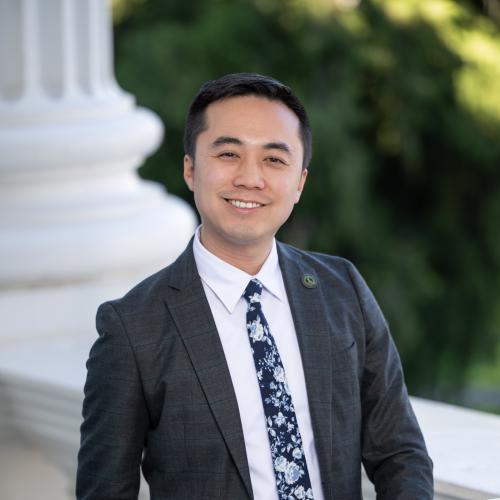
Asm. Alex Lee
Sponsored bills
Existing law authorizes the operation of an autonomous vehicle on public roads for testing purposes by a driver who possesses the proper class of license for the type of vehicle operated if specified requirements are satisfied. Existing law prohibits the operation of an autonomous vehicle on public roads until the manufacturer submits an application to the Department of Motor Vehicles, as specified, and that application is approved. This bill would require a manufacturer of an autonomous vehicle to report to the department a collision on a public road that involved one of its autonomous vehicles with a gross vehicle weight of 10,001 pounds or more that is operating under a testing or deployment permit that resulted in damage of property, bodily injury, or death within 10 days of the collision. The bill would require a manufacturer of an autonomous vehicle to annually submit to the department specified information regarding the deactivation of the autonomous mode for its autonomous vehicles with a gross vehicle weight of 10,001 pounds or more that were operating under a testing or deployment permit that authorized the vehicle to operate on public roads. The bill would prohibit the operation of an autonomous vehicle with a gross vehicle weight of 10,001 pounds or more on public roads for testing purposes, transporting goods, or transporting passengers without a human safety operator physically present in the autonomous vehicle at the time of operation. The bill would require the Department of Motor Vehicles, by January 1, 2030, or 5 years after commencement of testing, whichever occurs later, and upon appropriation by the Legislature, to submit a report to the appropriate policy and fiscal committees of the Legislature evaluating the performance of autonomous vehicle technology and its impact on public safety and employment in the transportation sector for autonomous vehicles with a gross vehicle weight of 10,001 pounds or more. The bill would require the Department of the California Highway Patrol, the Labor and Workforce Development Agency, the Department of Transportation, the State Air Resources Board, and other relevant state agencies to provide additional information needed to research the report.
Existing law grants pupils, parents, and guardians certain rights regarding the delivery of educational services, including, among others, rights regarding primary supplemental instruction materials. Existing law provides that none of these rights shall be construed as restricting teachers in the assignment of homework. This bill, the Healthy Homework Act, would encourage each school district, county office of education, and charter school to (1) develop a homework policy for all grades maintained by the local educational agency, as specified, by the start of the 2027–28 school year, (2) formally adopt a final homework policy by the start of the 2028–29 school year, and (3) update the adopted homework policy at least once every 5 years, as provided. The bill would, among other things, encourage the local educational agency to annually distribute the adopted or updated homework policy at the beginning of the school year to all certificated staff and administrators, to all pupils and parents or legal guardians, as specified, and by publication on the local educational agency's internet website and on the internet websites of the individual schools operated by the local educational agency. For a local educational agency that formally adopted a homework policy on or before July 31, 2024, the bill would encourage the local educational agency to update its adopted homework policy before the start of the 2028–29 school year or within 5 years of its adoption, whichever is later, and would encourage the local educational agency's updated homework policy to be consistent with the bill's provisions. The bill would authorize the State Department of Education to develop and post on its internet website, guidelines for local educational agencies to use in developing the homework policy, as provided, and would encourage those guidelines to be developed and posted by January 1, 2026.
The California Environmental Quality Act (CEQA) requires a lead agency, as defined, to prepare, or cause to be prepared, and certify the completion of an environmental impact report on a project that it proposes to carry out or approve that may have a significant effect on the environment or to adopt a negative declaration if it finds that the project will not have that effect. CEQA also requires a lead agency to prepare a mitigated negative declaration for a project that may have a significant effect on the environment if revisions in the project would avoid or mitigate that effect and there is no substantial evidence that the project, as revised, would have a significant effect on the environment. CEQA, until January 1, 2030, exempts from its requirements certain transportation-related projects if specified requirements are met, including that a local agency, as defined, is carrying out the project and that the project will be completed by a skilled and trained workforce, as provided. CEQA includes within these exempt transportation-related projects a public project for the institution or increase of bus rapid transit, bus, or light rail service, which will be exclusively used by low-emission or zero-emission vehicles, on existing public rights-of-way or existing highway rights-of-way. Existing law requires the lead agency, if it determines that a transportation-related project is exempt from CEQA and determines to carry out the project, to file a notice of exemption with the Office of Planning and Research and the county clerk in which the project is located. This bill would expand that exemption from CEQA to include a public project for the institution or increase of other passenger rail service, which will be exclusively used by zero-emission trains, located entirely within existing rail rights-of-way or existing highway rights-of-way. Because the bill would increase the duties of the county clerk, this bill would impose a state-mandated local program. The California Constitution requires the state to reimburse local agencies and school districts for certain costs mandated by the state. Statutory provisions establish procedures for making that reimbursement. This bill would provide that no reimbursement is required by this act for a specified reason.
Existing law requires the court clerk to allow specified persons access to case records, including the court file, index, and register of actions, filed in unlawful detainer actions that are limited civil cases. Existing law requires that this access must be given to any other person 60 days after the complaint has been filed if judgment against all defendants has been entered for the plaintiff within 60 days of the filing of the complaint, and other persons as specified. Existing law exempts from these requirements records in a case that seeks to terminate a mobilehome park tenancy if the statement of the character of the proceeding in the caption of the complaint clearly indicates that the complaint seeks termination of a mobilehome park tenancy. The bill would delete the exemption for access to case records for cases that seek to terminate a mobilehome tenancy, as specified.
(1) Existing law, the Employee Housing Act, generally regulates employee housing, as defined. Among other things, the act authorizes a development proponent to submit an application for a development that is subject to a streamlined, ministerial process, as specified, and is not subject to a conditional use permit if certain requirements are met, including that the development is located on land designated as agricultural in the applicable city or county general plan, and that the development is an eligible agricultural employee housing development. The act defines eligible agricultural housing development as, among other things, an agricultural employee housing development that consists of no more than 36 units or spaces designed for use by a single family or household and is not ineligible for state funding under a provision that prohibits state funding from being provided to an employer who employs at least one H-2A worker, as specified. This bill would additionally authorize a development proponent to submit an application for a development that would be subject to the above-described conditions, if the development is located on land in the County of Santa Clara or the County of Santa Cruz that is within 15 miles of an area designated as farmland or grazing by the Department of Conservation and is not a site or adjoined to a site where more than 13 of the square footage on the site is dedicated to industrial use, as specified. The bill would also increase the maximum number of units in an eligible agricultural employee housing development from 36 units to 150 units if the development is located with the County of Santa Clara or the County of Santa Cruz. The bill would also specify that an eligible agricultural employee housing development under these provisions may not be ineligible for state funding pursuant to a specified provision of the Joe Serna, Jr., Farmworker Housing Grant Program, which prohibits funding under that program to an agricultural employer or farm labor contractor who employs at least one H-2A worker, as specified, and would make additional clarifying changes. By expanding the scope of housing developments eligible for approval under these provisions, thereby increasing the duties of local officials, the bill would impose a state-mandated local program. This bill would make legislative findings and declarations as to the necessity of a special statute for the County of Santa Clara and the County of Santa Cruz. (2) Existing law establishes a low-income housing tax credit program pursuant to which the California Tax Credit Allocation Committee provides procedures and requirements for the allocation, in modified conformity with federal law, of state insurance, personal income, and corporation tax credit amounts to qualified low-income housing projects that have been allocated, or qualify for, a federal low-income housing tax credit, and farmworker housing. Existing law limits the total annual amount of the state low-income housing credit for which a federal low-income housing credit is required to the sum of $70,000,000, as increased by any percentage increase in the Consumer Price Index for the preceding calendar year, any unused credit for the preceding calendar years, and the amount of housing credit ceiling returned in the calendar year. Existing law provides for an additional allocation of $500,000,000 in low-income housing tax credits for the 2020 calendar year and up to $500,000,000 for the 2021 calendar year and thereafter, only if the Budget Act or related legislation specifies an amount available for allocation (additional amount) . Existing law, for calendar years 2024 to 2034, inclusive, allocates the lesser of 5% or $25,000,000 of that additional amount for farmworker housing, as specified. Existing law requires any amount of the farmworker housing funds that are unallocated in a funding round to rollover to consecutive subsequent funding rounds in that calendar year, except that any of those farmworker housing funds that are unallocated prior to the final funding round for that calendar year are returned to the above-described additional amount. This bill would instead require that any of those farmworker housing funds that are unallocated after the final funding round for that calendar year are returned to the above-described additional amount. (3) The California Constitution requires the state to reimburse local agencies and school districts for certain costs mandated by the state. Statutory provisions establish procedures for making that reimbursement. This bill would provide that no reimbursement is required by this act for a specified reason. (4) This bill would incorporate additional changes to Sections 12206, 17058 and 23610.5 of the Revenue and Taxation Code proposed by AB 3160 to be operative only if this bill and AB 3160 are enacted and this bill is enacted last.
The California Safe Drinking Water Act provides for the operation of public water systems and imposes on the State Water Resources Control Board various duties and responsibilities for the regulation and control of drinking water in the State of California. The act requires the state board to adopt primary drinking water standards for contaminants in drinking water based upon specified criteria. Existing law makes certain violations of the act a crime. This bill would require an owner of a domestic well that serves a rental property within the boundaries of a testing program, as defined, to participate in the testing program, as specified. The bill would require the state board to post certain information regarding applicable testing programs on its internet website. The bill would require the owner of a domestic well that serves a rental property to ensure that the test results, and information on how to read and understand the test results, are provided to current residents of the rental property within 10 days of receiving the test results. If the test results demonstrate an exceedance of any primary drinking water standard, and the owner of the domestic well or a resident served by the domestic well is eligible for a program for the provision of safe drinking water, the bill would require the domestic well owner to provide safe drinking water to the residents. The bill would prohibit an owner of a domestic well from imposing any charge, or increasing any fee, rent, or other charge imposed, on any resident solely as a result of the requirements of these provisions. To the extent that an owner of the rental property, when providing notice of the results of domestic well testing to residents pursuant to these provisions, would make any false statement or representation, this bill would expand the scope of a crime and impose a state-mandated local program. The California Constitution requires the state to reimburse local agencies and school districts for certain costs mandated by the state. Statutory provisions establish procedures for making that reimbursement. This bill would provide that no reimbursement is required by this act for a specified reason.
Existing law, commencing with the 2013–14 fiscal year, establishes a public school financing system that requires state funding for county superintendents of schools, school districts, and charter schools to be calculated pursuant to a local control funding formula, as specified. This bill would require the State Department of Education, by July 1, 2025, to update a salary and benefit schedule form, as described, to include salary data collection for classified school staff assigned to a schoolsite or sites in the same manner as that data is collected for certificated staff assigned to a schoolsite or sites, and to call this updated form the Salary and Benefit Schedule for the Bargaining Units (Form J–90) . The bill would require school districts, county offices of education, and direct-funded charter schools, by January 31, 2026, and annually thereafter, to complete the Form J–90 for specified classified and certificated staff assigned to a schoolsite or sites and report the Form J–90 to the department, and would authorize those local educational agencies to complete and report the Form J-90 for prior fiscal years, as provided. By imposing new duties on local educational agencies, the bill would impose a state-mandated local program. The bill would require the department, by August 31, 2026, and annually thereafter, to report to the Legislature on the progress of school districts, county offices of education, and charter schools in increasing salaries for classified and certificated staff assigned to a schoolsite or sites, as provided. The California Constitution requires the state to reimburse local agencies and school districts for certain costs mandated by the state. Statutory provisions establish procedures for making that reimbursement. This bill would provide that, if the Commission on State Mandates determines that the bill contains costs mandated by the state, reimbursement for those costs shall be made pursuant to the statutory provisions noted above.
(1) Existing law requires a city or county to deem an applicant for a housing development project to have submitted a preliminary application upon providing specified information about the proposed project to the city or county from which approval for the project is being sought. Existing law requires a housing development project be subject only to the ordinances, policies, and standards adopted and in effect when the preliminary application was submitted. This bill would authorize a development proponent that submits a preliminary application for a housing development project to request a preliminary fee and exaction estimate, as defined, and would require a city, county, or city and county to provide the estimate within 30 business days of the submission of the preliminary application. For development fees imposed by an agency other than a city, county, or city and county, the bill would require the development proponent to request the fee schedule from the agency that imposes the fee and would require the agency that imposes the fee to provide the fee schedule to the development proponent without delay. The bill would specify that the preliminary fee and exaction estimate is for informational purposes only and does not affect the scope, amount, or time of payment of any fee or exaction, as specified. (2) Existing law requires a public agency that receives an application for a development project to, within 30 calendar days, determine in writing whether the application is complete and immediately transmit its determination to the applicant for the development project, as specified. This bill would, upon final approval of a housing development project, require a city, county, or city and county to provide the development proponent with an itemized list and a good faith estimate of the total sum amount of all fees and exactions that will apply to the project within 30 business days of the above-described determination of completeness transmitted to the applicant. For development fees imposed by an agency other than a city, county, or city and county, the bill would require the development proponent to request the good faith estimate of the total sum amount of all fees and exactions imposed by the agency that will apply to the project, and would require the agency to provide the development proponent with this information within 30 business days. The bill would state that the itemized list and good faith estimate is for informational purposes, is not legally binding on the agency, and shall not be construed to affect the scope, amount, or time of payment of any fees or exactions applicable to the project pursuant to other law. (3) Existing law requires a city, county, or special district that has an internet website to make specified information available on its internet website, as applicable, including a current schedule of fees, exactions, affordability requirements it has imposed that are applicable to a proposed housing development project, and an archive of impact fee nexus studies, cost of service studies, or equivalent, conducted by that city, county, or special district on or after January 1, 2018. Existing law requires a city or county to request from a development proponent, upon issuance of a certificate of occupancy or the final inspection, whichever occurs last, the total amount of fees and exactions associated with the project for which the certificate was issued. This bill would clarify that these provisions may not be construed to impose any obligation on any entity, including a development proponent, other than a city, county, or special district, as specified. The bill would also require the request from the city or county for the total amount of fees and exactions associated with the project to clearly state that the request does not create any obligation to respond and that the development proponent will not be subjected to any consequences for not responding or for the content of a response. (4) The bill would include findings that changes proposed by this bill address a matter of statewide concern rather than a municipal affair and, therefore, apply to all cities, including charter cities. (5) By imposing new duties on local governments when receiving and reviewing certain development project applications, the bill would impose a state-mandated local program. The California Constitution requires the state to reimburse local agencies and school districts for certain costs mandated by the state. Statutory provisions establish procedures for making that reimbursement. This bill would provide that no reimbursement is required by this act for a specified reason.
Existing law requires the State Department of Social Services, subject to an appropriation for this purpose in the annual Budget Act, to administer the California Guaranteed Income Pilot Program to provide grants to eligible entities for the purpose of administering pilot programs and projects that provide a guaranteed income to participants. Existing law requires the department to prioritize funding for pilot programs and projects that serve California residents who age out of the extended foster care program and pregnant individuals. Existing law requires the department, in consultation with relevant stakeholders, to determine the methodology for, and manner of, distributing those grants, subject to certain requirements. Existing law requires the department to review and evaluate the pilot programs and projects funded pursuant to these provisions, provide a report to the Legislature regarding that review and evaluation, and post a copy of the report on its internet website. This bill, the California Guaranteed Income Statewide Feasibility Study Act, would require the State Department of Social Services to contract with one or more entities, subject to specified requirements, for the provision of a Guaranteed Income Statewide Feasibility Study to provide recommendations on the feasibility of a statewide Guaranteed Income Program and achieve, among other things, the objective of examining the feasibility, benefits, and challenges of scaling up permanent guaranteed income programs to reach a larger proportion of California's socially and economically vulnerable populations, focusing on regions with a high cost of living, and informed by best practices and lessons learned from the Guaranteed Income Pilot Program. The bill would require specified state departments to disclose necessary data to the State Department of Social Services and require the study to include a steering committee composed of various stakeholders, as provided. The bill would require the department to, on or before July 1, 2027, publish on its internet website and provide a report to the Governor and the Legislature on the feasibility and benefits of expanding the Guaranteed Income Program statewide based on the outcomes of the study. This bill would authorize the State Department of Social Services to implement, interpret, or make specific the act without taking any regulatory action, as specified, and accept and, subject to an appropriation, expend funds to administer and implement the act.