Maddy summaryThis is a symbolic resolution, not a substantive bill. It designates September 7-13, 2025, as "Direct Support Professional Recognition Week" in California. The resolution acknowledges direct support professionals who assist Californians with intellectual and developmental disabilities (IDD) through the state's Lanterman Act system, which serves over 450,000 residents. It formally recognizes their role in enabling community inclusion and independence but does not create new policies, funding, or legal obligations.
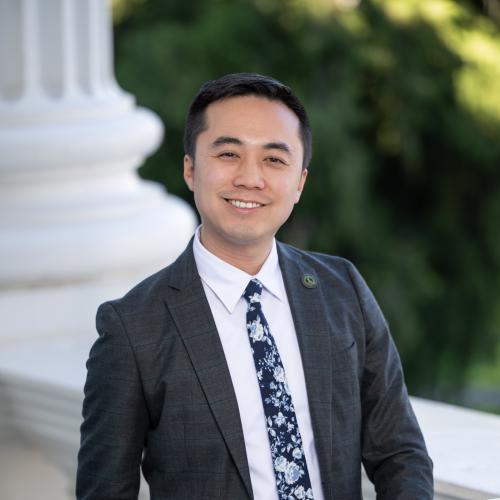
Asm. Alex Lee
Sponsored bills
Maddy summaryThis symbolic resolution recognizes September 20, 2025, as National Fried Rice Day in California, highlighting the dish's cultural significance to Asian American communities and its connection to California's rice-growing economy (noting the state's status as the second-largest rice producer). It has no legal effect or policy changes - it serves solely to celebrate culinary traditions and community diversity. The resolution was adopted by the California Assembly with no opposing votes.
The Budget Act of 2018 appropriated $50,000,000 to the Board of State and Community Corrections for a grant program, known as the Adult Reentry Grant Program, for the purpose of awarding competitive grants to community based organizations to support offenders formerly incarcerated in state prison. The Budget Act of 2018 allocated a specified amount of those funds for, among other things, rental assistance, rehabilitation of existing property or buildings, and to support the warm hand-off and reentry of offenders transitioning from prison to communities. Subsequent budget acts have continued to fund the program. This bill, instead, commencing July 1, 2026, and upon appropriation of funds, would transfer the administration of the grant program to the Department of Housing and Community Development. The bill would require the department, on or before December 1, 2026, to modify the grant program to provide 5-year renewable grants to geographically diverse regional administrators responsible for funding permanent supportive housing and reentry services for eligible people, as specified. The bill would require the department to issue proposed guidelines or a draft notice, as specified, establishing the grant program and require the department to competitively score applicants applying for grant funds as regional administrators. The bill would require the department to work collaboratively with the State Department of Health Care Services, Department of Corrections and Rehabilitation, and homeless continuums of care, and seek to work collaboratively with county probation departments, to establish a process for referrals of people eligible to participate in the program, as specified. The bill would also require the department to establish specified benchmarks to promote and track ideal outcomes from the program. This bill would require the department to distribute program funds by executing contracts with awarded regional administrators and would impose certain requirements on those regional administrators. The bill would prescribe eligibility requirements for a person scheduled for release from, or who has been be formerly incarcerated in, state prison, to participate in the program. The bill would require program funds to be used for specified purposes, including specified administrative fees, permanent housing, rental and operating subsidies, incentives to landlords, and voluntary multidisciplinary services, as specified. The bill would require the department, upon implementation of the program, to design an evaluation and hire an independent evaluator to assess outcomes from the program, and would require the evaluation to be submitted to specified committees of the Legislature. This bill would require the board to continue to oversee and administer existing program grants that have not yet expired, using resources allocated to the board through funds allocated by the Budget Act of 2025. This bill would require the Department of Corrections and Rehabilitation to establish a process to engage an individual scheduled for discharge, within at least 210 days of the scheduled release date, for the purpose of assessing the individual's risk of homelessness upon discharge, as specified.
Maddy summaryThis House Resolution designates a month as Filipino American History Month in California. It recognizes the historical contributions of Filipino Americans to the state, including early settlement (dating to 1587), agricultural labor, community building (such as "Little Manila" in Stockton), and military service during World War II. As a symbolic resolution, it does not create new laws, policies, or direct effects on any specific group.
Existing law requires all public and private animal shelters to keep accurate records on each animal taken up, medically treated, or impounded, as specified. This bill would require animal shelters, as defined, to collect and record the number of animals taken in, the source of intake, and the outcomes for all animals, as specified. The bill would require this information to be updated at least once per quarter. The bill would require animal shelters with internet websites to post this information on their internet websites and would require that this information remain publicly accessible for at least 5 years. The bill would require animal shelters that do not have internet websites to make this information publicly available, upon request, for at least 5 years. To the extent that this bill would impose a new program or higher level of service on public animal control agencies or shelters, the bill would impose a state-mandated local program. The California Constitution requires the state to reimburse local agencies and school districts for certain costs mandated by the state. Statutory provisions establish procedures for making that reimbursement. This bill would provide that, if the Commission on State Mandates determines that the bill contains costs mandated by the state, reimbursement for those costs shall be made pursuant to the statutory provisions noted above.

Existing law governs the hiring of residential dwelling units and requires a landlord to provide specified notice to tenants prior to an increase in rent. Existing law, the Costa-Hawkins Rental Housing Act, prescribes statewide limits on the application of local rent control with regard to certain properties. That act, among other things, authorizes an owner of residential real property to establish the initial and all subsequent rental rates for a dwelling or unit that meets specified criteria, subject to certain limitations. This bill would make it unlawful for any person to sell, license, or otherwise provide to 2 or more persons a rental pricing algorithm, as defined, with the intent or reasonable expectation that it be used by 2 or more persons, as specified, to set rental terms, as defined, for residential premises. The bill would make it unlawful for a person to set or adopt rental terms based on the recommendation of a rental pricing algorithm if the person knows or should know that the rental pricing algorithm processes nonpublic competitor data, as defined, to set rental terms and that the pricing algorithm or the recommendation of the algorithm was used by another person to set or recommend a rental term for residential premises in the same market. Existing law establishes the Attorney General as the head of the Department of Justice, with charge of all legal matters in which the state is interested, except as specified. Existing law imposes various requirements on the Attorney General related to consumer protection, including, among others, the supervision of charitable trusts and the enforcement of antitrust laws. This bill would authorize the Attorney General, and the city attorney or county counsel in the jurisdiction in which the rental unit is located, to file a civil action for a violation of the bill, as specified, and would authorize a person who is harmed by a violation of the bill to file a civil action, as specified.
Existing law requires the State Department of Social Services, subject to an appropriation, to administer the California Guaranteed Income Pilot Program until January 1, 2028, to provide grants to eligible entities for the purpose of administering pilot programs and projects that provide a guaranteed income to participants. Existing law requires the department to prioritize, for these purposes, California residents who age out of the extended foster care program at or after 21 years of age or who are pregnant individuals. Under existing law, guaranteed income payments received by an individual from a pilot program or project, as described above, are not considered income or resources for purposes of determining the individual's, or any member of their household's, eligibility for benefits or assistance, or the amount or extent of benefits or assistance, under any state or local benefit or assistance program, as specified. Existing law establishes various public social services programs within the jurisdiction of the State Department of Social Services, including, among others, the California Work Opportunity and Responsibility to Kids (CalWORKs) program and the CalFresh program. Existing law establishes the Medi-Cal program, which is administered by the State Department of Health Care Services and under which qualified low-income individuals receive health care services. Under this bill, to the extent not in conflict with federal law, guaranteed income payments received by an individual would not be considered income or resources for purposes of determining eligibility for benefits, or the amount of benefits, under any means-tested program, and vice versa. The bill would require the State Department of Social Services and the State Department of Health Care Services, for programs under their jurisdiction, to seek any federal waivers necessary to implement these provisions. The bill would define "guaranteed income payments" to include, but not be limited to, payments provided through pilot programs or projects receiving funding from the California Guaranteed Income Pilot Program or payments provided through locally funded programs, as specified. Under the bill, means-tested programs would include, but would not be limited to, the CalWORKs program, the CalFresh program, the California Food Assistance Program (CFAP) , the Medi-Cal program, the General Assistance Program, and the Cash Assistance Program for Immigrants (CAPI) . By creating new duties for counties with regard to eligibility determinations for means-tested programs, the bill would impose a state-mandated local program. Existing law continuously appropriates moneys from the General Fund to defray a portion of county costs under the CalWORKs program. This bill would instead provide that the continuous appropriation would not be made for purposes of implementing these provisions. The California Constitution requires the state to reimburse local agencies and school districts for certain costs mandated by the state. Statutory provisions establish procedures for making that reimbursement. This bill would provide that with regard to certain mandates no reimbursement is required by this act for a specified reason. With regard to any other mandates, this bill would provide that, if the Commission on State Mandates determines that the bill contains costs so mandated by the state, reimbursement for those costs shall be made pursuant to the statutory provisions noted above.

This measure would call on members of the United States Congress to oppose reductions to funding that negatively impact educational services for students with disabilities and would call on the President of the United States and Congress to ensure that services and funding for students with disabilities are uninterrupted.
This measure would recognize February 2025 as Black History Month, urge all citizens to join in celebrating the accomplishments of African Americans during Black History Month, and encourage the people of California to recognize the many talents of African Americans and the achievements and contributions they make to their communities to create equity and equality for education, economics, and social justice. The measure would also recognize the significance in protecting citizens' right to vote and remedying racial discrimination in voting.
Maddy summaryThis is a commemorative resolution, not a bill with policy changes. It recognizes key historical milestones of transgender people in California, including Indigenous gender diversity documented in 1775, 19th-century transgender figures in San Francisco's Tenderloin, early activism like the 1959 Cooper Do-nuts Riot, and legal precedents such as Sir Lady Java's 1967 employment discrimination case. The resolution has no binding effect and does not create new laws or directly affect any individuals or groups. It serves solely to honor these historical contributions.